IntroductionThis article offers an analysis of environmental communication (EC) and citizen science (CS) in the context of Environmental Monitoring and Assessment (EMA) for the implementation of Sustainable Development Goal 15 (Life on Land) in Chile and Sweden.MethodsThe paper is based on fieldwork in two rural study areas of Chile and Sweden where we followed different CS initiatives in relation to EMA and Agenda 2030. We conducted interviews, analyzed documentation and conducted an SDG mapping workshop to understand the implementation of SDG 15 in these two rural forest settings.ResultsOur findings suggest that CS has potential as a democratic innovation for environmental governance in both countries. However, we also found important barriers to the legitimacy of CS as a feature of EMA and local environmental governance in both countries. The paper situates CS in the wider governance and environmental communication processes in regional politics surrounding implementation of national policies for the use of natural resources.DiscussionThe article offers new insights into the barriers and possibilities for public participation in environmental governance and policy at local levels, by addressing the interlinkages between environmental communication and citizen science in rural settings.
• Final disposal of nuclear waste • Unique government scientific advice council • Transdisciplinary planning process • Socio-technical challenges • Sweden
This commentary focuses on analyzing the potential of citizen science to address legitimacy issues in the knowledge base used to guide transformative governance in the context of the United Nation’s Sustainable Development Goals (henceforth SDGs). The commentary develops two interrelated arguments for better understanding the limits of what we term “traditional” Environmental Monitoring and Assessment (EMA) as well as the potential of citizen science (CS) for strengthening the legitimacy of EMA in the local implementation of SDGs. We start by arguing that there is an urgent need for a profound renewal of traditional EMA to better implement the SDGs. Then, we present CS as a democratic innovation that provides a path to EMA renewal that incorporates, develops, and extends the role of CS in data production and use by EMA. The commentary substantiates such arguments based on current approaches to CS and traditional EMA. From this starting point, we theorize the potential of CS as a democratic innovation that can repurpose EMA as a tool for the implementation of the SDGs. With a focus on the implementation of SDG15 (Life on Land) in local contexts, the commentary presents CS as a democratic innovation for legitimate transformative governance that can affect socio-ecological transitions. We see this approach as especially appropriate to analyze the implementation of SDGs in rural settings where a specific resource nexus can create conflict-laden contexts with much potential for a renewed EMA to support transformative governance towards Agenda 2030.
“How can we effectively address persisting challenges, in particular with regards to the effectiveness of IA instruments?” (Fischer & Bice, 2019, call for contributions to the special issue).In thi...
Fler arter an nagonsin i mansklighetens historia hotas av utrotning och den biologiska mangfalden lokalt har forandrats kraftigt i en stor del av varldens ekosystem. Grundlaggande forandringar behovs bade i samhallet och for individer, for att bromsa den negativa trenden, skriver en rad debattorer.
•We investigate the integration of the ecosystem services (ES) concept in decision making.•We use the three dimensions of learning to investigate the use of the ES concept.•ES concept seems to meet several positive expectations put forward in science and policy.•A main contribution from the concept may potentially be its function as a “boundary object”.•Implementing ES into practice is a complex process and a multifaceted task.
A summary is not available for this content so a preview has been provided. Please use the Get access link above for information on how to access this content.
Urban small water bodies, such as ponds, are essential elements of human socio-economic landscapes. Ponds also provide important habitats for species that would otherwise not survive in the urban environment. Knowledge on the biodiversity of urban ponds and the relationship between their ecological value and factors linked to urbanization and socio-economic status is crucial for decisions on where and how to establish and manage ponds in cities to deliver maximum biodiversity benefits. Our study investigates if the pattern of urban-pond biodiversity can be related to different socio-economic factors, such as level of wealth, education or percentage of buildings of different types. Because of lack of previous studies investigating that, our study is of exploratory character and many different variables are used. We found that the biodiversity of aquatic insects was significantly negatively associated with urbanisation variables such as amount of buildings and number of residents living around ponds. This relationship did not differ depending on the spatial scale of our investigation. In contrast, we did not find a significant relationship with variables representing socio-economic status, such as education level and wealth of people. This latter result suggests that the socio-economic status of residents does not lead to any particular effect in terms of the management and function of ponds that would affect biodiversity. However, there is a need for a finer-scale investigation of the different potential mechanism in which residents in areas with differing socio-economic status could indirectly influence ponds.
Ponds are important elements of green areas in cities that help counteract the negative consequences of urbanization, by providing important habitats for biodiversity in cities and being essential nodes in the overall landscape-scale habitat network. However, there is relatively little knowledge about the impacts of pond management intensity, function and environmental variables on urban pond biodiversity. In this study we addressed this gap by investigating which factors were correlated with the level of biodiversity in urban ponds, indicated by species richness of aquatic insects, in Stockholm, Sweden. Our study did not confirm any direct link between the perceived intensity of management or function of ponds and overall biodiversity. However, it seems that management can influence particular groups of species indirectly, since we found that Trichoptera richness (Caddisflies) was highest at intermediate management intensity. We suggest that this is caused by management of vegetation, as the amount of floating and emergent vegetation was significantly correlated with both the overall species richness and the richness of Trichoptera (Caddisflies). This relationship was non-linear, since ponds with an intermediate coverage of vegetation had the highest richness. Interestingly, the amount of vegetation in the pond was significantly affected by pond function and pond management. The overall species richness and richness of Trichoptera were also positively correlated with pond size. Since we found that the pattern of relations between species richness and environmental variables differed between the insect groups we suggest that it will be difficult to provide overall design and management recommendations for ponds in urban green areas. Therefore, it is recommended that to provide high aquatic diversity of species in urban areas one should aim at promoting high diversity of different types of ponds with differing management and environmental factors that shape them.
Vagar framat for nagra nationella myndigheters implementering av konventionen om biologisk mangfald och lokal och traditionell kunskap av betydelse for biologisk mangfald
Enligt miljobalkens bestammelser om miljobedomning och miljokonsekvensbedomning ska man vid planeringen ta fram olika alternativ som ar forenliga med syftet med planen, programmet eller projektet. Genom att utarbeta och analysera olika alternativ ska beslutsfattarna kunna finna det alternativ som sammantaget ar det basta ur olika aspekter inklusive miljo. I denna rapport beskrivs resultaten av en pilotstudie om hantering av alternativ i miljobedomning av planer och program och miljokonsekvensbedomning av projekt. Utgangspunkten ar erfarenheter att detta pa flera satt inte tycks fungera sa som det ar tankt utifran EU-direktiv och svensk lagstiftning. Pilotstudien har genomforts i fem olika moment: • Internationell litteraturstudie • Granskning av miljokonsekvensbeskrivningar mot en fast granskningsmall • Intervjuer, utifran en fragelista for semistrukturerade intervjuer, av svenska utforare som arbetar med MKB och MB • Diskussioner med svenska praktiker och med forskare i andra lander. • En workshop anordnad av Naturvardsverket i samarbete med projektet. Ansvariga for studien ar professor Tuija Hilding-Rydevik, SLU (projektledare) och professor Lars Emmelin, BTH Forskningsprogrammet MiSt Programmet Miljostrategiska verktyg, MiSt, ar ett tvarvetenskapligt forskningsprogram finansierat av Naturvardsverket. Programmet leds fran Blekinge Tekniska Hogskola. I programmet studeras verktyg som kan underlatta miljobedomning i strategiskt beslutsfattande pa olika nivaer, fran nationell till lokal. Forstaelsen och basen for utveckling av verktyg och rekommendationer om verktyg i olika planerings- och beslutsprocesser baseras pa empirisk forskning pa fall inom flera sektorer. Malen for MiSt-programmet: • Kritisk undersokning av verktygens funktion • Teoribaserad forstaelse av deras verkan • Utveckling av rad om effektiv anvandning av verktyg och kombinationer av verktyg Programchef: professor Lars Emmelin, Fysisk planering, BTH. Bitradande programchef: professor Tuija Hilding-Rydevik, MKB-Centrum SLU.
How human health is framed provides boundaries for choices in practice and bias for certain actions in health assessments in Environmental Impact Assessment (EIA). This study examines health frames in legislation and policies of importance for EIA in Swedish road planning and their implications for practice. The emphasis is on different approaches, such as promotion of health and prevention of ill-health. Indicators of the choices in practice for which the health frames exert bias are further analysed through a review of Environmental Impact Statements (EIS) for road planning and comparison with a similar study conducted about 10 years ago. The indicators studied are: health determinants included, health impacts assessed, and aspects of the affected population concerned in the EISs. There are fundamentally different health frames in Swedish legislation and policies, but this range is not yet reflected in EISs, which mainly focus on environmental health rather than on broader health determinants and health equity. The results indicate that this situation becomes a dilemma for EIA practitioners and a challenge for the field.
The international relevance of learning from nuclear waste management in Sweden cannot be underestimated as the planning process for the final disposal of spent nuclear fuel in Sweden has been underway for more than thirty years. During this time the same types of actors-private, public, and NGO representatives-and even the same individuals have interacted with each other throughout. Based on a review of the implementer's Research, Development and Demonstration programmes (RD&Ds) of methods for the management and disposal of nuclear waste and interviews with representatives of the implementer, regulator, and NGOs, this paper analyses the outcomes of these long-term interactions. It then discusses the potentially serious problems this creates in relation to knowledge production in the planning and environmental impact assessment process and problems now the regulator is set to review the final application. The tendency of the values and priorities of implementer and regulator to converge over time, due to sustained social interaction, is a new phenomenon, which could not only impede the safety of nuclear waste management, but also risks occurring in other countries embarking on similar long-term processes.
Discourse serves as a fundamental prerequisite for human action - as is displayed by the implementation in Swedish local spatial planning of the EU 'Strategic Environmental Assessment (SEA) Directive' which forms the focus of this paper. The national Swedish SEA policy discourse, following from the EU Directive, presents a clear case of 'doublespeak'. The major mobilising metaphor emerging from the discourse analysis is the concept of efficiency backed by the pronouncement of continuity. Major benefits for local spatial planning are outlined while at the same time assurance is given that no new efforts or added costs are foreseen for the municipalities. The role of the SEA is downsized in relation to sustainable development and to the Environmental Impact Assessment of projects. In order to fully interrogate this debate the current paper combines a policy implementation approach with a discourse perspective.
This paper presents the results of an investigation into how sustainable development was introduced as a new objective for regional development policy in Sweden. Specific attention is given to the basic assumptions underlying the shaping of sustainable regional development (SRD) as a new policy goal in the Swedish regional development policy arena, which is a main arena for regional planning in Sweden. The overall aim is to chart and critically assess official Swedish SRD policy discourse using an analytical approach inspired by Foucauldian discourse analysis; that is, targeting both text and practice through examination of policy documents and institutional settings. Of key interest are the norms and power relations produced and reproduced through the discourse. In the study, holism, equilibrium and consensus are identified as key storylines of the Swedish SRD discourse. In essence, our findings indicate a further (re) production and consolidation of a post-political approach that provides no input to developing any alternative trajectory for society. The concluding discussion concerns the need to challenge the post-political condition and reassert the political and ideological content of the aims and visions for SRD, as well as for development in general.
Boken handlar om erfarenheterna fran nagra svenska regioners anstrangningar att omsatta hallbar utveckling inom ramen for regionalt tillvaxtarbete, och behandlar bland annat larandeprocesser och in ...
The importance of considering cumulative effects (CE) in the context of environmental assessment is manifested in the EU regulations. The demands on the contents of Environmental Impact Assessment (EIA) and Strategic Environmental Assessment (SEA) documents explicitly ask for CE to be described. In Swedish environmental assessment documents CE are rarely described or included. The aim of this paper is to look into the reasons behind this fact in the Swedish context. The paper describes and analyse how actors implementing the EIA and SEA legislation in Sweden perceive the current situation in relation to the legislative demands and the inclusion of cumulative effects. Through semi-structured interviews the following questions have been explored: Is the phenomenon of CE discussed and included in the EIA/SEA process? What do the actors include in and what is their knowledge of the term and concept of CE? Which difficulties and obstacles do these actors experience and what possibilities for inclusion of CE do they see in the EIA/SEA process? A large number of obstacles and hindrances emerged from the interviews conducted. It can be concluded from the analysis that the will to act does seem to exist. A lack of knowledge in respect of how to include cumulative effects and a lack of clear regulations concerning how this should be done seem to be perceived as the main obstacles. The knowledge of the term and the phenomenon is furthermore quite narrow and not all encompassing. They experience that there is a lack of procedures in place. They also seem to lack knowledge of methods in relation to how to actually work, in practice, with CE and how to include CE in the EIA/SEA process. It can be stated that the existence of this poor picture in relation to practice concerning CE in the context of impact assessment mirrors the existing and so far rather vague demands in respect of the inclusion and assessment of CE in Swedish EIA and SEA legislation, regulations, guidelines and handbooks.
Within the context of both national and EU policy, sustainable development (SD) emerges in the Nordic countries as a horizontal perspective to be systematically integrated into regional development programming. Research on this type of integration has, however, been somewhat scarce. This paper deals with the question of how the relation between environmental and economic sustainability – as part of the overall SD framework – is played out in the context of regional development programming at both the national and regional levels. Three issues are raised in the analysis, pointing to challenges of achieving environmental policy-integration. First, working with cross-sectoral interconnectedness or ending up in sectoral traps, where partnership learning processes are hampered by both a lack of responsibility for, and ownership of, the overall SD-perspective and interactions dominated by sectoral struggles where the different roles, mandates and perspectives of various keyactors are strong. Second, achieving ‘win-win’ or getting stuck in environment-economy conflicts, where the policy-rhetoric picturing the existence of possible ‘win-win’-opportunities in which environmental and economic sustainability benefit each other show some empirical support at the same time as troublesome conflicts and tough regional development priorities raise questions of where principled priority lies in practical decisionmaking. Third, rhetorical declarations, pockets of good practice or systematic policyintegration, where the paper highlights a focus on environmental sustainability in rhetorical declarations and through flagship win-win examples though the study does not provide evidence of any overall transformation of regional development practices taking place. Indeed, policy-integration in terms of rhetorical declarations is more common than evidence of systematic integration. Despite indications of changing patterns of interaction and learning in respect of partnerships between actors from different sectors, the conflict perspective remains more representative of the practical realities and day-to-day concerns expressed in the interviews with both national and regional representatives.
 Malgorzata Blicharska合作论文数Department of Aquatic Sciences and Assessment, Swedish University of Agricultural Sciences3
 Kaisa Lähteenmäki-Smith合作论文数3
 Maria Hakansson合作论文数Future Applications Lab;Viktoria Institute;Future Applications Lab, Viktoria Institute3keith clement合作论文数2Thao Do合作论文数2Cristian Alarcon Ferrari合作论文数2ann akerskog合作论文数2Solomon Gebreyohannis Gebrehiwot合作论文数2Johan Andersson合作论文数2
 Kevin Bishop合作论文数Department of Aquatic Sciences and Assessment, Swedish University of Agricultural Sciences;Division of Geochemistry and Hydrology, Swedish University of Agricultural Sciences2
 Frank Johansson合作论文数Department of Ecology and Genetics, Uppsala University2
 Mari T. Jonsson合作论文数Department of Ecology, Swedish University of Agricultural Sciences2
 Sofie Storbjork合作论文数2
 Cecilia Mark-Herbert合作论文数Department of Economics, Swedish University of Agricultural Sciences2
 Johannes Bergsten合作论文数Department of Entomology, Swedish Museum of Natural History2
 Karin Beatrice Bradley合作论文数Experiences and Prospects2Ulf Bjelke合作论文数2
 Neil Powell合作论文数Department of Urban and Rural Studies, Swedish University of Agricultural Sciences2
 Linley Chiwona-Karltun合作论文数Department of Plant Biology;Department of Rural Development Studies;Swedish University of Agricultural Sciences;Department of Rural Development Studies, Swedish University of Agricultural Sciences2Torbjörn Ebenhard合作论文数1hans wiklund合作论文数1
 Marie Kvarnstrom合作论文数1Martin Smutny合作论文数1Tuija Hilding-Rydevik合作论文数1
 Weronika Axelsson Linkowski合作论文数1Anna Westin合作论文数1anders martensson合作论文数1
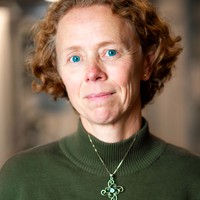 Anna Björklund合作论文数KTH Royal Institute of Technology;Department of Sustainable Development, Environmental Science and Engineering, Kungliga Tekniska Hogskolan1malin hansen合作论文数1
 Mari Kagstrom合作论文数1
 Karin Beland Lindahl合作论文数Dept Social Sci Technol & Arts, Lulea Univ Technol1
 Hakan Tunon合作论文数1
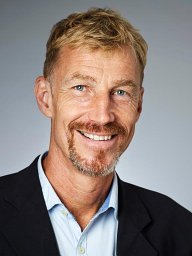 Thomas Hahn合作论文数Stockholm Resilience Centre, Stockholm University;Stockholm Resilience Centre, Stockholm University1
 Lena Bergstrom合作论文数Inst Coastal Res, Swedish Univ Agr Sci1
 Ruete Alejandro合作论文数Department of Ecology, Swedish University of Agricultural Sciences (SLU),1Johan Svensson合作论文数1
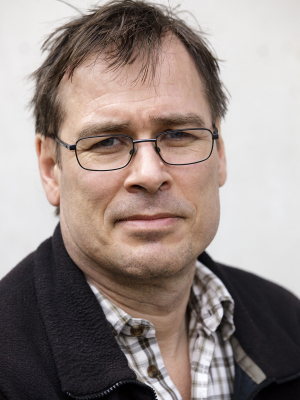 Henrik G. Smith (Henrik Smith)合作论文数Centre for Environmental and Climate Science, Lund University1Jessica Johansson合作论文数1Jon Moen合作论文数Department of Ecology and Environmental Science, Umeå University1
 Maria Johansson合作论文数1Per Viklund合作论文数1
 Malin Hansen合作论文数Division of Urban and Regional Studies, Department of Urban Planning and Environment, School of Architecture and the Built Environment, KTH Royal Institute of Technology1
 Matthew Cashmore合作论文数School of Environmental Sciences, University of East Anglia InteREAM1
 Daniela Manuschevich合作论文数Departamento de Ecología, Pontificia Universidad Católica de Chile1
 Anna Christiernsson合作论文数Luleå University of Technology;Division of Social Sciences;Division of Social Sciences, Luleå University of Technology1Ulrika Palme合作论文数Environmental Systems Analysis;Department of Energy and Environment;Chalmers University of Technology;Department of Energy and Environment, Chalmers University of Technology1
 Antoienette Warnback合作论文数1Antoienette Oscarsson合作论文数1
 Margareta Ihse合作论文数1




