We report on the design and automation of a mid-infrared, continuous wave, singly-resonant optical parametric oscillator. Hands-free controls and the implementation of a tuning algorithm allowed for hundreds of nanometers of continuous, effective-mode-hop-free tuning over the range of 2190-4000 nm. To demonstrate the applicability of this light source and algorithm to mid-IR spectroscopy, we performed a sample spectroscopy measurement in a C2H2 gas cell and compared the experimentally-measured absorption spectrum to HITRAN 2016 simulations. We found excellent agreement with simulation in both peak heights and peak centers; we also report a reduced uncertainty in peak centers compared to simulation.
Continuous-wave optical parametric oscillators (CW-OPOs) can offer broad tuning with high resolution and high power in the mid-infrared (MIR) and have many important potential applications in precision spectroscopy.The widely tunable cw-OPO system (TOPO) developed by TOPTICA Photonics is capable of covering the wavelength range of 1.45-4.0µm (with a degenerate gap between 2.07-2.19µm) without optics or nonlinear optical crystal exchanges.A computercontrolled automation system has been developed to achieve a broad (up to 300 GHz) mode-hop-free (MHF) tuning range of the idler wavelengths and high output power (>1 W).Its narrow linewidth is demonstrated in the direct absorption measurements and the Doppler-free saturated absorption spectroscopy of atmospheric molecules.Furthermore, a muchimproved frequency accuracy has been achieved by referencing the OPO to a frequency comb and creating a phase-coherent bridge between the NIR and MIR spectral ranges.Frequency noise from both the OPO cavity and the seed laser is eliminated by (i) beating the OPO signal output against the fundamental of the frequency comb and (ii) beating the seed laser against a 1064 nm comb extension.The TOPO system has been incorporated in the MIR cavity ring-down (CRD) system and the CRD-based two-photon spectroscopy system in our lab.
We demonstrate automated C2H2 direct absorption spectroscopy using a CW, tunable optical parametric oscillator, with a resolution of <5x10⁻⁴ cm-1 at 2 cm-1/min. We improve the resolution substantially by locking to a frequency comb.
We use a cw optical parametric oscillator for spectroscopy applications in the mid infrared. We implement an automatic tuning mechanism, and demonstrate scan stitching over more than 200 nm. We perform absorption spectroscopy on acetylene (C 2 H 2 ), and suggest future improvements of the HITRAN data.
We report on our development of laser rack systems as “quantum enabling” building blocks of future quantum devices. We present funded projects, where such rack laser systems are integrated into first prototypes.
High power continuous-wave (CW) single-frequency 1342 nm lasers are of interest for fundamental research, particularly, for laser cooling of lithium atoms. Using the popular Nd:YVO4 laser crystal requires careful heat management, because strong thermal effects in the gain medium are the most severe limitations of output power. Here, we present a multi-segmented Nd:YVO4 crystal design that consists of three segments with successive doping concentrations, optimized using a theoretical model. In order to quantify the optimization, we measured the thermal lens power of conventional crystal designs and compare them to our multi-segmented design. The optimized design displays a two times lower thermal lens dioptric power for the same amount of absorbed pump power in the non-lasing case. Using the optimized design, we demonstrate a high power all-solid-state laser emitting 10.0 W single-frequency radiation at 1342 nm when operating the laser crystal at room temperature. Further integration of the laser allows us to operate the laser crystal below room temperature for improving output power up to 11.4 W at 8°C. This is explained by the reduction of energy-transfer upconversion and excited-state absorption effects. Stable free-running operation at the low temperature of 8 °C is achieved with the power stability of ± 0.42 % by peak-to-peak fluctuation and frequency peak-to-peak fluctuation of ± 72 MHz in three hours.
We present and implement a non-destructive detection scheme for the transition probability readout of an optical lattice clock. The scheme relies on a differential heterodyne measurement of the dispersive properties of lattice-trapped atoms enhanced by a high finesse cavity. By design, this scheme offers a 1st order rejection of the technical noise sources, an enhanced signal-to-noise ratio, and an homogeneous atom-cavity coupling. We theoretically show that this scheme is optimal with respect to the photon shot noise limit. We experimentally realise this detection scheme in an operational strontium optical lattice clock. The resolution is on the order of a few atoms with a photon scattering rate low enough to keep the atoms trapped after detection. This scheme opens the door to various different interrogations protocols, which reduce the frequency instability, including atom recycling, zero-dead time clocks with a fast repetition rate, and sub quantum projection noise frequency stability.
We present a simple all-solid-state laser source emitting 2.4 W of single-frequency light at 671 nm for laser cooling of lithium atoms. It is based on a diode-pumped solid-state laser, which is frequency doubled in a ppZnO:LN ridge waveguide with an internal doubling efficiency of 54%. We develop a simple theory for the thermal effects we observed at elevated fundamental powers, and compare the setup to a more efficient but more complex one with an external resonant frequency doubling cavity providing 5.2 W at 671 nm.
The low-temperature unitary Bose gas is a fundamental paradigm in few-body and many-body physics, attracting wide theoretical and experimental interest. Here, we present experiments performed with unitary Cs-133 and Li-7 atoms in two different setups, which enable quantitative comparison of the three-body recombination rate in the low-temperature domain. We develop a theoretical model that describes the dynamic competition between two-body evaporation and three-body recombination in a harmonically trapped unitary atomic gas above the condensation temperature. We identify a universal "magic" trap depth where, within some parameter range, evaporative cooling is balanced by recombination heating and the gas temperature stays constant. Our model is developed for the usual three-dimensional evaporation regime as well as the two-dimensional evaporation case, and it fully supports our experimental findings. Combined Cs-133 and Li-7 experimental data allow investigations of loss dynamics over 2 orders of magnitude in temperature and 4 orders of magnitude in three-body loss rate. We confirm the 1/T-2 temperature universality law. In particular, we measure, for the first time, the Efimov inelasticity parameter eta(*) = 0.098(7) for the 47.8-G d-wave Feshbach resonance in Cs-133. Our result supports the universal loss dynamics of trapped unitary Bose gases up to a single parameter eta(*).
We present a resonantly frequency-doubled tapered amplified semiconductor laser system emitting up to 2.6W at 400 nm. The system shows 0.12% RMS RIN, and less than 0.15%/h relative loss over 16 hours. It can be stabilized, and the internal alignment can be optimized using computer-controlled mirrors.
Frequency-converted diode lasers provide continuous-wave light down to below 200 nm in the vacuum UV.
In this paper, we propose an in-depth review of the vector and tensor polarizabilities of the two energy levels of the 87Sr clock transition whose measurement was reported in [P. G. Westergaard et al., Phys. Rev. Lett. 106, 210801 (2011)]. We conduct a theoretical calculation that reproduces the measured coefficients. In addition, we detail the experimental conditions used for their measurement in two Sr optical lattice clocks, and exhibit the quadratic behaviour of the vector and tensor shifts with the depth of the trapping potential and evaluate their impact on the accuracy of the clock.
In their article, the authors of [Opt. Express 23, 4981 (2015)] observe step-like behavior and hysteresis of the output power of a diode-end-pumped Nd:YVO 4-laser as a function of pump power. While claiming that this behavior is a proof of thermal lensing in the intra-cavity TGG, no direct evidence is given. We will discuss here the validity of their statement, and propose an experimental proof.
In optical lattice clocks, a large number of neutral atoms confined in an optical lattice are probed by a narrow linewidth laser. These clocks combine an excellent control of the systematic effects, while offering a record stability thanks to the large number of interrogated atoms. Here, we report on recent results obtained with two strontium optical lattice clocks at LNE-SYRTE, Observatoire de Paris.
We present a comprehensive set of high resolution comparisons between strontium optical lattice clocks in agreement at the 10−16 level and three microwave cesium fountains. The microwave to optical comparison reaches a total uncertainty of 3.1×10⁻¹⁶.
We present an all-solid-state laser source emitting up to 2.1 W of single-frequency light at 671 nm developed for laser cooling of lithium atoms. It is based on a diode-pumped, neodymium-doped orthovanadate (Nd:YVO(4)) ring laser operating at 1342 nm. Optimization of the thermal management in the gain medium results in a maximum multi-frequency output power of 2.5 W at the fundamental wavelength. We develop a simple theory for the efficient implementation of intracavity second harmonic generation, and its application to our system allows us to obtain nonlinear conversion efficiencies of up to 88%. Single-mode operation and tuning is established by adding an etalon to the resonator. The second-harmonic wavelength can be tuned over 0.5 nm, and mode-hop-free scanning over more than 6 GHz is demonstrated, corresponding to around ten times the laser cavity free spectral range. The output frequency can be locked with respect to the lithium D-line transitions for atomic physics applications. Furthermore, we observe parametric Kerr-lens mode-locking when detuning the phase-matching temperature sufficiently far from the optimum value.
 Frédéric Chevy合作论文数École Normale Supérieure9
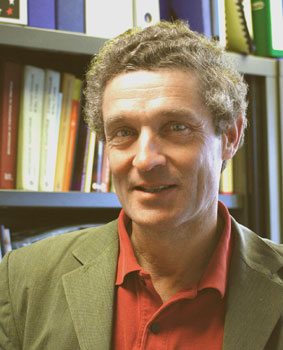 Christophe Salomon合作论文数Laboratoire Kastler Brossel, Département de Physique, Ecole Normale Supérieure8
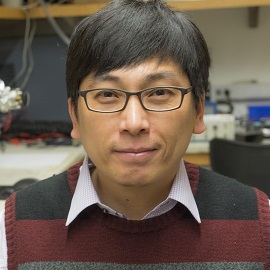 Cheng Chin合作论文数Department of Physics, The University of Chicago6Li-Chung Ha合作论文数5Chunyan Shi合作论文数5R. Le Targat合作论文数5Jerome Lodewyck合作论文数5S. Bize合作论文数4Walter C. Hurlbut合作论文数4Chris Haimberger合作论文数4Matthew J. Cich合作论文数TOPT Photon Inc4
 Foote David B合作论文数Department of Physics and Astronomy, University of Nebraska-Lincoln4
 Benno Rem合作论文数Spectrum Instrumentation4
 Lev Khaykovich合作论文数The Quantum Entanglement Science&Technology Impact Center, Department of Physics, Faculty of Exact Sciences, Bar-Ilan University4
 Andrew T. Grier合作论文数4j l robyr合作论文数3
 Adam Heiniger合作论文数3Eric L Hazlett合作论文数3
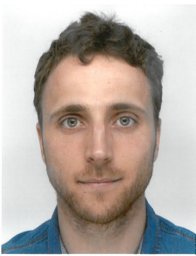 I. Ferrier-Barbut合作论文数Laboratoire Kastler-Brossel, UPMC3
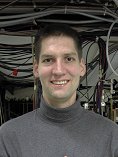 Peter Rosenbusch合作论文数Laboratoire Kastler Brossel3
 Y. Le Coq合作论文数3Juergen Stuhler合作论文数2Philippe Laurent合作论文数2Michel Abgrall合作论文数2Tim Paasch-Colberg合作论文数2
 Nir Navon合作论文数Department of Physics, Yale University2Laurent Sébastien合作论文数2
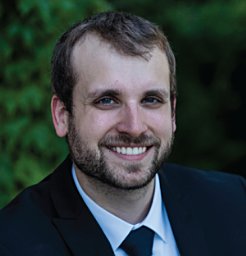 Clark Logan W合作论文数Enrico Fermi Institute and Department of Physics, University of Chicago2
 Matthias Scholz合作论文数2Felix Werner合作论文数2
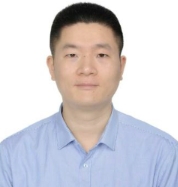 Xibo Zhang (张熙博)合作论文数Center for Quantum Materials, School of Physics, Peking University2Felix Rohde合作论文数ICFO-Institut de Ciencies Fotoniques2
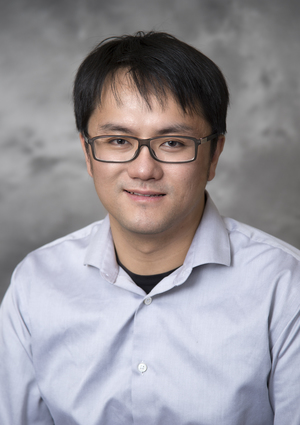 Chen-Lung Hung合作论文数Department of Physics and Astronomy,Purdue University2
 Mikhail Gurov合作论文数2Shih-Kuang Tung合作论文数2these de合作论文数1doctorat de合作论文数1A. Ridinger合作论文数1T. Langen合作论文数1
 Rudolf Neuhaus合作论文数1A. Senger合作论文数1N Kretzschmar合作论文数1Franz Sievers合作论文数1Daniel J. Christensen合作论文数1G. Vallet合作论文数1Xingyang Cui合作论文数1jacques vigue合作论文数1l universite paris vi合作论文数1




