Although recent studies have demonstrated the efficacy of chimeric antigen receptor T-cell (CAR-T) therapy in relapsed large B-cell lymphoma (LBCL) with MYC rearrangement (R-MYC), the data comparing CAR-T to autologous hematopoietic cell transplant (auto-HCT) in such patients who achieve a complete or partial response (CR/PR) after salvage therapies are limited. We compared the clinical outcomes of patients with R-MYC LBCL (including double and triple hit lymphomas) who underwent CAR-T or auto-HCT after achieving a CR/PR with salvage therapies using the Center for International Blood & Marrow Transplant Research registry. Among the 252 patients (auto-HCT = 98, CAR-T = 154), relative to auto-HCT, CAR-T was associated with significantly lower overall survival (OS) (Hazard Ratio [HR] 2.09, 95% CI 1.38-3.15, p < 0.001) on multivariate analysis. There were no differences in progression-free survival (PFS) (HR 1.21, 95% CI 0.81-1.8 p = 0.36), risk of relapse (HR 1.1, 95% CI 0.71-1.69 p = 0.68), nonrelapse mortality (NRM) (HR 1.74, 95% CI 0.64-4.7 p = 0.28) while the post-relapse survival was longer in auto-HCT relative to CAR-T (HR 1.93, 95% CI 1.21-3.06 p = 0.01). On propensity score matched analysis accounting for differences in characteristics across the two cohorts, we detected no significant differences in OS (HR 1.72, 95% CI 0.92-3.21 p = 0.09), PFS (HR 1.04, 95% CI 0.64-1.68 p = 0.88), NRM (HR 1.22, 95% CI 0.35-4.2 p = 0.76), relapse (HR = 0.93, 95% CI 0.54-1.6 p = 0.8) and post-relapse survival (HR 2.25, 95% CI 0.98-5.17, p = 0.06). These data, although retrospective, support consideration for auto-HCT in patients with R-MYC LBCL who achieve a CR/PR after salvage therapies, particularly in regions with no or limited access to CAR-T.
PDF file - 90K, Supplementary Table 1: Adjusted Association between LNR Status and Outcomes in Untreated T3N0 Colon Cancer Undergoing Molecular Staging; Supplementary Table 2: Unadjusted and adjusted association between LNR status and TTR, OS, and DFS within pMMR subgroup (N = 262).
Hematopoietic stem cells (HSCs) form the foundation of treatment for many hematologic and neoplastic diseases. The ability to collect HSCs that have been released into peripheral blood (PB) rather than harvesting from bone marrow (BM) directly has dramatically improved the likelihood of successful collection while minimizing donor discomfort [ [1] Bensinger W.I. Martin P.J. Storer B. Clift R. Forman S.J. Negrin R. et al. Transplantation of bone marrow as compared with peripheral-blood cells from HLA-identical relatives in patients with hematologic cancers. N Engl J Med. 2001; 344: 175-181 Crossref PubMed Scopus (851) Google Scholar ]. To facilitate the release of HSCs into PB, cytokines that stimulate cell proliferation and agents that directly antagonize stromal adherence factors are administered for several days pre-collection. The quantification of these mobilized HSCs is often performed pre-collection, based on the expression of the cell-surface marker CD34 [ [2] Weaver C.H. Hazelton B. Birch R. Palmer P. Allen C. Schwartzberg L. et al. An analysis of engraftment kinetics as a function of the CD34 content of peripheral blood progenitor cell collections in 692 patients after the administration of myeloablative chemotherapy. Blood. 1995; 86: 3961-3969 Crossref PubMed Google Scholar ]. Importantly, CD34 expression is not restricted to HSCs; it is a general marker of immaturity, thus it is also useful in the diagnosis of hematologic malignancies such as myeloid/lymphoid leukemias and myelodysplastic syndromes. For HSC collection, the number of circulating CD34+ cells is useful in assuring adequate mobilization and may also be used to estimate the blood volume necessary to process to meet collection goals [ [3] Trickett A.E. Smith S. Kwan Y.L. Accurate calculation of blood volume to be processed by apheresis to achieve target CD34+ cell numbers for PBPC transplantation. Cytotherapy. 2001; 3: 5-10 Abstract Full Text PDF PubMed Scopus (14) Google Scholar ]. To provide perspective, the mean pre-apheresis CD34+ cell count in autologous HSC donors at our institution from 2018 to 2021 was 47.3 cells/µl (median 35.3 cells/µl). Furthermore, < 10% of donors had CD34+ cell counts > 100 cells/µl, and the highest value was 465 cells/µl. This report details two autologous HSC donors with circulating CD34+ cell counts exceeding 1000 cells/µl, with differing treatment decisions following further investigation.
BackgroundMany studies showed that novel agent based regimens result in superior response rates and depth. Recommended practice prior to ASCT in TE, NDMM is novel induction therapy. While one CIBMTR study did not find an impact of intensity of induction therapy on overall outcomes, several other studies showed a significant impact. The value of induction therapy and response in the context of tandem ASCT using novel conditioning is not well studied.Patients and methodsAll sequential patients who received a planned tandem ASCT at our center between 2012 and 2015 were included in the analysis. We compared outcomes of patients who received novel induction based therapy, followed by DPACE mobilization with those who received DPACE alone as induction. Time was calculated from date of initial transplant to relapse or death due to any cause for PFS, and to death due to any cause for OS. The effect of clinical characteristics on outcomes was evaluated using Cox regression models. A time-dependent covariate was utilized for maintenance therapy.Results135 patients were included in the analysis. 39 patients received only DPACE and 96 received novel induction. 84 were male. Median age is 58 years (range 37-71).Conditioning regimen consisted of bortezomib, thalidomide, dexamethasone and melphalan (VTD-Mel) in all except 4 patients, who received melphalan only. 56% were classified as high risk by FISH. 43%, 26% and 25% received 2 years, 1 year and < 1 year of maintenance therapy. There was no difference in PFS or OS between the groups who received DPACE only versus the novel agent group. Best responses achieved at the time of transplant were 5% and 71% PR and CR, in DPACE group and 18% and 60% in the novel induction group, respectively. For the overall cohort, 5 year PFS and OS were 58% and 65%, respectively. Increasing age conferred poorer PFS and OS (both p<0.01). Maintenance therapy was found to be associated with PFS. The risk of relapse or death increased nearly 4 times (p<0.01) when maintenance was not received.ConclusionsThis study shows that after a planned tandem ASCT, there was no difference in OS at median follow up time of 33 months between patients who received 1 cycle of DPACE and those who received novel agent induction. Similarly, high risk and standard risk cytogenetics patients had similar OS. Responses with DPACE were lower compared to novel induction regimen, as was observed in previous studies. Although this study does not change the practice of induction, it is an important observation that the tandem ASCT followed by maintenance therapy may overcome the poor prognosis of high risk cytogenetics. The role of duration and intensity of induction therapy in tandem ASCT needs to further investigated. Many studies showed that novel agent based regimens result in superior response rates and depth. Recommended practice prior to ASCT in TE, NDMM is novel induction therapy. While one CIBMTR study did not find an impact of intensity of induction therapy on overall outcomes, several other studies showed a significant impact. The value of induction therapy and response in the context of tandem ASCT using novel conditioning is not well studied. All sequential patients who received a planned tandem ASCT at our center between 2012 and 2015 were included in the analysis. We compared outcomes of patients who received novel induction based therapy, followed by DPACE mobilization with those who received DPACE alone as induction. Time was calculated from date of initial transplant to relapse or death due to any cause for PFS, and to death due to any cause for OS. The effect of clinical characteristics on outcomes was evaluated using Cox regression models. A time-dependent covariate was utilized for maintenance therapy. 135 patients were included in the analysis. 39 patients received only DPACE and 96 received novel induction. 84 were male. Median age is 58 years (range 37-71).Conditioning regimen consisted of bortezomib, thalidomide, dexamethasone and melphalan (VTD-Mel) in all except 4 patients, who received melphalan only. 56% were classified as high risk by FISH. 43%, 26% and 25% received 2 years, 1 year and < 1 year of maintenance therapy. There was no difference in PFS or OS between the groups who received DPACE only versus the novel agent group. Best responses achieved at the time of transplant were 5% and 71% PR and CR, in DPACE group and 18% and 60% in the novel induction group, respectively. For the overall cohort, 5 year PFS and OS were 58% and 65%, respectively. Increasing age conferred poorer PFS and OS (both p<0.01). Maintenance therapy was found to be associated with PFS. The risk of relapse or death increased nearly 4 times (p<0.01) when maintenance was not received. This study shows that after a planned tandem ASCT, there was no difference in OS at median follow up time of 33 months between patients who received 1 cycle of DPACE and those who received novel agent induction. Similarly, high risk and standard risk cytogenetics patients had similar OS. Responses with DPACE were lower compared to novel induction regimen, as was observed in previous studies. Although this study does not change the practice of induction, it is an important observation that the tandem ASCT followed by maintenance therapy may overcome the poor prognosis of high risk cytogenetics. The role of duration and intensity of induction therapy in tandem ASCT needs to further investigated.
1Division of Hematology & Oncology, Medical College of Wisconsin, Milwaukee, WI 2Division of Hematology & Oncology, University of Cincinnati College of Medicine, Cincinnati, OH 3Divisions of Hematology, Oncology and Blood and Bone Marrow Transplant, Department of Internal Medicine, University of Iowa, Iowa City, IA The authors have no conflicts of interest to declare. All authors meet ICMJE authorship criteria.
Background Graft-versus-host-disease (GVHD) after liver transplantation (LT) is a deadly complication with very limited data on risk factors, diagnosis and management. We report a case series and a comprehensive review of the literature. Methods Data were systematically extracted from reports of GVHD after LT, and from the United Network for Organ Sharing database. Group comparisons were performed. Results One hundred fifty-six adult patients with GVHD after LT have been reported. Median time to GVHD onset was 28 days. Clinical features were skin rash (92%), pancytopenia (78%), and diarrhea (65%). Six-month mortality with GVHD after LT was 73%. Sepsis was the most common cause of death (60%). Enterobacter bacteremia, invasive aspergillosis, and disseminated Candida infections were frequently reported. Recipient age over 50 years is a risk factor for GVHD after LT. Hepatocellular carcinoma was overrepresented, whereas chronic hepatitis C was underrepresented, in reported United States GVHD cases relative to all United Network for Organ Sharing database LT cases. Mortality rate with treatment of GVHD after LT was 84% with high-dose steroids alone, 75% to 100% with regimens using dose increases of calcineurin inhibitors, and 55% with IL-2 antagonists. Mortality was 25% in small case series using the CD2-blocker alefacept or TNF-&agr; antagonists. Conclusions Age older than 50 years and hepatocellular carcinoma appear to be risk factors for GVHD. Hepatitis C may be protective. High-dose steroids and calcineurin inhibitors are ineffective in the treatment of GVHD after LT. CD2-blockers and TNF-&agr; antagonists appear promising. We propose a diagnostic algorithm to assist clinicians in managing adults with GVHD after LT.
Abstract Purpose: Recurrence risk assessment to make treatment decisions for early-stage colon cancer patients is a major unmet medical need. The aim of this retrospective multicenter study was to evaluate the clinical utility of guanylyl cyclase C (GCC) mRNA levels in lymph nodes on colon cancer recurrence. Methods: The proportion of lymph nodes with GCC-positive mRNA (LNR) was evaluated in 463 untreated T3N0 patients, blinded to clinical outcomes. One site's (n = 97) tissue grossing method precluded appropriate lymph node assessment resulting in post hoc exclusion. Cox regression models tested the relationship between GCC and the primary endpoint of time to recurrence. Assay methods, primary analyses, and cut points were all prespecified. Results: Final dataset contained 366 patients, 38 (10%) of whom had recurrence. Presence of four or more GCC-positive lymph nodes was significantly associated with risk of recurrence [hazard ratio (HR) = 2.46, 95% confidence interval (CI), 1.07–5.69, P = 0.035], whereas binary GCC LNR risk class (HR = 1.87, 95% CI, 0.99–3.54, P = 0.054) and mismatch repair (MMR) status (HR = 0.77, 95% CI, 0.36–1.62, P = 0.49) were not. In a secondary analysis using a 3-level GCC LNR risk group classification of high (LNR > 0.20), intermediate (0.10 < LNR ≤ 0.20), and low (LNR ≤ 0.10), high-risk patients had a 2.5 times higher recurrence risk compared with low-risk patients (HR = 2.53, 95% CI, 1.24–5.17, P = 0.011). Conclusions: GCC status is a promising prognostic factor independent of traditional histopathology risk factors in a contemporary population of patients with stage IIa colon cancer not treated with adjuvant therapy, but GCC determination must be performed with methodology adapted to the tissue procurement and fixation technique. Clin Cancer Res; 20(16); 4361–9. ©2014 AACR.
Abstract Adoptive Cell Therapies (ACT) with T cell receptor-engineered (TCReng) T cells have shown promising results. Unfortunately, for a fuller understanding of their biology, currently available immunological assays have proven inadequate. Given that RNA-Seq using Next Generation Sequencing (NGS) offers substantial opportunities, we carried out NGS of the MART-127-35 specific TCReng human primary CD8+ and CD4+ T-cells following cognate stimulation, to obtain a comprehensive understanding of the transcriptional signatures underlying their biology. Data analyses revealed approximately 30,000 transcripts, a sizeable number of which showing up- or down-regulation covering virtually all relevant aspects of T cell biology (i.e., effector function, differentiation, proliferative activities, apoptosis, etc.) when stimulated by the cognate epitope. The transcriptional profiles of the TCReng CD8+ and CD4+ T cells were found to be remarkably similar. Additionally, 72,000 known isoforms and about 20,000 previously undescribed isoforms were detected. Interestingly, a number of long noncoding RNAs (lncRNA) - some with known functions (e.g., NEAT1 and MALAT1, both implicated in RNA editing, were up-regulated in the two cell types), and others with unknown function (e.g., GAS5, MIAT, and FTX showing modulations in expression), were also detected in both cell types. Although a comprehensive knowledge of the transcriptional signatures and a clear understanding of the spliced variants, the novel isoforms, and the lncRNAs in T cell biology will require further work, our study shows that NGS of specific epitope reactive T cells will be a very useful tool in deciphering the transcriptional controls underlying the function and the fate of epitope specific anti-tumor T cells. Citation Format: Prashant Singh, Nitya G. Chakraborty, Umar Farooq, Upendra P. Hegde, Richard Everson, David I. Dorsky, Bijay Mukherji. Transcriptional signatures in human melanoma epitope MART-127-35 specific TCR-engineered T cells. [abstract]. In: Proceedings of the 105th Annual Meeting of the American Association for Cancer Research; 2014 Apr 5-9; San Diego, CA. Philadelphia (PA): AACR; Cancer Res 2014;74(19 Suppl):Abstract nr 3569. doi:10.1158/1538-7445.AM2014-3569
Abstract With increasing acceptance of the use of formalin-fixed, paraffin-embedded (FFPE) for next generation sequencing (NGS), researchers and clinicians need to choose whether to analyze FFPE or cryopreserved (CRYO) tissue. In many clinical situations normal tissue would be available from blood, FFPE normal and tumor tissues from pathology archives, while fresh or CRYO tumor would require an invasive biopsy. Options include analysis of either CRYO or FFPE tumor coupled with either CRYO or FFPE normal tissue. Alternately, analyses could incude both CRYO and FFPE normal tissue to detect the impact of FFPE on NGS results, or could defer analysis of normal tissue with identification of novel mutations by comparisons of variants in tumor with SNP databases. Little data are available directly comparing results or tradeoffs resulting from these choices, prompting this study comparing NGS analysis of matched samples of normal CRYO and FFPE and tumor CRYO and FFPE. Appropriate kits from Qiagen were used to extract DNA from sections of CRYO and FFPE tissues of bladder cancers obtained from our institution's biorepository with informed consent. Libraries were constructed using Agilent library kits and targeted with SureSelect Kinome reagents. Libraries were sequenced by 100 bp paired end Illumina sequencing on a HiSeq. Our analysis pipeline used BWA for alignment and conducted subsequent analyses in GeneSpring NGS 12.1, including inspecting tile quality, removing duplicates, filtering on base quality, post alignment read (alignment score 95 and mapping quality 40 or above), and read status (mate near required). Comparing a representative specimen of tumor CRYO with tumor FFPE, targeted sequencing library preparations yielded 19.9 and 12.8 million reads for CRYO and FFPE respectively. For this analysis filtering by tile quality was not required. Uniquely mapped reads to human genome were 92% of CRYO and 86% of FFPE. Out of the total reads that aligned, 73.5% of CRYO and 74.3% of FFPE reads aligned without error. Post all filters, 39% of CRYO and 44% of FFPE reads were available for variant calling. Comparing variant calls from reference sequence to novel variants, there were no differences comparing normal CRYO vs normal FFPE, or tumor CRYO vs tumor FFPE. Comparing tumor with normal samples there were 30 variants for CRYO samples, 25 for FFPE samples, and 23 when CRYO normal was compared with FFPE tumor. In comparing normal vs tumor, 22 variants calls were the same for all comparisons of tissue types. Results will be presented for a more detailed analyses of multiple samples Overall we found high concordance between results from the CRYO and FFPE samples. Our results support use of FFPE for NGS of clinical samples and highlights potential contribution of including sequencing a normal cryropreserved specimen to ensure analysis quality. Citation Format: Umar Farooq, Michael J. Gooch, Linda Burian, Prashant Singh, Shirin Karimi, Lorrie A. Perpetua, Mary M. Sanders, Richard B. Everson. Refining and assessing quality for next generation sequencing of formalin-fixed, paraffin-embedded tissues. [abstract]. In: Proceedings of the 104th Annual Meeting of the American Association for Cancer Research; 2013 Apr 6-10; Washington, DC. Philadelphia (PA): AACR; Cancer Res 2013;73(8 Suppl):Abstract nr 818. doi:10.1158/1538-7445.AM2013-818
369 Background: A multi-center prospectively specified retrospective study Validating Indicators to Associate Recurrence (VITAR) is assessing the relationship between guanylyl cyclase C (GCC) gene expression in formalin fixed LNs and recurrence risk in stage II CC pts not treated with adjuvant chemotherapy. Here we report the preplanned initial analysis performed with 241 pts. Methods: GCC mRNA was quantified by RT-qPCR using FFPE LNs tissues from untreated stage II CC pts diagnosed from 1999-2006 with at least 10 LN examined blinded to clinical outcomes. Cox regression models examined the relationship between GCC nodal status and the prespecified primary endpoint of recurrence risk. Results: Twenty-ninepts (12%) had a disease recurrence or cancer death, median follow-up was 60 months and median LNs examined was 15. The ratio of the number of GCC+ LNs over the total number of informative LNs (LNR) significantly predicted higher recurrence risk for 84 pts classified as high risk (HR, 2.38; p=0.02). The estimated 5-yr recurrence rates were 10% and 27% for the low and high risk group, respectively. After adjusting for age, T stage, number of LNs assessed, and MMR status, the significant association remained (HR, 2.61; 95% CI, 1.17-5.83; p=0.02). In a subset of 181 pts with negative margin, T3 tumor only and ≥12 LN examined, the GCC LNR had a HR for recurrence of 5.06 (95% CI 1.61-15.91, p=0.003), translating into 5-yr recurrence rates of 4% among low risk pts and 27% for the high-risk group. Conclusions: Our results suggest that GCC expression in LNs is a significant determinant of recurrence in appropriately staged CC pts not treated with adjuvant chemotherapy. The validation component of the study is ongoing. [Table: see text] [Table: see text]
e22211 Background: FFPE is the worldwide clinical standard for preservation of tissue samples. Although CRYO tissues are widely used for research, most gene expression assays in clinical use analyze FFPE by RT-PCR. Use of RT-PCR limits numbers of transcripts that can be studied with material available. Next Generation Sequencing promises to overcome those limitations, but for FFPE, there are concerns related to its accuracy including bias associated with RNA truncated at the 3’ end. Little data is available illustrating the extent of truncation or considering implications for bioinformatics analysis of sequencing results. Methods: Total RNA was extracted from patient consented specimens of tumor and normal bladder tissue split with matching halves processed by CRYO and FFPE. Paired end sequencing libraries 100 bp in length were generated using Illumina TruSeq RNA sample kits with minor modifications for FFPE samples. Sequencing was performed on the Illumina HiSeq 2000, aligned with TopHat using the hg19 reference sequence, and further analyzed using open source bioinformatics tools. Results: Comparing Cryo and FFPE reads for a representative specimen, the proportion of reads that mapped to the reference genome were 69% and 63% for normal, and 66% and 63% for tumor specimens. Mapped reads yielded over 25,000 significantly expressed transcripts, isoforms, and splice variants. The extent of 3’ bias was investigated by viewing data in the Integrated Genome Viewer and using Picard tools. Preliminary estimates of 3’ bias in FFPE showed 2.22 for normal and 1.48 for tumor. After accounting for bias, transcripts in CRYO vs FFPE were significantly correlated for both normal tissue and tumor (R2 = 0.76 and 0.95, respectively). Mutations previously identified in these samples by SureSelect hybrid capture system (Agilent) were also observed in the RNA-seq data. Conclusions: FFPE samples can be successfully analyzed by RNA-Seq, allowing the analysis of standard clinical samples and vast quantities of richly annotated archival specimens. Results from CRYO and FFPE analyses are similar when performed using minor modifications to sequencing library preparation and careful attention to appropriate analysis.
Pulmonary artery stump thrombosis is a recognized complication after pneumonectomy. However, to our knowledge, there is only one case report of delayed development of this complication. We report the case of a 68 year-old man who presented with chest pain nearly ten years after undergoing a right pneumonectomy for lung cancer. Workup identified a pulmonary artery stump thrombosis. Due to the acute onset of his symptoms, the patient was anticoagulated, and his chest pain resolved. While the literature suggests that anticoagulation is not generally required for stump thromboses, we highlight features of this case that may indicate an increased risk of clinically important sequelae. Taking previous reports into account, we argue that a specific subset of patients with stump thrombosis may benefit from systemic anticoagulation.
 Michael O. Meyers合作论文数Division of Surgical Oncology, Department of Surgery, School of Medicine, The University of North Carolina at Chapel Hill4
 Guillaume Beaudry合作论文数3
 Murray Resnick合作论文数Department of Pathology and Laboratory Medicine, Brown University3Pavey Emily S合作论文数3
 Daniel Sargent合作论文数Mayo Clinic3Singh Prashant合作论文数3
 Yves Fradet合作论文数Division of Urology, Department of Surgery, Université Laval;Department of Urology, CHU de Quebec-Universite Laval3Pierre Validire合作论文数3
 Qian Shi合作论文数Alliance for Clinical Trials in Oncology Statistics and Data Center, Mayo Clinic3
 Christophe Louvet合作论文数Département d’Oncologie Médicale, Institut Mutualiste Montsouris;Université Pierre et Marie Curie3
 J. Marc Pipas合作论文数GeoVax Labs, Inc.3Udo Kellner合作论文数3Thomas E. Clancy合作论文数3Jeanfrançois Haince合作论文数3Richard B. Everson合作论文数3
 Sharlene Gill合作论文数Department of Medicine, School of the University of British Columbia3
 David Huntsman合作论文数Department of Pathology and Laboratory Medicine, Faculty of Medicine, The University of British Columbia;Department of Obstetrics & Gynaecology, Faculty of Medicine, The University of British Columbia;Department of Molecular Oncology, BC Cancer Research Centre3Navin Verma合作论文数2Subhash Chandra合作论文数2Strouse Christopher合作论文数Department of Internal Medicine, Medical College of Wisconsin2Murali Arvind R合作论文数Department of Internal Medicine, John H Stroger Hospital of Cook County2
 Bruce Blazar合作论文数Division of Pediatric Blood and Marrow Transplantation & Cellular Therapy, Department of Pediatrics, Medical School, University of Minnesota;Center for Translational Medicine, University of Minnesota2
 Catherine Abendroth合作论文数2
 Giampaolo Talamo合作论文数Milton S. Hershey Medical Center, Penn State College of Medicine2Jeffrey C. Dunkelberg合作论文数2
 Tsung-Teh Wu (吴宗德)合作论文数Mayo Clinic Rochester Pathology2
 M. Nedim Ince合作论文数2Zoe A. Stewart合作论文数2Michael G. Bayerl合作论文数2linda c burian合作论文数1lorrie a perpetua合作论文数1
 Allyson Schultz合作论文数1Kai J Rogers合作论文数1Jenny J. Kim合作论文数1Jillna Claus合作论文数1Parsons Meredith G.合作论文数1Arushi Khurana合作论文数1
 Vidya Kollu合作论文数1Richard Everson合作论文数1Melinda Sanders合作论文数1
 Evandro D Bezerra合作论文数Division of Hematology, Mayo Clinic1
 Kalyan Vara Ganesh Nadiminti合作论文数Department of Medicine, School of Medicine and Public Health, University of Wisconsin-Madison1Jason T Romancik合作论文数1Forat Lutfi合作论文数Div Hematol Malignancies & Cellular Therapeut, Univ Kansas1
 Fateeha Furqan合作论文数Rochester Gen Hosp1Allison M. Winter合作论文数1
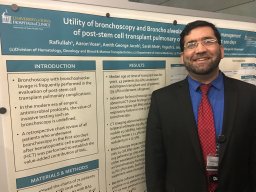 Rafiullah Khan合作论文数5 The Christ Hospital Health Network1Melody Smith合作论文数1Irit Avivi合作论文数1




