Understanding how mathematics teachers change after disruption is essential for supporting long-term professional growth. With the COVID-19 pandemic as a case, this longitudinal study examines how secondary mathematics teachers in Flanders, Germany, and the Netherlands responded over time to this disruption in terms of teaching practices, teachers’ beliefs, and assessment practices. To explore which changes persisted, which reverted, and how teachers reflected on their experiences, data were collected through two large-scale surveys, conducted in June 2020 and June 2021. A total of 2,058 teachers completed the follow-up questionnaire. Concerning teaching practices, we found a significant increase in videoconferencing and the use of homemade video clips. Learning management systems became a central part of teaching practice. However, there was little change in the use of online learning environments, exercise platforms, and digital mathematics tools. Regarding teachers’ beliefs, teachers reported improved digital skills, particularly with tools they used frequently, such as videoconferencing. However, they reported only slight changes in their perceptions of effective mathematics teaching and limited confidence in the use of digital formative assessment tools. Assessment practices shifted toward more interactive formats, including live questions and chat, while reliance on email declined. Our findings suggest that the impact of the crisis extended beyond the initial period of school closure and that the longer-term picture is more complex than early responses indicated.
Lesson Study (LS), a collaborative and inquiry-based teacher professional development model, has received increased attention in recent decades. It involves teachers in small groups planning lessons, teaching them and then reflecting on them. While evidence exists on teachers' satisfaction with participating in LS, evidence on the impact of LS on student learning outcomes is still scarce. This study examines (a) the impact of teachers' participation in LS on students' mathematical reasoning and (b) the impact of different types of support offered to the teachers. Secondary mathematics teachers (n = 132) in Belgium, Cyprus, and Greece were randomly split into three groups. Two experimental groups conducted LS, planning and reflecting on six lessons during the school year. They differed in terms of the type of support that they received in the LS meetings: the Facilitator guided teachers through the LS process and the Advisor also offered advice on teaching mathematical reasoning. Teachers in the control group did not conduct LS. Tests measuring mathematical reasoning were administered to students from two classes of each teacher at the beginning and end of the year. Multilevel analyses revealed that students in the Advisor group had better results. Implications for research, policy and practice are discussed.
Cohen's and Fleiss' kappa are well-known measures for inter-rater reliability. However, they only allow a rater to select exactly one category for each subject. This is a severe limitation in some research contexts: for example, measuring the inter-rater reliability of a group of psychiatrists diagnosing patients into multiple disorders is impossible with these measures. This paper proposes a generalisation of the Fleiss' kappa coefficient that lifts this limitation. Specifically, the proposed $\kappa$ statistic measures inter-rater reliability between multiple raters classifying subjects into one-or-more nominal categories. These categories can be weighted according to their importance, and the measure can take into account the category hierarchy (e.g., categories consisting of subcategories that are only available when choosing the main category like a primary psychiatric disorder and sub-disorders; but much more complex dependencies between categories are possible as well). The proposed $\kappa$ statistic can handle missing data and a varying number of raters for subjects or categories. The paper briefly overviews existing methods allowing raters to classify subjects into multiple categories. Next, we derive our proposed measure step-by-step and prove that the proposed measure equals Fleiss' kappa when a fixed number of raters chose one category for each subject. The measure was developed to investigate the reliability of a new mathematics assessment method, of which an example is elaborated. The paper concludes with the worked-out example of psychiatrists diagnosing patients into multiple disorders.
In this action research study, we investigate the impact of co-creation and generative coaching on students’ self-regulation, self-efficacy and academic efficacy in the context of three course units in higher mathematics education at university. Using questionnaire data, we measure (1) to what extent students perceive a difference between the learning environments of the three experimental courses - with co-creation and generative coaching - and those of the three control courses - without co-creation and generative coaching - and (2) to what extent there is a difference in self-regulation, self-efficacy and academic efficacy in the experimental learning environments vs. in the control learning environments. Descriptive statistics and paired t-tests show statistically and practically significant impacts of co-creation and generative coaching on self-regulation skills, self-efficacy and academic efficacy. The results suggest that in order to boost students’ learning, it might be worthwhile to invest in co-creation and generative coaching in learning environments.
Assessing exams with multiple assessors is challenging regarding inter-rater reliability and feedback. This paper presents ‘checkbox grading,’ a digital method where exam designers have predefined checkboxes with both feedback and associated partial grades. Assessors then tick the checkboxes relevant to a student solution. Dependencies between checkboxes ensure consistency among assessors in following the grading scheme. Moreover, the approach supports ‘blind grading’ by hiding the grades associated with the checkboxes, thus focusing assessors on the criteria rather than the scores. The approach was studied during a large-scale mathematics state exam. Results show that assessors perceived checkbox grading as very useful. However, compared to traditional grading—where assessors follow a correction scheme and communicate the resulting grade—more time is spent on checkbox grading, while both approaches are equally reliable. Blind grading improved inter-rater reliability for some tasks. Overall, checkbox grading might lead to a smoother process where feedback, not solely grades, is communicated to students.
Handwritten tasks are better suited than digital ones to assess higher-order mathematics skills, as students can express themselves more freely. However, maintaining reliability and providing feedback can be challenging when assessing high-stakes, handwritten mathematics exams involving multiple assessors. This paper discusses a new semi-automated grading approach called ‘checkbox grading’. Checkbox grading gives each assessor a list of checkboxes consisting of feedback items for each task. The assessor then ticks those feedback items which apply to the student’s solution. Dependencies between the checkboxes can be set to ensure all assessors take the same route on the grading scheme. The system then automatically calculates the grade and provides atomic feedback to the student, giving a detailed insight into what went wrong and how the grade was obtained. Atomic feedback consists of a set of format requirements for mathematical feedback items, which has been shown to increase feedback’s reusability. Checkbox grading was tested during the final high school mathematics exam (grade 12) organised by the Flemish Exam Commission, with 60 students and 10 assessors. This paper focuses on students’ perceptions of the received checkbox grading feedback and how easily they interpreted it. After the exam was graded, all students were sent an online questionnaire, including their personalised exam feedback. The questionnaire was filled in by 36 students, and 4 of them participated in semi-structured interviews. Findings suggest that students could interpret the feedback from checkbox grading well, with no correlation between students’ exam scores and feedback understanding. Therefore, we suggest that checkbox grading is an effective way to provide feedback, also for students with shaky subject matter knowledge.
In this crossover experiment, we investigated the impact of a statement bank, enabling the reuse of previously written feedback (SA condition), on 45 math teachers' feedback for 60 completed linear equation tests, compared to traditional pen-and-paper feedback (PP condition). In the SA condition, teachers were encouraged to use atomic feedback, a set of formulation requirements that makes feedback items significantly more reusable. A previous study found that significantly more feedback was written in the SA condition but did not investigate the content of the feedback. To address this gap, we employed a novel approach of combining text mining with qualitative methods. Results indicate similar wording and sentiments in both conditions. However, SA feedback was more elaborate yet general, focusing on major and minor strengths and deficits, while PP feedback was shorter but more concrete, emphasising main issues. Despite low feedback quality in both conditions, the statement bank led to less effective diagnostic activities, implying that teachers' careless use of statement banks, although convenient, might lead to lower-quality feedback.Practitioner notes What is already known about this topic High-quality feedback should strike a balance between the volume and focus on the main issues, as more feedback does not necessarily equate to better feedback. Feedback should analyse a student's solution whenever possible: interpreting mistakes and communicating that interpretation as feedback. Text mining identifies meaningful patterns and new insights in text using computer algorithms. When teachers can reuse already given feedback using a software tool (statement bank), they tend to write more feedback instead of saving time. What this paper adds Feedback is compared when teachers could use a tool to reuse already given feedback (referred to as 'statement banks') versus a scenario without such a tool. Both approaches observed similar word frequencies, sentiments and amounts of erroneous, descriptive and corrective feedback. However, feedback with a statement bank tended to be more elaborate yet less specific to individual student solutions. In contrast, feedback without the tool was shorter but more concrete, focusing on main issues. Overall, the tool for reusing feedback directed teachers towards less effective diagnostic activities. The paper introduces a novel methodological approach by combining text mining with qualitative techniques in educational research. While text mining provides an overall understanding of differences and similarities in feedback approaches, qualitative methods are essential for in-depth analysis of content characteristics and feedback quality. Implications for practice and/or policy Statement banks can support teachers by giving more feedback, but in order to improve feedback quality, further measures are necessary (eg, improving pedagogical content knowledge). Teachers may not confuse handiness with quality: statement banks can help, but when used carelessly, teachers tend to describe and correct students' work instead of analysing underlying (mis-)conceptions using it. Continued attention to feedback quality remains necessary when using such tools.
When schools closed in March 2020 due to the COVID-19 pandemic, mathematics teachers and their students were confronted with emergency remote mathematics teaching (ERMT). To investigate how they experienced this in the first months, we set up an online questionnaire for mathematics teachers and their students in Flanders (the Dutch-speaking part of Belgium), Germany, and the Netherlands. The questionnaire contained two open items, in which respondents were asked to report on what went well and what went badly during ERMT. The responses of 1599 teachers and 2196 students were analyzed using a theory-based codebook with the code families: teaching practices, didactics, assessment, situational circumstances, and student behavior. Among the main results, we find that both teachers and students report positively on the ERMT teaching practices that student-teacher interaction is an important topic and that teachers struggle with assessment in ERMT. These findings seem in agreement to other research findings. For future research, we recommend monitoring whether these experiences persist after longer periods of ERMT.
Team teaching among student teachers implies more than group composition: the challenge is to teach collaboratively. This quantitative study provides insight into the dynamics of student teachers' perceptions by identifying latent profiles and transition probabilities over time. Therefore, the Student teachers' Team Teaching Perceptions Questionnaire was administered twice during one academic semester to 126 participants. Overall results reveal that student teachers varied in their perceptions. Specifically, latent profile analysis shows that three distinct team teaching profiles emerged at both time points. Moreover, for most student teachers in each of these profiles the initial perceptions remained the same over time.
Workplace learning in teacher education is essential for creating and recreating the professional identity of student teachers. Innovative interventions, such as team teaching between student teachers and mentors at the workplace, are assumed to facilitate learning to teach. This experimental study provides valuable insight into the impact of team teaching on student teachers’ professional identity by implementing distinct student teaching formats: team teaching (A1intervention), team teaching with support (A2intervention), and traditional teaching (Control intervention). In this study, professional identity is understood as a multidimensional concept that consists of six components: student teachers’ learning and regulation activities, reflective thinking, teacher efficacy, beliefs about learning and teaching, motivation, and collaborative activities. A total of 464 student teachers from a Flemish College of Education were randomly assigned to one of the three student teaching formats. The overall findings of Bayesian structural equation modeling reveal significant impacts of team teaching with support compared to both team teaching and traditional teaching as well as a significant impact of team teaching over traditional teaching on three crucial components of student teachers’ professional identity, i.e., their learning and regulation activities, reflective thinking, and motivation.
Most often, flipped classroom approaches in science and mathematics classrooms follow a traditional approach to teaching, where students receive direct instruction as homework and have to apply and deepen their knowledge in a follow-up lesson. Little is known about the arrangements of in-class and out-of-class phases fostering learning through inquiry in flipped classroom scenarios. To support teachers' lesson planning practices, we developed a design heuristic for flipped classroom scenarios based on the 5E inquiry model. We implemented this design heuristic in an online professional development course for secondary mathematics teachers and collected 18 lesson plans. To explore how participating teachers adopted the design heuristic in their lesson plans, we conducted a document analysis on our data. We identified the following three major categories: (a) pre out-of-class phases to engage students, (b) in-class phases for student-centred learning activities and (c) post out-of-class phases for consolidation. Furthermore, we analysed lesson plans with the 5E model scoring instrument. Findings indicate that teachers' lesson plans were mainly in line with the 5E model, but most participants struggled with selecting appropriate assessment techniques. Based on the analysis, this paper discusses revision decisions regarding the proposed design heuristic.
In March 2020, many schools worldwide were closed due to the COVID-19 pandemic. This closure confronted mathematics teachers with the challenging transition to emergency remote teaching (ERT). How did students experience ERT, and how did these experiences relate to context variables and to their teachers' beliefs and practices? In particular, what didactic approaches and formative assessment practices did secondary mathematics students experience, and which beliefs did they hold concerning digital mathematics education? How were these student experiences and beliefs related to student context variables (gender, need to support family, personal home equipment), teacher beliefs, delivery modes, and student appreciation of mathematics? To investigate these issues, we set out online questionnaires for mathematics teachers and their students in Flanders-the Dutch-speaking part of Belgium-, Germany, and the Netherlands. Data consisted of completed questionnaires by 323 mathematics teachers and 2126 of their students. Results show that even though students preferred regular face-to-face teaching, they were content with the quality of their teachers' distance mathematics teaching. Students reported that they were taught new topics often, but did not experience teachers initiating peer feedback. High student appreciation of mathematics, good home environment, and more synchronous delivery of ERT were related to ERT experiences and more positive beliefs concerning digital mathematics education. These findings have implications for ERT teaching strategies in future, as well as for hybrid teaching practices.
Feedback has been recognized as a crucial element in the learning and teaching process. Although teachers know and accept this, they are not always eager to engage in this tedious and time-consuming activity. This study investigates how computers can work together with teachers to make the process of giving feedback more efficient by introducing a semi-automated approach (SA) with reusable feedback: when a teacher writes feedback for a student, the computer saves it, so it can be reused when following students make similar mistakes. We devised the concept of atomic feedback, a set of form requirements that could enhance feedback's reusability. To write atomic feedback, teachers have to identify the independent errors and write brief feedback items for each separate error. Our SA approach with reusable feedback was implemented in Moodle. During a crossover experiment with math teachers (n = 36 + 9 in pilot study), we examined (1) whether SA saves time or changes the amount of feedback, as compared to traditional, paper-based correction work, (2) the extent to which the feedback was atomic, (3) whether atomic feedback enhances the reusability of feedback and (4) how teachers used and perceived the SA system. In light of the results, which suggest that atomic feedback is indeed reusable, we propose formal requirements for writing reusable feedback. Nevertheless, teachers did not save time using the SA system, but they provided significantly more feedback.
The COVID-19 pandemic has confronted mathematics teachers with the challenge of developing alternative teaching practices-in many cases at a distance through digital technology-because schools were closed. To investigate what distance practices in secondary mathematics education have emerged and how teachers experienced them, we set out online questionnaires in Flanders-the Dutch-speaking part of Belgium-, Germany, and the Netherlands. The questionnaire focused on teaching practices, teacher beliefs, didactics, and assessment. Data consisted of completed questionnaires by 1719 mathematics teachers. Results show that the use of video conferencing tools increased massively, while the use of mathematics-specific tools that teachers used before the lockdown reduced substantially. Further findings are that teachers' confidence in using digital technologies increased remarkably during the lockdown and that their experiences and beliefs only marginally impacted their distance learning practices. Also, we observed some differences between the three countries that might be explained by differences in educational policies and in technological facilities and support. For future research, it would be relevant to investigate long-term changes in teachers' practices, as well as students' views and experiences related to the teacher's practices.
Inclusive education has been put on the global agenda to appreciate diversity on a broader level and reduce educational inequality. In order to optimally prepare secondary pre-service teachers for inclusive education, a highly innovative cooperation of five different teacher training institutes in and around Antwerp (Belgium) developed a collective Inclusion Pathway embedded in the various teacher education curricula. Through an explorative qualitative research study based on content data and semi-structured interviews, we studied (1) the programme's perceived impact on participating pre-service teachers' competences (attitudes, knowledge and skills) with respect to inclusion, and (2) how the pre-service teachers experience the inclusion programme. The results indicate a positive impact of the programme on the participants' attitudes with respect to inclusion. Participants also mention that the theoretical frameworks provided, the classroom observations and the teacher conversations helped them to enlarge their knowledge base and feel more confident to change their teaching practice. However, the participants also made some critical remarks. The teacher training institutes converted these insights into several organisational improvements and content-related action points.
The effectiveness of flipped classroom approaches can be improved by combining it with other pedagogical models such as inquiry-based learning. Implementing inquiry-based learning in flipped classroom scenarios requires teachers to plan arrangements for in- and out-of-class activities carefully. In this study, a design heuristic based on the 5E inquiry model was developed to support teachers’ practice of planning inquiry-based flipped classroom lessons. Following a design-based research approach, the design heuristic progressed through two cycles within 2 years. The design heuristic was implemented in both cycles in an online professional development course for secondary mathematics teachers. In the first cycle, 18 lesson plans were collected and analysed using the 5E lesson plan scoring instrument. Results showed that the design heuristic helped teachers to set up lesson plans for flipped classroom scenarios which were mostly in line with the 5E model. However, the evaluation phase was insufficiently addressed. Revision decisions were made at the end of the first cycle, and the design heuristic was revised and re-implemented in a second cycle. Results of the second cycle showed another 19 participating teachers who also struggled in choosing appropriate assessment techniques, an issue which could not be resolved with the proposed design heuristic. This paper describes the development of the design heuristic as well as relevant design principles for inquiry-based flipped classroom scenarios. The proposed design heuristic is not domain specific. Hence, further research could examine its use in other subjects or interdisciplinary as inquiry-based flipped classroom approaches are one of the emerging pedagogies.
Since collaboration within schools gains importance and is considered significant for teachers’ professional development in order to meet the new 21st-century educational demands, teacher education institutes show a growing interest in field experiences inspired by collaborative learning, such as team teaching. Team teaching is a teaching model in which (student) teachers work collaboratively in the preparation, teaching and evaluation of a course. In order to assess team teaching practices in teacher education by monitoring perceptions of collaborative team teaching experiences, an instrument is needed that offers insights to guide the learning process and support well-founded decision making. Therefore, an easy-to-use quantitative questionnaire to explore student teachers’ team teaching perceptions was developed and validated in four stages: an extensive literature review (1) resulting in a preliminary questionnaire containing advantages and disadvantages of team teaching (2). Next, a pilot study was conducted with 14 student teachers (3), followed by a further validation and reliability study based on exploratory factor analysis, peer debriefing, confirmatory factor analysis and internal consistency analysis with 181 participating student teachers (4). The final questionnaire comprises 29 Likert-items in four scales – collaboration, co-creation, coaching and complexity – and appears to be both valid and reliable.
Deze verkennende studie wil nagaan hoe taalcompetentie (i.c. woordenkennis en print exposure) en numerieke geletterdheid samen bijdragen aan studiesucces in het hoger onderwijs. Hierbij wordt rekening gehouden met de controlevariabelen geslacht, thuistaal, gevolgde onderwijsvorm in het secundair, en het wekelijks aantal uren wiskunde in het secundair. 318 studenten verspreid over de verschillende faculteiten van de Universiteit Antwerpen namen vrijwillig deel aan dit onderzoek. Door middel van regressiemodellen werd onderzocht in welke mate er een effect is van woordenkennis, print exposure en numerieke geletterdheid op academisch succes. Studiesucces werd gemeten via grade point average (GPA) en via studierendement. De resultaten geven aan dat woordenkennis en print exposure significant bijdragen aan studiesucces. Voor numerieke geletterdheid geldt dit enkel als GPA als maatstaf voor studiesucces gebruikt wordt. Het effect van print exposure op studiesucces bleek significant in combinatie met geslacht (voor GPA) of met de onderwijsvorm en het aantal uren wiskunde (voor studierendement). De variabele woordenkennis bleek significant in combinatie met de onderwijsvorm (voor GPA). Daarnaast werd de voorspellende kracht van thuistaal, onderwijsvorm en het aantal uren wiskunde bevestigd over de faculteiten heen. Deze studie is een eerste aanzet voor (vervolg) onderzoek naar de impact van taalcompetentie en numerieke geletterdheid op studiesucces.
 Filip Moons合作论文数11
 Mathea Simons合作论文数Fac Social Sci, Univ Antwerp6
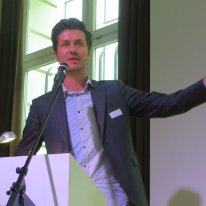 Jordi Casteleyn合作论文数Ghent Univ.;c5
 Marcel Klinger合作论文数University of Duisburg-Essen4
 Daniel Thurm合作论文数University of Siegen4
 Paul Drijvers合作论文数应用科学大学4
 Elke Struyf合作论文数Antwerp Institute for Education and Information Sciences, University4
 Heleen van der Ree合作论文数3
 Loan De Backer合作论文数3Wouter Schelfhout合作论文数Antwerp Sch Educ, Res Unit Didact, Univ Antwerp3
 Stefan Van Aelst合作论文数Department of Applied Mathematics, Computer Science and Statistics, Ghent University3
 Mia Hubert合作论文数Department of Mathematics, Katholieke Universiteit Leuven3
 Barbel Barzel合作论文数3
 Zsolt Lavicza合作论文数2
 Stefanie Schallert-Vallaster合作论文数2
 Aster Van Mieghem合作论文数2
 Paul Janssenswillen合作论文数Antwerp Sch Educ, Univ Antwerp2G. Willems合作论文数2
 Rianne Pinxten合作论文数Laboratory of Ethology, University of Antwerp2
 Tom F. H. Smits合作论文数Didact Res Grp, Univ Antwerp1
 Maria Vrikki合作论文数Dept Educ, Univ Cyprus1
 Paola Iannone合作论文数University of East Anglia1
 Jozef Colpaert合作论文数Research Centre Didascalia;University of Antwerp;Research Centre Didascalia, University of Antwerp1
 Michiel Doorman合作论文数Freudenthal Institute;Utrecht University;School of Education, Eindhoven;Eindhoven School of Education, Utrecht University1Gert Willems合作论文数1
 Giorgos Psycharis合作论文数Educational Technology Lab;School of Philosophy;University of Athens;School of Philosophy, University of Athens1
 Kyriakides Leonidas合作论文数Center for Applied Neuroscience, University of Cyprus;Department of Education, University of Cyprus1




