We present developments at the electron cooler of the CRYRING@ESR storage ring aimed at improving its performance as internal target in low-energy electron–ion collision experiments. We describe recent modifications of the high-voltage and vacuum systems which lead to improved electron energy control and lower background count rates during such measurements. In a benchmark experiment on dielectronic recombination of F ^6+ , we demonstrate that a spectroscopic resolution equivalent to transverse and longitudinal thermal electron energy spreads of ≈ 1 meV and ≈ 45 µeV, respectively, can be achieved under optimum conditions. This surpasses system performance observed previously in similar experiments.
We have tested operation of FAIR’s low-energy ion storage ring CRYRING@ESR with uncompensated electron cooler solenoid. With its standard working point on the lowest-order difference resonance, a second solenoid is normally used to cancel betatron coupling introduced by the cooler’s magnetic field. In operation with a D + test beam, we found that omission of the compensation solenoid did not lead to a notable deterioration of beam intensity, quality, or cooling time, though the expected coupling of betatron motion is then clearly observed.
Highly charged heavy ions at rest offer a wide spectrum of precision measurements. The GSI Helmholtzzentrum für Schwerionenforschung GmbH is able to deliver ions up to U92+. As the production of these heavy, highly charged ions requires high kinetic energies, it is necessary to decelerate these ions for ultimate precision. The broad energy distribution, which results from the deceleration in the HITRAP linear decelerator, needs to be reduced to allow for further transportation and experiments. The HITRAP cooling trap is designed to cool, i.e., reduce, this energy spread by utilizing electron cooling. The commissioning of this trap is done with Ar16+-ions from a local EBIT ion source. By analyzing the signal of stored ions after ejection, properties such as ion lifetime, charge exchange, and ion motions can be observed. Here, we provide an overview of the recent results of the commissioning process and discuss future experiments.
The low-energy heavy ion storage ring CRYRING was transported from Stockholm to Darmstadt, modernized and reconfigured, and recommissioned as CRYRING@ESR. The machine is now in operation with all installations in service and is available as a user facility for experiments proposed through the SPARC collaboration. During the 2020–2022 period, we brought a number of experimental installations into service and used them to measure first data: the ultra-cold electron cooler for merged-beam electron–ion collisions, the gas jet target for atomic collisions, a next-generation microcalorimeter-based X-ray spectroscopy setup, and others. Ions can be injected either in low charge states from a local ion source through a 300 keV/u RFQ linac, or in high charge states from the GSI accelerator chain through ESR. This allows for very broad access to ions across the entire periodic table. CRYRING@ESR is able to de- or accelerate ions and cool and store beams of isotopically pure species in a desired charge state. While the analysis is still largely ongoing, the first experimental data already show that the machine reached its expected performance level, and our high expectations regarding achievable resolution in spectroscopy experiments have been fulfilled. With access to new classes of ions available through ESR injection and a new generation of experimental instrumentation, CRYRING@ESR is a unique facility for experiments with heavy, highly charged ions. Here, we will review our present setup and machine performance, discuss the data from our first commissioning experiments and briefly preview the upcoming new installations for the coming years.
The heavy-ion storage ring CRYRING has been recommissioned downstream of GSI’s ESR, which it complements as dedicated low-energy machine. A key element of CRYRING@ESR is its electron cooler, which features one of the coldest electron beams available. This enables efficient phase-space cooling and, in addition, provides very high energy resolution when used as internal electron target. We report on technical upgrades that have been made as part of the re-installation of the cooler at GSI/FAIR and share first results obtained after recommissioning.
Employing the local ECR ion source of the FAIR phase 0 ion storage-ring CRYRING@ESR, we set up an IT-environment for on-line data processing and for applications accessing data available from beam-diagnostic instruments and input parameters controlling CRYRING@ESR’s ion source. As a first proof of principle, we implemented a closed-loop optimization software controller based on bi-objective Genetic Optimization. As first optimization goal property we used the averaged ion beam current measured with a Faraday cup. The second goal property was a metric for the pulse-by-pulse stability of the source. This metric was derived from the time-resolved signal of the individual ion source pulses employing the relatively new Matrix-Profile Algorithm. This paper reports on the status of the data logging framework, the implementation of related software programs and the results of first tests.
CRYRING was moved from Stockholm to Darmstadt, modernized and integrated into the GSI/FAIR beamline topology behind ESR. As CRYRING@ESR, it will receive and store heavy, highly charged ions from all species the present accelerator chain is capable of producing. An extensive research program on low-energy atomic collisions, spectroscopy and nuclear reactions was proposed. The facility is gradually completing commissioning, ion beams from the local injector branch have already been stored and prototype experiments performed. We present the machine status and highlight some planned experiments.
The hyperfine splitting in heavy highly charged ions provide the means to test QED in extremely strong magnetic fields. In order to provide a meaningful test, the splitting has to be measured in H-like and Li-like ions to remove uncertainties from nuclear structure. This has been achieved at the experimental storage ring ESR but a discrepancy to the theoretical prediction of more than 7σ was observed. We report on these measurements as well as on NMR measurements that were performed to solve this issue.
The application of machine learning and nature-inspired optimization methods, like for example genetic algorithms (GA) and particle swarm optimization (PSO) can be found in various scientific/technical areas. In recent years, these approaches are finding application in accelerator physics to a greater extent. In this paper, nature-inspired optimization as well as the machine learning will be shortly introduced and their application to the accelerator facility at GSI/FAIR will be presented. For the heavy-ion synchrotron SIS18 at GSI, the multi-objective GA/PSO optimization resulted in a significant improvement of multi-turn injection performance and subsequent transmission for intense beams. An automated injection optimization with genetic algorithms at the CRYRING@ESR ion storage ring has been performed. The usage of machine learning for a beam diagnostic application, where reconstruction of space-charge distorted beam profiles from ionization profile monitors is performed, will also be shown. First results and the experience gained will be presented.
The LIBELLE experiment performed at the experimental storage ring at the GSI Helmholtz Center for Heavy Ion Research in Darmstadt, Germany, has successfully determined the ground state hyperfine (HFS) splittings in hydrogen-like (Bi-209(82+)) and lithium-like (Bi-209(80+)) bismuth. The study of HFS transitions in highly charged ions enables precision tests of QED in extreme electric and magnetic fields otherwise not attainable in laboratory experiments. Besides the transition wavelengths the time-resolved detection of fluorescence photons following the excitation of the ions by a pulsed laser system also allows the extraction of lifetimes of the upper HFS levels and g-factors of the bound 1s and 2s electrons for both charge states. While the lifetime of the upper HFS state in Bi-209(82+) has already been measured in earlier experiments, an experimental value for lifetime of this state in Bi-209(80+) is reported for the first time in this work.
During the commissioning phase of CRYRING@ESR, several ion-optical measurements such as momentum spread, dispersion function, effective acceleration voltage and orbit response matrix were performed at the ring. The measurements help the commissioning process to reveal possible gauge errors and will be used to improve the theoretical model and to control the closed orbit.
Due to the massive parallel operation modes at the GSI accelerators, a lot of accelerator setup and re-adjustment has to be made during a beam time. This is typically done manually and is very time-consuming. With the FAIR project the complexity of the facility increases furthermore and for efficiency reasons it is recommended to establish a high level of automation. Modern Accelerator Control Systems allow a fast access to both, accelerator settings and beam diagnostics data. This provides the opportunity together with the fast-switching magnets in GSI-beamlines to implement evolutionary algorithms for automated adjustment. A lightweight python interface to CERN Front-End Software Architecture (FESA) gave the opportunity to try this novel idea, fast and easy at the CRYRING@ESR injector. Furthermore, the python interface facilitates the work flow significantly as the evolutionary algorithms python package DEAP could be used. DEAP has been applied already in external optimization studies with particle tracking codes*. The first results and gained experience of an automatized optimization at the CRYRING@ESR injector are presented here.
An automated beam-setting optimization application has been implemented on top of FAIR’s control system software stack based on CERN’s LSA framework. The optimization functionality is built using the Jenetics software library implemented in Java. Tests of the software with beam have been performed at the CRYRING@ESR ion storage ring. INTRODUCTION AND BACKGROUND In recent years, with advances in machine learning and evolutionary algorithms, a number of software libraries became available, allowing researchers and application programmers to utilize these libraries for their purposes. In 2017 we successfully investigated if genetic algorithms can be applied in the context of accelerator optimization [1, 2]. Despite the promising results of this prototype, it came with some disadvantages. The prototype driving and reading device data was programmed in Python and is communicating to the low level FESA stack of the FAIR control system [3] bypassing the higher levels of the FAIR control system [4] based on the LHC Software Architecture (LSA) implemented in Java [5]. We finally decided to implement an application in JAVA built on the high-level LSA-layers and the open-source genetic-algorithm library Jenetics [6]. For testing the software with beam we used the ion source and injector of the CRYRING@ESR ion storage ring, which serves besides its main purpose as machine for atomic and nuclear physics experiments as test bench for the FAIR control system [7].
The CRYRING@ESR facility [1] will provide the unique possibility for studying properties of highly charged cooled stable and short-lived ions stored at low energy for atomic and nuclear research within the FAIR project [2]. Heavy ion beams will be stored, cooled and decelerated to energies between 10 and 4 MeV/u in the ESR [3] and then delivered to the CRYRING@ESR. There is no dedicated kicker magnet for the fast extraction in this direction. However, a specially developed distorted closed orbit of the beam stored in the ESR in combination with the injection kicker has been suggested for the extraction and experimentally verified in 2014. In the first experiment the ion beam was extracted and transported over a distance of 20 m towards the CRYRING@ESR [4]. In the 2016 machine development run the heavy ion beam was successfully extracted from the ESR and delivered to the first fluorescent screen inside CRYRING@ESR for the first time. Detailed ion-optical simulations as well as the experimental results will be discussed.
Electrons bound in highly charged heavy ions such as hydrogen-like bismuth 209 Bi 82+ experience electromagnetic fields that are a million times stronger than in light atoms. Measuring the wavelength of light emitted and absorbed by these ions is therefore a sensitive testing ground for quantum electrodynamical (QED) effects and especially the electron–nucleus interaction under such extreme conditions. However, insufficient knowledge of the nuclear structure has prevented a rigorous test of strong-field QED. Here we present a measurement of the so-called specific difference between the hyperfine splittings in hydrogen-like and lithium-like bismuth 209 Bi 82+,80+ with a precision that is improved by more than an order of magnitude. Even though this quantity is believed to be largely insensitive to nuclear structure and therefore the most decisive test of QED in the strong magnetic field regime, we find a 7- σ discrepancy compared with the theoretical prediction.
The design of a high-resolution asymmetric von Hamos spectrometer for low energy X-ray spectroscopy experiments at the electron cooler of CRYRING [1] in the international Facility for Antiproton and Ion Research (FAIR) in Darmstadt is presented in this document. The spectrometer will allow to measure, with a high resolution of down to 100 meV, the low-energy X-rays (5-10 keV) from radiative recombination (RR) of stored bare or few-electron heavy ions interacting with cooling electrons. X-ray tracing simulations show that the energies of the X-ray transitions can be measured with relative precision of a few ppm, which gives access to study the QED effects for mid-Z bare ions with a high precision. For these ions the nuclear size effect is much smaller than one-loop QED corrections. The proposed asymmetric von Hamos spectrometer benefits from the unique features of RR X-ray emission in the electron cooler of CRYRING, namely, the extremely long-linear (∼ 1 m x 1 mm) X-ray source accepted by von Hamos geometry and very cold electron beam temperature of about meV. This is achieved by application of adiabatic magnetic expansion of the electron beam, which increases substantially the intensities of RR X-rays and, consequently, the precision of determination of X-ray energies. In order to control the Doppler effect, two copies of the asymmetric von Hamos spectrometer will be installed next to the dipole magnets on both sides of the electron cooler to detect blue/red (0◦/180◦) shifted RR X-rays, what allows to eliminate completely the influence of Doppler effect on measured X-ray energies. The X-rays diffracted by the cylindrically bent crystal will be measured by a novel type of position sensitive semiconductor detector having nanoseconds time resolution, what will be crucial to eliminate non-RR X-ray background by counting photon-downcharged-ion coincidences. The spectrometers will be mounted to the dedicated intermediate vacuum chambers on the e-cooler axis. EDMS 2384915 v.LATEST status In Work access Public GSI_TDR_VonHamos_CRYRING_online.pdf modified 2020-06-15 13:00
Once operational, CRYRING@ESR will store and decelerate ions delivered by the experimental storage ring ESR at energies well below those of ESR. In addition to that, CRYRING@ESR has an electron cooler operating with an ultracold electron beam, allowing to provide cooled ion beams for precision experiments. These ions will be delivered to a broad range of experiments presently in preparation; either in-ring or extracted to a dedicated beamline for experiments. An overview and status report of the installation and commissioning of the CRYRING-@ESR storage ring for highly charged ions at the GSI Helmholtzzentrum für Schwerionenforschung is presented. The installation of this storage ring started in 2014 and was completing end of 2016, when this publication was written.
We propose to study the ground-state properties of uorine isotopes through collinear laser spectroscopy. Electromagnetic properties of nuclei in the vicinity of oxygen isotopes are important to understand the emergence of shell structures, the role of many-body currents and the inclusion of the continuum eects in the nuclear many-body problem. With
We propose to study the ground-state properties of fluorine isotopes through collinear laser spectroscopy. Electromagnetic properties of nuclei in the vicinity of oxygen isotopes are important to understand the emergence of shell structures, the role of many-body currents and the inclusion of the continuum effects in the nuclear many-body problem. With the aim of identifying the most suitable way to study these isotopes, the current letter of intent aims to answer technical questions regarding the production of exotic fluorine isotopes, their availability as positive (or negative) ions and the efficiency of bunching such highly reactive elements. Requested shifts: 7 shifts of radioactive beams and 6 shifts of stable beams.
 Rainer Neugart合作论文数37
 Peter Lievens合作论文数Laboratorium voor Vaste-Stoffysica en Magnetisme, K.U. Leuven28S. Kappertz合作论文数26Zoran Andelkovic合作论文数GSI Helmholtzzentrum Schwerionenforsch, D-64291 Darmstadt, Germany23Sibylle M Wilbert合作论文数22M. Keim合作论文数17
 Frank Herfurth合作论文数GSI Helmholtzzentrum fur Schwerionenforschung GmbH17R. Sánchez合作论文数GSI Helmholtzzentrum Schwerionenforsch GmbH, D-64291 Darmstadt, Germany14Magdalena Kowalska合作论文数13Michael Lestinsky合作论文数13
 Christian Weinheimer合作论文数Institut für Kernphysik, Westfälische Wilhelms-Universität Münster12
 Krassimira Petrova Marinova合作论文数12
 M. Steck合作论文数11
 Klaus Blaum合作论文数Max Planck Institute for Nuclear Physics;Department of Physics and Astronomy, Ruprecht-Karls-University Heidelberg11Bernhard Maaß合作论文数Tech Univ Darmstadt, Inst Kernphys, Darmstadt, Germany10Carsten Brandau合作论文数Gesellschaft fuer Schwerionenforschung, GSI Helmholtzzentrum für Schwerionenforschung;ExtreMe Matter Institute, GSI Helmholtzzentrum für Schwerionenforschung10Gerda Neyens合作论文数IKS University of Leuven10
 Ludo Vermeeren合作论文数9D Borremans合作论文数8C. Gorges合作论文数Tech Univ Darmstadt, Inst Kernphys, D-64289 Darmstadt, Germany8V. Hannen合作论文数8
 Johannes Ullmann合作论文数Tech Univ Darmstadt, Inst Kernphys, D-64289 Darmstadt, Germany8Michael Hammen合作论文数8
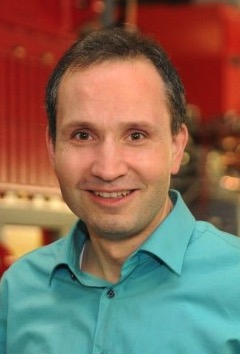 Wilfried Nörtershäuser合作论文数Institute for Nuclear Physics, Technische Universitat Darmstadt8Uwe Georg合作论文数8G. Kotrotsios合作论文数7
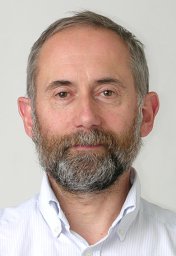 Richard C Thompson合作论文数Univ London Imperial Coll Sci Technol & Med, Blackett Lab, London SW7 2AZ, England7
 Jens Lassen合作论文数7Deyan T. Yordanov合作论文数7Stijn Gheysen合作论文数6Gleb Vorobjev合作论文数6Pieter Himpe合作论文数6S. Litvinov合作论文数GSI, Helmholtzzentrum für Schwerionenforschung GmbH5Anders Källberg合作论文数5J. Vollbrecht合作论文数5Kristian König合作论文数5
 Thomas Stöhlker合作论文数Institut für Optik und Quantenelektronik, Friedrich-Schiller-Universität Jena;Helmholtz-Instituts Jena;Atomic Physics Division, GSI Helmholtzzentrum für Schwerionenforschung GmbH5
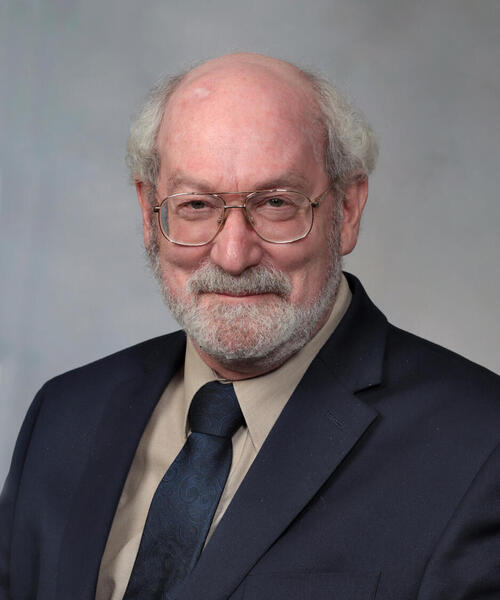 Scott H. Kaufmann合作论文数5A. Dax合作论文数5
 D.L Balabanski合作论文数5Stephen Mallion合作论文数5F. Mai合作论文数5Erhard Gaul合作论文数5A. Bräuning-Demian合作论文数5B. Ittermann合作论文数5
 Stefan Schippers合作论文数Institute of Experimental Physics I, Justus-Liebig-University Giessen5Stefan E. Schmidt合作论文数* Institutes5K Marbach合作论文数5M Fullgrabe合作论文数5




