Managing corporate sustainability involves consideration of the economic, environmental and social impacts of business activities on communities and society. Successful corporate sustainability strategy and sustainable operations must include an engaged and committed workforce. It has been seen that employees are increasingly seeking more purpose at work, with an awareness of environmental and social issues. Research has shown that employees engaged in corporate sustainability practices perceive their work as meaningful contributions to business performance. This empirical study explored sustainability performance in the tea industry, measured with a holistic sustainability framework and investigated the linkages between corporate social responsibility (CSR), employee engagement, and corporate contributions towards sustainability. The operations of participating organisations measured via a ‘7E’ model to benchmark sustainability performance, were compared with how employee engagement is influenced by CSR and wellbeing aspects. Data was collected from company sustainability surveys and surveys of 1146 employees in the tea industry. The results were analysed using a cluster model to assess employee attitudes to CSR and corporate sustainability practices towards sustainable development. The findings show that companies with strong company sustainability performance and developed social sustainability with CSR activities, have employees with higher participation at work and outreach engagement. Dimension reduction and the two-step cluster method was used to classify employee responses, showing the most engaged employees exhibited ‘shared values’ characteristics aligned with corporate engagement and social outreach. These results contribute to research on sustainability management from corporate and employee perspectives, with insights for sustainable development through CSR and sustainable business operations.
Managing organisational sustainability is complex, with multiple aspects including decarbonisation, sustainable finance, management of material flows and waste, to reduce harmful impacts and integrate sustainable approaches into business strategy. To improve sustainability, organisations must measure and manage the impacts of operations on the environment and society. This empirical study featuring case studies in the UK and Sri Lanka, examines the economic, environmental and social activities of company operations in the tea sector to evaluate and compare sustainability performance. The Triple Bottom Line (TBL) approach is expanded through a holistic sustainability framework proposed in this study, to support organisational sustainability measurement. We propose a ‘7E’ sustainability model that measures activities across seven operational areas of the organisation to create an overall sustainability score for benchmarking that aids sustainability improvements with an interconnected approach. The model supports organisations to identify savings, explore greener materials and energy choices through detailed insights and allows for ranking and comparison of companies using a sustainability index. A mixed methods approach is used to provide an analysis that offers granularity and comparability for sustainability strategy. Best practices from case studies, insights arising from the analysis of company surveys, interviews and employee surveys provide useful information on sustainability performance and decarbonisation progress. This research demonstrates the use of the 7E model as a practical tool for managers and organisations to improve sustainability management.
Stakeholder involvement is crucial to the success of biofuel policy implementation. While many approaches are used to assess potential impacts on stakeholders, these approaches do not consider stakeholders holistically. This research is an attempt to develop a metric of the financial impact on stakeholders derived from land use switching caused by biofuel development policy in Thailand. The results regarding the impacts of land use switching from the analysis of secondary data from the input-output national accounts of Thailand reveal that switching paddy areas to oil palm cultivation would clearly provide better contributions to the stakeholders in the supply chain and to the whole economy. However, the impact of switching land use from rubber to oil palm would benefit some stakeholders (input providers and transporters at the crop farming stage and input providers and entrepreneurs at the industrial processing stage), while the farmers and other stakeholders would lose. These findings imply that the overall positive financial trade-offs of land use switching from paddy rice to oil palm are an important factor that should cause the government to ignore unintended consequences that undermine the effectiveness of policies by allowing oil palm expansion to replace paddy rice area.
Pushed by public demand and regulations, the firms’ role in society is gradually changing from shareholder profit maximisation to societal shared value creation. Despite the positive market’s response in adopting sustainability as a business key driver, there is still a long way to go before companies can assess the full life-cycle impacts of their entire activities, products, and services regarding the triple bottom line. A gap remains in how businesses can set up sustainable products’ strategies within their wider business strategy and systematically replicate successes. Working together with an infrastructure company in the UK, we assessed how life-cycle thinking adoption could be pursued during management operations in the sustainability framework. It has emerged the necessity of a socio-technical system describing the life-cycle of products and services’ market proposition alongside the business model and business strategy concepts. We defined it as the product-market system as it aims to relate the life-cycle of product market proposition to the wider firms’ sustainability performances. It builds on LCT and multi Capitals approaches, and it should help firms address their role within the market and society they operate. Its use should help multi-product businesses to align their product strategies around established targets and values.
Since the 1990s firms in the western corporate world have increasingly shifted their goals from shareholder value maximization to concerns about broader societal impact, through frameworks such as environmental social and governance (ESG) reporting. In line with this reporting evolution, Certified B Corporations (B Corps) have met rigorous standards of sustainable performance assessment, receiving scores in dimensions such as governance structure, workers’ wellbeing, customer and community engagement and environmental impact. This study explores how high corporate social performance (CSP) is related to various CEO and HR managers’ perceptions of job quality and productivity, the relationship between these and what factors affect this relationship
This paper looks at differences and similarities in CSR between generations of family-run businesses in Thailand, especially their motivation, behaviour, targets, activities, and expectations towards CSR. It will be argued that family-run businesses in Thailand practise CSR informally, driven by a mentality of “giving back to society” and mostly influenced by religion and culture. Family-run businesses generally approach CSR differently from larger corporations. This paper also discusses differences of priorities between 1st and 2nd generation owners, with 1st generation FRBs tend to focus on survival and growth, while the 2nd generation on profit. Despite struggling to survive, 1st generation family-run businesses are typically engaged in CSR activities which influences the 2nd generation to follow suit.
This study explores the initial and sustaining motivations that drive leaders to pursue sustainability as a profession or vocation. Exploratory interviews were conducted with 16 sustainability leaders in the Philippines working in sectors ranging from corporate to social enterprise, NGO, and academia. Findings from thematic analysis reveal significant life experiences that drive initial motivation, how feedback sustains motivation, and the importance of self-awareness and positive psychological factors in starting and sustaining their work or advocacy. A framework for understanding motivations is developed therein, drawing on themes extracted from the interviews, Stern’s Value-Belief-Norm Theory, and Authentic and Transformational Leadership theories. Recommendations are given on how motivation can be instigated and sustained, namely, by cultivating hope and other positive psychological factors, integrating experiential learning to develop awareness, connectedness, and empathy, and creating social support and enabling environments. Further research to develop an instrument for measuring sustainability leadership motivation, one that can inform sustainability education facilitators of the effectiveness of their programs in inspiring participants to take action, is also recommended.
Private mini-grid developers, which deliver power to rural communities in developing countries through for-profit business models, represent an alternative organisational model compared to traditional state-led, donor-led or community-driven models of rural electrification. However, as the ‘private model’ covers many different ways of doing business, this paper seeks to broaden our understanding of its complexities. This is done by using insights into organisational hybridity as a defining characteristic of organisations that have a dual mission consisting of social and economic aims and by applying the analytical concept of institutional logics. The paper explores how four different mini-grid firms in Kenya draw on both a commercial logic and a social welfare logic in their everyday operational activities in order to achieve their goals. By studying the practices, activities and sense-making of the four firms, as well as the effects of these practices in the targeted areas, the paper illustrates how some firms prioritise one logic over the other, while other firms blend the two logics in their work. The paper finds that firms using a blending approach seem to derive synergies from integrating the two logics into their work. However, more research is needed to improve understanding of this link and of the organisational drivers that underpin each approach.
This research's overarching topic is the analysis of present and future crises and/or challenges traced back to the gap between the United Nation (UN) Sustainable Development Goals (SDGs) and sectors, which are predicted to growth in contradictory unsustainable ways. Its aim is the development of common, globally applicable guidelines based on seven stakeholder analyses tools. These tools are condensed to the so-called “7S(-stakeholder) Paradigm” – referring to Public Stakeholder Analysis (i.e., Policy Field Analysis and Crises Communication/Management), Stakeholder Identification, Stakeholder Prioritisation, Stakeholder Interest Analysis, Stakeholder Response Strategies, Stakeholder Performance Gaps, and Stakeholder Communication Strategies. Private, public as well as the third sector, related environmental, political, socio-economic, and educational challenges might manifest by their clash with the UN SDGs and the public sector's implementation responsibility. The result are example guidelines (i.e., 7S Paradigm) that might act as “decision-trees” – adaptable to different conflictual situations. Thus, potential initial points, appropriate stakeholder communication strategies, etc., might be an advantage. In addition, the herein presented paradigm might be suitable to cover, accompany, and underpin important points, which raise as soon as the public sector must become decisive. The World Economic Forum 2019’s hottest-discussed issues (regarding crises related to e.g., politics, polity, policies) were a clear-cut proof of the claim.
There is a prima facie argument that those who are affected by a decision should have a say in that decision. In terms of intergenerational equity, as well as the evolution and implementation of Transition Management often experts and specialists develop, for good reasons, most of visions and Transition Strategies. However, given their socio-cultural context, approach to technology, their experiences of risky and volatilely economic, socio-cultural, and times. 10-12-year-old people are likely to have very different notions of their specific future, and the way sustainability is evolving within this. In short, not involving young people in the Transition Pathways and Management agenda risks a governance deficit as well as an implementation challenge. To understand how young people, conceptualise their future within the wider theoretical framework of Transition Management and the role of CSR in promoting sustainable lifestyles, 105 Swiss pupils, living in Oberrieden, at ages between 10 and 12 were asked to write an essay. They were asked to write about their future visions so to analyse how they relate to sustainability transition with the corresponding investigation of the implications of this for the private and public sector. The paper outlines these visions (i.e., the pupils' perception of the future) and evaluates the adopted solution (i.e., transition pathways). On a first glimpse, this does not seem to be a novelty regarding new learning technologies. However, what started as some sort of enquiry-based learning induced a change in the Swiss political and social setting, i.e., by establishing a youth parliament and different sector specific roundtables not only politician but Swiss companies as well listened and started to adjust their public and private strategies. To kill two birds with one stone-this was the effect of the infusion of some creativity into the education of future citizens, since this rose a generation of innovators, of change makers, and/or guides who might shepherd this country into a sustainable future. This involves a viable theoretical framework that is strong and deeply anchored and, to some extent, a convergence of "nurture of characteristics" (as taking charge, feeling responsible), the education of leaders, and pathway components (i.e., hands-on drivers to induce change processes-as identified in this research).
Corporate Social Responsibility (CSR) can influence employee motivation and happiness so many enterprises in Thailand, both foreign and Thai, have been applying CSR concepts in their organisations, especially as part of staff management and human resource. However, many of these practices are not formalised, but intrinsic to, family-run businesses (FRBs), defined here as a business run by family members only. Despite their lack of formal procedures given their size, family heads often have their own understanding on what CSR activities should be done, and with what effect. It is less well known what the perception and perceived effect of such activities are in FRBs to provide a better understanding how informal CSR activities are initiated, how they differ among different FRBs and how these CSR activities are perceived by its employees. This is the topic of this research. The research is based on over 3,000 questionnaires sent to employees of 28 FRBs in Eastern Thailand, with 2,292 respondents in total. Overall, the results show strong appreciation of the intrinsic CSR activities with interesting gradients across sectors, organisational hierarchies, gender and age groups. Perceptions of CSR practice were clustered and labelled as: 1) inactive CSR 2) active CSR 3) caring company 4) moral owner 5) no CSR with a clear split in distribution between shop-floor staffs, head of section and managers. In addition, middle managers appear to appreciate the CSR activities more than shop-floor workers because they appreciate the strategic intent of the CSR activities and have better awareness of CSR activities within the company.
Energy consumption behaviours are gradually becoming better-understood. However, there is still a deficit in terms of knowledge of individuals’ energy-use behaviours in organisations, despite a variety of available theories. This paper addresses this need in three main stages, based on a survey among mid-level managers at a major infrastructure operator in Great Britain. Firstly, a principal components analysis is performed to identify key determinant constructs driving energy-efficient behaviours in organisations, revealing the importance of perceived benefit to the organisation and flexibility of existing performance goals and targets. Secondly, cluster analysis is undertaken, in an effort to identify differences in behavioural influences between demographic groups. These clusters highlight the heterogeneity of employee populations’ energy behaviours, demonstrating that assumptions cannot be made about these based on single responses to cross-industry surveys. Finally, a structural equation model of individuals’ energy use intentions and behaviours using the newly-identified constructs is developed, revealing some similarities with existing behavioural frameworks such as the Theory of Planned Behaviour (Ajzen, 1991). Implications for policymakers are then discussed, in terms of encouraging individual employees’ curtailment of energy consumption in organisations through tailored engagement programmes.
Many Swiss small and medium-sized enterprises (SMEs) have highly sophisticated Corporate Social Responsibility (CSR) agendas embedded in corporate cultures that nurture a “raison d’être” far beyond formalisation. Previous research culminated in the characterisation of this core logic as “L’EPOQuE”, the overarching SME business model making Switzerland, arguably, a hidden champion in CSR. This paper explored by the method of a two-stage Delphi process the model’s consistency with criteria of conventional business models. It confirmed the core logic of L’EPOQuE and encouraged at the same time slight modifications with regard to nomenclature of sub-features resulting in L’EPOQuE 2.0. This heightened the power of this CSR-driven approach to be a new template for informal set-ups, and niches. It emerges from the difficulties some mainstream business models have to satisfy the needs of business at the nexus of culture and economic rationale.
Safety Data Sheets are the primary source of hazard information on chemical substances and mixtures and are used to inform risk assessments. It is imperative to ascertain the quality of this primary source of information in informing risk based decision making. The content of Safety Data Sheets (SDS) is governed by regulatory requirements outlined under the Globally Harmonised System for the Classification and Labelling of Chemicals (GHS). However, regulation in itself does not provide assurance of the quality of the content of the SDS. This study assesses and creates an awareness of the quality of Safety Data Sheets and establishes the criteria for ranking the quality of various sections in the SDS. 200 Safety Data Sheets have been selected from the aerospace sector and assessed for their quality. A review of the 200 SDS has identified significant statistical differences between the various sections of the SDS and the quality of information between hazardous and non-hazardous chemicals. The data analysis suggests a limited impact of GHS and REACH, Annex II Regulations on the overall quality of content of the Safety Data Sheets.
This paper analyses the dynamics of land use via the perspectives, motivations and behaviours of local landowners looking at land-use change (through the landowner's eyes) in the way that the landowners would prefer to do and not to do in various situations. The dynamics are explored in the context of an oil-palm-based biodiesel development in Thailand where the advent of oil palm (OP) has caused the loss of paddy areas. A sequential mixed-method strategy, including 10 in-depth interviews and 180 responses to a questionnaire survey, indicates that the likelihood of a landowner switching traditional land for OP cultivation is affected by a number of factors including age and education of the head of household, number of household farming labourers, amount and source of income, land size and land right. Moreover, the results indicate that success of switching land to OP cultivation was determined by factors influencing willingness and capacity to change. Willingness-related factors are relevant to outcome expectation and social networks and connections while capacity-related factors are relevant to finance, labour, capital, land rights and transportation.
 Stéphanie Looser合作论文数12
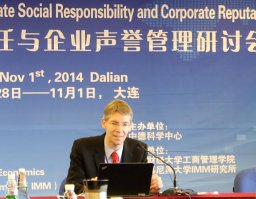 Marcus Oliver Wagner合作论文数Universität Würzburg, University of Würzburg10
 Yacob Mulugetta合作论文数Department of Science, Technology, Engineering and Public Policy, University College London8
 Jonathan Lee Chenoweth合作论文数6
 Julia Hertin合作论文数6
 Daniel Tyteca合作论文数Institut d»Administration et de Gestion, Université Catholique de Louvain6
 Kalliope Pediaditi合作论文数6Jérôme Carlens合作论文数5Roland Clift合作论文数Centre for Environment and Sustainability, University of Surrey5
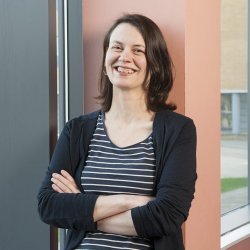 Kate Burningham合作论文数University of Surrey5
 Harish Jeswani合作论文数Department of Chemical Engineering and Analytical Science, School of Engineering, Faculty of Science and Engineering, The University of Manchester4Stefan Schaltegger合作论文数4
 Frans Berkhout合作论文数Department of Geography, School of Global Affairs, Faculty of Social Science & Public Policy, King’s College London4Eva Maleviti合作论文数Centre for Environmental Strategy, University of Surrey4Ken R. Lum合作论文数Lakes Research Branch, National Water Research Institute3Anthony Clayton合作论文数3Seraina Mohr合作论文数2Philip Evans Clark合作论文数2
 Sapanna Laysiriroj合作论文数2Pairote Nualnoom合作论文数2
 Stephen Morse合作论文数Centre for Environmental Strategy, University of Surrey2
 Tyteca Donatienne合作论文数CELL Unit, Catholic Univ Louvain2Murphy Richard J合作论文数2Shane Fudge合作论文数2
 Anna Carr合作论文数University of Otago2
 Chris France合作论文数2
 Julie Barnett合作论文数Department of Information Systems and Computing, Brunel University2Steven M. Hoffman合作论文数2Bryony Cunningham合作论文数2anna rowe合作论文数1A.A. Olsthoorn合作论文数1Urs Wagenseil合作论文数1kim t parker合作论文数1chris france合作论文数1Christine Jasch合作论文数1N. Lawson合作论文数1Rupert Zierler合作论文数1Agni Dikaiou合作论文数1
 Noemi Arena合作论文数1
 Mathilde Brix Pedersen合作论文数UNEP Copenhagen Climate Centre1Leach Matthew J合作论文数1
 Carlos R. N. Pacheco合作论文数Department of Chemistry, University of Connecticut1
 Jonathan Davis Smith合作论文数Department of Mathematics, Iowa State University1Sarah J. Cowell合作论文数1T Gazit合作论文数The Leslie and Suzan Gonda (Goldschmied) Multidisciplinary Brain Research Center, Bar Ilan University1Lynsey Hunton-Clarke合作论文数1Xander Olsthoorn合作论文数1
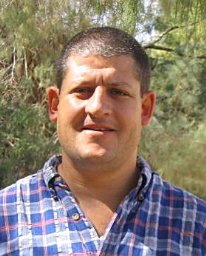 Clive Lipchin合作论文数Arava Institute for Environmental Studies1




