Photodynamic therapy (PDT) has shown superiorities of noninvasiveness and high-efficiency in the treatment of early-stage skin cancer. Rapid and accurate determination of spatially distributed photon fluence in turbid tissue is essential for the dosimetry evaluation of PDT. It is generally known that photon fluence can be accurately obtained by Monte Carlo (MC) methods, while too much time would be consumed especially for complex light source mode or online real-time dosimetry evaluation of PDT. In this work, a method to rapidly calculate spatially distributed photon fluence in turbid medium is proposed implementing a classical perturbation and iteration theory on mesh Monte Carlo (MMC). In the proposed method, photon fluence can be obtained by superposing a perturbed and iterative solution caused by the defects in turbid medium to an unperturbed solution for the background medium and therefore repetitive MMC simulations can be avoided. To validate the method, a non-melanoma skin cancer model is carried out. The simulation results show the solution of photon fluence can be obtained quickly and correctly by perturbation algorithm.
We present a novel approach for single snapshot determination of absorption coefficient based on multi-frequency modulation transfer function (MTF) characterization from measurement in spatial frequency domain. The adopted Fourier transform domain analysis enables simultaneous extraction of information at multiple applied frequencies and excellent reduction of noise. Simulations were conducted for respectively verifying the feasibility of the MTF based approach and the performance of single snapshot determination of absorption coefficient using multi-frequency measurements. Phantom experiments without reference measurement demonstrated the high accuracy of absolute absorption coefficient determination with a maximum reconstruction error of 0.002 mm-1.
We present a spatial-frequency domain (SFD) fluorescence tomography (FT) for acquiring three-dimensional fluorophore distribution in turbid media. The approach uses a composited epi-illumination of multi-frequency sinusoidal patterns on a sample of semi-infinite geometry and demodulates the measured data with a generalized phase shifting scheme to calculate the modulation transfer function (MTF) at each frequency. This method results in a significantly reduced number of the optical field measurements, as compared to those with separate illumination of single-frequency sinusoidal patterns, and, thereby, achieves a fast data acquisition that is desired for a dynamic imaging application. Fluorescence yield images are recovered with the normalized Born formulated inversion of the diffusion model by simultaneously using the multi-frequency MTFs. Simulative and experimental reconstructions are performed in comparison with the single-frequency scheme to validate the proposed algorithm. The results suggest that adoption of the multi-frequency strategy to the SFD-FT can substantially improve the reconstruction quality, as well as its imaging resolution and quantitative accuracy.
Spatial frequency domain (SFD) measurement allows rapid and non-contact wide-field imaging of the tissue optical properties, thus has become a potential tool for assessing physiological parameters and therapeutic responses during photodynamic therapy of skin diseases. The conventional SFD measurement requires a reference measurement within the same experimental scenario as that for a test one to calibrate mismatch between the real measurements and the model predictions. Due to the individual physical and geometrical differences among different tissues, organs and patients, an ideal reference measurement might be unavailable in clinical trials. To address this problem, we present a reference-free SFD determination of absorption coefficient that is based on the modulation transfer function (MTF) characterization.
We present a wide-field fluorescence tomography with epi-illumination of sinusoidal pattern. In this scheme, a DMD projector is employed as a spatial light modulator to generate independently wide-field sinusoidal illumination patterns at varying spatial frequencies on a sample, and then the emitted photons at the sample surface were captured with a EM-CCD camera. This method results in a significantly reduced number of the optical field measurements as compared to the point-source-scanning ones and thereby achieves a fast data acquisition that is desired for a dynamic imaging application. Fluorescence yield images are reconstructed using the normalized-Born formulated inversion of the diffusion model. Experimental reconstructions are presented on a phantom embedding the fluorescent targets and compared for a combination of the multiply frequencies. The results validate the ability of the method to determine the target relative depth and quantification with an increasing accuracy.
A measurement system for on-line determination of optical properties of tissue with large areas and correction of complex surface profile was developed. First, the three-dimensional surface profile of the tissues was obtained with phase profilometry. According to cosine radiator model, the change of illumination, which was caused by complex surface profile of the tissues, was corrected. Then, diffuse plane was used to replace the phantom in the traditional method, and the absolute optical parameters based on spatial frequency domain measure mode were measured. The absorption coefficient of the tissues was reconstructed using the developed method. Tissues phantoms with height variation less than 29 mm were adopted to verify the method, the relative error of absorption coefficient decreased from 60% to 13% compared to that without correction.
We present a wide-field method for obtaining fluorescence tomography of turbid media based on sinusoidal illumination pattern. Experimental validation performed on a phantom embedding the fluorescence targets is presented.
We implemented a novel lock-in photon-counting detection architecture that combines the ultra-high sensitivity of the photon-counting detection and the measurement parallelism of the lock-in technique. Based on this technique, a dual-wavelength simultaneous measurement continuous wave diffuse optical tomography system was developed with a configuration of 16 sources and 16 detectors that works in a tandem serial-to-parallel fashion. Methodology validation and performance assessment of the system were conducted using phantom experiments that demonstrate excellent measurement linearity, moderate-term system stability, robustness to noise and negligible inter-wavelength crosstalk. 2-D imaging experiments further validate high sensitivity of the lock-in photon-counting methodology as well as high reliability of the proposed system. The advanced detection principle can be adapted to achieving a fully parallelized instrumentation for the extended applications.
This article mainly deals with the following dilemmas, which affect oil sorption and sorbent preparation: (1) hydrophobization could facilitate oil sorption but has adverse impacts on emulsion sorption; (2) micropores of conventional oil sorbent do not exhibit effective emulsion sorption. To solve the above contradictions, hydrophilic and hydrophobic sites were fabricated onto polypropylene (PP) nonwoven through electron beam radiation and subsequent ring-opening reaction. Further, a similar structure without a hydrophilic site was constructed as comparison to verify the dilemmas. An oil sorption and emulsion adsorption experiment revealed that the PP nonwoven with specific hydrophilic and hydrophobic sites is more suitable for oil cleanup. The hydrophobic site preserved its hydrophobicity and sorption capacity, and the hydrophilic site on PP surface effectively increased the affinity between the hydrophilic interface of emulsion and sorbent. The overlapped and intertwined structures could provide spaces large enough to accommodate oil and emulsion. In addition, the oil and emulsion sorption behaviors were systematically analyzed. The PP nonwoven fabricated in this study may find practical application in the cleanup of oil spills and the removal of organic pollutants from water surfaces.
In breast diffuse optical tomography,the introduction of the L1-norm regularization greatly improves the quality of the reconstructed image.However,the non-differentiable property of the objective function leads to exceeding difficulty in the optimization process.A new reconstruction method based on the L1-norm regularization with the non-negative restriction is proposed.To easily solve the first-order gradient of the objective function,the non-negative prior information is introduced.The optimization process is then well simplified and accelerated.Both the numerical simulations and the phantom experiments demonstrate that this new method can obtain much better results than the conventional regularization methods,and its process is more simple and faster.
A combined fluorescence-optical tomography methodology of steady-state is developed to enhance the applicability of the breast-dedicated diffuse optical tomography (DOT). The system employed a 4-channel gated photon-counting technique working in a fiber-switch-based tandem series-to-parallel mode to achieve the tradeoff among the measuring time, probing sensitivity and cost effectiveness. Based on the graphics-processing-unit accelerated Monte Carlo modeling of photon migration, a fluorescence-guided hemoglobin DOT reconstruction algorithm was proposed, which can effectively alleviate the ill-posedness of the hemoglobin DOT using the localization prior provided by the high-contrast fluorescence DOT. The phantom experiments demonstrate that the reconstruction accuracy and quantitative performance can be improved efficiently comparing with the standalone-DOT.
We presented a novel dual-wavelength diffuse optical imaging system which can perform 2-D or 3-D imaging fast and high-sensitively for monitoring the dynamic change of optical parameters. A newly proposed lock-in photon-counting detection method was adopted for week optical signal collection, which brought in excellent property as well as simplified geometry. Fundamental principles of the lock-in photon-counting detection were elaborately demonstrated, and the feasibility was strictly verified by the linearity experiment. Systemic performance of the prototype set up was experimentally accessed, including stray light rejection and inherent interference. Results showed that the system possessed superior anti-interference capability (under 0.58% in darkroom) compared with traditional photon-counting detection, and the crosstalk between two wavelengths was lower than 2.28%. For comprehensive assessment, 2-D phantom experiments towards relatively large dimension model (diameter of 4cm) were conducted. Different absorption targets were imaged to investigate detection sensitivity. Reconstruction image under all conditions was exciting, with a desirable SNR. Study on image quality v.s. integration time put forward a new method for accessing higher SNR with the sacrifice of measuring speed. In summary, the newly developed system showed great potential in promoting detection sensitivity as well as measuring speed. This will make substantial progress in dynamically tracking the blood concentration distribution in many clinical areas, such as small animal disease modeling, human brain activity research and thick tissues (for example, breast) diagnosis.
The common approach in fluorescence molecular tomography (FMT) assumes homogeneous distributions of the optical properties and normally results in reconstructions of low sensitivity. A natural enhancement is to incorporate diffuse optical tomography (DOT) to FMT. However, the traditional voxel-based DOT has been a severely ill-posed inverse problem and cannot retrieve the optical property distributions accurately. We present a structural-prior-based DOT method to effectively acquire the heterogeneous optical background with the aid of some imperfect structural priors from x-ray computed tomography and/or magnetic resonance imaging anatomical imaging modalities, and quantitatively compare its hard- and soft-prior schemes for achieving an improved recovery of the fluorescence distribution. Numerical simulations are conducted on a region-labeled three-dimensional (3D) digital mouse model to investigate the performance of this method. Physical experiments on a cylindrical phantom are also conducted to assess this methodology. Our simulated and experimental reconstruction results indicate that the structural-prior-based DOT guided FMT approach can significantly improve the sensitivity of FMT reconstruction, as well as its imaging resolution and quantitative accuracy.
基于电子倍增电荷耦合器件探测器搭建了面向小鼠活体非接触式测量的荧光扩散光层析成像系统,为了避免复杂的焦点矫正计算并降低逆问题的病态性,提出一种新的电荷耦合器件平板探测器信息提取及扩展方法,并根据信息提取方法发展了非接触式荧光扩散光层析成像图像重建算法.通过大量仿体荧光扩散光层析成像实验,证明当提取的信息对应于圆柱域投影的1/2、且将信息提取域分解为3个子域时重建可获得最好的效果.制备了皮下植入荧光目标体的活体小鼠进行荧光扩散光层析成像实验,与显微CT成像结果的对比表明:搭建的系统结合所发展的图像重建算法能够较好地重建出活体小鼠内荧光目标体的位置和浓度,有望应用到小鼠肿瘤模型的荧光层析成像中.
The common approach to diffuse optical tomography is to solve a nonlinear and ill-posed inverse problem using a linearized iteration process that involves repeated use of the forward and inverse solvers on an appropriately discretized domain of interest. This scheme normally brings severe computation and storage burdens to its applications on large-sized tissues, such as breast tumor diagnosis and brain functional imaging, and prevents from using the matrix-fashioned linear inversions for improved image quality. To cope with the difficulties, we propose in this paper a parallelized full domain-decomposition scheme, which divides the whole domain into several overlapped subdomains and solves the corresponding subinversions independently within the framework of the Schwarz-type iterations, with the support of a combined multicore CPU and multithread graphics processing unit (GPU) parallelization strategy. The numerical and phantom experiments both demonstrate that the proposed method can effectively reduce the computation time and memory occupation for the large-sized problem and improve the quantitative performance of the reconstruction.
为解决含有低散射、高吸收和空腔区域组织内扩散方程光子输运模型的不适用性,发展了基于图形处理单元(GPU)加速的任意复杂组织体光子输运的蒙特卡罗建模方法。在此基础上,提出了基于蒙特卡罗正向模型的时域荧光扩散层析广义脉冲谱技术法。模拟结果表明,与扩散方程相比,基于蒙特卡罗模拟的时域荧光扩散层析对含有低吸收高散射、低吸收低散射、高吸收低散射、高吸收高散射和空腔异质体的复杂组织体中荧光目标体的位置和形状都进行了更准确的重建,从而验证了这种荧光图像重建方法的通用性。
At present, the most widely accepted forward model in diffuse optical tomography (DOT) is the diffusion equation, which is derived from the radiative transfer equation by employing the P-1 approximation. However, due to its validity restricted to highly scattering regions, this model has several limitations for the whole-body imaging of small-animals, where some cavity and low scattering areas exist. To overcome the difficulty, we presented a Graphic-Processing-Unit(GPU) implementation of Monte-Carlo (MC) modeling for photon migration in arbitrarily heterogeneous turbid medium, and, based on this GPU-accelerated MC forward calculation, developed a fast, universal DOT image reconstruction algorithm. We experimentally validated the proposed method using a continuous-wave DOT system in the photon-counting mode and a cylindrical phantom with a cavity inclusion.
In order to overcome the inherent drawbacks of Lambert-Beer's Law,which ignores the scattering effect and thus leads to a poor measurement precision,especially for low oxygen saturation,a study on the accurate measurement of low oxygen saturation was conducted in this paper.The photon diffusion theory was employed to achieve the calibration curve between oxygen saturation and the eigenvalue R rather than Lambert-Beer's Law.A pulse oximetry system using digital signal processer as core device was set up based on the above theory.A finger blocking-up qualitative experiment and a series of quantitative phantom experiments were performed under low oxygen saturation.The results demonstrate that the measurement system based on photon diffusion theory can effectively provide the variation trends of oxygen saturation in tissue,and that there is an improvement of 20% in accuracy compared with Lambert-Beer's Law theory when low oxygen saturation is measured.The approach proposed in this paper offers a promising tool for the accurate measurement of low oxygen saturation.
Diffuse optical tomography was recognized as one of the most potential methods to in-vivo imaging due to its advantages of non-invasiveness, high sensitivity and excellent specificity etc. This modality aims at portraying the concentration distribution of oxy-hemoglobin and deoxy-hemoglobin statically or dynamically by resolving the optical properties at multiple wavelengths. To further improve the instantaneity and sensitivity of the method, we have developed a continuous-wave diffuse optical tomography system based on lock-in photon-counting technique, which can perform dual-wavelength measurement simultaneously at ultra-high sensitivity. The system was configured by modulating the laser sources at different wavelengths with different frequencies and adopting a single photon-counting block based on the digital lock-in detection for the data demodulation. Phantom experiments were conducted to evaluate the capability of the method. Results have shown that the absorption contrast can be commendably reconstructed, and the system we proposed provides a promising tool for in-vivo imaging.
In biomedical optics, the Monte Carlo (MC) simulation is widely recognized as a gold standard for its high accuracy and versatility. However, in fluorescence regime, due to the requirement for tracing a huge number of the consecutive events of an excitation photon migration, the excitation-to-emission convention and the resultant fluorescent photon migration in tissue, the MC method is prohibitively time-consuming, especially when the tissue has an optically heterogeneous structure. To overcome the difficulty, we present a parallel implementation of MC modeling for fluorescence propagation in tissue, on the basis of the Graphics Processing Units (GPU) and the Compute Unified Device Architecture (CUDA) platform. By rationalizing the distribution of blocks and threads a certain number of photon migration procedures can be processed synchronously and efficiently, with the single-instruction-multiple-thread execution mode of GPU. We have evaluated the implementation for both homogeneous and heterogeneous scenarios by comparing with the conventional CPU implementations, and shown that the GPU method can obtain significant acceleration of about 20-30 times for fluorescence modeling in tissue, indicating that the GPU-based fluorescence MC simulation can be a practically effective tool for methodological investigations of tissue fluorescence spectroscopy and imaging.
 Huijuan Zhao (赵慧娟)合作论文数College of Information Technology, Shanghai Ocean University19
 Feng Gao (高峰)合作论文数School of Precision Instruments and Opto-electronics Engineering, Tianjin University18Xi Yi合作论文数8Panpan Yan合作论文数7
 Li Tongxin合作论文数7
 Limin Zhang (张丽敏)合作论文数School of Precision Instruments and Opto-electronics Engineering, Tianjin University6Caixia Qi合作论文数5Linhui Wu合作论文数5Kuanxin Zhao合作论文数4
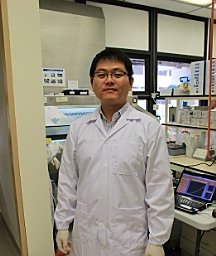 Wei Zhang合作论文数School of Electrical and Information Engineering, Tianjin University4
 Jiao Li (李娇)合作论文数Biomedical Photonic Imaging Laboratory, School of Precision Instrument and Optoelectronics Engineering, Tianjin University3Zhuanping Qin合作论文数2Xiaoqing Zhou合作论文数2
 Xin Wang (汪欣)合作论文数河南大学生命科学学院2
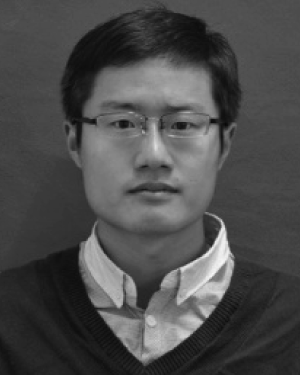 Wang Bingyuan合作论文数2
 Wenjuan Ma合作论文数2
 Yanqi Zhang合作论文数1Feifei Wang合作论文数1Yali Ji合作论文数1Jin Qi (祁瑾)合作论文数1Hui Guo合作论文数1Zhou Xiangyu合作论文数1Junfu Wei (魏俊富)合作论文数School of Material Science and Engineering, Tiangong University1
 Yihan Wang (王艺涵)合作论文数School of Life Science and Technology, Xidian University1Wan Wenbo合作论文数1
 Zhongxing Zhou (周仲兴)合作论文数School of Precision Instrument and Optoelectronics Engineering, Tianjin University1Shuying Zhang (张书颖)合作论文数1Ming Liu (刘明)合作论文数1




