We propose PolyVoice, a language model-based framework for speech-to-speech translation (S2ST) system. Our framework consists of two language models: a translation language model and a speech synthesis language model. We use discretized speech units, which are generated in a fully unsupervised way, and thus our framework can be used for unwritten languages. For the speech synthesis part, we adopt the existing VALL-E X approach and build a unit-based audio language model. This grants our framework the ability to preserve the voice characteristics and the speaking style of the original speech. We examine our system on Chinese $\rightarrow$ English and English $\rightarrow$ Spanish pairs. Experimental results show that our system can generate speech with high translation quality and audio quality. Speech samples are available at https://speechtranslation.github.io/polyvoice.
Aiming at reducing the reliance on expensive human annotations, data synthesis for Automatic Speech Recognition (ASR) has remained an active area of research. While prior work mainly focuses on synthetic speech generation for ASR data augmentation, its combination with text generation methods is considerably less explored. In this work, we explore text augmentation for ASR using large-scale pre-trained neural networks, and systematically compare those to traditional text augmentation methods. The generated synthetic texts are then converted to synthetic speech using a text-to-speech (TTS) system and added to the ASR training data. In experiments conducted on three datasets, we find that neural models achieve 9%-15% relative WER improvement and outperform traditional methods. We conclude that text augmentation, particularly through modern neural approaches, is a viable tool for improving the accuracy of ASR systems.
In real noisy and reverberant environments, the performance of current single channel speech separation algorithms decreases significantly. Given this situation, this paper proposes a novel speech separation framework, called Graph convolution and Leading global Multi-scale separation network (GLMSnet). The graph convolution network (GCN) is introduced on high-level features for modeling global context and incorporating long-range information, and it can be arbitrarily inserted into the desired position. Furthermore, Global multi-scale convolution is proposed to aggregate different levels features and improve the audio quality of separation. The leading factor is applied to increase valid information of target speech. We evaluate our method on WHAMR! Database. The results show that our proposed method can obtain state-of-the-art speech separation effect in the presence of noise and reverberation. Compared with the most advanced model before, the performance is improved by 22.7%.
In this work, we develop a novel non-autoregressive TTS model to predict all mel-spectrogram frames in parallel. Different from the previous non-autoregressive TTS methods, which typically require an external aligner implemented by an attention-based autoregressive model, our model can be opti-mized jointly without sophisticated external aligners. Motivated by the CTC-based speech recognition, which is a simple and effective manner to achieve the frame-level forced-alignment between the speech and text, our main idea is to consider the aligner learning of TTS as a CTC-based speech recognition like task. Specifically, our model learns the alignment generator by adopting the CTC-loss, to provide supervision for the duration predictor learning on the fly. In this way, we are able to learn a one-stage TTS system by optimizing the aligner with the feed forward transformer jointly. In inference phase, the aligner is removed and the duration predictor is used to predict duration sequence for synthesizing speech. To demonstrate our method, we conduct extensive experiments on an open-source Chinese standard Mandarin speech dataset11https://www.data-baker.com/open_source.html. The results show that our method achieves competitive performance compared with counterpart models (e.g. FastSpeech: a well-known non-autoregressive with extra aligner) in terms of the synthesized speech quality and robustness.
Direction of arrival (DOA) estimation is a key front-end technology for many speech-based intelligent systems. Deep neural networks-based DOA systems have recently demonstrated better performances than conventional ones. However, most of the existing networks use only one specific acoustical feature as input, limiting their noise-robustness. This paper proposes an attention-based feature fusion approach for DOA estimation. Two classical DOA estimation approaches, i.e., the least mean square-based adaptive filtering and the generalized cross-correlation, are adopted, and the respective features are served as input to the networks. Network with attention mechanism is built to learn the optimal weighting scheme, which can take advantage of the two features' complementary contributions in DOA estimation. Simulation and real test results show that the proposed method could use the complementary DOA information in different features and improve estimation accuracy under acoustic conditions with both noise and reverberation.
This work presents a 65nm CMOS speech recognition processor, named Thinker-IM, which employs 16 computing-in-memory (SRAM-CIM) macros for binarized recurrent neural network (RNN) computation. Its major contributions are: 1) A novel digital-CIM mixed architecture that runs an output-weight dual stationary (OWDS) dataflow, reducing 85.7% memory accessing; 2) Multi-bit XNOR SRAM-CIM macros and corresponding CIM-aware weight adaptation that reduces 9.9% energy consumption in average; 3) Predictive early batch-normalization (BN) and binarization units (PBUs) that reduce at most 28.3% computations in RNN. Measured results show the processing speed of 127.3us/Inference and over 90.2% accuracy, while achieving neural energy efficiency of 5.1pJ/Neuron, which is 2.8 × better than state-of-the-art.
Segmenting human left ventricle (LV) in magnetic resonance imaging images and calculating its volume are important for diagnosing cardiac diseases. The latter task became the topic of the Second Annual Data Science Bowl organized by Kaggle. The dataset consisted of a large number of cases with only systole and diastole volume labels. We designed a system based on neural networks to solve this problem. It began with a detector to detect the regions of interest (ROI) containing LV chambers. Then a deep neural network named hypercolumns fully convolutional network was used to segment LV in ROI. The 2-D segmentation results were integrated across different images to estimate the volume. With ground-truth volume labels, this model was trained end-to-end. To improve the result, an additional dataset with only segmentation labels was used. The model was trained alternately on these two tasks. We also proposed a variance estimation method for the final prediction. Our algorithm ranked the fourth on the test set in this competition.
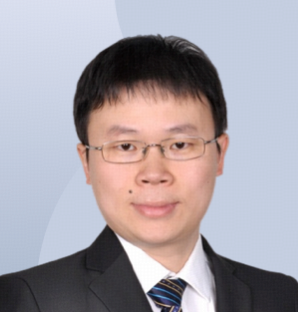 Peng Ouyang (欧阳鹏)合作论文数3
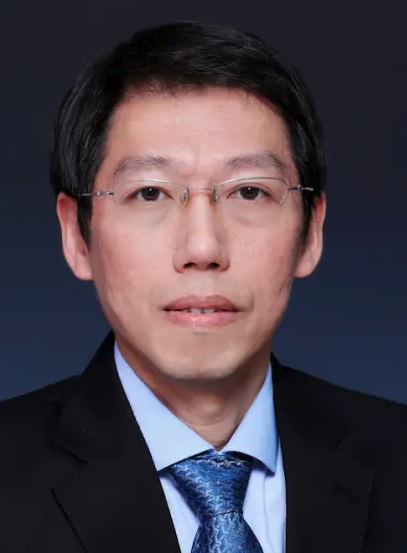 Shouyi Yin (尹首一)合作论文数School of Integrated Circuits, Tsinghua University3
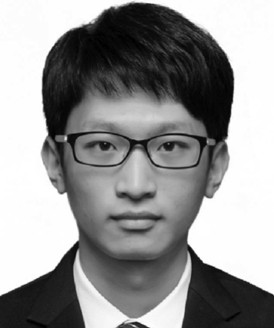 Ruiqi Guo合作论文数School of Integrated Circuits, Tsinghua University2
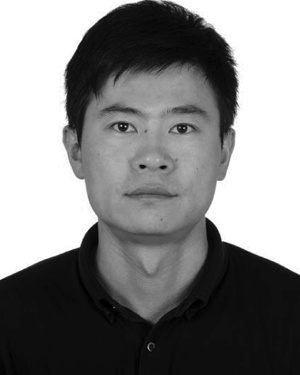 Xiudong Li合作论文数Institute of Microelectronics, Tsinghua University, Beijing, China2
 Shixuan Zheng合作论文数2
 Win-San Vince Khwa合作论文数Corporate Research Design Solution Department, Taiwan Semiconductor Manufacturing Company2
 Jia-Jing Chen合作论文数Institute of Electrical Engineering, National Tsing Hua University2
 Meng-Fan (Marvin) Chang (張孟凡)合作论文数Memory Design Lab, Department of Electrical Engineering, National Tsing Hua University2
 Leibo Liu (刘雷波)合作论文数School of Integrated Circuits, Tsinghua University;Wuxi Micro Innovation Integrated Circuit Design Company Ltd.2
 Yonggang Liu合作论文数2
 Shaojun Wei (魏少军)合作论文数Institute of Integrated Circuit Design and Electronic Design Automation, School of Integrated Circuits, Tsinghua University2
 Tianlong Kong合作论文数1Yuping Wang合作论文数1Zeqing Zhao合作论文数1Ethan Campbell-Taylor合作论文数1Antony D'Avirro合作论文数1Yunlong Zhao合作论文数1Kexin Wang合作论文数1Tang Li合作论文数1Siyuan Feng合作论文数1Junjie Wang合作论文数1
 Yuxuan Wang合作论文数ByteDance1Irina-Elena Veliche合作论文数1Qiao Tian合作论文数1
 Gil Keren合作论文数Univ Passau, Chair Complex & Intelligent Syst, Passau, Germany1Fengpeng Yue合作论文数1
 Xuxin Cheng合作论文数School of ECE, Peking University1Lin Yang合作论文数1Huiyu Shi合作论文数1
 Fangzhou Liao合作论文数Fastdiag.Ai1Zejun Ma合作论文数Bytedance AI Lab1
 Ssu-Yen Wu合作论文数1
 Hui Liu合作论文数1
 Sen Song (宋森)合作论文数Laboratory of Brain and Intelligence, Department of Biomedical Engineering, School of Medicine, Tsinghua University1
 Xu Chen (许晨)合作论文数College of Computer Science and Technology, Harbin Engineering University1
 Mingxuan Wang合作论文数Bytedance AI Lab;Tencent1
 Zhiying Huang (黄志英)合作论文数Shanghai Ocean University1Xuyang Wang (王旭阳)合作论文数1
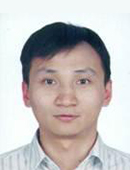 Xiaolin Hu (胡晓林)合作论文数McGovern Institute for Brain Research, Tsinghua University;State Key Laboratory of Intelligent Technology and Systems, Department of Computer Science and Technology, Tsinghua University;Tsinghua Laboratory of Brain and Intelligence1
 David Zhang, Dapeng (张大鹏)合作论文数Department of Computing, Hong Kong Polytechnic University;School of Data Science, Chinese University of Hong Kong (Shenzhen)1
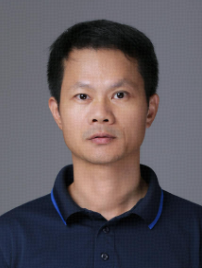 Nengheng Zheng (郑能恒)合作论文数College of Electronics and Information Engineering, Shenzhen University1
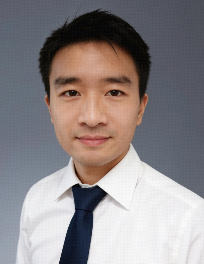 Tom Ko Yu Ting (高汝霆)合作论文数Center for Language, Intelligence and Machines, Shenzhen Loop Area Institute1Qianqian Dong合作论文数ByteDance AI Lab1
 Farnaz Abtahi合作论文数Amirkabir University of Technology;Department of Computer Engineering;Department of Computer Engineering, Amirkabir University of Technology1
 Duc Vinh Le合作论文数Institute of High Performance Computing, Agency for Science, Technology and Research1Ye Bai (白烨)合作论文数Speech & Audio Team, Bytedance AI Lab1




