Ionic liquids as templates or directing agents have attracted great attention for shaping-modulated synthesis of advanced nanomaterials. In this work, reduced graphene oxide supported uniform core-shell Au@Pt nanoparticles (Au@Pt NPs/rGO) were fabricated by a simple one-pot aqueous approach, using N-methylimidazolium-based dicationic ionic liquid (1,1-bis(3-methylimadazoilum-1-yl)butylene bromide, [C-4(Mim)(2)]2Br) as the shape-directing agent. The morphology evolution, structural information and formation mechanism of Au@Pt NPs anchored on rGO were investigated by a series of characterization techniques. The obtained nanocomposites displayed superior electrocatalytic features toward hydrogen evolution reaction (HER) and oxygen reduction reaction (ORR) compared with commercial Pt/C catalyst. This approach provides a novel route for facile synthesis of nanocatalysts in fuel cells. (C) 2018 Elsevier B.V. All rights reserved.
Herein, reduced graphene oxide supported PtPd alloyed core-shell nanodendrites (Pt77Pd23 ACSNDs/rGO) were fabricated by a one-pot aqueous method with the biosynthesized polypeptide (colistin sulfate, CS) as the eco-friendly stabilizer and structure-director. The associated morphology, composition and structure were mainly investigated by a set of characterization techniques, and the synthesis mechanism was discussed in details. When compared with home-made Pt59Pd41 nanoparticles (NPs)/rGO, Pt89Pd11 NPs/rGO, Pt NPs/rGO, commercial Pt/C and Pd/C catalysts, the prepared nanocomposite exhibited comparable and/or even superior catalytic characters for glycerol oxidation reaction (GOR) with the higher mass activity (MA, 1533.49 mA mg(-1) metal) and specific activity (SA, 2.74 mA cm(-2) metal), and hydrogen evolution reaction (HER) with the lower onset potential (Eonset,-34 mV), smaller overpotential (57 mV) at 10 mA cm(-2) and Tafel slope (36 mV dec(-1)). (C) 2017 Elsevier B. V. All rights reserved.
The performance of Pd/Pt-based electrocatalysts is closely correlated with their surface structure, size and composition. Herein, we prepared uniformly distributed ultra-small PtPd alloyed nanoparticles (PtPd ANPs, similar to 5 nm) within a robust three-dimensional nitrogen-doped reduced graphene oxide (3D-N-rGO) under hydrothermal conditions. L-Hydroxyproline was employed as reductant, N-doping and swelling agent for 3D-N-rGO. The size and shape of graphene hydrogels were easily adjusted by controlling the reaction temperature, and the formation mechanism was discussed in details. Then, the product was explored for ethylene glycol oxidation reaction (EGOR) and hydrogen evolution reaction (HER). The catalytic activity of PtPd ANPs/3D-N-rGO towards HER is close to the state-of-the-art Pt/C catalyst, and better than that of Pt/C in the case of EGOR. This study has shed some lights on the universal approach to develop next-generation catalysts, which is of great significance for direct alcohol fuel cells. (C) 2018 Elsevier Ltd. All rights reserved.
Support-free interconnected Pt nanowire networks (Pt NWNs) were fabricated by rapidly pouring sodium borohydride (NaBH4) solution into the Pt precursor solution, where hydrogen bubbles were in situ generated from hydrolysis and oxidation of NaBH4 as a dynamic template. There was no any capping agent, surfactant, seed, polymer, or special experimental device involved. The morphology, composition and structure of the samples were mainly characterized by transmission electron microscopy (TEM), X-ray photoelectron spectroscopy (XPS), and X-ray diffraction (XRD). The architectures displayed highly electrocatalytic behavior toward nitrite oxidation and wide linear ranges of 1.0μM–24.0mM and 24.0–132.0mM, together with high sensitivity (16.94 and 4.34μAmM−1) and low detection limit (0.14μM, S/N=3). It demonstrated the improved electroanalytical performance for nitrite determination because of the unique free-standing Pt nanostructures with clean surfaces.
Herein, we develop a simple one-pot aqueous method to prepare AuPd alloy nanocrystals on reduced graphene oxide (AuPd NCs/rGO), by using 1-acetyl-4-(p-hydroxyphenyl) piperazine (AHPP) as the reductant, stabilizing agent and structure-director, without any other additives (e.g., seed, surfactant or polymer). The product is mainly characterized by transmission electron microscopy, X-ray photoelectron spectroscopy, X-ray diffraction and thermogravimetric analysis. The obtained AuPd NCs/rGO displays enlarged electrochemically active surface area and superior catalytic performances toward oxygen reduction reaction (ORR) and hydrogen evolution reaction (HER) relative to Pt/C, Pd/C, Pd/rGO and Au/rGO catalysts, showing promising applications in energy storage and conversion.
In this work, highly branched gold-palladium alloy nanobrambles (Au46Pd54 NBs) were fabricated by a facile, eco-friendly and controlled one-pot aqueous approach, using thymine as the weak stabilizing, capping and structure-directing agents. The synthesized architectures were mainly characterized by scanning electron microscopy (SEM), transmission electron microscopy (TEM), energy dispersive X-ray spectroscopy (EDS), X-ray diffraction (XRD), and X-ray photoelectron spectroscopy (XPS), and their formation mechanism was discussed in some detail. Using crystal violet (CV) as the typical Raman probe, the obtained Au46Pd54 NBs displayed superior surface-enhanced Raman scattering (SERS) performance when compared with Au(3)oPd(70) NCs and Au(6)oPd(40) NCs, owing to the unique structure and morphology of Au46Pd54 NBs as well as the synergistic effects between Au and Pd. (C) 2017 Elsevier B.V. All rights reserved.
Herein, we developed a facile one-pot wet-chemical coreduction method for synthesis of core-shell AuPd@Pd nanocrystals (AuPd@Pd NCs), using polyvinylpyrrolidone (PVP) and minoxidil as the dispersing and growth-directing agents, respectively. The fabricated nanocrystals were mainly characterized by transmission electron microscopy (TEM), scanning transmission electron microscopy (STEM), X-ray photoelectron spectroscopy (XPS) and X-ray diffraction (XRD) in details. The architectiires were explored for the catalytic reduction of Cr(VI) to Cr(III) by employing formic acid (HCOOH) as the reducing agent, showing enhanced catalytic activity of AuPd@Pd NCs in contrast with commercial Pd black catalyst. Additionally, the formation mechanism of AuPd@Pd NCs and the catalytic reduction mechanism of Cr(V1) were illustrated and discussed in some detail, respectively. (C) 2017 Elsevier B.V. All rights reserved.
Herein, reduced graphene oxide supported core-shell Pt@Pd nanoflowers (Pt@Pd NFs/rGO) were fabricated by a singlestep, seedless wet -chemical approach at room temperature, only using 3-aminopyrrolidine dihydrochloride (APDC) as the weak stabilizer and structure director. The morphology, structure, and composition of the product were characterized by a series of characterization techniques, and the formation mechanism was discussed in detail. The nanocomposite exhibited improved catalytic activity for oxygen reduction reaction (ORR) with the positive onset potential (E-onset, 0.91 V vs. RHE) and half-wave potential (E-1/2, 0.82 V vs. RHE), and hydrogen evolution reaction (HER) with the low E-onset (-39 mV vs. RHE), overpotential (56 mV vs. RHE) at the fixed current density of 10 mA cm -2, and small Tafel slope (39 mV dec(-1)). This is ascribed to the synergistic effects of the bimetals, rGO as the good support, and electronic coupling between the Pd shell and the Pt core.
With the purpose to search novel surface-enhanced Raman scattering (SERS) substrates, uniform multi-branched AgPt alloyed dendritic nanoflowers (AgPt DNFs) are fabricated with the assistance of 3-aminopyrazine-2-carboxylic acid (Apzc) as a structure-director via a one-pot successive aqueous co reduction strategy. The formation mechanism of AgPt DNFs is investigated in details. Their morphology, structure, size, and composition are confirmed by a series of characterization technique. The hierarchical nanostructures exhibit strong SERS enhancement and excellent stability by using 4-nitrothiophenolate (4-NTP) as a typical Raman probe. The improved SERS performance for 4-NTP is mainly attributed to the synergistic effects between the bimetals, together with the enriched hot spots at the sharp corners and/or edges of the architectures. This synthetic strategy provided a facile and environment-friendly method to prepare other metallic architectures with novel properties. (C) 2017 Elsevier B.V. All rights reserved.
With the purpose to develop low-cost, highly active and durable electrocatalysts in fuel cells, three-dimensional (3D) freestanding porous PtAg hollow nanochain networks (HNCNs) with tunable compositions were large-scaled prepared by a one-pot co-reduction method. 3-Aminopyrrolidine dihydrochloride (3-APDH) served as the structure director in the synthetic process, while no other specific additives such as surfactant, polymer, seed and template were involved. The structure, morphology, and composition of the architectures were examined by a series of characterizations. PtAg HNCNs showed larger electrochemically active surface area (ECSA) due to the specific 3D hollow porous structure. Moreover, PtAg HNCNs with high Pt content (i.e., Pt75Ag25 HNCNs) exhibited significantly improved durability and enhanced mass activity of 0.37 mA mg(-1) at 0.81 V (vs. RHE) in contrast with commercial Pt/C for oxygen reduction reaction (ORR), owing to the specific structures and synergetic effects of the bimetals. This strategy can be explored to fabricate other novel metallic nanocatalysts in fuel cells. (C) 2017 Elsevier Ltd. All rights reserved.
A facile one-pot coreduction strategy was developed to synthesize composition-tunable cross-linked AgPt aerogels, where ionic liquid (1-aminopropyl-3-methylimidazolium bromide, [APMIm]Br) played a significant role in controlling the morphology and structure. During the synthesis progress, Br- easily reacted with Ag+ to form AgBr precipitate and consequently slowed down the reducing rate of Ag+, as well as acting as a capping agent to promote the anisotropic growth of AgPt aerogels, as mainly demonstrated by the electronic microscopy, Brunauer-Emmett-Teller, X-ray diffraction and X-ray photoelectron spectroscopy analysis. The architectures showed superior catalytic activity and enhanced durability toward ethanol oxidation reaction (EOR) and ethylene glycol oxidation reaction (EGOR) in contrast with commercial Pt black, owing to the tailored composition, morphology and electronic structure of the prepared AgPt aerogels.
Herein, we reported the direct synthesis of core-shell AuPt@Pt nanocrystals supported on reduced graphene oxide (AuPt@Pt NCs/rGO) in aqueous media, with poly(1-vinyl-3-ethylimidazolium bromide) (poly(ViEtlmBr)) as a structure-directing agent, without any specific additive (e.g., seed, organic solvent or template). The as-synthesized AuPt@Pt NCs/rGO exhibited improved electrocatalytic performances towards ethylene glycol oxidation reaction (EGOR) in contrast with commercial Pt/C (20%) catalyst in acidic and alkaline electrolytes. Meanwhile, the catalyst displayed enhanced catalytic activity for hydrogen evolution reaction (HER) with the positive onset potential (-25 mV) and a small Tafel slope (33 mV decade(-1)) relative to Pt/C catalyst (-18 mV, 31 mV decade(-1)) in 0.5 M H2SO4, along with the positive onset potential (-43 mV) and a small Tafel slope (73 mV decade(-1)) as compared with Pt/C catalyst (-42 mV, 85 mV decade(-1)) in 0.5 M KOH. (C) 2016 Elsevier Ltd. All rights reserved.
Herein, uniform Pt2.6Co1 nanoflowers (NFs) were synthesized in oleylamine by a one-pot solvothermal method, using cetyltrimethylammonium chloride (CTAC) and glucose as the capping agent and green reducing agent. The samples were mainly characterized by transmission electron microscopy (TEM), high angle annular dark-field scanning TEM (HAADF-STEM), X-ray diffraction (XRD), and X-ray photoelectron spectroscopy (XPS). The architectures had larger electrochemically active surface area (ECSA) of 23.84 m(2) g(Pt)(1) than Pt1.2Co1 nanocrystals (NCs, 14.96 m(2) g(Pt)(1)), Pt3.7Co1 NCs (16.96 m(2) g(Pt)(1)) and commercial Pt black (20.35 m(2) g(Pt)(1)). And the as-obtained Pt2.6Co1 catalyst displayed superior catalytic performance and better durability for hydrogen evolution reaction (HER) as compared to Pt1.2Co1 NCs, Pt3.7Co1 NCs, commercial 50% Pt/C and Pt black catalysts in acid and alkaline media. Meanwhile, the electrocatalytic performance of Pt2.6Co1 NFs for oxygen reduction reaction (ORR) is better in acid media as compared with that in alkaline media. It indicates the great potential applications of the as-prepared catalyst in fuel cells. (C) 2016 Elsevier Ltd. All rights reserved.
Bimetallic core-shell PtPd@Pt nanocrystals were uniformly supported on reduced graphene oxide (PtPd@Pt NCs/rGO) through a facile and green wet-chemical procedure. Formic acid was employed here as the reducing agent, without using any additive (e.g., surfactant, polymer, seed, or template). The as-prepared nanocomposites displayed enlarged electrochemically active surface area, enhanced catalytic activity, high stability and tolerance toward ethylene glycol oxidation reaction (EGOR) in acidic and alkaline media as compared with commercial Pd/C and Pt/C catalysts. This strategy opens an environmentally friendly way to fabricate other bimetallic catalysts with improved catalytic activity and stability in direct alcohol fuel cells. (C) 2015 Elsevier Ltd. All rights reserved.
 Ai-Jun Wang (王爱军)合作论文数College of Geography and Environmental Sciences, Zhejiang Normal University16
 Jiuju Feng (冯九菊)合作论文数College Of Chemistry And Materials Science, Zhejiang Normal University16
 Junhua Yuan (袁军华)合作论文数College of Chemistry and Life Sciences, Zhejiang Normal University7Liu-Ying Jiang合作论文数4Saisai Chen合作论文数4Ya-Cheng Shi合作论文数3Xiao-Fang Zhang合作论文数2
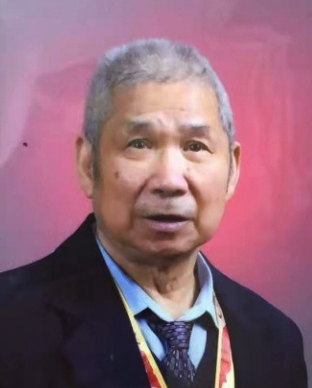 Keming Fang (方克明)合作论文数School of Metallurgical and Ecological Engineering, University of Science and Technology Beijing2
 Hong Huang (黄鸿)合作论文数College of Optoelectronic Engineering, Chongqing University2
 Jianrong Chen (陈建荣)合作论文数College of Geography and Environmental Sciences, Zhejiang Normal University2Si-Yuan Zou合作论文数1Zhongzhi Yang合作论文数1Li Xin-Sheng合作论文数1Li-Xian Chen合作论文数1Meng-Ting Liu合作论文数1Xiao-Yan Zhu合作论文数1
 Lu Zhang合作论文数1Qianli Zhang合作论文数1Wang Weiping合作论文数1Xinsheng Li (李新生)合作论文数College of Chemistry and Life Sciences, Zhejiang Normal University1




