Recent speech-aware large language models (Speech-LLMs) rely on a pre-trained speech encoder to convert audio into semantic-rich representations consumable by LLM. In this work, instead, we explore: can an LLM learn to read Mel spectrogram directly without a dedicated speech encoder? We propose Mel-LLM, an encoder-free Speech-LLM that feeds lightly pre-processed Mel spectrogram patches directly into the LLM through a linear projection, allowing the LLM to learn speech-text alignment purely through its own parameters. We conduct extensive experiments on both automatic speech recognition (ASR) and text-to-speech (TTS) tasks. For ASR, we evaluate on the OpenASR leaderboard public sets and production-level scaling experiments, demonstrating that the encoder-free solution achieves competitive performance with only limited degradation compared to encoder-initialized counterparts. We find that when data is limited, initialization from a multimodal checkpoint (Phi-4-MM) is crucial for maintaining performance. We also present ablation studies revealing which LLM layers are less relevant to speech encoding. For TTS, we show preliminary results with a next-token VAE approach. While TTS performance is not yet optimal, these results establish the feasibility of a fully unified encoder-free architecture for autoregressive speech-text modeling.
Neural audio codecs are foundational to speech language models. It is expected to have a low frame rate and decoupled semantic and acoustic information. A lower frame rate codec can reduce the computational cost of speech language models by shortening the sequence length. Recent studies have developed 12.5Hz low-frame-rate audio codecs, but even lower frame rate codecs remain underexplored. We find that pushing existing audio codecs to very low frame rates loses much semantic information. We suggest that low-frame-rate codecs' limitations are in both insufficient semantic decoupling and insufficient time resolution at capturing transient phonetic details. This paper introduces **FlexiCodec** to address this limitation. FlexiCodec improves semantic preservation with a **dynamic frame rate** approach and introduces a novel architecture featuring an **ASR feature-assisted dual stream** encoding and Transformer bottlenecks. With dynamic frame rates, it uses less frames at information-sparse regions through adaptively merging semantically similar frames. A dynamic frame rate also allows FlexiCodec to support inference-time **controllable frame rates** between 3Hz and 12.5Hz. Experiments on **6.25Hz, 8.3Hz and 12.5Hz** average frame rates confirm that FlexiCodec excels over baseline systems in semantic information preservation and delivers a high audio reconstruction quality. We also validate the effectiveness of FlexiCodec in language model-based TTS. Demos are available at: https://flexicodec.github.io.
Spoken Language Models (SLMs) are designed to take speech inputs and produce spoken responses. However, current SLMs lack the ability to perform an internal, unspoken thinking process before responding. In contrast, humans typically engage in complex mental reasoning internally, enabling them to communicate ideas clearly and concisely. Thus, integrating an unspoken thought process into SLMs is highly desirable. While naively generating a complete chain-of-thought (CoT) reasoning before starting to talk can enable thinking for SLMs, this induces additional latency for the speech response, as the CoT reasoning can be arbitrarily long. To solve this issue, we propose STITCH, a novel generation method that alternates between the generation of unspoken reasoning chunks and spoken response chunks. Since the audio duration of a chunk of spoken response is much longer than the time to generate the tokens in a chunk of spoken response, we use the remaining free time to generate the unspoken reasoning tokens. When a chunk of audio is played to the user, the model continues to generate the next unspoken reasoning chunk, achieving simultaneous thinking and talking. Remarkably, STITCH matches the latency of baselines that cannot generate unspoken CoT by design while outperforming those baselines by 15% on math reasoning datasets; STITCH also performs equally well on non-reasoning datasets as those baseline models
Current large language models (LLMs) and spoken language models (SLMs) begin thinking and taking actions only after the user has finished their turn. This prevents the model from interacting with the user during the user’s turn and can lead to high response latency when the model is thinking. To address this issue, we draw inspiration from the “think while listening” behavior of humans. In this paper, we propose SHANKS, a general inference framework that enables SLMs to generate unspoken chain-of-thought reasoning while listening to user input. SHANKS streams input speech in fixed-duration chunks and, as soon as a chunk is received, generates unspoken reasoning based on all previous speech and reasoning, while the user continues speaking. SHANKS uses unspoken reasoning to determine whether to interrupt the user and make tool calls to complete the task. We demonstrate that SHANKS enhances real-time user–SLM interaction in two scenarios: (1) SHANKS can listen to the user’s speech and interrupt when the user makes a mistake. (2) In a tool-augmented dialogue scenario, SHANKS can complete 56.9% of the tool calls before the user ends their turn. Overall, SHANKS is a step toward models that keep thinking throughout the conversation, not only after a turn ends. Demos can be found on the project page: https://d223302.github.io/SHANKS/.
Strong speech-to-text (S2T) LLMs already provide robust speech perception and text reasoning, but adding speech-to-speech (S2S) output is challenging: fine-tuning the backbone can degrade the original S2T performance, while attaching a downstream talker reintroduces a serial text-to-speech bottleneck. We present PRIME-Speech, a frozen-backbone S2S conversion framework that trains only speech-generation modules. PRIME-Speech synchronizes a causal audio post-decoder with intermediate hidden states of the frozen backbone, so codec tokens are generated from the model's evolving reasoning trajectory rather than from completed text chunks. The post-decoder uses mixed hidden-state, text, and audio-history conditioning, and a training-time packing strategy with turn-level audio KV-cache and position reset stabilizes multi-turn spoken interaction without additional multi-turn S2S training data. Multi-token prediction further reduces the effective codec prediction rate and improves first-audio latency without modifying the reasoning path. Across speech translation, spoken QA, speech understanding, and multi-turn dialogue, PRIME-Speech preserves the S2T behavior of the frozen backbone while producing accurate, low-WER spoken responses.
Instruction-based image editing has advanced rapidly, yet reliable and interpretable evaluation remains a bottleneck. Current protocols either (i) depend on paired reference images—resulting in limited coverage and inheriting biases from prior generative models—or (ii) rely *solely* on zero-shot vision–language models (VLMs), whose prompt-based assessments of instruction following, content consistency, and visual quality are often imprecise. To address this, we introduce **EdiVal-Agent**, an automated and fine-grained evaluation framework grounded in an object-centric perspective, designed to assess not only standard single-turn but also multi-turn instruction-based editing with precision. Given an input image, **EdiVal-Agent** first decomposes it into semantically meaningful objects, then synthesizes diverse, context-aware editing instructions while dynamically updating object pools across turns. These two stages enable two novel object-centric metrics tailored for multi-turn evaluation and one global metric of visual quality: 1) EdiVal-IF, which measures instruction following by combining open-vocabulary object detectors for symbolic checks with VLMs for semantic verification on detector-guided crops; 2) EdiVal-CC, which evaluates content consistency by calculating semantic similarity of unchanged objects and background using the evolving object pools; and 3) EdiVal-VQ, which quantifies changes in overall visual quality with human preference models. Instantiating this pipeline, we build **EdiVal-Bench**, a multi-turn editing benchmark covering 9 instruction types and 13 state-of-the-art editing models spanning In-Context, flow-matching, and diffusion paradigms. We further conduct experiments comparing multi-turn editing with single-shot complex editing, highlighting the distinctive characteristics of different model paradigms. We demonstrate that EdiVal can be used to identify existing failure modes, thereby informing the development of the next generation of editing models.
In this paper, we introduce zero-shot audio-video editing, a novel task that requires transforming original audio-visual content to align with a specified textual prompt without additional model training. To evaluate this task, we curate a benchmark dataset, AvED-Bench, designed explicitly for zero-shot audio-video editing. AvED-Bench includes 110 videos, each with a 10-second duration, spanning 11 categories from VGGSound. It offers diverse prompts and scenarios that require precise alignment between auditory and visual elements, enabling robust evaluation. We identify limitations in existing zero-shot audio and video editing methods, particularly in synchronization and coherence between modalities, which often result in inconsistent outcomes. To address these challenges, we propose AvED, a zero-shot cross-modal delta denoising framework that leverages audio-video interactions to achieve synchronized and coherent edits. AvED demonstrates superior results on both AvED-Bench and the recent OAVE dataset to validate its generalization capabilities. Results are available at https://genjib.github.io/project_page/AVED/index.html
Flow-matching-based text-to-speech (TTS) models, such as Voicebox, E2 TTS, and F5-TTS, have attracted significant attention in recent years. These models require multiple sampling steps to reconstruct speech from noise, making inference speed a key challenge. Reducing the number of sampling steps can greatly improve inference efficiency. To this end, we introduce Fast F5-TTS, a training-free approach to accelerate the inference of flow-matching-based TTS models. By inspecting the sampling trajectory of F5-TTS, we identify redundant steps and propose Empirically Pruned Step Sampling (EPSS), a non-uniform time-step sampling strategy that effectively reduces the number of sampling steps. Our approach achieves a 7-step generation with an inference RTF of 0.030 on an NVIDIA RTX 3090 GPU, making it 4 times faster than the original F5-TTS while maintaining comparable performance. Furthermore, EPSS performs well on E2 TTS models, demonstrating its strong generalization ability.
Generating natural-sounding, multi-speaker dialogue is crucial for applications such as podcast creation, virtual agents, and multimedia content generation. However, existing systems struggle to maintain speaker consistency, model overlapping speech, and synthesize coherent conversations efficiently. In this paper, we introduce CoVoMix2, a fully non-autoregressive framework for zero-shot multi-talker dialogue generation. CoVoMix2 directly predicts mel-spectrograms from multi-stream transcriptions using a flow-matching-based generative model, eliminating the reliance on intermediate token representations. To better capture realistic conversational dynamics, we propose transcription-level speaker disentanglement, sentence-level alignment, and prompt-level random masking strategies. Our approach achieves state-of-the-art performance, outperforming strong baselines like MoonCast and Sesame in speech quality, speaker consistency, and inference speed. Notably, CoVoMix2 operates without requiring transcriptions for the prompt and supports controllable dialogue generation, including overlapping speech and precise timing control, demonstrating strong generalizability to real-world speech generation scenarios.
We extend the frameworks of Serialized Output Training (SOT) to address practical needs of both streaming and offline automatic speech recognition (ASR) applications. Our approach focuses on balancing latency and accuracy, catering to real-time captioning and summarization requirements. We propose several key improvements: (1) Leveraging Continuous Speech Separation (CSS) single-channel front-end with end-to-end (E2E) systems for highly overlapping scenarios, challenging the conventional wisdom of E2E versus cascaded setups. The CSS framework improves the accuracy of the ASR system by separating overlapped speech from multiple speakers. (2) Implementing dual models -- Conformer Transducer for streaming and Sequence-to-Sequence for offline -- or alternatively, a two-pass model based on cascaded encoders. (3) Exploring segment-based SOT (segSOT) which is better suited for offline scenarios while also enhancing readability of multi-talker transcriptions.
Streaming multi-talker speech translation is a task that involves not only generating accurate and fluent translations with low latency but also recognizing when a speaker change occurs and what the speaker's gender is. Speaker change information can be used to create audio prompts for a zero-shot text-to-speech system, and gender can help to select speaker profiles in a conventional text-to-speech model. We propose to tackle streaming speaker change detection and gender classification by incorporating speaker embeddings into a transducer-based streaming end-to-end speech translation model. Our experiments demonstrate that the proposed methods can achieve high accuracy for both speaker change detection and gender classification.
Speech language models (Speech LMs) enable end-to-end speech-text modeling within a single model, offering a promising direction for spoken dialogue systems. The choice of speech-text jointly decoding paradigm plays a critical role in performance, efficiency, and alignment quality. In this work, we systematically compare representative joint speech-text decoding strategies, including the interleaved, and parallel generation paradigms, under a controlled experimental setup using the same base language model, speech tokenizer and training data. Our results show that the interleaved approach achieves the best alignment. However it suffers from slow inference due to long token sequence length. To address this, we propose a novel early-stop interleaved (ESI) pattern that not only significantly accelerates decoding but also yields slightly better performance. Additionally, we curate high-quality question answering (QA) datasets to further improve speech QA performance.
The language model (LM) approach based on acoustic and linguistic prompts, such as VALL-E, has achieved remarkable progress in the field of zero-shot audio generation. However, existing methods still have some limitations: 1) repetitions, transpositions, and omissions in the output synthesized speech due to limited alignment constraints between audio and phoneme tokens; 2) challenges of fine-grained control over the synthesized speech with autoregressive (AR) language model; 3) infinite silence generation due to the nature of AR-based decoding, especially under the greedy strategy. To alleviate these issues, we propose ELLA-V, a simple but efficient LM-based zero-shot text-to-speech (TTS) framework, which enables fine-grained control over synthesized audio at the phoneme level. The key to ELLA-V is interleaving sequences of acoustic and phoneme tokens, where phoneme tokens appear ahead of the corresponding acoustic tokens. The experimental findings reveal that our model outperforms baselines in terms of accuracy and delivers more stable results using both greedy and sampling-based decoding strategies.
We study technical image generation, where a model must synthesize information-dense, scientifically precise illustrations from detailed descriptions rather than merely produce visually plausible pictures. To quantify the progress, we introduce TechImage-Bench, a rubric-based benchmark that targets biology schematics, engineering/patent drawings, and general technical illustrations. For 654 figures collected from real textbooks and technical reports, we construct detailed image instructions and a hierarchy of rubrics that decompose correctness into 6,076 criteria and 44,131 binary checks. Rubrics are derived from surrounding text and reference figures using large multimodal models, and are evaluated by an automated LMM-based judge with a principled penalty scheme that aggregates sub-question outcomes into interpretable criterion scores. We benchmark several representative text-to-image models on TechImage-Bench and find that, despite strong open-domain performance, the best base model reaches only 0.801 rubric accuracy and 0.576 criterion score overall, revealing substantial gaps in fine-grained scientific fidelity. Finally, we show that the same rubrics provide actionable supervision: feeding failed checks back into an editing model for iterative refinement boosts a strong generator from 0.660 to 0.865 in rubric accuracy and from 0.382 to 0.697 in criterion score. TechImage-Bench thus offers both a rigorous diagnostic for technical image generation and a scalable signal for improving specification-faithful scientific illustrations.
Speech-aware language models (LMs) have demonstrated capabilities in understanding spoken language while generating text-based responses. However, enabling them to produce speech output efficiently and effectively remains a challenge. In this paper, we present SLM-S2ST, a multimodal LM for direct speech-to-speech translation (S2ST), built on the open-source Phi4-MM model. SLM-S2ST extends its predecessor by generating translated speech using an audio transformer head that predicts audio tokens with a delay relative to text tokens, followed by a streaming vocoder for waveform synthesis. Our experimental results on the CVSS-C dataset demonstrate SLM-S2ST's superior performance, significantly surpassing existing baseline models trained on the same dataset. Furthermore, when we scale up the training data and the model size, SLM-S2ST reaches on-par performance with the current SOTA model.
Audio-aware large language models (ALLMs) can understand the textual and non-textual information in the audio input. In this paper, we explore using ALLMs as an automatic judge to assess the speaking styles of speeches. We use ALLM judges to evaluate the speeches generated by SLMs on two tasks: voice style instruction following and role-playing. The speaking style we consider includes emotion, volume, speaking pace, word emphasis, pitch control, and non-verbal elements. We use four spoken language models (SLMs) to complete the two tasks and use humans and ALLMs to judge the SLMs' responses. We compare two ALLM judges, GPT-4o-audio and Gemini-2.5-pro, with human evaluation results and show that the agreement between Gemini and human judges is comparable to the agreement between human evaluators. These promising results show that ALLMs can be used as a judge to evaluate SLMs. Our results also reveal that current SLMs, even GPT-4o-audio, still have room for improvement in controlling the speaking style and generating natural dialogues.
The first Natural Office Talkers in Settings of Far-field Audio Recordings (NOTSOFAR-1) Challenge is a pivotal initiative that sets new benchmarks by offering datasets more representative of the needs of real-world business applications than those previously available. The challenge provides a unique combination of 315 recorded meetings across 30 diverse environments, capturing real-world acoustic conditions and conversational dynamics, and a 1000-hour simulated training dataset, synthesized with enhanced authenticity for real-world generalization, incorporating 15,000 real acoustic transfer functions. In this paper, we provide an overview of the systems submitted to the challenge and analyze the top-performing approaches, hypothesizing the factors behind their success. Additionally, we highlight promising directions left unexplored by participants. By presenting key findings and actionable insights, this work aims to drive further innovation and progress in DASR research and applications.
End-to-end speech translation (ST), which translates source language speech directly into target language text, has garnered significant attention in recent years. Many ST applications require strict length control to ensure that the translation duration matches the length of the source audio, including both speech and pause segments. Previous methods often controlled the number of words or characters generated by the Machine Translation model to approximate the source sentence's length without considering the isochrony of pauses and speech segments, as duration can vary between languages. To address this, we present improvements to the duration alignment component of our sequence-to-sequence ST model. Our method controls translation length by predicting the duration of speech and pauses in conjunction with the translation process. This is achieved by providing timing information to the decoder, ensuring it tracks the remaining duration for speech and pauses while generating the translation. The evaluation on the Zh-En test set of CoVoST 2, demonstrates that the proposed Isochrony-Controlled ST achieves 0.92 speech overlap and 8.9 BLEU, which has only a 1.4 BLEU drop compared to the ST baseline.
We introduce the first Natural Office Talkers in Settings of Far-field Audio Recordings (``NOTSOFAR-1'') Challenge alongside datasets and baseline system. The challenge focuses on distant speaker diarization and automatic speech recognition (DASR) in far-field meeting scenarios, with single-channel and known-geometry multi-channel tracks, and serves as a launch platform for two new datasets: First, a benchmarking dataset of 315 meetings, averaging 6 minutes each, capturing a broad spectrum of real-world acoustic conditions and conversational dynamics. It is recorded across 30 conference rooms, featuring 4-8 attendees and a total of 35 unique speakers. Second, a 1000-hour simulated training dataset, synthesized with enhanced authenticity for real-world generalization, incorporating 15,000 real acoustic transfer functions. The tasks focus on single-device DASR, where multi-channel devices always share the same known geometry. This is aligned with common setups in actual conference rooms, and avoids technical complexities associated with multi-device tasks. It also allows for the development of geometry-specific solutions. The NOTSOFAR-1 Challenge aims to advance research in the field of distant conversational speech recognition, providing key resources to unlock the potential of data-driven methods, which we believe are currently constrained by the absence of comprehensive high-quality training and benchmarking datasets.
Laughter is one of the most expressive and natural aspects of human speech, conveying emotions, social cues, and humor. However, most text-to-speech (TTS) systems lack the ability to produce realistic and appropriate laughter sounds, limiting their applications and user experience. While there have been prior works to generate natural laughter, they fell short in terms of controlling the timing and variety of the laughter to be generated. In this work, we propose ELaTE, a zero-shot TTS that can generate natural laughing speech of any speaker based on a short audio prompt with precise control of laughter timing and expression. Specifically, ELaTE works on the audio prompt to mimic the voice characteristic, the text prompt to indicate the contents of the generated speech, and the input to control the laughter expression, which can be either the start and end times of laughter, or the additional audio prompt that contains laughter to be mimicked. We develop our model based on the foundation of conditional flow-matching-based zero-shot TTS, and fine-tune it with frame-level representation from a laughter detector as additional conditioning. With a simple scheme to mix small-scale laughter-conditioned data with large-scale pre-training data, we demonstrate that a pre-trained zero-shot TTS model can be readily fine-tuned to generate natural laughter with precise controllability, without losing any quality of the pre-trained zero-shot TTS model. Through objective and subjective evaluations, we show that ELaTE can generate laughing speech with significantly higher quality and controllability compared to conventional models. See https://aka.ms/elate/ for demo samples.
 Naoyuki Kanda合作论文数Meta33
 Takuya Yoshioka合作论文数AssemblyAI29
 Zhuo Chen合作论文数Bytedance25
 Jinyu Li合作论文数Microsoft23
 Yonghong Yan (颜永红)合作论文数17
 Zhong Meng合作论文数Google13
 Yao Qian合作论文数Microsoft13Yanmeng Guo (国雁萌)合作论文数12
 Yashesh Gaur合作论文数Microsoft12
 Sefik Emre Eskimez合作论文数University of Rochester11
 Dongmei Wang合作论文数11
 Shujie Liu (刘树杰)合作论文数Microsoft Research Asia10
 Sheng Zhao合作论文数Microsoft Azure Speech9
 Shinji Watanabe合作论文数Department of Electrical and Computer Engineering, College of Engineering, Carnegie Mellon University8Chao Wu (吴超)合作论文数School of Physics and Optoelectronic Engineering, Anhui University7
 Lijuan Wang合作论文数Microsoft7
 Hynek Hermansky合作论文数Department of Electrical and Computer Engineering, Whiting School of Engineering, Johns Hopkins University7
 Manthan Thakker合作论文数6Zirun Zhu合作论文数6
 Hemin Yang合作论文数Georgia Inst Technol, Sch Elect & Comp Engn, Atlanta, GA 30332 USA6Min Tang合作论文数Tongji Univ, Sch Med, Shanghai East Hosp, Inst Biomed Engn & Nano Sci iNANO, Shanghai 200092, Peoples R China6
 Aswin Shanmugam Subramanian合作论文数Johns Hopkins University6Xu Li合作论文数6
 Chung-Ching Lin合作论文数Microsoft Research6
 Linjie Li (李琳婕)合作论文数Microsoft Cloud & AI6
 Kevin Lin (林可昀)合作论文数Microsoft Azure AI6
 Qiang Fu (付强)合作论文数Department of Atmospheric Sciences, College of the Environment, University of Washington6
 Zhengyuan Yang合作论文数Microsoft6
 Xiong Xiao合作论文数Microsoft Azure Speech6Chung-Hsien Tsai合作论文数5Canrun Li合作论文数5
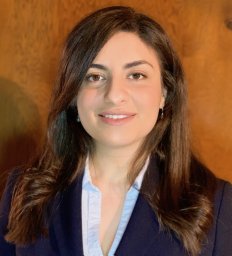 Midia Yousefi合作论文数Erik Jonsson School of Engineering and Computer Science, The University of Texas at Dallas5Ziteng Wang (王子腾)合作论文数JD Speech Lab5
 Yuxuan Hu合作论文数4Jian Wu合作论文数4
 Ruchao Fan合作论文数University of California Los Angeles4
 Yiming Wang (王一鸣)合作论文数Microsoft4
 Jinqiang Gao (高进强)合作论文数School of Materials Science & Engineering, Shandong University4
 Wang Peidong合作论文数Harbin University of Science and Technology4
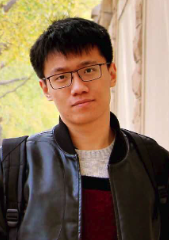 Yu Wu (吴俣)合作论文数DeepSeek AI4
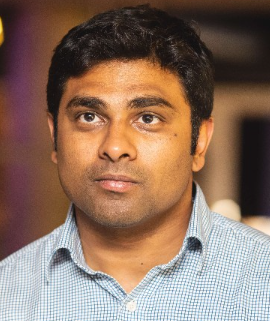 Sunit Sivasankaran合作论文数Microsoft4
 Michael Zeng (曾南山)合作论文数Microsoft4
 Junkun Chen合作论文数Microsoft4
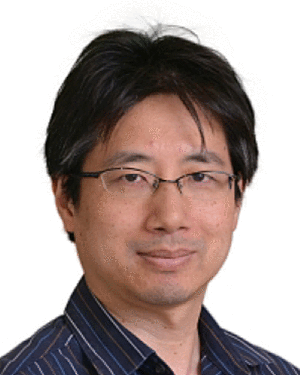 Takaaki Hori合作论文数Apple Inc.4
 Cheng-Han Chiang (姜成翰)合作论文数Machine Learning and Speech Processing Lab, National Taiwan University3
 Leying Zhang (张乐莹)合作论文数Shanghai Jiao Tong University;Meta Superintelligence Labs3
 Huaming Wang合作论文数Microsoft3
 Xie Chen (陈谐)合作论文数3




