Inspired by dual-process theory (DPT), type-2 fuzzy numbers (T2FNs) are introduced to model human judgment. Specifically, the judgment is functioned simultaneously by two systems: the intuitive System 1 referred to as fast thinking, and the analytical System 2 referred to as slow thinking. As a novel modeling tool for decision making, T2FNs have a wide range of potential applications in artificial intelligence, decision analysis, and related domains. To facilitate their extensive application, we adhere to DPT's thinking mechanism, in which the processes of fast and slow thinkings are relatively autonomous while also being capable of mutual cooperation, and then develop some measures for T2FNs, including fuzzy entropy, distance measure, similarity measure, and correlation coefficient. In contrast to the existing fuzzy measures, the proposed ones allow for the quantification of mechanism between fast and slow thinkings. As such, they offer a solid theoretical interpretation for decision analysis. Finally, a numerical example is given to show that the proposed measures are capable of capturing the balanced interplay between fast thinking and slow thinking in human decision making.
Modeling human thinking process is essential in decision making. According to dual-process theory, fast thinking and slow thinking in our brains shape our judgments and decisions. Type- 2 fuzzy number (T2FN) models the shaping process with these two thinking patterns. However, how to model the interaction between them is a mystery, which can be referred as interactive thinking. In this paper, we propose a d score of T2FN to reveal their interaction mechanism, where an interaction coefficient theta is used to measure the interaction. This score describes fast and slow thinking patterns and the transformation process between them, and how the interaction helps decision makers make better decisions. We propose two optimization models to solve for the coefficient theta. With the collected data based on questionnaires, we find a dominant role of interactive thinking in practice. In particular, it is most common that fast thinking and slow thinking play equally important roles in forming our judgments. Moreover, our results suggest that fast thinking tends to correspond with questions that contain complex information, while slow thinking tends to correspond with simple information.
Fuzzy neural networks (FNNs) have gained attention for their interpretability and self-learning ability. However, they struggle with interpreting high-dimensional unstructured data and the problem of “rule explosion”. To address this, a model called VAE-FNN is proposed, which combines a FNN with a variational autoencoder (VAE). The VAE-FNN simulates the image perception, feature extraction, inductive reasoning, and adjustment learning processes in the human brain. An encoder is used to simulate the visual cortex for extracting features from complex images, reducing the dimensionality, and mitigating the rule explosion problem. The fuzzy neural network classifier (FNNC) simulates the reasoning functions of the parietal and prefrontal cortex in the human brain and achieves interpretable classification based on the encoder’s output features. A training algorithm is designed to improve the stability of the FNNC. The VAE-FNN’s training method adjusts the feature extraction process based on reconstruction and classification effects, enabling the model to obtain advanced and semantic classification features. Detailed experimental results on two image datasets demonstrate that the proposed model can extract high-level classification features and provide explanations consistent with human intuition while achieving high-precision classification. The experimental results on the other two datasets further validate the effectiveness of the proposed model.
A novel Fuzzy Neural Network Classifier (FNNC) with high classification accuracy is proposed in this paper. To alleviate rule explosion, the adaptive learning of the structure is performed in the proposed model. The dual structure of the model is designed, and the parameter conversion method of the two models during training is offered, so the gradient descent and back propagation methods can be used to train our model without intervention. The nodes in the model are composed of fuzzy membership functions, fuzzy logic connectives, and classification categories, which make it easy to transform the trained model into fuzzy rules and provide interpretations. Finally, the methods of rule extraction and reduction are further offered, and the causality contained in the model is analyzed. Compared with several existing neuro-fuzzy models on UCI and KEEL datasets, the results indicate that the proposed FNNC can achieve high classification accuracy and meanwhile provide interpretations in the form of fuzzy rules. The proposed method can achieve high accuracy without intervention while showing the decision process, reasons, and basis for classification. Moreover, by interpretations in the form of fuzzy rules that conform to human intuition, the proposed model can help people better understand, grasp, and analyze the classification process. Therefore, it has good application prospects in the classification problems that require the model to be transparent and interpretable, especially in the high-risk decision-making fields.
The interpretable image classifier VAE-FNN can extract high-level features for classification from complex image information and provide explanations that are consistent with human intuition. However, due to the insufficient reconstruction ability of VAE, there are still challenges in feature extraction and interpretable classification for highdefinition images. An image preprocessing method is proposed in this paper and a model named E2GAN that can extract low-dimensional interpretable features from high-definition images is constructed. The model is based on a pre-trained StyleGAN generator, and two mapping networks are trained, one for extracting the low-dimensional compressed encoding of the input image and the other for restoring it to the matrix representation required by the StyleGAN generator, which effectively improves the quality of feature extraction and image reconstruction. A discriminator is introduced to perform adversarial training with the mapping network, further improving the realism of the reconstructed image. The training algorithm of the E2GAN model is designed, and a decoupling loss for the low-dimensional encoding is added to further improve its semantic interpretability. Experiments on the CelebA-HQ dataset show that the E2GAN model can extract low-dimensional, semantically informative features from high-definition images, which can be used to train high-precision and interpretable fuzzy neural network classifiers.
Fuzzy neural networks have both the interpretability of fuzzy systems and the self-learning ability of neural networks, but they will face the challenge of “rule explosion” when dealing with high-dimensional data. Moreover, the structure and parameter identifications of models are generally performed in two stages, and this always attends to one thing and loses another in terms of interpretability and predictive performance. In this paper, a fuzzy neural network regression method (FNNR) that coordinates structure identification and parameter identification is proposed. To alleviate the problem of rule explosion, the structure identification and parameter identification are coordinated in the training process, and the numbers of fuzzy rules and fuzzy partitions are effectively limited, while the parameters of fuzzy rules are optimized. The symmetrical architecture of the FNNR is designed for automatic structure identification. An alternate training strategy is adopted by treating discrete and continuous parameters differently, and thus the convergence efficiency of the algorithm is improved. To enhance interpretability, regularized terms are designed from fuzzy rule level and fuzzy partition level to guide the model to learn fuzzy rules with simple structures and clear semantics. The experimental results show that the proposed method has both a compact structure and high precision.
神经过程(NP)能够结合神经网络和高斯过程的优势,通过少量上下文数据估计不确定性分布函数,实现函数回归功能.现已应用于数据补全、分类等多种机器学习任务.但面对二维数据回归问题(如图像数据补全),神经过程预测准确度有限且对上下文数据的拟合存在欠缺.为此,将卷积神经网络(CNN)整合到神经过程中,基于证据下界和损失函数推导,构造了面向图像的神经过程(IFNP)模型.在IFNP基础上,设计了适用于IFNP的局部池化聚合模块和全局交叉注意力模块,并构造出性能明显优于NP和IFNP的的面向图像的注意力神经过程(IFANP)模型.最后,相关模型应用于MNIST及CelebA数据集,通过定性与定量分析相结合,展现出IFNP的可扩展性,证实了 IFANP更佳的数据补全及细节拟合能力.
以不可观察算子实时位置预测为例进行兵棋对抗态势预测方法研究.训练基于注意力机制的陆战场战术级兵棋不可观察算子实时位置端到端预测模型.对高维离散兵棋态势特征进行低维嵌入,用多头自注意力机制学习特征交叉,通过把兵棋地图的各个六角格视为单独的类,将算子位置预测转化为稀疏特征下的多分类问题,达到33.47%的top_1 预测准确率,相较其他模型至少提高 2.57 个百分点,并具有良好的可解释性.
无人装备侦察过程中,自然地物形成的前景遮挡严重干扰目标检测算法提取侦察图像特征,导致算法对装甲车辆目标图像识别准确率大幅降低,甚至无法识别,影响军事人员对侦察回传的图像进行分析、研判.对此,本文提出了 一种基于改进掩码自编码器(masked autoencoders,MAE)和YOLOv5的被遮挡装甲目标两阶段识别方法,以改进MAE作为"修复器",修复装甲目标的被遮挡部分,再利用YOLOv5作为"检测器"获取修复后的目标类别和位置.该方法为大面积遮挡目标识别提出了一种"先修后检"的思路,其他行之有效的修复模型、检测模型同样可以尝试利用这一方法解决此类问题.仿真实验的定量对比和定性分析证明了本文提出的两阶段检测方法具有可行性;另外,在不同遮挡比例下,该方法的装甲目标检测效果也通过实验进行了展示和分析.面对大面积前景遮挡的装甲目标非实时检测问题,两阶段检测方法有效解决了难以识别或识别准确率低的问题,降低了军事人员确认算法检测结果的难度.
在战场上敌我双方作战的过程中,准确地预测敌方的兵力部署将有利于我方的作战.基于兵棋推演的态势数据,通过训练图神经网络,提出了预测敌方未知算子位置的方法.首先,在对数据进行预处理后,实现了态势到图结构数据的转化,构造了兵棋态势的图结构数据集,用于图神经网络的训练.其次,根据兵棋态势及其数据的特点改造了GraphVAE模型,实现了兵棋态势图结构数据的补全.最后设计了基于补全后的图结构数据,计算敌方算子位置的方法.通过实验证实了该方法的有效性和可行性.
AbstractNeural Process (NP) fully combines the advantages of neural network and Gaussian Process (GP) to provide an efficient method for solving regression problems. Nonetheless, limited by the dimensionality of the latent variable, NP has difficulty fitting the observed data completely and predicting the targets perfectly. To remedy these drawbacks, the authors propose a concise and effective improvement of the latent path of NP, which the authors term Multi‐Latent Variables Neural Process (MLNP). MLNP samples multiple latent variables and integrates the representations corresponding to the latent variables in the decoder with adaptive weights. MLNP inherits the desirable property of linear computation scales of NP and learns the approximate distribution over objective functions from contexts more flexibly and accurately. By applying MLNP to 1‐D regression, real‐world image completion, which can be seen as a 2‐D regression task, the authors demonstrate its significant improvement in the accuracy of prediction and contexts fitting capability compared with NP. Through ablation experiments, the authors also verify that the number of latent variables has a great impact on the prediction accuracy and fitting capability of MLNP. Moreover, the authors also analyze the roles played by different latent variables in reconstructing images.
设计和利用良好的图像先验知识是解决图像补全问题的重要方式.生成对抗网络(GAN)作为一种优秀的生成式模型,其生成器可以从大型图像数据集中学习到丰富的图像语义信息,将预训练GAN模型作为图像先验是一种好的选择.为了利用预训练GAN模型更好地解决图像补全问题,本文在使用多个隐变量的基础上,在预训练生成器中间层同时对通道和特征图添加自适应权重,并在训练过程中微调生成器参数.最后通过图像重建和图像补全实验,定性和定量分析相结合,证实了本文提出的方法可以有效地挖掘预训练模型的先验知识,进而高质量地完成图像补全任务.
经过训练的分类模型可以准确识别出图像中的具体对象,找出"图像中有什么",但针对诸如"图片描述了什么"的抽象概念标签的图像分类问题研究较少,研究难度也更大.抽象概念标签不属于图像中包含的任何一个具体的对象,而是由许多不同的概念混合在一起,所以直接学习这个抽象标签相当困难.为了解决这类抽象标签的图像分类问题,借助多示例学习方法思路,设计并实现了多示例两阶段模型.该模型由两个阶段构成,第一阶段基于Yolo模型修改,实现从图像中快速、精准提取出具体对象,第二阶段构建多层感知机,利用第一阶段模型的结果最终得到图像的分类抽象概念.最后,通过一个具有示范性的实验案例,验证多示例两阶段模型可以利用多示例学习有效解决抽象标签的图像分类问题,展示了多示例两阶段模型的可行性.
Shapley值归因解释方法虽然能更准确量化解释结果,但过高的计算复杂度严重影响了该方法的实用性.本文引入KD树重新整理待解释模型的预测数据,通过在KD树上插入虚节点,使之满足TreeSHAP算法的使用条件,在此基础上提出了KDSHAP方法.该方法解除了TreeSHAP算法仅能解释树结构模型的限制,将该算法计算Shapley值的高效性放宽到对所有的黑盒模型的解释中,同时保证了计算准确度.通过实验对比分析,KDSHAP方法的可靠性,以及在解释高维输入模型时的适用性.
Using fuzzy rules to explain the neural network conforms with people’s way of thinking. Multi-objective evolutionary fuzzy systems can obtain the fuzzy rules with high accuracy and strong interpretability, but the efficiency is low because they are often limited by the complexity of the problem. Therefore, a multi-objective evolutionary fuzzy system algorithm with a flowing data pool and a rule pool (FPs-MOEFS) is proposed in this paper. Based on the multi-objective evolutionary learning of fuzzy rules, an iteratively updated data pool is introduced, so that the next evolution iteration can focus on the current unpredictable data and improve the ability of the algorithm to find the global optimum; a fixed-size flowing rule pool is introduced to guarantee the diversity of candidate rules during the evolution while reducing the encoding length. To further improve the level of evolution, the co-evolution algorithm is integrated into the multi-objective framework, and a set of fuzzy rules with a strong fitting ability and high interpretability are obtained. The interpretations of neural networks by fuzzy rules are visualized on the artificial data. Comparative studies with other algorithms on UCI datasets indicate the effectiveness of the proposed algorithm. The proposed method can provide interpretations in the form of fuzzy rules for any kind of neural network with high interpretability and high accuracy. Therefore, it has good application prospects in the fields that need to understand the decision-making process and reasons of neural networks, especially in the high-risk decision-making fields.
特征选择可以从原始特征空间中选择出一些最有效的特征以降低数据特征维度,提高学习算法性能.在数据降维问题中,常见的特征选择方法主要依靠数据本身的统计特性,通过数据本身信息选择更有效的特征,然而一些实际问题中往往积累了大量人类经验,这些人类知识可能对特征选择有重要影响,但很少有特征选择方法考虑使用这些人类知识.针对此类包含人类知识问题,并兼顾人类知识和采集数据的特征选择方法,提出了基于随机森林和模糊系统的二次筛选的特征选择模型.该模型通过随机森林算法剔除原始数据集中的冗余特征,实现初步筛选,利用初选特征中包含的人类知识搭建模糊系统,对初选特征计算评估得分,筛选出最终的关键特征.在汽油提纯真实数据集上进行了实验,相较于常规特征选择方法,该模型有显著提升,验证了结合人类知识随机森林特征选择方法的有效性.
Accurate prediction of the enemy’s combat missions in combat deductions is helpful to improve the quality of command decision. Intelligent combat mission prediction method is a technical means to adapt to the fast-paced complex modern war, and is an important part of intelligent command decision technology. In this paper, based on the solution of the problems of combat mission prediction, it is modeled as a multi-instance learning (MIL) problem according to the characteristics of the problem. To effectively integrate expert knowledge and combat deduction data, a MIL model called multi-instance genetic fuzzy system (MIGFS) is designed and implemented based on the genetic fuzzy systems (GFSs). The model is composed of multiple genetic sub-fuzzy systems (sub-FSs). By means of multi-tasking genetic fuzzy systems (MTGFSs) algorithm, multiple sub-FSs have been trained separately to solve the problem of excessive time consuming and high cost because of synchronously training too many sub-FSs. Furthermore, to complete the integration of instance prediction to bag prediction, the weighted average is used instead of the traditional max function, and the mutation problem of taking the max function is solved by learning the weight parameters of the sub-FSs. A more continuous and smooth result integration method is implemented, and the prediction accuracy is improved. Finally, a demonstrative experimental case of wargaming has been taken to illustrate that MIGFS can successfully apply MIL to combat deductions with a small amount of data, and effectively solve the problems of combat mission prediction, which demonstrates the feasibility and practicability of the proposed MIGFS model. This method can well model the problems of combat mission prediction into MIL problems, and solve the problems well, which is a good start.
Online education brings more possibilities for personalized learning, in which identifying the cognitive state of learners is conducive to better providing learning services. Cognitive diagnosis is an effective measurement to assess the cognitive state of students through response data of answering the problems(e.g., right or wrong). Generally, the cognitive diagnosis framework includes the mastery of skills required by a specified problem and the aggregation of skills. The current multi-skill aggregation methods are mainly divided into conjunctive and compensatory methods and generally considered that each skill has the same effect on the correct response. However, in practical learning situations, there may be more complex interactions between skills, in which each skill has different weight impacting the final result. To this end, this paper proposes a generalized multi-skill aggregation method based on the Sugeno integral (SI-GAM) and introduces fuzzy measures to characterize the complex interactions between skills. We also provide a new idea for modeling multi-strategy problems. The cognitive diagnosis process is implemented by a more general and interpretable aggregation method. Finally, the feasibility and effectiveness of the model are verified on synthetic and real-world datasets.
在教学应用场景中,知识之间的关联性广受关注,但现有研究通常偏重两两知识点之间关系的建模,忽视知识集合中复杂的关联关系,导致研究结果出现偏差.因此,文中引入模糊测度对知识集合进行量化度量,并在此基础上提出基于模糊测度的知识关联性建模方法.首先,基于认知心理学理论,分析知识间存在的三种不同关系,并利用模糊测度建模知识间的关联性,通过实际教学场景论证方法的实用性.然后,在模糊测度建模的基础上,从知识关联性的视角讨论知识的重要度和交互指标.最后,研究知识关联性在认知诊断中的应用.真实数据集上的实验证实知识关联性对认知诊断的影响,不仅有效提升预测精度,也提供更好的可解释性.
帮助兵棋AI学习兵棋推演中专家(人类指挥员)的知识和经验,有望提升其智能程度.在前期对兵棋专家知识进行分析归纳的过程中发现,专家知识中包含一类重要且使用频繁的隐性知识——作战任务规划关键点.以这些关键点为抓手,可以为兵棋AI的作战行动分配以及作战方案的制定增加可行性,进而提高其智能水平.以兵棋推演中的进攻作战任务为例,在对专家知识进行分析综合的基础上,利用级联模糊系统对模糊的态势信息进行推理,提取出进攻任务中的关键点.仿真结果表明采用的级联模糊推理系统可以较好地挑选出进攻任务中不同作战单元的关键点.
 Zeshui Xu (徐泽水)合作论文数Business School, Sichuan University24
 Wenning Hao合作论文数18SuoJuan Zhang (张所娟)合作论文数10Tianhao Shao合作论文数7
 Shousheng Liu合作论文数7XiangLin Liao (廖湘琳)合作论文数7Xiuli Qi合作论文数7Gang CHEN (陈刚)合作论文数5Qi Chen (陈琦)合作论文数4
 Yang Zou (邹杨)合作论文数Shanghai Institute of Applied Physics, Chinese Academy of Sciences;University of Chinese Academy of Sciences4
 Kai Cheng合作论文数4Shaochen Mao (毛绍臣)合作论文数3Kun Yu合作论文数3
 Zi-Xuan Zhang合作论文数Army Engn Univ PLA, Inst Command & Control Syst, Nanjing 210007, Jiangsu, Peoples R China3Ke ZHANG (张可)合作论文数3WenBin Jie (解文彬)合作论文数3Bo Xu (徐博)合作论文数3JinYu Song (宋金玉)合作论文数3
 Changhua Yao (姚昌华)合作论文数School of Electronics & Information Engineering, Nanjing University of Information Science & Technology3
 Lei Wang (王磊)合作论文数School of Automation Science and Electrical Engineering, Beihang University3Gang Chen合作论文数3
 Liuhao Chen合作论文数3You-Wei Xu合作论文数2LU Shijie (卢世杰)合作论文数2Yuan Jiang合作论文数2
 Jun-Yue Chen合作论文数Army Engn Univ PLA, Inst Command & Control Syst, Nanjing 210007, Jiangsu, Peoples R China2DaWei Jin (靳大尉)合作论文数2
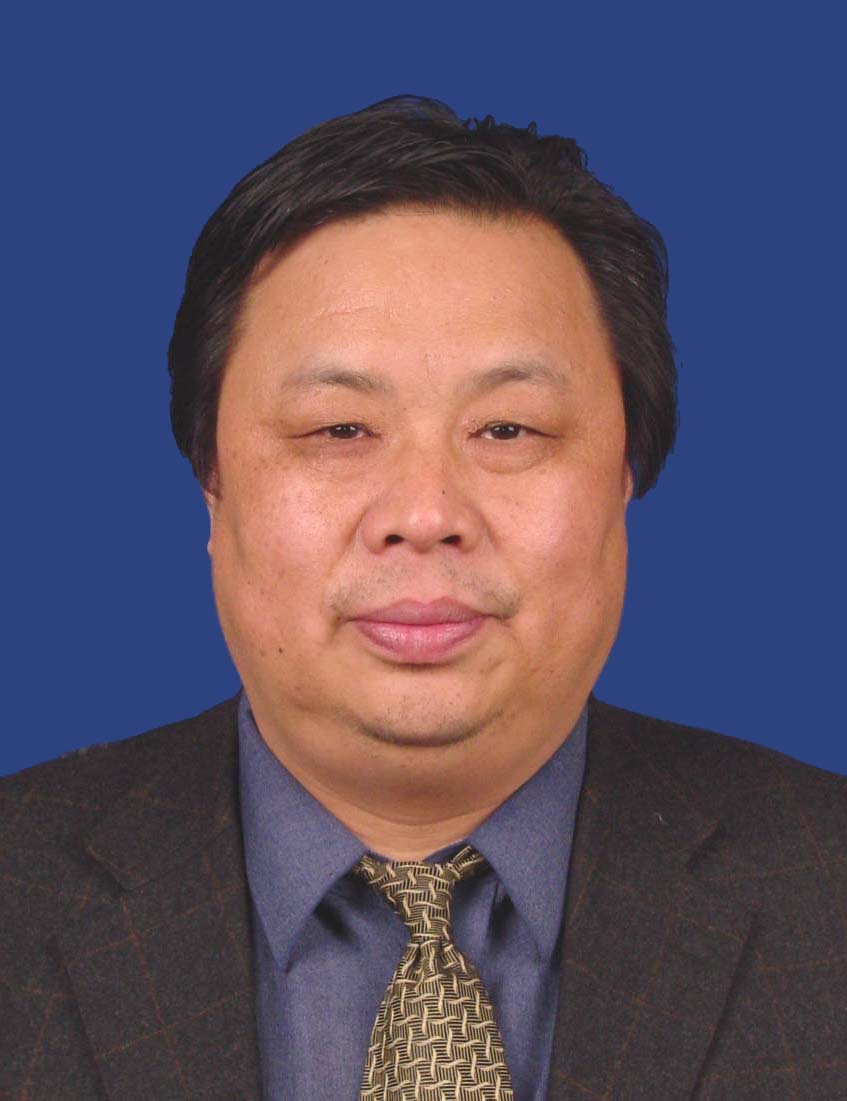 Hongjie Xu (徐洪杰)合作论文数Shanghai Institute of Applied Physics, Chinese Academy of Sciences2
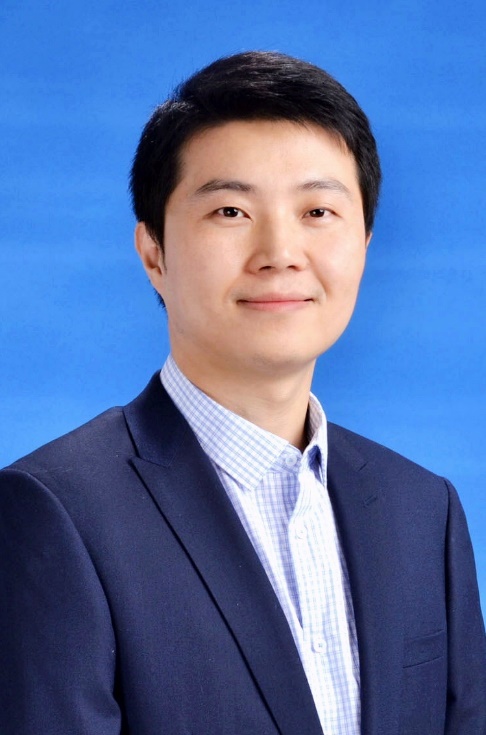 Bin Zhu (朱斌)合作论文数School of Management and Economics, Beijing Institute of Technology2
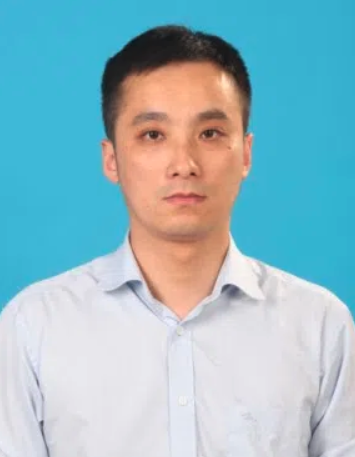 Dawei Jin (金大卫)合作论文数School of Information Engineering, Zhongnan University of Economics and Law2
 Song Huang合作论文数2
 En-Hong Chen (陈恩红)合作论文数Anhui Province Key Laboratory of Big Data Analysis and Application, School of Computer Science and Technology, University of Science and Technology of China2Xiumei Zhang合作论文数2
 Fei Wang合作论文数School of Computer Science and Technology, University of Science and Technology of China;State Key Laboratory of Cognitive Intelligence, University of Science and Technology of China1Ke Zhang合作论文数1Naixing Chen合作论文数1
 Feilong Liu合作论文数1
 Yuqi Yang合作论文数1Chong Zhou (周翀)合作论文数1Ye Yu合作论文数1SHEN Qiuhui (申秋慧)合作论文数1Liu Wu合作论文数1CHEN Jinyang (陈锦阳)合作论文数1ZHANG Bo (张博)合作论文数1Hua WANG (王华)合作论文数1Yongxing Jia合作论文数1Yanzhi E (鄂彦志)合作论文数1




