Remote Photoplethysmography (rPPG) is a non-contact technique for extracting physiological signals from facial videos. Recently, Transformer-based architectures have exhibited remarkable performance in rPPG estimation, owing to their excellent long-range spatial-temporal modeling capacities. However, challenges persist in applying Transformer-based rPPG methods, where quadratic computational costs and inadequate feature modeling diversity remain formidable. To address these challenges, we leverage the power of the Frequency Domain-based Vision Transformer and propose an end-to-end model PhysFFTFormer. Specifically, by integrating customized Frequency-Domain Spatiotemporal Self-Attention and Frequency-Domain Discriminative Feed-Forward modules, PhysFFTFormer efficiently captures spatial-temporal dependencies with reduced computational complexity. To extract rich and diverse feature representations, we design a dual-pathway architecture to utilize both raw and differential video frames. Furthermore, the Frequency-Domain Spatiotemporal Cross-Attention module is introduced to enhance information exchange and enable feature complementation between the two pathways. Extensive experiments on multiple benchmark datasets demonstrate PhysFFTFormer’s state-of-the-art performance, robustness, and potential for real-world non-contact health monitoring.
Roll call vote prediction is a research field in quantitative political science that is crucial for understanding the legislative process and assessing the impact of political decisions. Much of the current work incorporates contextual information about legislation and legislators, relying on historical voting data to learn about legislation and preferences of legislators. However, these efforts have paid insufficient attention to characterizing the important role of cosponsors in legislation. In practical scenarios, whether a legislator votes for or against a bill is largely related to the cosponsors. To address the above challenge, in this article, we propose a group enhanced roll call vote prediction model, which considers cosponsors as a group. Specifically, we first reconstruct the historical cosponsorship network to obtain an accurate graph of relationships among legislators, and we utilize a GNN to obtain the preferences of legislators. Then, we propose an individual aggregation method to obtain the representation of groups and we further employ the BERT model to obtain the representation of legislative texts. We further integrate these representations by attention mechanisms to gain the final representation of legislation. It is worth mentioning that in the group representation component, considering the large size of some groups and the significant differences among group members, we apply self-attention mechanism within the group and prune members based on attention scores. Finally, we input the obtained representations of legislation and legislators into an MLP layer to obtain the final voting results of legislators on the legislation. Extensive experiments conducted on real-world datasets demonstrate the competitiveness of our model compared to state-of-the-art baseline methods.
Cross-domain recommendation (CDR), aiming to extract and transfer knowledge across domains, has attracted wide attention for its efficacy in addressing data sparsity and cold-start problems. Despite significant advances in representation disentanglement to capture diverse user preferences, existing methods usually neglect representation enhancement and lack rigorous decoupling constraints, thereby limiting the transfer of relevant information. To this end, we propose a Unified Framework for Adaptive Representation Enhancement and Inversed Learning in Cross-Domain Recommendation (AREIL). Specifically, we first divide user embeddings into domain-shared and domain-specific components to disentangle mixed user preferences. Then, we incorporate intra-domain and inter-domain information to adaptively enhance the ability of user representations. In particular, we propose a graph convolution module to capture high-order information, and a self-attention module to reveal inter-domain correlations and accomplish adaptive fusion. Next, we adopt domain classifiers and gradient reversal layers to achieve inversed representation learning in a unified framework. Finally, we employ a cross-entropy loss for measuring recommendation performance and jointly optimize the entire framework via multi-task learning. Extensive experiments on multiple datasets validate the substantial improvement in the recommendation performance of AREIL. Moreover, ablation studies and representation visualizations further illustrate the effectiveness of adaptive enhancement and inversed learning in CDR.
Knowledge tracing (KT) is an intelligent educational technology used to model students' learning progress and mastery in adaptive learning environments for personalized education. Despite utilizing deep learning models in KT, current approaches often oversimplify students' exercise records into knowledge sequences, which fail to explore the rich information within individual questions. In addition, existing KT models tend to neglect the complex, higher order relationships between questions and latent concepts. Therefore, we introduce a novel model called feature crosses information-based KT (FCIKT) to explore the intricate interplay between questions, latent concepts, and question difficulties. FCIKT utilizes a fusion module to perform feature crosses operations on questions, integrating information from our constructed multirelational heterogeneous graph using graph convolutional networks. We deployed a multihead attention mechanism, which enriches the static embedding representations of questions and concepts with dynamic semantic information to simulate real-world scenarios of problem-solving. We also used gated recurrent units to dynamically capture and update the students' knowledge state for final prediction. Extensive experiments demonstrated the validity and interpretability of our proposed model.
Last year has witnessed the re-flourishment of tag-aware recommender systems supported by the LLM-enriched tags. Unfortunately, though large efforts have been made, current solutions may fail to describe the diversity and uncertainty inherent in user preferences with only tag-driven profiles. Recently, with the development of geometry-based techniques, e.g., box embeddings, the diversity of user preferences now could be fully modeled as the range within a box in high dimension space. However, defect still exists as these approaches are incapable of capturing high-order neighbor signals, i.e., semantic-rich multi-hop relations within the user-tag-item tripartite graph, which severely limits the effectiveness of user modeling. To deal with this challenge, in this paper, we propose a novel framework, called BoxGNN, to perform message aggregation via combinations of logical operations, thereby incorporating high-order signals. Specifically, we first embed users, items, and tags as hyper-boxes rather than simple points in the representation space, and define two logical operations, i.e., union and intersection, to facilitate the subsequent process. Next, we perform the message aggregation mechanism via the combination of logical operations, to obtain the corresponding high-order box representations. Finally, we adopt a volume-based learning objective with Gumbel smoothing techniques to refine the representation of boxes. Extensive experiments on two publicly available datasets and one LLM-enhanced e-commerce dataset have validated the superiority of BoxGNN compared with various state-of-the-art baselines. The code is released online: https://github.com/critical88/BoxGNN.
The sequential recommender (SR) system is a crucial component of modern recommender systems, as it aims to capture the evolving preferences of users. Significant efforts have been made to enhance the capabilities of SR systems. These methods typically follow the model-centric paradigm, which involves developing effective models based on fixed datasets. However, this approach often overlooks potential quality issues and flaws inherent in the data. Driven by the potential of data-centric AI, we propose a novel data-centric paradigm for developing an ideal training dataset using a model-agnostic dataset regeneration framework called DR4SR. This framework enables the regeneration of a dataset with exceptional cross-architecture generalizability. Additionally, we introduce the DR4SR+ framework, which incorporates a model-aware dataset personalizer to tailor the regenerated dataset specifically for a target model. To demonstrate the effectiveness of the data-centric paradigm, we integrate our framework with various model-centric methods and observe significant performance improvements across four widely adopted datasets. Furthermore, we conduct in-depth analyses to explore the potential of the data-centric paradigm and provide valuable insights. The code can be found at https://github.com/USTC-StarTeam/DR4SR.
As a fundamental research task for intelligent education, knowledge tracing (KT) aims to trace learners' dynamic knowledge states and predict their future performance based on their historical response data. However, learners' cognitive processes cannot be studied in isolation from the context; nevertheless, existing knowledge tracing models mainly use knowledge topology as auxiliary information but do not deeply explore the contextual information of exercises. Thus, an in-depth exploration of multi-layer contextual information in learning scenarios is required, focusing on the cognitive differences among different learners. Furthermore, knowledge tracing models exhibit limited interpretability compared with cognition diagnosis methods integrating educational priors. To address these issues, we propose a multi-layer context-aware deep knowledge tracing (MLC-DKT) model. Specifically, we first present the multi-layer contextual representation method involving knowledge concepts and exercises. In the knowledge state tracing module, we incorporate the learners' knowledge priors into the attention mechanism to capture the evolution of the learners' knowledge. Then, we develop a calculation method for the similarity effect among the contextual information, which helps estimate the learners' knowledge states. In the learning performance prediction module, we introduce the guessing and slipping factors from the cognition diagnosis model to optimize the MLC-DKT model, further improving the performance of the KT model. Finally, we conduct extensive experiments on real-world datasets, demonstrating that the MLC-DKT model provides improved predictions of learner performance. Moreover, the MLC-DKT model realizes contextual awareness from knowledge concepts and exercises, making the predictions more interpretable.
Multimodal Entity Linking (MEL) aims to address the ambiguity in multimodal mentions and associate them with Multimodal Knowledge Graphs (MMKGs). Existing works primarily focus on designing multimodal interaction and fusion mechanisms to enhance the performance of MEL. However, these methods still overlook two crucial gaps within the MEL task. One is the content discrepancy between mentions and entities, manifested as uneven information density. The other is the knowledge gap, indicating insufficient knowledge extraction and reasoning during the linking process. To bridge these gaps, we propose a novel framework FissFuse, as well as a plug-and-play knowledge-aware re-ranking method KAR. Specifically, FissFuse collaborates with the Fission and Fusion branches, establishing dynamic features for each mention-entity pair and adaptively learning multimodal interactions to alleviate content discrepancy. Meanwhile, KAR is endowed with carefully crafted instruction for intricate knowledge reasoning, serving as re-ranking agents empowered by Large Language Models (LLMs). Extensive experiments on two well-constructed MEL datasets demonstrate outstanding performance of FissFuse compared with various baselines. Comprehensive evaluations and ablation experiments validate the effectiveness and generality of KAR.
Based on the construction of the knowledge map of "Data Structure and Programming" course, the data of PTA platform, rain class data, MOOC and other platforms are integrated, and the comparative analysis is carried out according to the different granularity of knowledge points, trying to find out students' learning difficulties and blind spots, so as to provide more specific and effective help for students' learning.At the same time, it provides the basis for the adjustment of the follow-up curriculum exercises, the targeted adjustment of the textbook and the concrete implementation of the teaching work.
面向计算机类课程的思政建设进行探索,研究如何将思政建设与课程教学融为一体,依托思政建设进一步培养学生的计算思维与解决复杂工程问题的能力,为培养计算机专业人才提质增效.首先,从计算机专业的目标定位、学科特点入手,分析计算机类课程思政建设的基本思路,阐明了计算机类课程间存在较强的支撑关系,应突出计算思维培养要求与思政元素的天然联结.然后,从内容关联、把握本质、体验感悟3个方面提出课程思政元素的挖掘方法.最后,将专业、课程、课时对应宏观、中观、微观层面构建思政建设教学实践路径,并结合具体课程展开描述,指导教师结合具体课程更好地开展课程思政建设.
Online education brings more possibilities for personalized learning, in which identifying the cognitive state of learners is conducive to better providing learning services. Cognitive diagnosis is an effective measurement to assess the cognitive state of students through response data of answering the problems(e.g., right or wrong). Generally, the cognitive diagnosis framework includes the mastery of skills required by a specified problem and the aggregation of skills. The current multi-skill aggregation methods are mainly divided into conjunctive and compensatory methods and generally considered that each skill has the same effect on the correct response. However, in practical learning situations, there may be more complex interactions between skills, in which each skill has different weight impacting the final result. To this end, this paper proposes a generalized multi-skill aggregation method based on the Sugeno integral (SI-GAM) and introduces fuzzy measures to characterize the complex interactions between skills. We also provide a new idea for modeling multi-strategy problems. The cognitive diagnosis process is implemented by a more general and interpretable aggregation method. Finally, the feasibility and effectiveness of the model are verified on synthetic and real-world datasets.
在教学应用场景中,知识之间的关联性广受关注,但现有研究通常偏重两两知识点之间关系的建模,忽视知识集合中复杂的关联关系,导致研究结果出现偏差.因此,文中引入模糊测度对知识集合进行量化度量,并在此基础上提出基于模糊测度的知识关联性建模方法.首先,基于认知心理学理论,分析知识间存在的三种不同关系,并利用模糊测度建模知识间的关联性,通过实际教学场景论证方法的实用性.然后,在模糊测度建模的基础上,从知识关联性的视角讨论知识的重要度和交互指标.最后,研究知识关联性在认知诊断中的应用.真实数据集上的实验证实知识关联性对认知诊断的影响,不仅有效提升预测精度,也提供更好的可解释性.
In the context of personalized learning, the recommendation method aims to provide appropriate exercises for each student. And individualized knowledge status may give more effective recommendation. In this study, a priority recommendation method based on cognitive diagnosis model is proposed, and cosine similarity algorithm is applied to improve the accuracy and interpretability of recommendation. Then the performance of the methods was compared under cognitive diagnosis models. The experimental results show that the method proposed achieves more accurate results and better performance.
作者围绕学生创新能力和组织管理能力的培养,以程序设计俱乐部为依托,构建贯穿全期的、不间断的人才培养模式,重构程序设计创新能力培养知识框架,完善教材体系,建立丰富的配套教学资源和信息化实践平台,形成了较为完善的程序设计俱乐部教学训练体系,取得了较为显著的实践效果.
针对作战模拟课程的教学现状以及目前存在的问题,提出了项目驱动和案例教学法相融合的教学模式,并结合专业课程,探讨这种教学模式的具体应用方法,通过案例引导下的课程总体设计、项目驱动下的课程单元设计,将教学模式应用到课程教学实施过程中,取得良好的教学效果.
Recently, a new extension of fuzzy sets, Pythagorean fuzzy sets (PFS), has attracted a lot of attention from scholars in various fields of research. Due to PFS's powerfulness in modeling the imprecision of human perception in multicriteria decision-making (MCDM) problems, this paper aims to extend the classicalpreference ranking organization method of enrichment evaluations (PROMETHEE) into the Pythagorean fuzzy environment. The proposed method takes not only the weights related to different criteria but also the preference relations as Pythagorean fuzzy numbers, therefore providing a broader range of choices for the decision-maker to express their preferences. Five properties are put forward to regulate the designing of both intuitionistic and Pythagorean fuzzy PROMETHEE (PF-PROMETHEE) preference functions. Furthermore two illustrative examples are given to demonstrate the detailed procedure of PF-PROMETHEE, and comparisons are made to distinguish the differences among our proposed method, the classical PROMETHEE and intuitionistic PROMETHEE. The results show that PF-PROMETHEE is effective, comprehensive, and applicable to a wide range of MCDM problems.
Data quality problems are analyzed to get several typical problems, such as data missing, data duplication, data abnormality, data inconsistency and data logic error. In order to resolve these problems, a universal data quality management software is proposed. This software provides data cleaning method for each problem and evaluates the effect of these methods, and manages the plug-in components for use. The architecture and critical technologies are introduced in detail, and main steps are shown with a specific application. According to the feedback of users, this new software is powerful, adaptable, simple to use, easy to set processes, with high data cleaning efficiency and accurate effect evaluations.
针对大学计算机基础课程实践教学中计算思维的培养问题,从场域的角度出发,分析了教学范式与场域的变化映射关系,提出"自适应"理念下多场域导向的大学计算机基础课程实践教学范式,通过教育科学和数据科学研究方法的交叉融合,推进实践教学的发展.
In most cases, PROMETHEE method just applies to traditional multicriteria decision making (MCDM) problems with independent criteria. However, there exist more or less interdependences among criteria in actual situations. A special case is MCDM with prioritizations among criteria, called prioritized MCDM. In recent years, how to deal with MCDM problems in the environment of prioritized criteria becomes hot topic increasingly. Lots of existing methods, especially some methods based on aggregated operators, are modified for the prioritized MCDM. However, up to now, PROMETHEE methods are not very mature when used into prioritized MCDM problems. Therefore, our purpose is to modify traditional PROMETHEE methods according to prioritized MCDM after considering the characteristics of both PROMETHEE methods and prioritized criteria. Firstly, preference information is not static any longer for prioritized criteria, so we design an approach to weight the criteria dynamically based on a new concept—preference expectations. Furthermore, an ordered weighted averaging operator is used to generate pseudo-criteria for the situation of weakly ordered prioritizations. In such a case, the situation of weakly ordered prioritizations is transformed into that of strictly ones. After quantifying preference information properly, we can then calculate aggregated preference indices which are important intermediate outcomes for PROMETHEE to rank alternatives. An example, for assessing the strategic status of islands and reefs, is taken to illustrate the practicability and feasibility of our method.
 XiangLin Liao (廖湘琳)合作论文数12
 Xiaohan Yu合作论文数10
 En-Hong Chen (陈恩红)合作论文数Anhui Province Key Laboratory of Big Data Analysis and Application, School of Computer Science and Technology, University of Science and Technology of China9JinYu Song (宋金玉)合作论文数8Jiandong Hao合作论文数5Xiuli Qi合作论文数5
 Xingde Li (李兴德)合作论文数中国人民解放军陆军工程大学5WenBin Jie (解文彬)合作论文数4
 Tong Xu (徐童)合作论文数School of Computer Science and Technology, University of Science and Technology of China4
 Hao Wang (王皓)合作论文数Anhui Province Key Laboratory of Big Data Analysis and Application, School of Computer Science and Technology, University of Science and Technology of China;School of Data Science, University of Science and Technology of China;Key Laboratory of Cognitive Intelligence, University of Science and Technology of China3
 Song Huang合作论文数3Wenning Hao合作论文数3Fake Lin合作论文数School of Computer Science and Technology, University of Science and Technology of China2
 Mingjia Yin (尹铭佳)合作论文数School of Artificial Intelligence and Data Science, University of Science and Technology of China2Ziwei Zhao合作论文数2Chen Weiwei合作论文数2
 Sirui Zhao (赵思蕊)合作论文数State Key Laboratory of Cognitive Intelligence, School of Computer Science and Technology, University of Science and Technology of China2
 Zi-Xuan Zhang合作论文数Army Engn Univ PLA, Inst Command & Control Syst, Nanjing 210007, Jiangsu, Peoples R China2Yi-Ping Guo合作论文数2
 Jun-Yue Chen合作论文数Army Engn Univ PLA, Inst Command & Control Syst, Nanjing 210007, Jiangsu, Peoples R China2
 Faming Shao合作论文数2Rui Zhang (张睿)合作论文数2
 Kai Cheng合作论文数2
 Defu Lian (连德富)合作论文数School of Computer Science and Technology, University of Science and Technology of China2Che Liu合作论文数1Da Zhang合作论文数1Luankang Zhang合作论文数1Shitian Shen合作论文数1Yongqiang Han合作论文数1
 Fei Wang合作论文数School of Computer Science and Technology, University of Science and Technology of China;State Key Laboratory of Cognitive Intelligence, University of Science and Technology of China1
 Xi Zhu合作论文数1
 Zikai Yin合作论文数1Minglei Li合作论文数1
 Pengfei Luo合作论文数University of Science and Technology of China1Wei Guo合作论文数Noah's Ark Lab, Huawei;School of Electronic Information, Wuhan University1Xiao-Han Yu合作论文数1Yongfen Wu合作论文数Army Engineering University of PLA, Nanjing, China1En Yuan合作论文数1
 Ruizhi KANG (康睿智)合作论文数1TANG Yan-qin (唐艳琴)合作论文数1XiLiang Ceng (曾喜良)合作论文数1JinLei Xu (徐金雷)合作论文数1TongXiang Xie (谢同祥)合作论文数1YuXia Niu (牛玉霞)合作论文数1HaiYing Yu (俞海英)合作论文数1Bin Hu (胡斌)合作论文数1
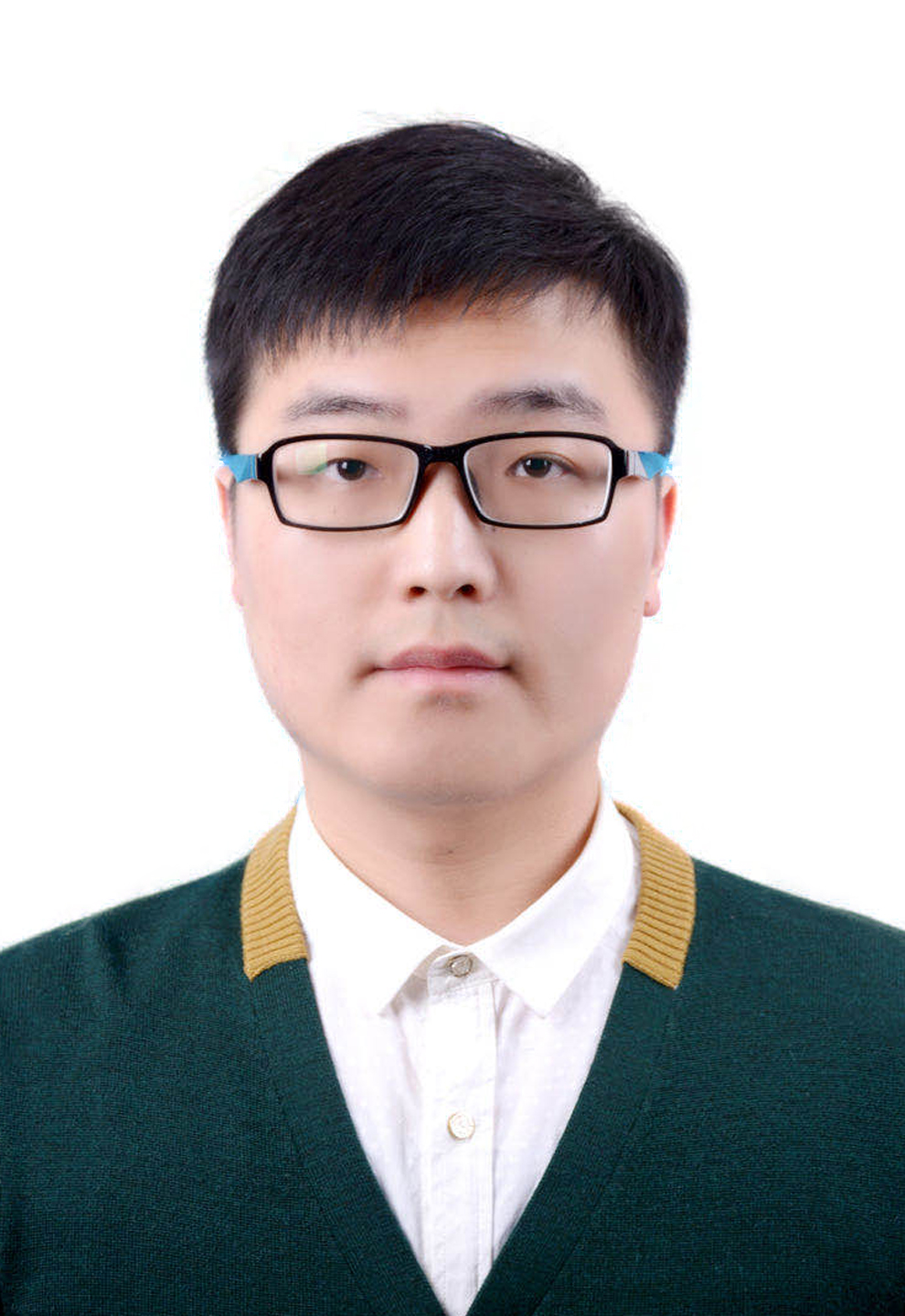 Zhenya Huang (黄振亚)合作论文数School of Computer Science and Technology, University of Science and Technology of China;School of Data Science, University of Science and Technology of China1
 Xin Yuan合作论文数Dept. of Electr. Eng., Duke Univ.;c;Dept. of Electr. Eng., Duke Univ.1
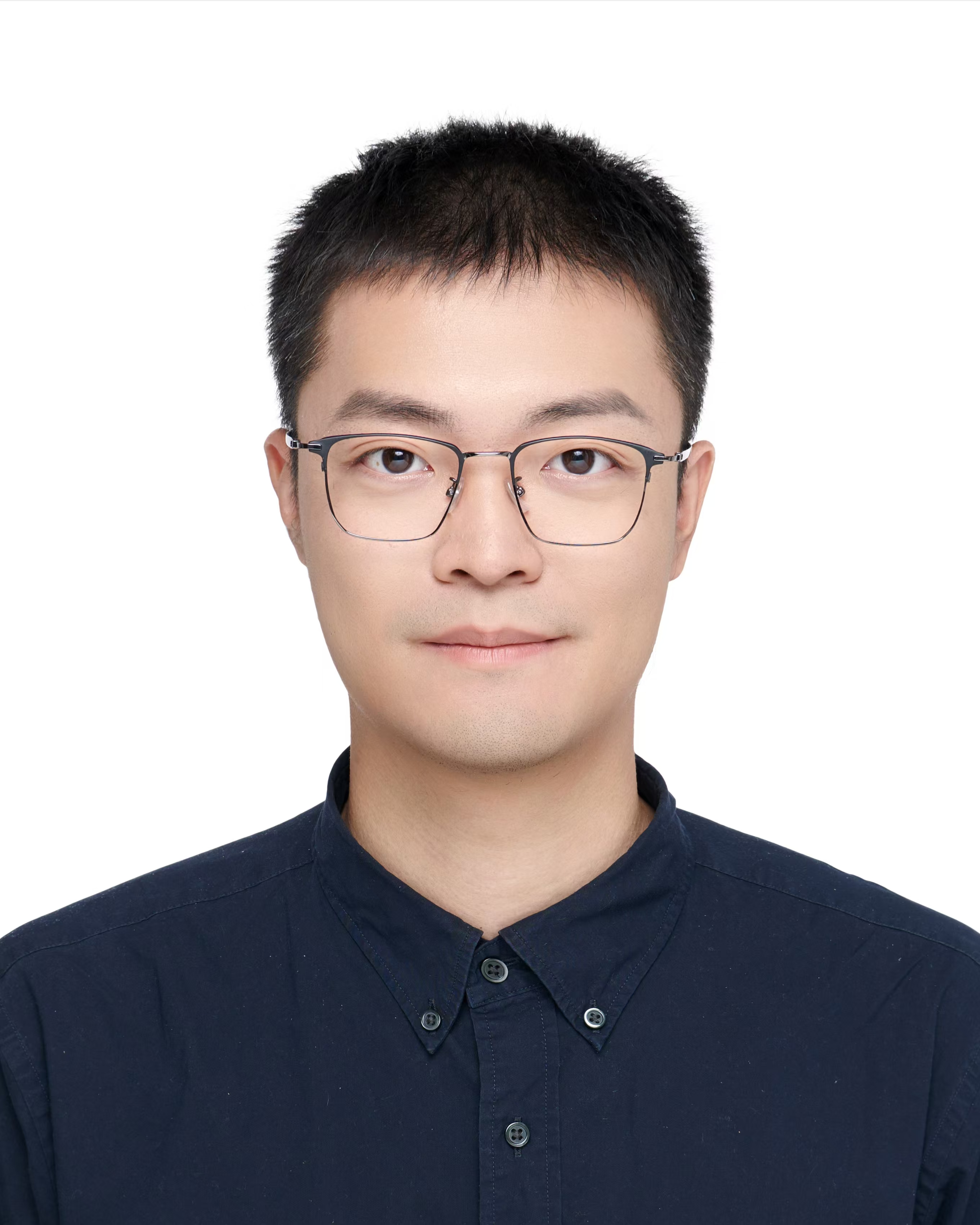 Zhi Zheng (郑值)合作论文数State Key Laboratory of Cognitive Intelligence, School of Computer Science and Technology, University of Science and Technology of China1




