PyTorch has ascended as a premier machine learning framework, yet it lacks a native and comprehensive library for decision and control tasks suitable for large development teams dealing with complex real-world data and environments. To address this issue, we propose TorchRL, a generalistic control library for PyTorch that provides well-integrated, yet standalone components. We introduce a new and flexible PyTorch primitive, the TensorDict, which facilitates streamlined algorithm development across the many branches of Reinforcement Learning (RL) and control. We provide a detailed description of the building blocks and an extensive overview of the library across domains and tasks. Finally, we experimentally demonstrate its reliability and flexibility and show comparative benchmarks to demonstrate its computational efficiency. TorchRL fosters long-term support and is publicly available on GitHub for greater reproducibility and collaboration within the research community. The code is open-sourced on GitHub.
The quadratic complexity and weak length extrapolation of Transformers limits their ability to scale to long sequences, and while sub-quadratic solutions like linear attention and state space models exist, they empirically underperform Transformers in pretraining efficiency and downstream task accuracy. We introduce Megalodon, a neural architecture for efficient sequence modeling with unlimited context length. Megalodon inherits the architecture of Mega (exponential moving average with gated attention), and further introduces multiple technical components to improve its capability and stability, including complex exponential moving average (CEMA), timestep normalization layer, normalized attention mechanism and pre-norm with two-hop residual configuration. In a controlled head-to-head comparison with Llama2, Megalodon achieves better efficiency than Transformer in the scale of 7 billion parameters and 2 trillion training tokens. Megalodon reaches a training loss of 1.70, landing mid-way between Llama2-7B (1.75) and 13B (1.67). Code: https://github.com/XuezheMax/megalodon
Recent research has increasingly focused on evaluating large language models’ (LLMs) alignment with diverse human values and preferences, particularly for open-ended tasks like story generation. Traditional evaluation metrics rely heavily on lexical similarity with human-written references, often showing poor correlation with human judgments and failing to account for alignment with the diversity of human preferences. To address these challenges, we introduce PerSE, an interpretable evaluation framework designed to assess alignment with specific human preferences. It is tuned to infer specific preferences from an in-context personal profile and evaluate the alignment between the generated content and personal preferences. PerSE enhances interpretability by providing detailed comments and fine-grained scoring, facilitating more personalized content generation. Our 13B LLaMA-2-based PerSE shows a 15.8% increase in Kendall correlation and a 13.7% rise in accuracy with zero-shot reviewers compared to GPT-4. It also outperforms GPT-4 by 46.01% in Kendall correlation on new domains, indicating its transferability
While large language models (LLMs) have shown impressive results for more objective tasks such as QA and retrieval, it remains nontrivial to evaluate their performance on open-ended text generation for reasons including (1) data contamination; (2) multi-dimensional evaluation criteria; and (3) subjectiveness stemming from reviewers' personal preferences. To address such issues, we propose to model personalization in an uncontaminated open-ended generation assessment. We create two new datasets Per-MPST and Per-DOC for personalized story evaluation, by re-purposing existing datasets with proper anonymization and new personalized labels. We further develop a personalized story evaluation model PERSE to infer reviewer preferences and provide a personalized evaluation. Specifically, given a few exemplary reviews from a particular reviewer, PERSE predicts either a detailed review or fine-grained comparison in several aspects (such as interestingness and surprise) for that reviewer on a new text input. Experimental results show that PERSE outperforms GPT-4 by 15.8% on Kendall correlation of story ratings, and by 13.7% on pairwise preference prediction accuracy. Both datasets and code will be released.
Story plots, while short, carry most of the essential information of a full story that may contain tens of thousands of words. We study the problem of automatic generation of story plots, which includes story premise, character descriptions, plot outlines, etc. To generate a single engaging plot, existing plot generators (e.g., DOC (Yang et al., 2022a)) require hundreds to thousands of calls to LLMs (e.g., OpenAI API) in the planning stage of the story plot, which is costly and takes at least several minutes. Moreover, the hard-wired nature of the method makes the pipeline non-differentiable, blocking fast specialization and personalization of the plot generator. In this paper, we propose three models, $\texttt{OpenPlot}$, $\texttt{E2EPlot}$ and $\texttt{RLPlot}$, to address these challenges. $\texttt{OpenPlot}$ replaces expensive OpenAI API calls with LLaMA2 (Touvron et al., 2023) calls via careful prompt designs, which leads to inexpensive generation of high-quality training datasets of story plots. We then train an end-to-end story plot generator, $\texttt{E2EPlot}$, by supervised fine-tuning (SFT) using approximately 13000 story plots generated by $\texttt{OpenPlot}$. $\texttt{E2EPlot}$ generates story plots of comparable quality to $\texttt{OpenPlot}$, and is > 10$\times$ faster (1k tokens in only 30 seconds on average). Finally, we obtain $\texttt{RLPlot}$ that is further fine-tuned with RLHF on several different reward models for different aspects of story quality, which yields 60.0$\%$ winning rate against $\texttt{E2EPlot}$ along the aspect of suspense and surprise.
The aggressive performance optimizations in modern microprocessors can result in security vulnerabilities. For example, timing-based attacks in processor caches can steal secret keys or break randomization. So far, finding cache-timing vulnerabilities is mostly performed by human experts, which is inefficient and laborious. There is a need for automatic tools that can explore vulnerabilities given that unreported vulnerabilities leave the systems at risk.In this paper, we propose AutoCAT, an automated exploration framework that finds cache timing-channel attack sequences using reinforcement learning (RL). Specifically, AutoCAT formulates the cache timing-channel attack as a guessing game between an attack program and a victim program holding a secret. This guessing game can thus be solved via modern deep RL techniques. AutoCAT can explore attacks in various cache configurations without knowing design details and under different attack and victim program configurations. AutoCAT can also find attacks to bypass certain detection and defense mechanisms. In particular, AutoCAT discovered StealthyStreamline, a new attack that is able to bypass performance counter-based detection and has up to a 71% higher information leakage rate than the state-of-the-art LRU-based attacks on real processors. AutoCAT is the first of its kind in using RL for crafting microarchitectural timing-channel attack sequences and can accelerate cache timing-channel exploration for secure microprocessor designs.
Finding the optimal pass sequence of compilation can lead to a significant reduction in program size and/or improvement in program efficiency. Prior works on compilation pass ordering have two major drawbacks. They either require an excessive budget (in terms of compilation steps) at compile time or fail to generalize to unseen programs. In this paper, for code-size reduction tasks, we propose a novel pipeline to find program-dependent pass sequences within 45 compilation calls. It first identifies a coreset of 50 pass sequences via greedy optimization of a submodular function, and then learns a policy with Graph Neural Network (GNN) to pick the optimal sequence by predicting the normalized values of the pass sequences in the coreset. Despite its simplicity, our pipeline outperforms the default -Oz flag by an average of 4.7% over a large collection (4683) of unseen code repositories from diverse domains across 14 datasets. In comparison, previous approaches like reinforcement learning on the raw pass sequence space may take days to train due to sparse reward, and may not generalize well in held-out ones from different domains. Our results demonstrate that existing human-designed compiler flags can be improved with a simple yet effective technique that transforms the raw action space into a small one with denser rewards.
Finding antenna designs that satisfy frequency requirements and are also optimal with respect to multiple physical criteria is a critical component in designing next generation hardware. However, such a process is non-trivial because the objective function is typically highly nonlinear and sensitive to subtle design change. Moreover, the objective to be optimized often involves electromagnetic (EM) simulations, which is slow and expensive with commercial simulation software. In this work, we propose a sample-efficient and accurate surrogate model, named CZP (Constant Zeros Poles), to directly estimate the scattering coefficients in the frequency domain of a given 2D planar antenna design, without using a simulator. CZP achieves this by predicting the complex zeros and poles for the frequency response of scattering coefficients, which we have theoretically justified for any linear PDE, including Maxwell’s equations. Moreover, instead of using low-dimensional representations, CZP leverages a novel image-based representation for antenna topology inspired by the existing mesh-based EM simulation techniques, and attention-based neural network architectures. We demonstrate experimentally that CZP not only outperforms baselines in terms of test loss, but also is able to find 2D antenna designs verifiable by commercial software with only 40k training samples, when coupling with advanced sequential search techniques like reinforcement learning.
Linear Partial Differential Equations (PDEs) govern the spatial-temporal dynamics of physical systems that are essential to building modern technology. When working with linear PDEs, designing a physical system for a specific outcome is difficult and costly due to slow and expensive explicit simulation of PDEs and the highly nonlinear relationship between a system's configuration and its behavior. In this work, we prove a parametric form that certain physical quantities in the Fourier domain must obey in linear PDEs, named the CZP (Constant-Zeros-Poles) framework. Applying CZP to antenna design, an industrial application using linear PDEs (i.e., Maxwell's equations), we derive a sample-efficient parametric surrogate model that directly predicts its scattering coefficients without explicit numerical PDE simulation. Combined with a novel image-based antenna representation and an attention-based neural network architecture, CZP outperforms baselines by 10% to 25% in terms of test loss and also is able to find 2D antenna designs verifiable by commercial software with $33\%$ greater success than baselines, when coupled with sequential search techniques like reinforcement learning.
Security vulnerabilities in computer systems raise serious concerns as computers process an unprecedented amount of private and sensitive data today. Cache timing attacks (CTA) pose an important practical threat as they can effectively breach many protection mechanisms in today’s systems. However, the current detection techniques for cache timing attacks heavily rely on heuristics and expert knowledge, which can lead to brittleness and the inability to adapt to new attacks. To mitigate the CTA threat, we propose MACTA, a multi-agent reinforcement learning (MARL) approach that leverages population-based training to train both attackers and detectors. Following best practices, we develop a realistic simulated MARL environment, MA-AUTOCAT, which enables training and evaluation of cache-timing attackers and detectors. Our empirical results suggest that MACTA is an effective solution without any manual input from security experts. MACTA detectors can generalize to a heuristic attack not exposed in training with a 97.8% detection rate and reduce the attack bandwidth of adaptive attackers by 20% on average. In the meantime, MACTA attackers are qualitatively more effective than other attacks studied, and the average evasion rate of MACTA attackers against an unseen state-of-the-art detector can reach up to 99%. Furthermore, we found that agents equipped with a Transformer encoder can learn effective policies in situations when agents with multi-layer perceptron encoders do not in this environment, suggesting the potential of Transformer structures in CTA problems.
We introduce Nocturne, a new 2D driving simulator for investigating multi-agent coordination under partial observability. The focus of Nocturne is to enable research into inference and theory of mind in real-world multi-agent settings without the computational overhead of computer vision and feature extraction from images. Agents in this simulator only observe an obstructed view of the scene, mimicking human visual sensing constraints. Unlike existing benchmarks that are bottlenecked by rendering human-like observations directly using a camera input, Nocturne uses efficient intersection methods to compute a vectorized set of visible features in a C++ back-end, allowing the simulator to run at over 2000 steps-per-second. Using open-source trajectory and map data, we construct a simulator to load and replay arbitrary trajectories and scenes from real-world driving data. Using this environment, we benchmark reinforcement-learning and imitation-learning agents and demonstrate that the agents are quite far from human-level coordination ability and deviate significantly from the expert trajectories.
We propose a new building block, IdleBlock, which naturally prunes connections within the block. To fully utilize the IdleBlock we break the tradition of monotonic design in state-of-the-art networks, and introducing hybrid composition with IdleBlock. We study hybrid composition on MobileNet v3 and EfficientNet-B0, two of the most efficient networks. Without any neural architecture search, the deeper "MobileNet v3" with hybrid composition design surpasses possibly all state-of-the-art image recognition network designed by human experts or neural architecture search algorithms. Similarly, the hybridized EfficientNet-B0 networks are more efficient than previous state-of-the-art networks with similar computation budgets. These results suggest a new simpler and more efficient direction for network design and neural architecture search.
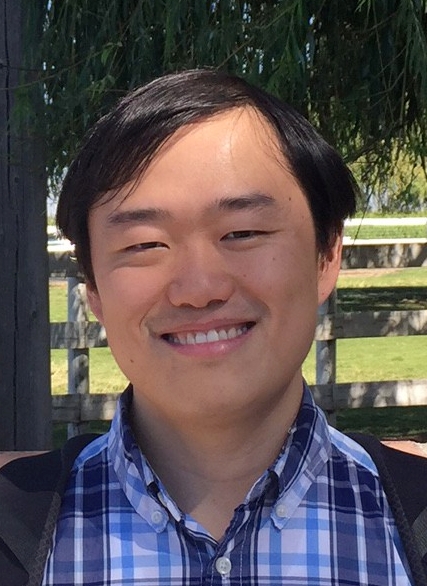 Yuandong Tian (田渊栋)合作论文数Recursive Superintelligence Inc.8
 Andrew Cohen合作论文数5
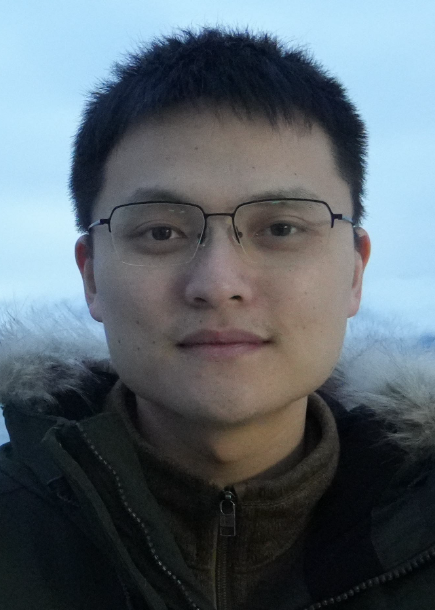 Hanlin Zhu (竺涵林)合作论文数Department of Electrical Engineering and Computer Science, University of California, Berkeley3
 Danqing Wang (王丹青)合作论文数Language Technologies Institute, Carnegie Mellon University3
 Kevin Yang合作论文数UC Berkeley;Meta AI3
 Beidi Chen合作论文数Department of Electrical and Computer Engineering, College of Engineering, Carnegie Mellon University;FAIR, Meta3
 Peter Renner合作论文数2
 Kevin Stone合作论文数Meta2Jan-Ove Mattsson合作论文数2Weiping Dou合作论文数2
 Jiang Zhu合作论文数Google LLC, Mountain View, CA 94043 USA2
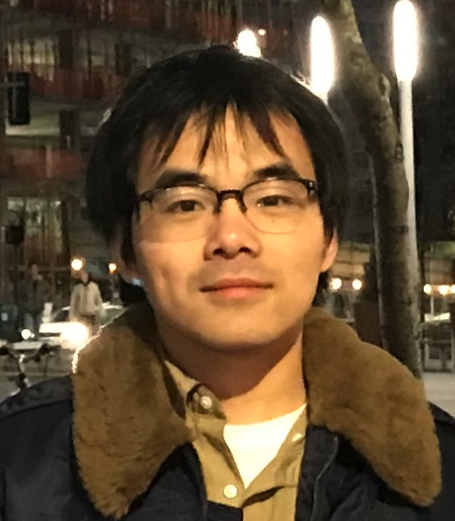 Mulong Luo合作论文数The University of Texas at Austin;Cornell University;Semiconductor Research Corporation2
 Wenjie Xiong合作论文数Bradley Department of Electrical and Computer Engineering, Virginia Polytechnic Institute and State University2
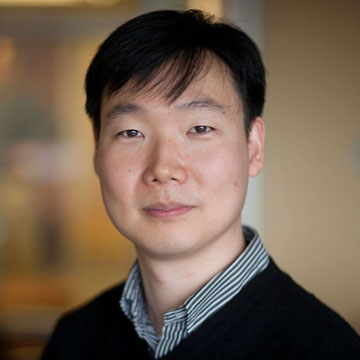 Edward Suh合作论文数NVIDIA2
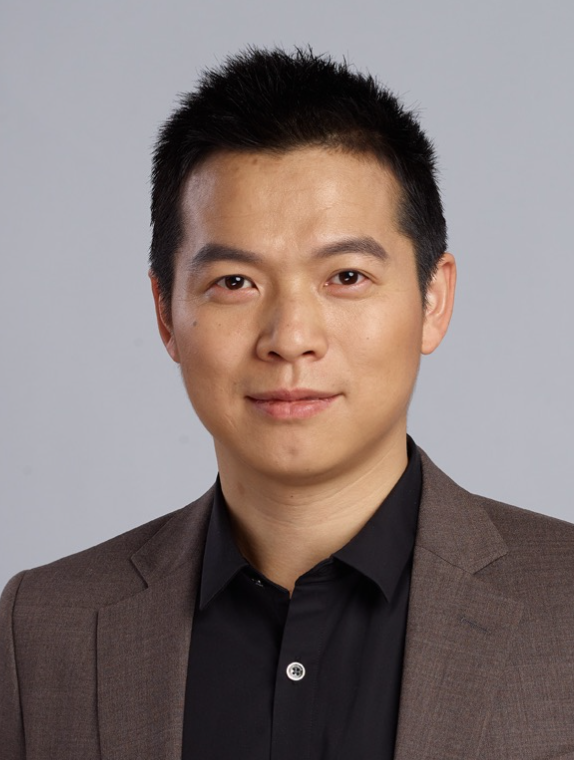 Lei Li合作论文数Language Technology Institute, School of Computer Science, Carnegie Mellon University;CyLab Security and Privacy Institute, Robert Mehrabian Collaborative Innovation Center, Carnegie Mellon University2
 Hsien-Hsin Sean Lee (李憲信)合作论文数Intel Corporation2
 Gary Geunbae Lee合作论文数Department of Computer Science & Engineering, Pohang University of Science and Technology2
 Slawomir Marcin Koziel合作论文数Department of Engineering, School of Science and Engineering, Reykjavik University;Gdańsk University of Technology2Ali Shameli合作论文数1
 Sebastian Dittert合作论文数Computational Science Laboratory, Universitat Pompeu Fabra;Quantfolio.AI1
 Albert Bou合作论文数Universitat Pompeu Fabra1Lili Yu合作论文数1
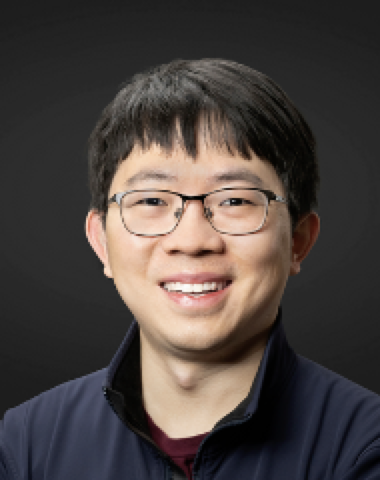 Hao Zhang (张昊)合作论文数Halıcıoğlu Data Science Institute, School of Computing, Information and Data Sciences, University of California, San Diego;Department of Computer Science and Engineering, Jacobs School of Engineering, University of California, San Diego1
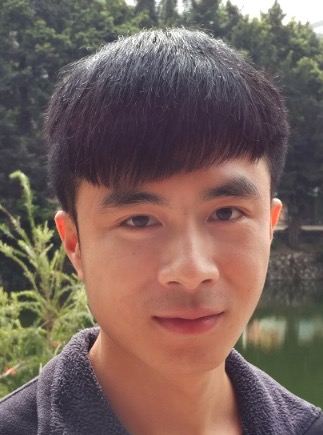 Youwei Liang合作论文数Department of Electrical and Computer Engineering, University of California, San Diego1Yueying Li合作论文数1
 Chris Cummins合作论文数Dept Linguist & English Language, Univ Edinburgh1
 Matteo Bettini合作论文数1
 Vincent Moens合作论文数Université catholique de Louvain1
 Andrew Tulloch合作论文数Thinking Machines Lab1Nathan Lichtlé合作论文数1Lin Qiao合作论文数Facebook Inc, Cambridge, MA 02142 USA1Jiadong Guo合作论文数Meta1Hugh Leather合作论文数School of Informatics, The University of Edinburgh1
 Eugene Vinitsky合作论文数Tandon School of Engineering, New York University1
 Benoit Steiner合作论文数Anthropic;Facebook1
 Jakob N. Foerster合作论文数Department of Engineering Science, University of Oxford;Meta1
 Vikash Kumar合作论文数The Robotics Institute, School of Computer Science, Carnegie Mellon University;FAIR-MetaAI1
 Omer Levy合作论文数Google DeepMind1
 Brandon Amos合作论文数Fundamental AI Research Group, Meta AI1
 Luke Zettlemoyer合作论文数Paul G. Allen School of Computer Science & Engineering, University of Washington;Facebook AI1
 Mostafa Elhoushi合作论文数Cerebras Systems1
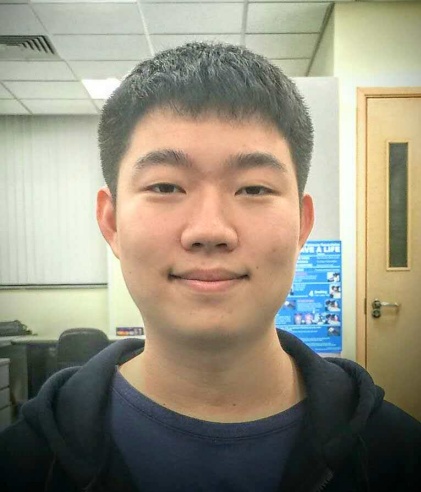 Yunpeng Chen (陈云鹏)合作论文数YITU Teach1
 Jiaxun Cui (崔佳勋)合作论文数Cockrell School of Engineering, The University of Texas at Austin1
 Jonathan May合作论文数Thomas Lord Department of Computer Science, Viterbi School of Engineering, University of Southern California;Amazon1
 Amy Zhang合作论文数Department of Electrical and Computer Engineering, University of Texas at Austin;Facebook1
 Chunting Zhou合作论文数Meta AI;FAIR Seattle1
 Bing Xu合作论文数NVIDIA1
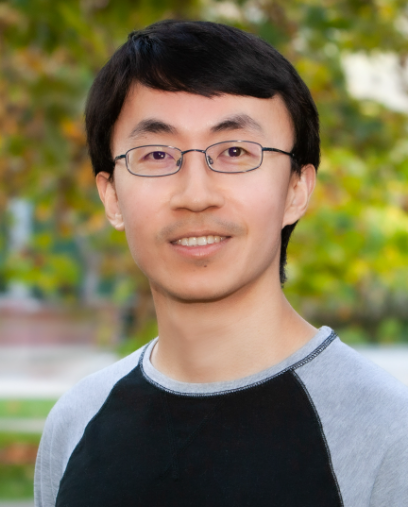 Pengtao Xie (谢澎涛)合作论文数Department of Electrical and Computer Engineering, Jacobs School of Engineering, University of California San Diego;Division of Biomedical Informatics, Department of Medicine, University of California San Diego1
 Shagun Sodhani合作论文数DeepMind1




