Relative position embedding has become a standard mechanism for encoding positional information in Transformers. However, existing formulations are typically limited to a fixed geometric space, namely 1D sequences or regular 2D/3D grids, which restricts their applicability to many computer vision tasks that require geometric reasoning across camera views or between 2D and 3D spaces. To address this limitation, we propose URoPE, a universal extension of Rotary Position Embedding (RoPE) to cross-view or cross-dimensional geometric spaces. For each key/value image patch, URoPE samples 3D points along the corresponding camera ray at predefined depth anchors and projects them into the query image plane. Standard 2D RoPE can then be applied using the projected pixel coordinates. URoPE is a parameter-free and intrinsics-aware relative position embedding that is invariant to the choice of global coordinate systems, while remaining fully compatible with existing RoPE-optimized attention kernels. We evaluate URoPE as a plug-in positional encoding for transformer architectures across a diverse set of tasks, including novel view synthesis, 3D object detection, object tracking, and depth estimation, covering 2D-2D, 2D-3D, and temporal scenarios. Experiments show that URoPE consistently improves the performance of transformer-based models across all tasks, demonstrating its effectiveness and generality for geometric reasoning. Our project website is: https://urope-pe.github.io/.
Modern video generators produce visually compelling clips but still struggle with physical and motion consistency, limiting their use as reliable world simulators. Existing remedies often rely on external simulators, teacher models, or curated physics-focused data. We explore a complementary self-supervised direction: extracting motion cues from the unlabeled videos already used to train video diffusion models. We propose LaMo, which formulates a latent motion prior over frame-to-frame latent changes conditioned on the current latent and prompt. This prior is exposed through two lightweight readouts: a macro motion drift used during training as a Motion Drift Loss, and a learned micro motion field used during sampling as Motion Prior Guidance. Both components are plug-and-play with existing video diffusion backbones, requiring no architectural or I/O changes. On VideoPhy and VideoPhy2, LaMo improves CogVideoX backbones and outperforms recent physics-aware baselines that use external supervision. On VBench, it preserves overall generation quality while improving motion-related dimensions. These results suggest that unlabeled video contains useful motion supervision for improving physical fidelity in modern video diffusion models.
The generalization ability of imitation learning policies for robotic manipulation is fundamentally constrained by the diversity of expert demonstrations, while collecting demonstrations across varied environments is costly and difficult in practice. In this paper, we propose a practical framework that exploits inherent scene diversity without additional human effort by scaling camera views during demonstration collection. Instead of acquiring more trajectories, multiple synchronized camera perspectives are used to generate pseudo-demonstrations from each expert trajectory, which enriches the training distribution and improves viewpoint invariance in visual representations. We analyze how different action spaces interact with view scaling and show that camera-space representations further enhance diversity. In addition, we introduce a multiview action aggregation method that allows single-view policies to benefit from multiple cameras during deployment. Extensive experiments in simulation and real-world manipulation tasks demonstrate significant gains in data efficiency and generalization compared to single-view baselines. Our results suggest that scaling camera views provides a practical and scalable solution for imitation learning, which requires minimal additional hardware setup and integrates seamlessly with existing imitation learning algorithms. The website of our project is https://yichen928.github.io/robot_multiview.
Dexterous manipulation has advanced rapidly, with policies now capable of performing complex, contact-rich tasks in simulation. However, transferring these policies from simulation to real world remains a significant challenge. A key obstacle is the mismatch in low-level controller dynamics, where same trajectories can produce vastly different contact forces and behaviors when control parameters change. Existing solutions often rely on manual tuning or controller randomization, which can be labor-intensive, task-specific, and introduce substantial training difficulty. In this work, we propose DexCtrl, a novel framework that jointly learns actions and controller parameters by leveraging the historical information of both trajectory and controller. This adaptive controller adjustment mechanism enables the policy to automatically tune control parameters during execution, thereby mitigating severe sim-to-real gap without extensive manual tuning or excessive randomization. Moreover, by explicitly providing controller parameters as part of the observation, our approach facilitates better reasoning over force interactions and improves robustness in real-world scenarios. Experimental results demonstrate that our method achieves improved transfer performance across a variety of dexterous tasks involving variable force conditions.
Video world models should maintain evolving states when evidence is unobserved, yet current generators often freeze hidden states upon interruption. This is not simply a capacity problem: pretrained video diffusion transformers already possess KV-cache mechanisms capable of non-local retrieval, but they are rarely trained to use them as dynamic memory. We introduce ReMind, a framework eliciting dynamic memory behavior via memory-oriented data, event-aware training, and cache adaptation. Organized around a taxonomy of 100+ dynamic events, we build a camera-annotated training mixture combining VLM-filtered real videos, generated hard dynamics, synthetic camera loops, and memory-interruption augmentations. Each clip is converted into a frame graph with protected anchors, degraded intervals, and explicit temporal gaps. A node-structured curriculum, including node-drop, noisy memory, frontier continuation, and reference-cache training, forces the model to retrieve relevant past states across interruptions rather than relying solely on local continuity. PM-RoPE, an elegant camera-phase RoPE extension, unlocks spatiotemporal retrieval at a single-attention cost while preserving pretrained pathways. ReMind achieves the best overall scores on STEVO-Bench and recovery tasks. Furthermore, general image-to-video evaluations confirm this curriculum avoids catastrophic forgetting. We will open-source our code, data, and models.
Gaussian Splatting is a powerful tool for reconstructing diffuse scenes, but it struggles to simultaneously model specular reflections and the appearance of objects behind semi-transparent surfaces. These specular reflections and transmittance are essential for realistic novel view synthesis, and existing methods do not properly incorporate the underlying physical processes to simulate them. To address this issue, we propose RT-GS, a unified framework that integrates a microfacet material model and ray tracing to jointly model specular reflection and transmittance in Gaussian Splatting. We accomplish this by using separate Gaussian primitives for reflections and transmittance, which allow modeling distant reflections and reconstructing objects behind transparent surfaces concurrently. We utilize a differentiable ray tracing framework to obtain the specular reflection and transmittance appearance. Our experiments demonstrate that our method successfully produces reflections and recovers objects behind transparent surfaces in complex environments, achieving significant qualitative improvements over prior methods where these specular light interactions are prominent.
Multi-modal Large Language Models (MLLMs) have demonstrated remarkable capabilities in semantic understanding and common sense reasoning, making them promising candidates for solving planning problems in autonomous driving. However, the next-token text prediction objectives traditionally used in pre-training and supervised fine-tuning (SFT) of MLLMs may fall short of fulfilling the planning objectives for autonomous vehicles. The next-token prediction objective merely encourages per-token imitation in text, often irrespective of multi-step consequences and the alignment with crucial planning considerations such as giving space to other road actors. To overcome these limitations, we propose a reinforcement learning fine-tuning (RLFT) approach, MAGNIFIED, that aligns the MLLM-based driving agent with planning objectives by learning from token-level rewards. By mapping a sequence of predicted tokens to corresponding vehicle trajectories and learning from planning rewards, MAGNIFIED optimizes for the true planning objectives rather than focusing solely on token prediction accuracy, enabling the model to refine its understanding of the planning task beyond simple imitation. We validate our approach on the Waymo Open Motion Dataset with a novel setup incorporating rasterized birds-eye views and tokenized trajectories as inputs and planning-oriented outputs. An initial SFT phase establishes a strong baseline in outputting plan trajectories as sequences of X-Y coordinates in text, while subsequent RL fine-tuning substantially enhances planning performance relative to the SFT baseline (demonstrating over a 10.5% reduction in overlap rate and a 38.9% reduction in off-road rate), underscoring the potential of RLFT on MLLMs to achieve vehicle planning that is better aligned with compliant, comfortable, and efficient driving.
We present UniQueR, a unified query-based feedforward framework for efficient and accurate 3D reconstruction from unposed images. Existing feedforward models such as DUSt3R, VGGT, and AnySplat typically predict per-pixel point maps or pixel-aligned Gaussians, which remain fundamentally 2.5D and limited to visible surfaces. In contrast, UniQueR formulates reconstruction as a sparse 3D query inference problem. Our model learns a compact set of 3D anchor points that act as explicit geometric queries, enabling the network to infer scene structure, including geometry in occluded regions–in a single forward pass. Each query encodes spatial and appearance priors directly in global 3D space (instead of per-frame camera space) and spawns a set of 3D Gaussians for differentiable rendering. By leveraging unified query interactions across multi-view features and a decoupled cross-attention design, UniQueR achieves strong geometric expressiveness while substantially reducing memory and computational cost. Experiments on Mip-NeRF 360 and VR-NeRF demonstrate that UniQueR surpasses state-of-the-art feedforward methods in both rendering quality and geometric accuracy, using an order of magnitude fewer primitives than dense alternatives.
World foundation models aim to simulate the evolution of the real world with physically plausible behavior. Unlike prior methods that handle spatial and temporal correlations separately, we propose RayNova, a geometry-free world model that employs a dual-causal autoregressive framework. It follows both scale-wise and temporal topological orders in the autoregressive process, and leverages global attention for unified 4D spatio-temporal reasoning. Different from existing works that impose strong 3D geometric priors, RayNova constructs an isotropic spatio-temporal representation across views, frames, and scales based on relative Plücker-ray positional encoding, enabling robust generalization to diverse camera setups and ego motions. We further introduce a recurrent training paradigm to alleviate distribution drift in long-horizon video generation. RayNova achieves state-of-the-art multi-view video generation results on nuScenes, while offering higher throughput and strong controllability under diverse input conditions, generalizing to novel views and camera configurations without explicit 3D scene representation.
End-to-end differentiable learning has emerged as a prominent paradigm in autonomous driving (AD). A significant bottleneck in this approach is its substantial demand for high-quality labeled data, such as 3D bounding boxes and semantic segmentation, which are especially expensive to annotate manually. This challenge is exacerbated by the long tailed distribution in AD datasets, where a substantial portion of the collected data might be trivial (e.g. simply driving straight on a straight road) and only a minority of instances are critical to safety. In this paper, we propose ActiveAD, a planning-oriented active learning strategy designed to enhance sampling and labeling efficiency in end-to-end autonomous driving. ActiveAD progressively annotates parts of collected raw data based on our newly developed metrics. We design innovative diversity metrics to enhance initial sample selection, addressing the cold-start problem. Furthermore, we develop uncertainty metrics to select valuable samples for the ultimate purpose of route planning during subsequent batch selection. Empirical results demonstrate that our approach significantly surpasses traditional active learning methods. Remarkably, our method achieves comparable results to state-of-the-art end-to-end AD methods - by using only 30% data in both open-loop nuScenes and closed-loop CARLA evaluation.
Recent advancements have exploited diffusion models for the synthesis of either LiDAR point clouds or camera image data in driving scenarios. Despite their success in modeling single-modality data marginal distribution, there is an under-exploration in the mutual reliance between different modalities to describe complex driving scenes. To fill in this gap, we propose a novel framework, X-DRIVE, to model the joint distribution of point clouds and multi-view images via a dual-branch latent diffusion model architecture. Considering the distinct geometrical spaces of the two modalities, X-DRIVE conditions the synthesis of each modality on the corresponding local regions from the other modality, ensuring better alignment and realism. To further handle the spatial ambiguity during denoising, we design the cross-modality condition module based on epipolar lines to adaptively learn the cross-modality local correspondence. Besides, X-DRIVE allows for controllable generation through multi-level input conditions, including text, bounding box, image, and point clouds. Extensive results demonstrate the high-fidelity synthetic results of X-DRIVE for both point clouds and multi-view images, adhering to input conditions while ensuring reliable cross-modality consistency. Our code will be made publicly available at https://github.com/yichen928/X-Drive.
Dexterous manipulation has seen remarkable progress in recent years, with policies capable of executing many complex and contact-rich tasks in simulation. However, transferring these policies from simulation to real world remains a significant challenge. One important issue is the mismatch in low-level controller dynamics, where identical trajectories can lead to vastly different contact forces and behaviors when control parameters vary. Existing approaches often rely on manual tuning or controller randomization, which can be labor-intensive, task-specific, and introduce significant training difficulty. In this work, we propose a framework that jointly learns actions and controller parameters based on the historical information of both trajectory and controller. This adaptive controller adjustment mechanism allows the policy to automatically tune control parameters during execution, thereby mitigating the sim-to-real gap without extensive manual tuning or excessive randomization. Moreover, by explicitly providing controller parameters as part of the observation, our approach facilitates better reasoning over force interactions and improves robustness in real-world scenarios. Experimental results demonstrate that our method achieves improved transfer performance across a variety of dexterous tasks involving variable force conditions.
In the field of long-tailed recognition, the Decoupled Training paradigm has shown exceptional promise by dividing training into two stages: representation learning and classifier re-training. While previous work has tried to improve both stages simultaneously, this complicates isolating the effect of classifier re-training. Recent studies reveal that simple regularization can produce strong feature representations, highlighting the need to reassess classifier re-training methods. In this study, we revisit classifier re-training methods based on a unified feature representation and re-evaluate their performances. We propose two new metrics, Logits Magnitude and Regularized Standard Deviation, to compare the differences and similarities between various methods. Using these two newly proposed metrics, we demonstrate that when the Logits Magnitude across classes is nearly balanced, further reducing its overall value can effectively decrease errors and disturbances during training, leading to better model performance. Based on our analysis using these metrics, we observe that adjusting the logits could improve model performance, leading us to develop a simple label over-smoothing approach to adjust the logits without requiring prior knowledge of class distribution.This method softens the original one-hot labels by assigning a probability slightly higher than $\frac{1}{K}$ to the true class and slightly lower than $\frac{1}{K}$ to the other classes, where $K$ is the number of classes.Our method achieves state-of-the-art performance on various imbalanced datasets, including CIFAR100-LT, ImageNet-LT, and iNaturalist2018.
Semi-supervised 3D object detection is a common strategy employed to circumvent the challenge of manually labeling large-scale autonomous driving perception datasets. Pseudo-labeling approaches to semi-supervised learning adopt a teacher-student framework in which machine-generated pseudo-labels on a large unlabeled dataset are used in combination with a small manually-labeled dataset for training. In this work, we address the problem of improving pseudo-label quality through leveraging long-term temporal information captured in driving scenes. More specifically, we leverage pre-trained motion-forecasting models to generate object trajectories on pseudo-labeled data to further enhance the student model training. Our approach improves pseudo-label quality in two distinct manners: first, we suppress false positive pseudo-labels through establishing consistency across multiple frames of motion forecasting outputs. Second, we compensate for false negative detections by directly inserting predicted object tracks into the pseudo-labeled scene. Experiments on the nuScenes dataset demonstrate the effectiveness of our approach, improving the performance of standard semi-supervised approaches in a variety of settings.
The pretraining-finetuning paradigm has become dominant in computer vision, yet strategically exploiting limited annotation budgets during finetuning remains unexplored. We introduce active finetuning—a novel task for selecting the most informative samples to annotate within this paradigm. We propose Sel4FT, a unified annotation selection framework that optimizes a parametric model in continuous feature space to identify a subset preserving the entire pool's distribution while maintaining diversity. To address distribution shifts from data augmentation, we develop Sel4FT++ with augmentation-aware selection mechanisms. We theoretically prove our approach minimizes the Earth Mover's Distance between selected subset and full data pool. Our framework eliminates iterative retraining and annotation process during selection, providing an efficient solution for real-world deployment. Extensive experiments on image classification, long-tailed recognition, and semantic segmentation demonstrate state-of-the-art performance with over 100× speedup compared to existing methods. Code is released at https://github.com/yichen928/ActiveFT.
The latest advancements in multi-modal large language models (MLLMs) have spurred a strong renewed interest in end-to-end motion planning approaches for autonomous driving. Many end-to-end approaches rely on human annotations to learn intermediate perception and prediction tasks, while purely self-supervised approaches—which directly learn from sensor inputs to generate planning trajectories without human annotations—often underperform the state of the art. We observe a key gap in the input representation space: end-to-end approaches built on MLLMs are often pretrained with reasoning tasks in 2D image space rather than the native 3D space in which autonomous vehicles plan. To this end, we propose S4-Driver, a scalable self-supervised motion planning algorithm with spatio-temporal visual representation, based on the popular PaLI [9] multimodal large language model. S4-Driver uses a novel sparse volume strategy to seamlessly transform the strong visual representation of MLLMs from perspective view to 3D space without the need to finetune the vision encoder. This representation aggregates multi-view and multi-frame visual inputs and enables better prediction of planning trajectories in 3D space. To validate our method, we run experiments on both nuScenes and Waymo Open Motion Dataset (with in-house camera data). Results show that S4-Driver performs favorably against existing supervised multi-task approaches while requiring no human annotations. It also demonstrates great scalability when pretrained on large volumes of unannotated driving logs.
Due to the lack of depth cues in images, multi-frame inputs are important for the success of vision-based perception, prediction, and planning in autonomous driving. Observations from different angles enable the recovery of 3D object states from 2D image inputs if we can identify the same instance in different input frames. However, the dynamic nature of autonomous driving scenes leads to significant changes in the appearance and shape of each instance captured by the camera at different time steps. To this end, we propose a novel contrastive learning algorithm, Cohere3D, to learn coherent instance representations in a long-term input sequence robust to the change in distance and perspective. The learned representation aids in instance-level correspondence across multiple input frames in downstream tasks. In the pretraining stage, the raw point clouds from LiDAR sensors are utilized to construct the long-term temporal correspondence for each instance, which serves as guidance for the extraction of instance-level representation from the vision-based bird's eye-view (BEV) feature map. Cohere3D encourages a consistent representation for the same instance at different frames but distinguishes between representations of different instances. We evaluate our algorithm by finetuning the pretrained model on various downstream perception, prediction, and planning tasks. Results show a notable improvement in both data efficiency and task performance.
Current autonomous driving systems rely on specialized models for perceiving and predicting motion, which demonstrate reliable performance in standard conditions. However, generalizing cost-effectively to diverse real-world scenarios remains a significant challenge. To address this, we propose Plug-and-Forecast (PnF), a plug-and-play approach that augments existing motion forecasting models with multimodal large language models (MLLMs). PnF builds on the insight that natural language provides a more effective way to describe and handle complex scenarios, enabling quick adaptation to targeted behaviors. We design prompts to extract structured scene understanding from MLLMs and distill this information into learnable embeddings to augment existing behavior prediction models. Our method leverages the zero-shot reasoning capabilities of MLLMs to achieve significant improvements in motion prediction performance, while requiring no fine-tuning -- making it practical to adopt. We validate our approach on two state-of-the-art motion forecasting models using the Waymo Open Motion Dataset and the nuScenes Dataset, demonstrating consistent performance improvements across both benchmarks.
We introduce perioperation, a paradigm for robotic data collection that sensorizes and records human manipulation while maximizing the transferability of the data to real robots. We implement this paradigm in DEXOP, a passive hand exoskeleton designed to maximize human ability to collect rich sensory (vision + tactile) data for diverse dexterous manipulation tasks in natural environments. DEXOP mechanically connects human fingers to robot fingers, providing users with direct contact feedback (via proprioception) and mirrors the human hand pose to the passive robot hand to maximize the transfer of demonstrated skills to the robot. The force feedback and pose mirroring make task demonstrations more natural for humans compared to teleoperation, increasing both speed and accuracy. We evaluate DEXOP across a range of dexterous, contact-rich tasks, demonstrating its ability to collect high-quality demonstration data at scale. Policies learned with DEXOP data significantly improve task performance per unit time of data collection compared to teleoperation, making DEXOP a powerful tool for advancing robot dexterity. Our project page is at https://dex-op.github.io.
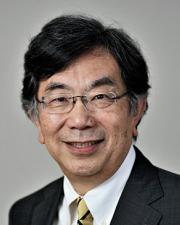 Masayoshi Tomizuka合作论文数Mechanical Systems Control Lab, Department of Mechanical Engineering, University of California, Berkeley20
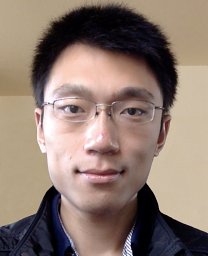 Wei Zhan合作论文数Applied Intuition;Mechanical Systems Control Lab, University of California, Berkeley;Berkeley DeepDrive16
 Han Lu合作论文数Shanghai Jiao Tong University7
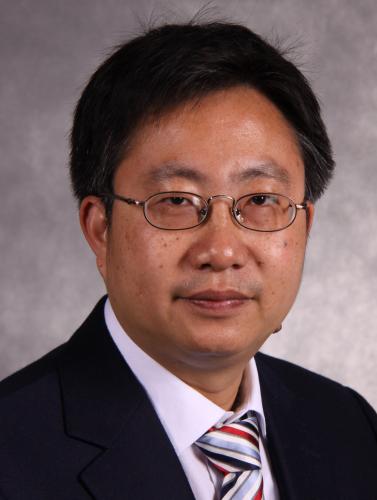 Xiaokang Yang (杨小康)合作论文数Institute of Image Communication and Network Engineering, School of Electronic Information and Electrical Engineering, Shanghai Jiao Tong University7
 Junchi Yan (严骏驰)合作论文数Department of Computer Science and Engineering, Shanghai Jiao Tong University;ReThinkLab, Shanghai Jiao Tong University7
 Chensheng Peng合作论文数Key Laboratory of System Control and Information Processing of;Ministry of Education, Shanghai Jiao Tong University;Department of Automation, Shanghai Jiao Tong University5
 Chenfeng Xu合作论文数Mechanical Systems Control Lab, University of California, Berkeley;NVIDIA4
 Mingyu Ding (丁明宇)合作论文数UC Berkeley4
 Quanshi Zhang (张拳石)合作论文数School of Computer Science, Shanghai Jiao Tong University;John Hopcroft Center for Computer Science, Department of Computer Science & Engineering, School of Electronic Information and Electrical Engineering, Shanghai Jiao Tong University4Siyu Sun合作论文数Department of CSE, Shanghai Jiao Tong University;MoE Key Lab of AI, Shanghai Jiao Tong University3Changhao Wang合作论文数Univ Calif Irvine, Dept Mol Biol & Biochem, Irvine, CA 92697 USA3
 Hao-Shu Fang (方浩树)合作论文数Computer Science & Artificial Intelligence Laboratory, Massachusetts Institute of Technology3
 Dragomir Anguelov合作论文数Waymo3
 Xiang Zhang合作论文数Mechanical Systems Control Lab, Mechanical Engineering Department, University of California, Berkeley;College of Engineering, University of California, Berkeley2
 Yinchao Ma合作论文数School of Information Science and Technology, University of Science and Technology of China2
 Chenran Li合作论文数Department of Mechanical Engineering, University of California Berkeley2Sen Li合作论文数Sun Yat-sen University2
 Wenzhao Zheng (郑文钊)合作论文数Department of EECS, University of California, Berkeley2
 Mingjie Li (李明杰)合作论文数Department of Computer Science and Engineering, Shanghai Jiao Tong University2
 Tong He合作论文数Waymo2
 Jingwei Ji合作论文数Waymo2
 Kurt Keutzer合作论文数Department of Electrical Engineering and Computer Sciences, University of California, Berkeley;Graduate School, University of California, Berkeley2
 Mingxing Tan (谭明星)合作论文数Waymo Research2
 Liqing Zhang (张丽清)合作论文数Department of Computer Science and Engineering, Shanghai Jiao Tong University;Center for Brain-like Computing and Machine Intelligence, Shanghai Jiao Tong University2Runsheng Xu合作论文数1Tianjiao Li合作论文数1Alexander Pham合作论文数1Shuqi Zhao合作论文数1Yixiao Wang合作论文数1Chengwei Zhang合作论文数1Yiren Lu合作论文数1Hubert Lin合作论文数1Katie Z Luo合作论文数1Jyh-Jing Hwang合作论文数1Xin Huang合作论文数1Stefano Sabatini合作论文数1Longjie Zheng合作论文数1Nicola Poerio合作论文数1
 Yanjiang Guo合作论文数Institute for Interdisciplinary Information Sciences, Tsinghua University1Ben Sapp合作论文数1
 Hengxu Yan合作论文数1
 Bo Jiang合作论文数Vision Lab, Huazhong University of Science and Technology1Patrick Rim合作论文数1
 Katie Luo合作论文数Cornell University;Department of Aeronautics and Astronautics, Stanford University1
 Xiaosong Jia (贾萧松)合作论文数Institute of Trustworthy Embodied AI, Fudan University1Jirong Liu合作论文数1




