This paper presents a new approach of improving automatic target recognition (ATR) performance by tuning adaptively the Gabor filter. The Gabor filter adopts the network structure of two layers, and its input layer constitutes the adaptive nonlinear feature extraction part, whereas the weights between output layer and input layer constitute the linear classifier. From the statistic property of high-resolution range profile (HRRP), its extracted nonstationarity degree of features is tracked to extract the discriminative features of Gabor atoms. Two experimental examples show that the Gabor filter approach with simple structure has higher recognition rate in radar target recognition from HRRP as compared with several existing methods.
This paper describes a novel method for radar target classification based on high range resolution profile (HRRP). In view of the non-stationary characteristic of radar signal, adaptive Gaussian basis representation (AGR) is utilized to extract features from raw HRRP signatures to fully retain the physics information of target. Then learning vector quantization (LVQ) network is adopted to tackle the classification of single echo (after features extraction) with complicated space distribution. Finally ,a combined classification scheme combining LVQ networks with the majority voting rule is designed to circumvent the sensitivity of HRRP to target aspects based on sequential echoes. A actual example using three scaled aircraft model data collected in microwave anechoic chamber is presented to demonstrate the effectiveness of proposed scheme.
Low rank approximations of matrices have been widely used in pattern recognition and machine learning. Based on a sequence of matrices, a generalized low rank approximation problem was presented and an iterative scheme was given by Liang and Shi recently proposed an analytical scheme for this approximation problem. In this paper, we identify the weakness in their scheme and prove that their algorithm is incorrect.
TreeFam ( http://www.treefam.org ) was developed to provide curated phylogenetic trees for all animal gene families, as well as orthologue and paralogue assignments. Release 4.0 of TreeFam contains curated trees for 1314 families and automatically generated trees for another 14 351 families. We have expanded TreeFam to include 25 fully sequenced animal genomes, as well as four genomes from plant and fungal outgroup species. We have also introduced more accurate approaches for automatically grouping genes into families, for building phylogenetic trees, and for inferring orthologues and paralogues. The user interface for viewing phylogenetic trees and family information has been improved. Furthermore, a new perl API lets users easily extract data from the TreeFam mysql database.
This paper presents a new scheme for radar target recognition, in which we fuse sequential radar echoes from multiple target-radar aspect angles. The nonstationary hidden Markov model (NSHMM) is employed to characterize the sequential information contained in multiaspect radar echoes. Features from echoes are extracted via the multirelax algorithm, and moments are used to reduce the extracted-feature dimensionality. The proposed NSHMM has many parameters and states to be estimated, so the Markov chain Monte Carlo sampling algorithm is adopted. Finally, this new scheme is demonstrated with experiments on inverse synthetic aperture radar data
Pig Genomic Information System (PigGIS) is a web-based depository of pig (Sus scrofa) genomic learning mainly engineered for biomedical research to locate pig genes from their human homologs and position single nucleotide polymorphisms (SNPs) in different pig populations. It utilizes a variety of sequence data, including whole genome shotgun (WGS) reads and expressed sequence tags (ESTs), and achieves a successful mapping solution to the low-coverage genome problem. With the data presently available, we have identified a total of 15 700 pig consensus sequences covering 18.5 Mb of the homologous human exons. We have also recovered 18 700 SNPs and 20 800 unique 60mer oligonucleotide probes for future pig genome analyses. PigGIS can be freely accessed via the web at http://www.piggis.org/ and http://pig.genomics.org.cn/.
Snap (Single Nucleotide Polymorphism Annotation Platform) is a server designed to comprehensively analyze single genes and relationships between genes basing on SNPs in the human genome. The aim of the platform is to facilitate the study of SNP finding and analysis within the framework of medical research. Using a user-friendly web interface, genes can be searched by name, description, position, SNP ID or clone name. Several public databases are integrated, including gene information from Ensembl, protein features from Uniprot/SWISS-PROT, Pfam and DAS-CBS. Gene relationships are fetched from BIND, MINT, KEGG and are integrated with ortholog data from TreeFam to extend the current interaction networks. Integrated tools for primer-design and mis-splicing analysis have been developed to facilitate experimental analysis of individual genes with focus on their variation. Snap is available at http://snap.humgen.au.dk/ and at http://snap.genomics.org.cn/.
A novel approach for handwritten digit recognition is proposed in this paper, which combines the low rank approximation and the competitive neural network together. The images in each class are clustered into several subclasses by the competitive neural network, which is helpful for feature extraction. The low rank approximation is used for image feature extraction. Finally, the k-nearest neighbor classifier is applied to the classification. Experiment results on USPS dataset show the effectiveness of the proposed approach.
This paper presents an efficient carrier frequency offset (CFO) estimation algorithm for the orthogonal frequency-division multiplexing (OFDM)-based wireless local area networks (WLANs) which adopts the IEEE 802.11 standardization. This algorithm adopts the BP network with the orthogonal projector for the fast adaptive CFO estimation. Numerical results are presented to demonstrate the effectiveness of the proposed algorithm.
This paper presents a new target recognition scheme via the neural network based on Hidden Markov Model (HMM), which processes the multiaspect features. The target features are extracted by the adaptive gaussian representation (AGR) from the view of physics. Discrimination results are presented for ISAR radar return signal.
A new robust method for image recognition based on iterative oblique projection is presented. By oblique projection, both the unstructured and structured noises can be suppressed. To improve recognition accuracy. an iterative process is adopted to reduce interference further. Experiments show that the proposed approach offers better performance than the conventional template matching method.
License plate recognition has many applications in traffic systems. It is very difficult because images are usually noisy, broken or incomplete. In this paper, a novel robust approach for license plate recognition is proposed, which combines subspace projection with probabilistic neural network to improve the recognition rate. Probabilistic neural network is used as a classifier to identify low-dimension test samples which are obtained from actual license plate images by subspace projection. Experiment results show the effectiveness of the proposed method.
The Silkworm Knowledgebase (SilkDB) is a web-based repository for the curation, integration and study of silkworm genetic and genomic data. With the recent accomplishment of a ∼6X draft genome sequence of the domestic silkworm (Bombyx mori), SilkDB provides an integrated representation of the large-scale, genome-wide sequence assembly, cDNAs, clusters of expressed sequence tags (ESTs), transposable elements (TEs), mutants, single nucleotide polymorphisms (SNPs) and functional annotations of genes with assignments to InterPro domains and Gene Ontology (GO) terms. SilkDB also hosts a set of ESTs from Bombyx mandarina, a wild progenitor of B.mori, and a collection of genes from other Lepidoptera. Comparative analysis results between the domestic and wild silkworm, between B.mori and other Lepidoptera, and between B.mori and the two sequenced insects, fruitfly and mosquito, are displayed by using B.mori genome sequence as a reference framework. Designed as a basic platform, SilkDB strives to provide a comprehensive knowledgebase about the silkworm and present the silkworm genome and related information in systematic and graphical ways for the convenience of in-depth comparative studies. SilkDB is publicly accessible at http://silkworm.genomics.org.cn.
Working in parallel with the efforts to sequence the chicken (Gallus gallus) genome, the Beijing Genomics Institute led an international team of scientists from China, USA, UK, Sweden, The Netherlands and Germany to map extensive DNA sequence variation throughout the chicken genome by sampling DNA from domestic breeds. Using the Red Jungle Fowl genome sequence as a reference, we identified 3.1 million non-redundant DNA sequence variants. To facilitate the application of our data to avian genetics and to provide a foundation for functional and evolutionary studies, we created the ‘Chicken Variation Database’ (ChickVD). A graphical MapView shows variants mapped onto the chicken genome in the context of gene annotations and other features, including genetic markers, trait loci, cDNAs, chicken orthologs of human disease genes and raw sequence traces. ChickVD also stores information on quantitative trait loci using data from collaborating institutions and public resources. Our data can be queried by search engine and homology-based BLAST searches. ChickVD is publicly accessible at http://chicken.genomics.org.cn.
 Feng Zhu合作论文数Department of Physics, Heriot-Watt University7
 Xianda Zhang (张贤达)合作论文数Xidian University7
 Jue Ruan (阮珏)合作论文数Agricultural Genomics Institute at Shenzhen, University of Chinese Academy of Sciences4
 Jun Wang (王军)合作论文数Key Laboratory of Pathogenic Microbiology and Immunology, Institute of Microbiology, Chinese Academy of Sciences3
 Hairong Lv (闾海荣)合作论文数Department of Automation, Tsinghua University3
 Heng Li合作论文数Research Centre for Construction Innovation3
 Lars Bolund合作论文数Lars Bolund Institute of Regenerative Medicine, Department of Biomedicine and BGI Genomics, Aarhus University3Deguang Xie (谢德光)合作论文数3GKS Wong合作论文数2ye chen (叶辰)合作论文数2Yiran Guo合作论文数Childrens Hosp Philadelphia, Ctr Appl Genom, Philadelphia, PA 19104 USA2
 Huanming Yang (杨焕明)合作论文数Chinese Academy of Medical Sciences;BGI Group;Advanced Institute for Life and Health, Southeast University2
 Jie Chen合作论文数Carle Illinois College of Medicine, University of Illinois at Urbana-Champaign2
 Ruiqiang Li (李瑞强)合作论文数Department of Computer Science, University of Hong Kong;Novogene Co., Ltd2
 Jing Wang (王菁)合作论文数Kavli Institute for Astronomy and Astrophysics, Peking University2Songgang Li合作论文数Department of General Surgery, Xinhua Hospital, Affiliated to School of Medicine, Shanghai Jiao Tong University, 1665 Kongjiang Road, Shanghai 200092, China2
 Jun Yu (于军)合作论文数Beijing Institute of Genomics, Chinese Academy of Sciences2
 Ximiao He (何西淼)合作论文数School of Basic Medicine, Tongji Medical College, Huazhong University of Science and Technology2
 Søren Vang合作论文数Aarhus University Hospital, University of Aarhus2Mingtao Dai合作论文数2X. Zhang合作论文数1
 Zeyang Zhou (周泽扬)合作论文数State Key Laboratory of Resource Insects, Southwest University;Chongqing Normal University1
 Junjie Qin (覃俊杰)合作论文数School of Life Science and Technology, Wuhan Polytechnic University,All rights reserved1
 Lin Fang合作论文数BGI-Shenzhen, Shenzhen, China.1
 Zhongzhong Chen (陈仲中)合作论文数Affiliated Women and Children's Medical Center, Guangzhou Medical University1
 Alan M Moses合作论文数Department of Computer Science, Faculty of Arts and Science, University of Toronto1SaiYi Wang (王赛一)合作论文数1
 Tao Liu (刘涛)合作论文数State Key Laboratory of Marine Environmental Science, College of Ocean and Earth Sciences, Xiamen University1Hériché Jean-Karim合作论文数European Mol Biol Lab, Heidelberg, Germany1
 Haifeng Yuan (袁海锋)合作论文数State Key Laboratory of Oil and Gas Reservoir Geology and Exploitation, Chengdu University of Technology1
 Bin Liu ( 刘斌)合作论文数School of Science, Beijing Jiaotong University1
 Yong Zhang (张勇)合作论文数Institute of Zoology, Chinese Academy of Sciences1
 Karsten Kristiansen合作论文数Laboratory of Genomics and Molecular Biomedicine, Department of Biology, University of Copenhagen1Tao Feng (冯涛)合作论文数1
 Cheng Lu (鲁成)合作论文数State Key Laboratory of Resource Insects, Southwest University1
 Zhonghuai Xiang (向仲怀)合作论文数State Key Laboratory of Resource Insects, Southwest University;Institute of Sericulture and Systems Biology, Southwest University1
 Peng Wei合作论文数1
 Qingyou Xia (夏庆友)合作论文数Biological Science Research Center, Academy for Advanced Interdisciplinary Studies, Southwest University1
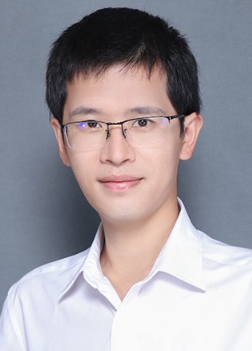 Lijia Ma (马里佳)合作论文数Research Institute of Network and Information Security, College of Computer Science and Software Engineering, Shenzhen University1Lijuan Cong合作论文数1
 Albert J. Vilella合作论文数Bioinformatics Institute;Wellcome Trust Genome;Wellcome Trust Genome, Bioinformatics Institute1
 Richard Durbin合作论文数Wellcome Sanger Institute;Department of Genetics, University of Cambridge1
 Taisheng Li (李太生)合作论文数Peking Union Medical College Hospital1
 Abel Ureta-Vidal合作论文数Wellcome Trust Genome Campus, European Bioinformatics Institute;Eagle Genomics Ltd.;Eagle Genomics Ltd., European Bioinformatics Institute1
 Lachlan Coin合作论文数School of Public Health, Imperial College1
 Dave Burt合作论文数School of Chemistry and Molecular Biosciences, The University of Queensland1Shengting Li合作论文数1
 Avril Coghlan合作论文数Wellcome Trust Sanger Institute;Wellcome Trust Genome Campus;Wellcome Trust Genome Campus, Wellcome Trust Sanger Institute1




