Large language model (LLM) agents for long-horizon interactive tasks typically follow a ReAct-style protocol, issuing one primitive action per LLM round. While this enables frequent replanning, it is inefficient for long-horizon tasks where many rounds are spent on routine action sequences. A natural alternative is to let the agent emit variable-length action chunks. However, naively training such policies with standard reinforcement learning fails: the agent either collapses to single-action behavior or over-commits to excessively long sequences. Both failures share a common root cause: the inability to learn chunk boundaries. We propose SPACE, which addresses this challenge by distilling chunk-boundary supervision from trajectory-induced programmatic skills. We induce two-level programmatic skills from successful trajectories, where subskill boundaries serve as direct chunk-boundary supervision. This temporal structure is then distilled into a primitive-chunk policy via hybrid on-/off-policy optimization with chunk-aware credit assignment. Experiments on ALFWorld and ScienceWorld show that SPACE improves success rates by 7.0
Reinforcement learning improves the reasoning ability of large language models but remains costly and sample-inefficient, as many rollouts provide weak learning signals. Difficulty-aware data selection methods attempt to address this by prioritizing moderately difficult prompts, yet our analysis reveals three limitations: difficulty estimates become inaccurate under policy drift, data selection alone yields limited final-performance gains, and inference efficiency remains largely unchanged. These findings suggest that efficient and effective RL requires more than filtering by difficulty: the policy should learn to solve hard tasks while producing concise responses for easy ones. To this end, we propose **Dare**, a unified framework that co-evolves difficulty estimation with the policy via self-normalized importance sampling, maintains diverse difficulty coverage through a symmetric Beta sampling distribution, and applies tailored training strategies across difficulty tiers with adaptive compute allocation. Extensive experiments across multiple models and domains demonstrate that **Dare** consistently outperforms existing methods in training efficiency, final effectiveness, and inference efficiency, producing more concise responses on easy tasks while improving correctness on hard ones. Code is available at https://github.com/EtaYang10th/DARE.
Reinforcement learning (RL) has become essential for post-training large language models (LLMs) in reasoning tasks. While scaling rollouts can stabilize training and enhance performance, the computational overhead is a critical issue. In algorithms like GRPO, multiple rollouts per prompt incur prohibitive costs, as a large portion of prompts provide negligible gradients and are thus of low utility. To address this problem, we investigate how to select high-utility prompts before the rollout phase. Our experimental analysis reveals that sample utility is non-uniform and evolving: the strongest learning signals concentrate at the “learning edge", the intersection of intermediate difficulty and high uncertainty, which shifts as training proceeds. Motivated by this, we propose HIVE (History-Informed and online-VErified prompt selection), a dual-stage framework for data-efficient RL. HIVE utilizes historical reward trajectories for coarse selection and employs prompt entropy as a real-time proxy to prune instances with stale utility. By evaluating HIVE across multiple math reasoning benchmarks and models, we show that HIVE yields significant rollout efficiency without compromising performance.
A generalist robot should perform effectively across various environments. However, most existing approaches heavily rely on scaling action-annotated data to enhance their capabilities. Consequently, they are often limited to single physical specification and struggle to learn transferable knowledge across different embodiments and environments. To confront these limitations, we propose UniVLA, a new framework for learning cross-embodiment vision-language-action (VLA) policies. Our key innovation is to derive task-centric action representations from videos with a latent action model. This enables us to exploit extensive data across a wide spectrum of embodiments and perspectives. To mitigate the effect of task-irrelevant dynamics, we incorporate language instructions and establish a latent action model within the DINO feature space. Learned from internet-scale videos, the generalist policy can be deployed to various robots through efficient latent action decoding. We obtain state-of-the-art results across multiple manipulation and navigation benchmarks, as well as real-robot deployments. UniVLA achieves superior performance over OpenVLA with less than 1/20 of pretraining compute and 1/10 of downstream data. Continuous performance improvements are observed as heterogeneous data, even including human videos, are incorporated into the training pipeline. The results underscore UniVLA's potential to facilitate scalable and efficient robot policy learning.
Large Language Models (LLM) based agents have shown promise in autonomously completing tasks across various domains, e.g., robotics, games, and web navigation. However, these agents typically require elaborate design and expert prompts to solve tasks in specific domains, which limits their adaptability. We introduce AutoManual, a framework enabling LLM agents to autonomously build their understanding through interaction and adapt to new environments. AutoManual categorizes environmental knowledge into diverse rules and optimizes them in an online fashion by two agents: 1) The Planner codes actionable plans based on current rules for interacting with the environment. 2) The Builder updates the rules through a well-structured rule system that facilitates online rule management and essential detail retention. To mitigate hallucinations in managing rules, we introduce a *case-conditioned prompting* strategy for the Builder. Finally, the Formulator agent compiles these rules into a comprehensive manual. The self-generated manual can not only improve the adaptability but also guide the planning of smaller LLMs while being human-readable. Given only one simple demonstration, AutoManual significantly improves task success rates, achieving 97.4\% with GPT-4-turbo and 86.2\% with GPT-3.5-turbo on ALFWorld benchmark tasks. The code is available at https://github.com/minghchen/automanual.
Personalized recommendation serves as a ubiquitous channel for users to discover information tailored to their interests. However, traditional recommendation models primarily rely on unique IDs and categorical features for user-item matching, potentially overlooking the nuanced essence of raw item contents across multiple modalities such as text, image, audio, and video. This underutilization of multimodal data poses a limitation to recommender systems, especially in multimedia services like news, music, and short-video platforms. The recent advancements in large multimodal models offer new opportunities and challenges in developing content-aware recommender systems. This survey seeks to provide a comprehensive exploration of the latest advancements and future trajectories in multimodal pretraining, adaptation, and generation techniques, as well as their applications in enhancing recommender systems. Furthermore, we discuss current open challenges and opportunities for future research in this dynamic domain. We believe that this survey, alongside the curated resources, will provide valuable insights to inspire further advancements in this evolving landscape.
For a general-purpose robot to operate in reality, executing a broad range of instructions across various environments is imperative. Central to the reinforcement learning and planning for such robotic agents is a generalizable reward function. Recent advances in vision-language models, such as CLIP, have shown remarkable performance in the domain of deep learning, paving the way for open-domain visual recognition. However, collecting data on robots executing various language instructions across multiple environments remains a challenge. This paper aims to transfer video-language models with robust generalization into a generalizable language-conditioned reward function, only utilizing robot video data from a minimal amount of tasks in a singular environment. Unlike common robotic datasets used for training reward functions, human video-language datasets rarely contain trivial failure videos. To enhance the model's ability to distinguish between successful and failed robot executions, we cluster failure video features to enable the model to identify patterns within. For each cluster, we integrate a newly trained failure prompt into the text encoder to represent the corresponding failure mode. Our language-conditioned reward function shows outstanding generalization to new environments and new instructions for robot planning and reinforcement learning.
In the field of music information retrieval (MIR), cover song identification (CSI) is a challenging task that aims to identify cover versions of a query song from a massive collection. Existing works still suffer from high intra-song variances and inter-song correlations, due to the entangled nature of version-specific and version-invariant factors in their modeling. In this work, we set the goal of disentangling version-specific and version-invariant factors, which could make it easier for the model to learn invariant music representations for unseen query songs. We analyze the CSI task in a disentanglement view with the causal graph technique, and identify the intra-version and inter-version effects biasing the invariant learning. To block these effects, we propose the disentangled music representation learning framework (DisCover) for CSI. DisCover consists of two critical components: (1) Knowledge-guided Disentanglement Module (KDM) and (2) Gradient-based Adversarial Disentanglement Module (GADM), which block intra-version and inter-version biased effects, respectively. KDM minimizes the mutual information between the learned representations and version-variant factors that are identified with prior domain knowledge. GADM identifies version-variant factors by simulating the representation transitions between intra-song versions, and exploits adversarial distillation for effect blocking. Extensive comparisons with best-performing methods and in-depth analysis demonstrate the effectiveness of DisCover and the and necessity of disentanglement for CSI.
 Minghao Chen合作论文数Zhejiang Key Laboratory of Space Information Sensing and Transmission, School of Computer Science, Hangzhou Dianzi University2
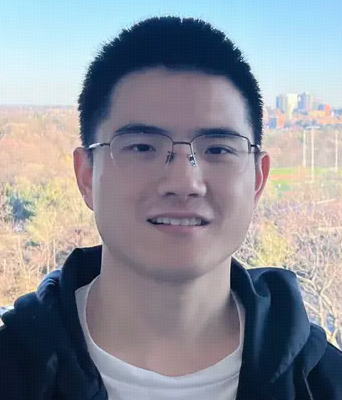 Can Jin合作论文数Department of Computer Science, School of Arts and Sciences, Rutgers, The State University of New Jersey;Adobe2
 Binbin Lin (林彬彬)合作论文数School of Software Technology, Zhejiang University2
 Xiaofei He (何晓飞)合作论文数State Key Lab of CAD&CG, College of Computer Science and Technology, Zhejiang University2
 Zhou Zhao (赵洲)合作论文数College of Computer Science and Technology, Zhejiang University;College of Artificial Intelligence, Zhejiang University2
 Zhenhua Dong合作论文数Foundation Model System Engineering Lab, Huawei2
 Jieming Zhu (朱杰明)合作论文数Huawei 2012 Labs2
 Shiyu Yu合作论文数1Yihang Li合作论文数1
 Zhepeng Wang合作论文数Department of Electrical and Computer Engineering, George Mason University;Junction of Quantum-Classical Computer-Aided Design Lab, George Mason University1
 Jinman Zhao合作论文数Department of Computer Science, University of Toronto1
 Shengcai Liu (刘晟材)合作论文数Department of Computer Science and Engineering, College of Engineering, Southern University of Science and Technology1
 Qingwen Bu (布清文)合作论文数Shanghai Jiao Tong University1Zhaocheng Du合作论文数Noah’s Ark Lab, Huawei Technologies1Jiahao Xun合作论文数Zhejiang University1Ruiqi Li合作论文数Zhejiang University1Jiahao Wu合作论文数1
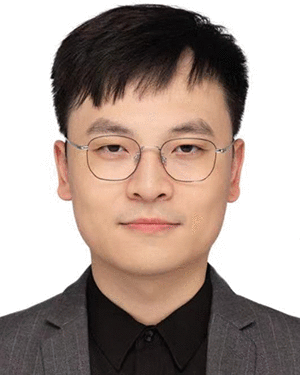 Qibo Qiu合作论文数Zhejiang Laboratory1
 Shenyuan Gao (高深远)合作论文数The Hong Kong University of Science and Technology1
 Qijiong Liu (刘奇煚)合作论文数Department of Computing, Faculty of Engineering, The Hong Kong Polytechnic University1
 Guanghui Ren (任广辉)合作论文数AgiBot1Lichao Zhang合作论文数1Liqun Deng合作论文数1
 Wenxiao Wang (王闻箫)合作论文数School of Software Technology, Zhejiang University1
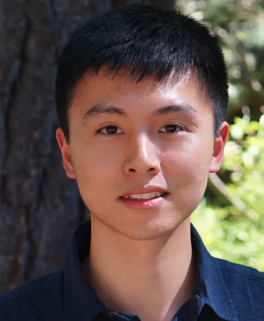 Zhendong Wang合作论文数Microsoft GenAI Team1
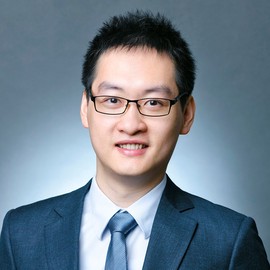 Ping Luo (羅平)合作论文数Department of Computer Science, School of Computing and Data Science, The University of Hong Kong1
 Xiao-Ming Wu合作论文数Department of Data Science and Artificial Intelligence, Faculy of Computer and Mathematical Sciences, The Hong Kong Polytechnic University1
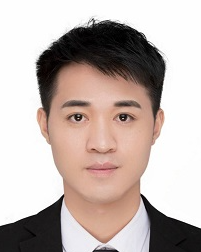 Quanyu Dai (戴全宇)合作论文数Noah's Ark Lab, Huawei Technologies1
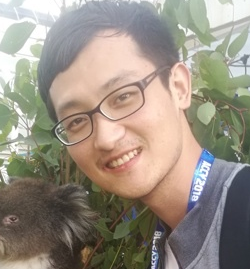 Shiyu Zhao (赵世雨)合作论文数Department of Computer Science, Rutgers University1
 Dimitris N. Metaxas合作论文数Department of Computer Science, School of Arts and Sciences, Rutgers University1
 Runxue Bao合作论文数Electrical and Computer Engineering Department, University of Pittsburgh1
 Hongyang Li (李弘扬)合作论文数Musketeers Foundation Institute of Data Science, The University of Hong Kong1
 Ke Tang (唐珂)合作论文数Department of Computer Science and Engineering, Southern University of Science and Technology1
 Fei Wu (吴飞)合作论文数College of Computer Science and Technology, Zhejiang University1Rui Zhang (张瑞)合作论文数1
 Qing Li (李青)合作论文数Department of Computing, Faculty of Engineering, Hong Kong Polytechnic University1
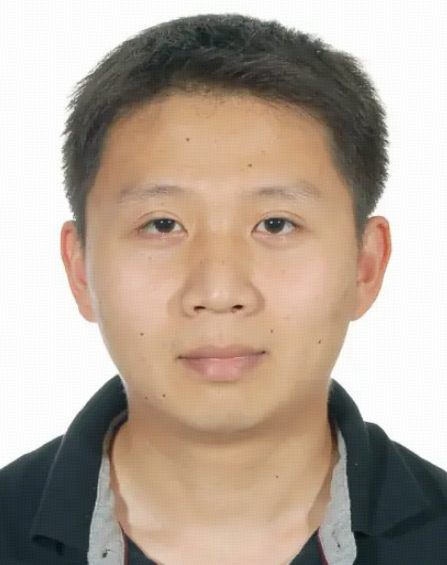 Ziyu Guan (管子玉)合作论文数School of Computer Science and Technology, Xidian University1
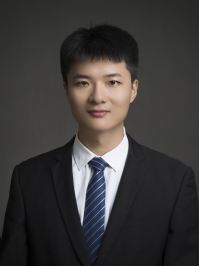 Shengyu Zhang (张圣宇)合作论文数School of Software Technology, Zhejiang University;College of Computer Science and Technology, Zhejiang University1
 Chen Jason Zhang合作论文数Department of Computing, Faculty of Computer and Mathematical Sciences, The Hong Kong Polytechnic University1




