Current evaluations and training of multimodal models predominantly focus on multi-image tasks, largely overlooking interleaved text-image scenarios. In such multi-image tasks, text typically serves merely as task instructions, lacking deep semantic interaction with the visual content. In contrast, realworld applications like text-image co-creation, character tracking, and spatial reconstruction require constant interaction between text and images. Consequently, models must possess a deep understanding of these interleaved contexts. To bridge this gap, we introduce a novel benchmark, TIC-Bench (deeply interleaved Text-Image Contexts), designed to evaluate the capability of models to integrate text-image clues and recover the ground truth facts within deeply interleaved contexts. This benchmark encompasses three core domains: Logical, Temporal, and Spatial Association, which are further categorized into eight specific types, comprising a total of 2,280 questions. We evaluated 10 state-of-the-art MLLMs and observed a substantial performance gap compared to human experts, together with persistent difficulties in integrating evidence distributed across interleaved visual and textual inputs. Ultimately, this benchmark provides a valuable analytical tool for assessing and advancing the ability of multimodal models to effectively integrate text and image information in deeply interleaved contexts. TIC-Bench is publicly available at https://huggingface.co/datasets/pino10010/TIC-Bench
Real-world image restoration is challenging due to complex and interacting mixed degradations. Recent agent-based approaches address this problem by composing multiple task-specific restoration tools. However, empirical analysis reveals that their performance is fundamentally limited by implicitly constrained planning spaces and the lack of coordination among independently pretrained tools. To address these issues, we propose OPERA (Optimized Planning-Execution Restoration Agent), a framework that jointly optimizes restoration planning and tool execution in an end-to-end manner. On the planning side, OPERA uses reinforcement learning to directly optimize tool composition over a combinatorial plan space, with the final restoration quality as the reward. On the execution side, OPERA introduces agent-guided co-training of restoration tools, enabling them to learn cooperative behaviors under sequential composition. Extensive experiments on multi-degradation benchmarks and real-world datasets demonstrate that OPERA consistently outperforms both all-in-one restoration models and existing agent-based methods across diverse and complex degradation scenarios.
Federated fine-tuning of foundation models with Low-Rank Adaptation (LoRA) provides an efficient solution for reducing communication and computation costs while preserving data locality. However, the direct combination of FedAvg and LoRA suffers from three key issues: limited update space, which restricts the model's effective learning capacity; inter-round state mismatch, which disrupts cross-round local optimization continuity; and a client-agnostic starting state, which slows local convergence on clients. Although recent methods mitigate the limited update space issue by merging LoRA updates into the backbone across communication rounds, inter-round state mismatch and the client-agnostic starting state remain insufficiently addressed. To address these issues, we propose FedSmoothLoRA, a federated LoRA tuning framework that preserves the enlarged update space, improves cross-round local optimization continuity, and provides a client-aware starting state for local training. At each communication round, FedSmoothLoRA constructs the local LoRA initialization using two matrices: a Round-Matching matrix that preserves cross-round local state continuity, and a Gradient-Aligned matrix that provides client-specific optimization guidance from gradient signals estimated on local data. Together, these designs enable smoother and faster convergence. Extensive experiments on image classification and natural language generation tasks demonstrate that FedSmoothLoRA consistently outperforms existing federated LoRA tuning methods. Code: https://github.com/wangzehao0704/FedSmoothLoRA
Recent advances in multimodal large language models (MLLMs) have shown impressive reasoning capabilities. However, further enhancing existing MLLMs necessitates high-quality vision-language datasets with carefully curated task complexities, which are both costly and challenging to scale. Although recent self-improving models that iteratively refine themselves offer a feasible solution, they still suffer from two core challenges: (i) most existing methods augment visual or textual data separately, resulting in discrepancies in data complexity (e.g., over-simplified diagrams paired with redundant textual descriptions); and (ii) the evolution of data and models is also separated, leading to scenarios where models are exposed to tasks with mismatched difficulty levels. To address these issues, we propose C2-Evo, an automatic, closed-loop self-improving framework that jointly evolves both training data and model capabilities. Specifically, given a base dataset and a base model, C2-Evo enhances them by a cross-modal data evolution loop and a data-model evolution loop. The former loop expands the base dataset by generating complex multimodal problems that combine structured textual sub-problems with iteratively specified geometric diagrams, while the latter loop adaptively selects the generated problems based on the performance of the base model, to conduct supervised fine-tuning and reinforcement learning alternately. Consequently, our method continuously refines its model and training data, and consistently obtains considerable performance gains across multiple mathematical reasoning benchmarks. Our code, models, and datasets will be released.
In this paper, we address the challenging task of multimodal reasoning by incorporating the notion of "slow thinking" into multimodal large language models (MLLMs). Our core idea is that models can learn to adaptively use different levels of reasoning to tackle questions of varying complexity. We propose a novel paradigm of Self-structured Chain of Thought (SCoT), which consists of minimal semantic atomic steps. Unlike existing methods that rely on structured templates or free-form paradigms, our method not only generates flexible CoT structures for various complex tasks but also mitigates the phenomenon of overthinking for easier tasks. To introduce structured reasoning into visual cognition, we design a novel AtomThink framework with four key modules: (i) a data engine to generate high-quality multimodal reasoning paths; (ii) a supervised fine-tuning (SFT) process with serialized inference data; (iii) a policy-guided multi-turn inference method; and (iv) an atomic capability metric to evaluate the single-step utilization rate. Extensive experiments demonstrate that the proposed AtomThink significantly improves the performance of baseline MLLMs, achieving more than 10% average accuracy gains on MathVista and MathVerse. Compared to state-of-the-art structured CoT approaches, our method not only achieves higher accuracy but also improves data utilization by 5 × and boosts inference efficiency by 85.3%.
Score Distillation Sampling (SDS) has achieved remarkable success in text-to-3D content generation. However, SDS-based methods struggle to maintain semantic fidelity for user prompts, particularly when involving multiple objects with intricate interactions. While existing approaches often address 3D consistency through multiview diffusion model fine-tuning on 3D datasets, this strategy inadvertently exacerbates text-3D alignment degradation. The limitation stems from SDS's inherent accumulation of view-independent biases during optimization, which progressively diverges from the ideal text alignment direction. To alleviate this limitation, we propose a novel SDS objective, dubbed as Textual Coherent Score Distillation (TCSD), which integrates alignment feedback from multimodal large language models (MLLMs). Our TCSD leverages cross-modal understanding capabilities of MLLMs to assess and guide the text-3D correspondence during the optimization. We further develop 3DLLaVA-CRITIC - a fine-tuned MLLM specialized for evaluating multiview text alignment in 3D generations. Additionally, we introduce an LLM-layout initialization that significantly accelerates optimization convergence through semantic-aware spatial configuration. Our framework, CoherenDream, achieves consistent improvement across multiple metrics on TIFA subset.As the first study to incorporate MLLMs into SDS optimization, we also conduct extensive ablation studies to explore optimal MLLM adaptations for 3D generation tasks.
Post-training via Supervised Fine-Tuning (SFT) and Reinforcement Learning (RL) is crucial for enhancing reasoning in Multimodal Large Language Models (MLLMs), yet existing paradigms often reach a performance bottleneck due to the limitations of static data. While current methods leverage self-reflection or self-evolution to push these boundaries, they still suffer from cognitive drift and hallucinated reasoning paths caused by low-quality synthetic data. To address these challenges, we propose Anchor Evolution (AnE), a new paradigm that integrates truth-anchored data curation and model evolution, achieving faithful and steady performance gains at the reasoning frontier. Specifically, we propose Truth Anchor Expansion, which pinpoints the model failing frontier via trajectory rollouts and leverages ground-truth databases to retrieve high-fidelity anchors for faithful data curation. Subsequently, we introduce the Scaffold-Stripping Mechanism to internalize reasoning capabilities. This mechanism first anchors reasoning paths via scaffold-augmented supervision to mitigate the learning complexity and distribution drift of direct SFT on raw data, then leverages RL to strip the scaffold template, thereby effectively transitioning the reasoning paths into intrinsic model capabilities. Experimental results on multimodal reasoning benchmarks show that our method substantially advances the model performance frontier, improving the base model by 10.3% across eight multimodal benchmarks and achieving state-of-the-art results. The code will be made publicly available.
Graphical User Interface (GUI) Agents, benefiting from recent advances in multimodal large language models (MLLM), have achieved significant development. However, due to the frequent updates of GUI applications, adapting to new tasks without forgetting old tasks in GUI continual learning remains an open problem. Existing works are generally trained on a fixed set of tasks and adapt to new tasks either through supervised fine-tuning (SFT) or reinforcement learning (RL), suffering from catastrophic forgetting and slow adaptation. In this work, we propose a \textbf{C}ontinual \textbf{G}UI \textbf{L}earning (CGL) framework that dynamically balances adaptation efficiency and skill retention by enhancing the synergy between SFT and RL. Specifically, we introduce an SFT proportion adjustment mechanism guided by policy entropy to dynamically control the weight allocation between the SFT and RL training phases. Additionally, we propose gradient surgery and entropy-regulated tuning strategies to enable GUI agents to continuously evolve while maintaining competence across previously learned domains. On top of that, we propose a AndroidControl-CL benchmark, which divides GUI applications into distinct task groups to effectively simulate and evaluate the performance of GUI continual learning. Experimental results demonstrate the effectiveness of our proposed CGL framework under the continual learning setting. The benchmark, code and model will be made publicly available.
Visual Instruction Tuning (VIT) aims to enhance Multimodal Large Language Models (MLLMs), yet its effectiveness is often compromised by corrupted datasets with issues such as hallucinated content, incorrect responses, and poor OCR quality. Previous approaches to address these challenges have focused on refining datasets through high-quality data collection or rule-based filtering that can be costly or limited in scope. In this paper, we conduct a systematic investigation into the impact of corrupted data on MLLMs and discover that, although corrupted data degrade model performance, such adverse effects are largely reversible, and MLLMs are corrupted but not broken. Specifically, we find that disabling a small subset of parameters can almost fully restore performance. Moreover, corrupted MLLMs inherently possess the capability to differentiate between clean and corrupted samples, facilitating dataset cleaning without external intervention. Building on these insights, we introduce a corruption-robust training paradigm that significantly surpasses existing strategies for mitigating the effects of corrupted data.
Interactive image editing allows users to modify images through visual interaction operations such as drawing, clicking, and dragging. Existing methods construct such supervision signals from videos, as they capture how objects change with various physical interactions. However, these models are usually built upon text-to-image diffusion models, so necessitate (i) massive training samples and (ii) an additional reference encoder to learn real-world dynamics and visual consistency. In this paper, we reformulate this task as an image-to-video generation problem, so that inherit powerful video diffusion priors to reduce training costs and ensure temporal consistency. Specifically, we introduce FramePainter as an efficient instantiation of this formulation. Initialized with Stable Video Diffusion, it only uses a lightweight sparse control encoder to inject editing signals. Considering the limitations of temporal attention in handling large motion between two frames, we further propose matching attention to enlarge the receptive field while encouraging dense correspondence between edited and source image tokens. We highlight the effectiveness and efficiency of FramePainter across various of editing signals: it domainantly outperforms previous state-of-the-art methods with far less training data, achieving highly seamless and coherent editing of images, , automatically adjust the reflection of the cup. Moreover, FramePainter also exhibits exceptional generalization in scenarios not present in real-world videos, , transform the clownfish into shark-like shape. Our code will be available at https://github.com/YBYBZhang/FramePainter.
Dynamic 3D interaction has been attracting a lot of attention recently. However, creating such 4D content remains challenging. One solution is to animate 3D scenes with physics-based simulation, which requires manually assigning precise physical properties to the object or the simulated results would become unnatural. Another solution is to learn the deformation of 3D objects with the distillation of video generative models, which, however, tends to produce 3D videos with small and discontinuous motions due to the inappropriate extraction and application of physics priors. In this work, to combine the strengths and complementing shortcomings of the above two solutions, we propose to learn the physical properties of a material field with video diffusion priors, and then utilize a physics-based Material-Point-Method (MPM) simulator to generate 4D content with realistic motions. In particular, we propose motion distillation sampling to emphasize video motion information during distillation. In addition, to facilitate the optimization, we further propose a KAN-based material field with frame boosting. Experimental results demonstrate that our method enjoys more realistic motions than state-of-the-arts do.
GPT-4o, an omni-modal model that enables vocal conversations with diverse emotions and tones, marks a milestone for omni-modal foundation models. However, empowering Large Language Models to perceive and generate images, texts, and speeches end-to-end with publicly available data remains challenging for the open-source community. Existing vision-language models rely on external tools for speech processing, while speech-language models still suffer from limited or totally without vision-understanding capabilities. To address this gap, we propose the EMOVA (EMotionally Omni-present Voice Assistant), to enable Large Language Models with end-to-end speech abilities while maintaining the leading vision-language performance. With a semantic-acoustic disentangled speech tokenizer, we surprisingly notice that omni-modal alignment can further enhance vision-language and speech abilities compared with the bi-modal aligned counterparts. Moreover, a lightweight style module is introduced for the flexible speech style controls including emotions and pitches. For the first time, EMOVA achieves state-of-the-art performance on both the vision-language and speech benchmarks, and meanwhile, supporting omni-modal spoken dialogue with vivid emotions.
Video detailed captioning aims to generate comprehensive video descriptions to facilitate video understanding. Recently, most efforts in the video detailed captioning community have been made towards a local-to-global paradigm, which first generates local captions from video clips and then summarizes them into a global caption. However, we find this paradigm leads to less detailed and contextual-inconsistent captions, which can be attributed to (1) no mechanism to ensure fine-grained captions, and (2) weak interaction between local and global captions. To remedy the above two issues, we propose GLaVE-Cap, a Global-Local aligned framework with Vision Expert integration for Captioning, which consists of two core modules: TrackFusion enables comprehensive local caption generation, by leveraging vision experts to acquire cross-frame visual prompts, coupled with a dual-stream structure; while CaptionBridge establishes a local-global interaction, by using global context to guide local captioning, and adaptively summarizing local captions into a coherent global caption. Besides, we construct GLaVE-Bench, a comprehensive video captioning benchmark featuring 5X more queries per video than existing benchmarks, covering diverse visual dimensions to facilitate reliable evaluation. We further provide a training dataset GLaVE-1.2M containing 16K high-quality fine-grained video captions and 1.2M related question-answer pairs. Extensive experiments on four benchmarks show that our GLaVE-Cap achieves state-of-the-art performance. Besides, the ablation studies and student model analyses further validate the effectiveness of the proposed modules and the contribution of GLaVE-1.2M to the video understanding community. The source code, model weights, benchmark, and dataset will be open-sourced.
Interactive world models that simulate object dynamics are crucial for robotics, VR, and AR. However, it remains a significant challenge to learn physics-consistent dynamics models from limited real-world video data, especially for deformable objects with spatially-varying physical properties. To overcome the challenge of data scarcity, we propose PhysWorld, a novel framework that utilizes a simulator to synthesize physically plausible and diverse demonstrations to learn efficient world models. Specifically, we first construct a physics-consistent digital twin within MPM simulator via constitutive model selection and global-to-local optimization of physical properties. Subsequently, we apply part-aware perturbations to the physical properties and generate various motion patterns for the digital twin, synthesizing extensive and diverse demonstrations. Finally, using these demonstrations, we train a lightweight GNN-based world model that is embedded with physical properties. The real video can be used to further refine the physical properties. PhysWorld achieves accurate and fast future predictions for various deformable objects, and also generalizes well to novel interactions. Experiments show that PhysWorld has competitive performance while enabling inference speeds 47 times faster than the recent state-of-the-art method, i.e., PhysTwin.
Detecting accurate 3D bounding boxes from LiDAR point clouds is crucial for autonomous driving. Recent studies have shown the superiority of the performance of multi-frame 3D detectors, yet eliminating the misalignment across frames and effectively aggregating spatiotemporal information are still challenging problems. In this paper, we present a novel flow-guided feature aggregation scheme for 3D object detection (FIFA3D) to align cross-frame information. FIFA3D first leverages optical flow with supervised signals to model the pixel-to-pixel correlations between sequential frames. Considering the sparse nature of bird’s-eye-view feature maps, an additional classification branch is adopted to provide explicit pixel-wise clues. Meanwhile, we utilize multi-scale feature maps and predict flow in a coarse-to-fine manner. With guidance from the estimated flow, historical features can be well aligned to the current situation, and a cascade fusion strategy is introduced to benefit the following detection. Extensive experiments show that FIFA3D surpasses the single-frame baseline with remarkable margins of +10.8% mAPH and +6.8% mAP on the Waymo and nuScenes validation datasets and performs well compared with state-of-the-art methods.
Recent advancements in multi-modal 3D pre-training methods have shown promising efficacy in learning joint representations of text, images, and point clouds. However, adopting point clouds as 3D representation fails to fully capture the intricacies of the 3D world and exhibits a noticeable gap between the discrete points and the dense 2D pixels of images. To tackle this issue, we propose UniGS, integrating 3D Gaussian Splatting (3DGS) into multi-modal pre-training to enhance the 3D representation. We first rely on the 3DGS representation to model the 3D world as a collection of 3D Gaussians with color and opacity, incorporating all the information of the 3D scene while establishing a strong connection with 2D images. Then, to achieve Language-Image-3D pertaining, UniGS starts with a pretrained vision-language model to establish a shared visual and textual space through extensive real-world image-text pairs. Subsequently, UniGS employs a 3D encoder to align the optimized 3DGS with the Language-Image representations to learn unified multi-modal representations. To facilitate the extraction of global explicit 3D features by the 3D encoder and achieve better cross-modal alignment, we additionally introduce a novel Gaussian-Aware Guidance module that guides the learning of fine-grained representations of the 3D domain. Through extensive experiments across the Objaverse, ABO, MVImgNet and SUN RGBD datasets with zero-shot classification, text-driven retrieval and open-world understanding tasks, we demonstrate the effectiveness of UniGS in learning a more general and stronger aligned multi-modal representation. Specifically, UniGS achieves leading results across different 3D tasks with remarkable improvements over previous SOTA, Uni3D, including on zero-shot classification (+9.36%), text-driven retrieval (+4.3%) and open-world understanding (+7.92%).
In this paper, we address the challenging task of multimodal mathematical reasoning by incorporating the ability of "slow thinking" into multimodal large language models (MLLMs). Our core idea is that different levels of reasoning abilities can be combined dynamically to tackle questions with different complexity. To this end, we propose a paradigm of Self-structured Chain of Thought (SCoT), which is composed of minimal semantic atomic steps. Different from existing methods that rely on structured templates or free-form paradigms, our method can not only generate cognitive CoT structures for various complex tasks but also mitigates the phenomenon of overthinking. To introduce structured reasoning capabilities into visual understanding models, we further design a novel AtomThink framework with four key modules, including (i) a data engine to generate high-quality multimodal reasoning paths; (ii) a supervised fine-tuning process with serialized inference data; (iii) a policy-guided multi-turn inference method; and (iv) an atomic capability metric to evaluate the single step utilization rate. We conduct extensive experiments to show that the proposed AtomThink significantly improves the performance of baseline MLLMs, achieving more than 10% average accuracy gains on MathVista and MathVerse. Compared to state-of-the-art structured CoT approaches, our method not only achieves higher accuracy but also improves data utilization by 5 times and boosts inference efficiency by 85.3%. Our code is now public available in https://github.com/Quinn777/AtomThink.
Large language models (LLMs) have demonstrated strong capabilities in language understanding and reasoning, yet they remain limited when tackling real-world tasks that require up-to-date knowledge, precise operations, or specialized tool use. To address this, we propose Tool-R1, a reinforcement learning framework that enables LLMs to perform general, compositional, and multi-step tool use by generating executable Python code. Tool-R1 supports integration of user-defined tools and standard libraries, with variable sharing across steps to construct coherent workflows. An outcome-based reward function, combining LLM-based answer judgment and code execution success, guides policy optimization. To improve training efficiency, we maintain a dynamic sample queue to cache and reuse high-quality trajectories, reducing the overhead of costly online sampling. Experiments on the GAIA benchmark show that Tool-R1 substantially improves both accuracy and robustness, achieving about 10% gain over strong baselines, with larger improvements on complex multi-step tasks. These results highlight the potential of Tool-R1 for enabling reliable and efficient tool-augmented reasoning in real-world applications. Our code will be available at https://github.com/YBYBZhang/Tool-R1.
3D reconstruction has been widely used in autonomous navigation fields of mobile robotics. However, the former research can only provide the basic geometry structure without the capability of open-world scene understanding, limiting advanced tasks like human interaction and visual navigation. Moreover, traditional 3D scene understanding approaches rely on expensive labeled 3D datasets to train a model for a single task with supervision. Thus, geometric reconstruction with zero-shot scene understanding i.e. Open vocabulary 3D Understanding and Reconstruction, is crucial for the future development of mobile robots. In this paper, we propose OpenOcc, a novel framework unifying the 3D scene reconstruction and open vocabulary understanding with neural radiance fields. We model the geometric structure of the scene with occupancy representation and distill the pre-trained open vocabulary model into a 3D language field via volume rendering for zero-shot inference. Furthermore, a novel semantic-aware confidence propagation (SCP) method has been proposed to relieve the issue of language field representation degeneracy caused by inconsistent measurements in distilled features. Experimental results show that our approach achieves competitive performance in 3D scene understanding tasks, especially for small and long-tail objects.
3D generation has raised great attention in recent years. With the success of text-to-image diffusion models, the 2D-lifting technique becomes a promising route to controllable 3D generation. However, these methods tend to present inconsistent geometry, which is also known as the Janus problem. We observe that the problem is caused mainly by two aspects, i.e., viewpoint bias in 2D diffusion models and overfitting of the optimization objective. To address it, we propose a two-stage 2D-lifting framework, namely DreamControl, which optimizes coarse NeRF scenes as 3D self-prior and then generates fine-grained objects with control-based score distillation. Specifically, adaptive viewpoint sampling and boundary integrity metric are proposed to ensure the consistency of generated priors. The priors are then regarded as input conditions to maintain reasonable geometries, in which conditional LoRA and weighted score are further proposed to optimize detailed textures. DreamControl can generate high-quality 3D content in terms of both geometry consistency and texture fidelity. Moreover, our control-based optimization guidance is applicable to more downstream tasks, including user-guided generation and 3D animation. The project page is available at https://github.com/tyhuang0428/DreamControl.
 Hang Xu (徐航)合作论文数Huawei Noah‘s Ark Lab;2030 Lab, Huawei ADS22
 Wangmeng Zuo (左旺孟)合作论文数School of Computer Science and Technology, Harbin Institute of Technology12
 Xiaodan Liang (梁小丹)合作论文数School of Intelligent Systems Engineering, Sun Yat-Sen University9
 Jianhua Han合作论文数Huawei Noah Ark's Lab8
 Wei Zhang合作论文数Huawei Technology Co., Ltd7
 Songcen Xu (许松岑)合作论文数Noah's Ark Lab, Huawei Technologies5
 Runhui Huang合作论文数Department of Computer Science, School of Computing and Data Science, The University of Hong Kong4
 Haoyue Bai合作论文数Department of Computer Sciences, School of Computer, Data and Information Sciences, University of Wisconsin-Madison4
 Zhili Liu (刘智立)合作论文数Department of Computer Science and Engineering, Hong Kong University of Science and Technology;AI theory Lab, Huawei Noah’s Ark Lab4
 Dit-Yan Yeung (楊瓞仁)合作论文数Department of Computer Science and Engineering, School of Engineering, The Hong Kong University of Science and Technology4
 Tianyu Huang (黄天毓)合作论文数Harbin Institute of Technology3Zhilu Zhang (张志路)合作论文数Harbin Institute of Technology3
 Yabo Zhang (张亚博)合作论文数Harbin Institute of Technology;Bytedance Seed Vision3Chunwei Wang合作论文数3
 Li Zhang合作论文数School of Data Science, Fudan University;Shanghai Key Lab of Intelligent Information Processing, Fudan University3
 Hui Li (李惠)合作论文数School of Civil Engineering, Harbin Institute of Technology3
 Guansong Lu合作论文数Huawei Noah‘s Ark Lab3
 Chao Ma (马超)合作论文数AI Institute, School of Computer Science, Shanghai Jiao Tong University;MoE Key Lab of Artificial Intelligence, Shanghai Jiao Tong University3
 Rynson W. H. Lau (劉永雄)合作论文数Department of Computer Science, College of Engineering, City University of Hong Kong;Swansea University3
 Yuanfan Guo (郭远帆)合作论文数317 Lab, Department of Electronic Engineering, Shanghai Jiao Tong University3
 Chenhan Jiang合作论文数Department of Computer Science and Engineering, Hong Kong University of Science and Technology3
 Hanhui Li (黎汉汇)合作论文数Guilin University of Electronic Technology,3Yunshuang Nie合作论文数2
 Chun-Mei Feng合作论文数Institute of High Performance Computing, Agency for Science, Technology and Research2Kaixin Cai合作论文数Shenzhen Campus of Sun Yat-sen University2Haoyuan Li合作论文数Sun Yat-sen University2
 Yunhao Gou (苟耘豪)合作论文数Department of Computer Science and Engineering, Hong Kong University of Science and Technology;Huawei Noah’s Ark Lab2
 Zhen Yang合作论文数2Chaoqiang Ye合作论文数2
 Qingqiu Huang (黄青虬)合作论文数2
 Ming Liu (刘铭)合作论文数Faculty of Computing, Harbin Institute of Technology2
 Yu Zhang (张宇)合作论文数Department of Computer Science and Engineering, College of Engineering, Southern University of Science and Technology2
 Qun Liu (刘群)合作论文数Huawei2
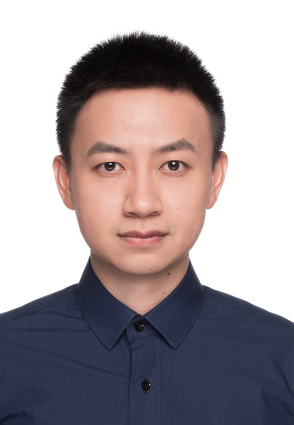 Zhihong Zhang (张志宏)合作论文数School of Informatics, Xiamen University2
 Kai Chen (陈铠)合作论文数Department of Computer Science and Engineering, School of Engineering, Hong Kong University of Science and Technology2
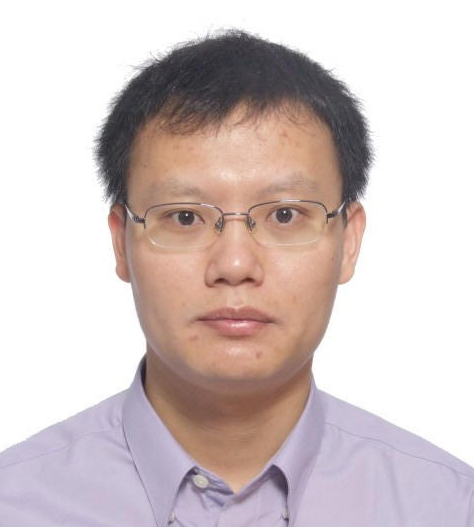 Zhenguo Li合作论文数Noah's Ark Lab, Huawei Technologies;Department of Computer Science and Engineering, Hong Kong University of Science and Technology2
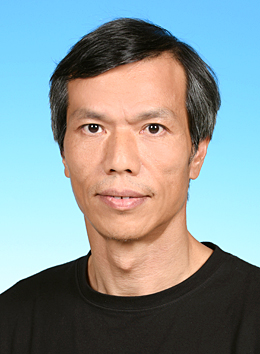 James Tin-Yau KWOK (郭天佑)合作论文数Department of Computer Science and Engineering, School of Engineering, Hong Kong University of Science and Technology2
 Zitong Huang合作论文数Faculty of Computing, Harbin Institute of Technology;Alibaba Group1Zhenquan Yao合作论文数Harbin Institute of Technology1xinpeng zhou合作论文数1Haoze Zhang合作论文数1Weike Jin合作论文数1Jing Xu合作论文数1Zhihui Wei合作论文数1Huaizhe Xu合作论文数1Yanyan Xu合作论文数1Haochen Jiang合作论文数1Wan Xu合作论文数1
 Tao Tang合作论文数Sun Yat-sen University1




