Emotions can be perceived from a person's gait, i.e., their walking style. Existing methods on gait emotion recognition mainly leverage the posture information as input, but ignore the body movement, which contains complementary information for recognizing emotions evoked in the gait. In this paper, we propose a Bilateral Posture and Movement Graph Convolutional Network (BPM-GCN) that consists of two parallel streams, namely posture stream and movement stream, to recognize emotions from two views. The posture stream aims to explicitly analyse the emotional state of the person. Specifically, we design a novel regression constraint based on the hand-engineered features to distill the prior affective knowledge into the network and boost the representation learning. The movement stream is designed to describe the intensity of the emotion, which is an implicitly cue for recognizing emotions. To achieve this goal, we employ a higher-order velocity-acceleration pair to construct graphs, in which the informative movement features are utilized. Besides, we design a PM-Interacted feature fusion mechanism to adaptively integrate the features from the two streams. Therefore, the two streams collaboratively contribute to the performance from two complementary views. Extensive experiments on the largest benchmark dataset Emotion-Gait show that BPM-GCN performs favorably against the state-of-the-art approaches (with at least $4.59\%$ performance improvement). The source code is released on https://github.com/exped1230/BPM-GCN .
Semantic segmentation is an important task for numerous applications but it is still quite challenging to achieve advanced performance with limited computational costs. In this paper, we present CGRSeg, an efficient yet competitive segmentation framework based on context-guided spatial feature reconstruction. A Rectangular Self-Calibration Module is carefully designed for spatial feature reconstruction and pyramid context extraction. It captures the axial global context in both horizontal and vertical directions to explicitly model rectangular key areas. A shape self-calibration function is designed to make the key areas closer to foreground objects. Besides, a lightweight Dynamic Prototype Guided head is proposed to improve the classification of foreground objects by explicit class embedding. Our CGRSeg is extensively evaluated on ADE20K, COCO-Stuff, and Pascal Context benchmarks, and achieves state-of-the-art semantic performance. Specifically, it achieves 43.6% mIoU on ADE20K with only 4.0 GFLOPs, which is 0.9% and 2.5% mIoU better than SeaFormer and SegNeXt but with about 38.0% fewer GFLOPs. Code is available at https://github.com/nizhenliang/CGRSeg.
Current architectures for video understanding mainly build upon 3D convolutional blocks or 2D convolutions with additional operations for temporal modeling. However, these methods all regard the temporal axis as a separate dimension of the video sequence, which requires large computation and memory budgets and thus limits their usage on mobile devices. In this paper, we propose to squeeze the time axis of a video sequence into the channel dimension and present a lightweight video recognition network, term as \textit{SqueezeTime}, for mobile video understanding. To enhance the temporal modeling capability of the proposed network, we design a Channel-Time Learning (CTL) Block to capture temporal dynamics of the sequence. This module has two complementary branches, in which one branch is for temporal importance learning and another branch with temporal position restoring capability is to enhance inter-temporal object modeling ability. The proposed SqueezeTime is much lightweight and fast with high accuracies for mobile video understanding. Extensive experiments on various video recognition and action detection benchmarks, i.e., Kinetics400, Kinetics600, HMDB51, AVA2.1 and THUMOS14, demonstrate the superiority of our model. For example, our SqueezeTime achieves $+1.2\%$ accuracy and $+80\%$ GPU throughput gain on Kinetics400 than prior methods. Codes are publicly available at https://github.com/xinghaochen/SqueezeTime and https://github.com/mindspore-lab/models/tree/master/research/huawei-noah/SqueezeTime.
Image complexity (IC) is an essential visual perception for human beings to understand an image. However, explicitly evaluating the IC is challenging, and has long been overlooked since, on the one hand, the evaluation of IC is relatively subjective due to its dependence on human perception, and on the other hand, the IC is semantic-dependent while real-world images are diverse. To facilitate the research of IC assessment in this deep learning era, we built the first, to our best knowledge, large-scale IC dataset with 9,600 well-annotated images. The images are of diverse areas such as abstract, paintings and real-world scenes, each of which is elaborately annotated by 17 human contributors. Powered by this high-quality dataset, we further provide a base model to predict the IC scores and estimate the complexity density maps in a weakly supervised way. The model is verified to be effective, and correlates well with human perception (with the Pearson correlation coefficient being 0.949). Last but not the least, we have empirically validated that the exploration of IC can provide auxiliary information and boost the performance of a wide range of computer vision tasks. The dataset and source code can be found at https://github.com/tinglyfeng/IC9600.
Multi-level feature fusion is a fundamental topic in computer vision. It has been exploited to detect, segment and classify objects at various scales. When multi-level features meet multi-modal cues, the optimal feature aggregation and multi-modal learning strategy become a hot potato. In this paper, we leverage the inherent multi-modal and multi-level nature of RGB-D salient object detection to devise a novel Bifurcated Backbone Strategy Network (BBS-Net). Our architecture, is simple, efficient, and backbone-independent. In particular, first, we propose to regroup the multi-level features into teacher and student features using a bifurcated backbone strategy (BBS). Second, we introduce a depth-enhanced module (DEM) to excavate informative depth cues from the channel and spatial views. Then, RGB and depth modalities are fused in a complementary way. Extensive experiments show that BBS-Net significantly outperforms 18 state-of-the-art (SOTA) models on eight challenging datasets under five evaluation measures, demonstrating the superiority of our approach (~4% improvement in S-measure vs . the top-ranked model: DMRA). In addition, we provide a comprehensive analysis on the generalization ability of different RGB-D datasets and provide a powerful training set for future research. The complete algorithm, benchmark results, and post-processing toolbox are publicly available at https://github.com/zyjwuyan/BBS-Net.
Multi-level feature fusion is a fundamental topic in computer vision for detecting, segmenting and classifying objects at various scales. When multi-level features meet multi-modal cues, the optimal fusion problem becomes a hot potato. In this paper, we make the first attempt to leverage the inherent multi-modal and multi-level nature of RGB-D salient object detection to develop a novel cascaded refinement network. In particular, we 1) propose a bifurcated backbone strategy (BBS) to split the multi-level features into teacher and student features, and 2) utilize a depth-enhanced module (DEM) to excavate informative parts of depth cues from the channel and spatial views. This fuses RGB and depth modalities in a complementary way. Our simple yet efficient architecture, dubbed B ifurcated B ackbone S trategy Net work ( BBS-Net ), is backbone independent and outperforms 18 SOTAs on seven challenging datasets using four metrics.
 Jufeng Yang (杨巨峰)合作论文数College of Computer Science, Nankai University4
 Ling Shao (邵岭)合作论文数Terminus Group3
 Deng-Ping Fan (范登平)合作论文数College of Computer Science, Nankai University3
 Yehui Tang (唐业辉)合作论文数Noah's Ark Lab, Huawei Technologies Ltd.2
 Xinghao Chen合作论文数Efficient AI Lab, Huawei2
 Jing Zhang (张敬)合作论文数School of Computer Science, Wuhan University2
 Dacheng Tao (陶大程)合作论文数College of Computing & Data Science, Nanyang Technological University;Lee Kong Chian School of Medicine, Nanyang Technological University;DaXiao Robot2
 Ali Borji合作论文数HCL America2
 Yunhe Wang (王云鹤)合作论文数Noah's Ark Lab, Huawei Technologies2
 Wenshuo Li合作论文数Noah's Ark Lab, Huawei Technologies Ltd.1
 Zhen-Liang Ni (倪振梁)合作论文数Noah's Ark Lab, Huawei Technologies Ltd1Tinglei Feng合作论文数1
 Guoli Jia合作论文数1
 Liang Wang (王亮)合作论文数National Laboratory of Pattern Recognition, Institute of Automation, Chinese Academy of Sciences;School of Artificial Intelligence, University of Chinese Academy of Sciences1
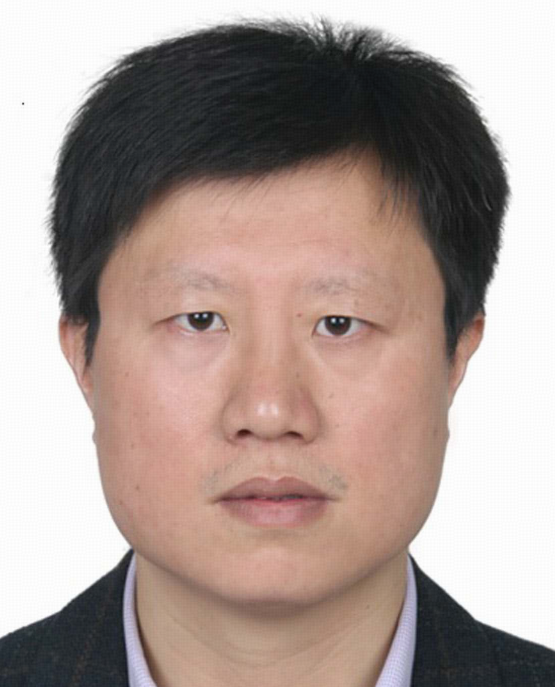 Junwei Han (韩军伟)合作论文数School of Automation, Northwestern Polytechnical University1
 Yu-Kun Lai合作论文数School of Computer Science and Informatics, Cardiff University;AI Hub in Generative Models1
 Jie Liang (梁杰)合作论文数School of Electronic Science and Technology, College of Information Science and Technology, Eastern Institute of Technology, Ningbo;Altumview Systems Inc1




