Adverse weather and imaging environments may degrade image quality and pose a significant challenge to the visual perception systems of multimedia. Various image restoration tasks necessitate the modeling of multiscale features, which is highly demanding on networks. To date, Vision Transformer has exhibited impressive image restoration performance. However, in this model, global self-attention is computationally expensive and local self-attention typically limits the interaction domain of each token. To solve this problem, we propose a novel reconfigurable self-attention transformer called RcFormer, which is designed to adequately model multiscale image features. This is achieved through a cross-grouped transformer (CGTransformer) block that uses convolution, area self-attention, and row-column self-attention for different head groups. CGTransformer is combined with an intragroup operation interaction structure. Moreover, an intergroup reconfigurable mechanism is implemented based on CGTransformer and channel circulation. The combination of multiple operations effectively enhances the modeling capability in the spatial and channel dimensions for various image recovery tasks. The performance of the proposed RcFormer is compared with low-level vision modules in a unified framework. Extensive experiments demonstrated that RcFormer exhibited a superior performance for the following image restoration tasks: image dehazing, rain streak removal, raindrop removal, snow removal, and single image deblurring.
Reinforcement Learning with Verifiable Rewards (RLVR) has significantly advanced the reasoning capabilities of Large Language Models (LLMs) and is now being applied to Vision-Language Models (VLMs). However, vanilla RLVR for VLMs verifies only the final textual output, critically neglecting the foundational step of visual perception. This oversight leads to visual hallucinations and reward hacking, as reasoning built upon flawed perception is inherently unreliable. To address this, we propose PEARL (Perceptual-Evidence Anchored Reinforced Learning), a dual-branch, perception-reasoning synergistic that strengthens multimodal reasoning by explicitly anchoring it to verified visual evidence. For each reasoning-oriented QA instance, PEARL first derive a perception checklist---a set of perception-oriented sub-questions with verifiable answers that probe the model's understanding of key visual evidence. During training, auxiliary rollouts on this checklist yield a perceptual reward that both directly reinforces the model's perception ability and acts as a fidelity gate for reasoning. If the model passes the perception check, its policy update is biased towards evidence-anchored reasoning. Otherwise, the process is halted to prevent reasoning from flawed premises. PEARL can be seamlessly integrated with popular RL methods like GRPO and DAPO. Comprehensive experiments show PEARL achieves substantial gains on multimodal reasoning benchmarks, e.g., a +9.7\% improvement over the baseline and +6.6\% over GRPO on MathVerse.
Reconstructing high-fidelity animatable 3D human avatars from monocular RGB videos remains challenging, particularly in unconstrained in-the-wild scenarios where camera parameters and human poses from off-the-shelf methods (e.g., COLMAP, HMR2.0) are often inaccurate. Splatting (3DGS) advances demonstrate impressive rendering quality and real-time performance, they critically depend on precise camera calibration and pose annotations, limiting their applicability in real-world settings. We present JOintGS, a unified framework that jointly optimizes camera extrinsics, human poses, and 3D Gaussian representations from coarse initialization through a synergistic refinement mechanism. Our key insight is that explicit foreground-background disentanglement enables mutual reinforcement: static background Gaussians anchor camera estimation via multi-view consistency; refined cameras improve human body alignment through accurate temporal correspondence; optimized human poses enhance scene reconstruction by removing dynamic artifacts from static constraints. We further introduce a temporal dynamics module to capture fine-grained pose-dependent deformations and a residual color field to model illumination variations. Extensive experiments on NeuMan and EMDB datasets demonstrate that JOintGS achieves superior reconstruction quality, with 2.1 dB PSNR improvement over state-of-the-art methods on NeuMan dataset, while maintaining real-time rendering. Notably, our method shows significantly enhanced robustness to noisy initialization compared to the baseline.Our source code is available at https://github.com/MiliLab/JOintGS.
Images suffer from color shift and detail distortion owing to limitations of contrast and visibility in hazy scenes, affecting their subjective perception. However, the performance of existing algorithms on real-world hazy images remains limited as scenes can be complex and haze degradation varies in outdoor visual systems. This study proposes a meta-knowledge single image dehazing algorithm based on hierarchical decoupling, combining the advantages of convolutional neural networks (CNNs) and transformers. We propose a novel dual-branch decoupling network that decouples low-level features from high-level semantic information in images, leveraging the hierarchical properties of the network. It combines a CNN and cross dual-branch transformer network (CDual transformer) in the encoder network to fully extract local and global features of images. To disentangle high-level semantic features, a style transfer module is designed to transform the style of hazy images while retaining the remaining semantic information. Afterward, the low-level features of images and the transformed high-level semantic features are used to reconstruct the dehazed images, fully capitalizing on the multilevel features. Furthermore, we built a meta-semi-supervised training strategy to improve the decoupling performance of the model and accumulated style knowledge of clear images from both synthetic and real-world hazy data, improving the generalizability of the model. Extensive experiments on both synthetic and real datasets show that the proposed algorithm effectively removes haze and offers better generalization abilities than similar methods.
Reconstructing complete and animatable 3D human avatars from monocular videos remains challenging, particularly under severe occlusions. While 3D Gaussian Splatting has enabled photorealistic human rendering, existing methods struggle with incomplete observations, often producing corrupted geometry and temporal inconsistencies. We present InpaintHuman, a novel method for generating high-fidelity, complete, and animatable avatars from occluded monocular videos. Our approach introduces two key innovations: (i) a multi-scale UV-parameterized representation with hierarchical coarse-to-fine feature interpolation, enabling robust reconstruction of occluded regions while preserving geometric details; and (ii) an identity-preserving diffusion inpainting module that integrates textual inversion with semantic-conditioned guidance for subject-specific, temporally coherent completion. Unlike SDS-based methods, our approach employs direct pixel-level supervision to ensure identity fidelity. Experiments on synthetic benchmarks (PeopleSnapshot, ZJU-MoCap) and real-world scenarios (OcMotion) demonstrate competitive performance with consistent improvements in reconstruction quality across diverse poses and viewpoints.
Generative recommendation (GR) typically first quantizes continuous item embeddings into multi-level semantic IDs (SIDs), and then generates the next item via autoregressive decoding. Although existing methods are already competitive in terms of recommendation performance, directly inheriting the autoregressive decoding paradigm from language models still suffers from three key limitations: (1) autoregressive decoding struggles to jointly capture global dependencies among the multi-dimensional features associated with different positions of SID; (2) using a unified, fixed decoding path for the same item implicitly assumes that all users attend to item attributes in the same order; (3) autoregressive decoding is inefficient at inference time and struggles to meet real-time requirements. To tackle these challenges, we propose MDGR, a Masked Diffusion Generative Recommendation framework that reshapes the GR pipeline from three perspectives: codebook, training, and inference. (1) We adopt a parallel codebook to provide a structural foundation for diffusion-based GR. (2) During training, we adaptively construct masking supervision signals along both the temporal and sample dimensions. (3) During inference, we develop a warm-up-based two-stage parallel decoding strategy for efficient generation of SIDs. Extensive experiments on multiple public and industrial-scale datasets show that MDGR outperforms ten state-of-the-art baselines by up to 10.78
Autonomous driving technology has garnered significant attention for its potential to reduce driver burden and enhance road safety. Modern autonomous driving systems rely on a variety of sensors to perceive complex driving environments. Many existing methods map heterogeneous data into the bird's eye view (BEV) space for feature fusion. However, they often fail to fully exploit the cross-modal interactions between cameras and LiDAR, or incorporate temporal information, resulting in suboptimal performance. Furthermore, commonly used fusion strategies are often overly simplistic. This study proposes BEV-CMHF, a cross-modality hybrid fusion framework for BEV 3D object detection with feature interaction and temporal fusion. By introducing an interactive cross-attention module and a long-short-term temporal module, the proposed framework enhances the representational power of fused BEV features. Specifically, a feature-interaction attention module that facilitates effective interaction between the camera and LiDAR BEV features using deformable attention is designed, providing guidance and supervision for the camera BEV features. Subsequently, a historical feature temporal fusion module that integrates the long-short-term temporal module is introduced to incorporate additional critical temporal information into the BEV features. Moreover, a dynamic hybrid feature-fusion module is designed to fuse the BEV features of the camera and LiDAR effectively through a hybrid attention mechanism that combines coarse and fine attention. Extensive experiments conducted on the nuScenes benchmark validate the effectiveness of the proposed method, achieving 70.87% mAP and 74.00% NDS on the test set. Using a single NVIDIA GeForce RTX 4090, the method attained an inference speed of 5.79 images per second (5.79 img/s), corresponding to an inference time of 172.64 ms on the nuScenes dataset.
Cross-view geo-localization infers a location by retrieving geo-tagged reference images that visually correspond to a query image. However, the traditional satellite-centric paradigm limits robustness when high-resolution or up-to-date satellite imagery is unavailable. It further underexploits complementary cues across views (e.g., drone, satellite, and street) and modalities (e.g., language and image). To address these challenges, we propose GeoBridge, a foundation model that performs bidirectional matching across views and supports language-to-image retrieval. Going beyond traditional satellite-centric formulations, GeoBridge builds on a novel semantic-anchor mechanism that bridges multi-view features through textual descriptions for robust, flexible localization. In support of this task, we construct GeoLoc, the first large-scale, cross-modal, and multi-view aligned dataset comprising over 50,000 pairs of drone, street-view panorama, and satellite images as well as their textual descriptions collected from 36 countries, ensuring both geographic and semantic alignment. We performed broad evaluations across multiple tasks. Experiments confirm that GeoLoc pre-training markedly improves geo-location accuracy for GeoBridge while promoting cross-domain generalization and cross-modal knowledge transfer. The dataset, source code, and pretrained models will be released.
Recommender systems traditionally represent items using unique identifiers (ItemIDs), but this approach struggles with large, dynamic item corpora and sparse long-tail data, limiting scalability and generalization. Semantic IDs, derived from multimodal content such as text and images, offer a promising alternative by mapping items into a shared semantic space, enabling knowledge transfer and improving recommendations for new or rare items. However, existing methods face two key challenges: (1) balancing cross-modal synergy with modality-specific uniqueness, and (2) bridging the semantic-behavioral gap, where semantic representations may misalign with actual user preferences. To address these challenges, we propose Multimodal Mixture-of-Quantization (MMQ), a two-stage framework that trains a novel multimodal tokenizer. First, a shared-specific tokenizer leverages a multi-expert architecture with modality-specific and modality-shared experts, using orthogonal regularization to capture comprehensive multimodal information. Second, behavior-aware fine-tuning dynamically adapts semantic IDs to downstream recommendation objectives while preserving modality information through a multimodal reconstruction loss. Extensive offline experiments and online A/B tests demonstrate that MMQ effectively unifies multimodal synergy, specificity, and behavioral adaptation, providing a scalable and versatile solution for both generative retrieval and discriminative ranking tasks.
Whole slide image (WSI) analysis heavily relies on multiple instance learning (MIL). While recent methods benefit from large-scale foundation models and advanced sequence modeling to capture long-range dependencies, they still struggle with two critical issues. First, directly applying frozen, task-agnostic features often leads to suboptimal separability due to the domain gap with specific histological tasks. Second, relying solely on global aggregators can cause over-smoothing, where sparse but critical diagnostic signals are overshadowed by the dominant background context. In this paper, we present ReconMIL, a novel framework designed to bridge this domain gap and balance global-local feature aggregation. Our approach introduces a Latent Space Reconstruction module that adaptively projects generic features into a compact, task-specific manifold, improving boundary delineation. To prevent information dilution, we develop a bi-stream architecture combining a Mamba-based global stream for contextual priors and a CNN-based local stream to preserve subtle morphological anomalies. A scale-adaptive selection mechanism dynamically fuses these two streams, determining when to rely on overall architecture versus local saliency. Evaluations across multiple diagnostic and survival prediction benchmarks show that ReconMIL consistently outperforms current state-of-the-art methods, effectively localizing fine-grained diagnostic regions while suppressing background noise. Visualization results confirm the models superior ability to localize diagnostic regions by effectively balancing global structure and local granularity.
Multimodal reasoning for ultra-high-resolution (UHR) remote sensing (RS) is usually bottlenecked by visual evidence acquisition: the model necessities localizing tiny task-relevant regions in massive pixel spaces. While Agentic Reinforcement Learning with Verifiable Rewards (RLVR) using zoom-in tools offers a path forward, we find that standard reinforcement learning struggles to navigate these vast visual spaces without structured domain priors. In this paper, we investigate the interplay between post-training paradigms: comparing Cold-start Supervised Fine-Tuning (SFT), RLVR, and Agentic RLVR on the UHR RS benchmark. Our controlled studies yield a counter-intuitive finding: high-quality Earth-science text-only QA is a primary driver of UHR visual reasoning gains. Despite lacking images, domain-specific text injects the concepts, mechanistic explanations, and decision rules necessary to guide visual evidence retrieval. Based on this, we propose a staged knowledge injection recipe: (1) cold-starting with scalable, knowledge-graph-verified Earth-science text QA to instill reasoning structures; and (2) "pre-warming'' on the same hard UHR image–text examples during SFT to stabilize and amplify subsequent tool-based RL. This approach achieves a 60.04\% Pass@1 on XLRS-Bench, significantly outperforming larger general-purpose models (e.g., GPT-5.2, Gemini 3.0 Pro, Intern-S1) and establishing a new state-of-the-art. We provide both the automated data pipeline and the rigorous ablation studies that validate this "Text-Before-Vision'' paradigm. Datasets and code will be released.
Ultrasound interpretation requires both precise lesion localization and holistic clinical reasoning, yet existing methods typically excel at only one of these capabilities: specialized detectors offer strong localization but limited reasoning, whereas multimodal large language models (MLLMs) provide flexible reasoning but weak grounding in specialized medical domains. We present Echo-α, an agentic multimodal reasoning model for ultrasound interpretation that unifies these strengths within an invoke-and-reason framework. Echo-α is trained to coordinate organ-specific detector outputs, integrate them with global visual context, and convert the resulting evidence into grounded diagnostic decisions beyond detector-only inference. This behavior is established through a nine-task supervised curriculum and then refined by sequential reinforcement learning under different reward trade-offs, yielding Echo-α-Grounding for lesion anchoring and Echo-α-Diagnosis for final diagnosis. On multi-center renal and breast ultrasound benchmarks, Echo-α outperforms competitive baselines on both grounding and diagnosis. In particular, on cross-center test sets, Echo-α-Grounding attains 56.73
Synthetic Aperture Radar (SAR) imagery plays a critical role in all-weather, day-and-night remote sensing applications. However, existing SAR-oriented deep learning is constrained by data scarcity, while the physically grounded speckle noise in SAR imagery further hampers fine-grained semantic representation learning. To address these challenges, we propose SARMAE, a Noise-Aware Masked Autoencoder for self-supervised SAR representation learning. Specifically, we construct SAR-1M, the first million-scale SAR dataset, with additional paired optical images, to enable large-scale pre-training.Building upon this, we design Speckle-Aware Representation Enhancement (SARE), which injects SAR-specific speckle noise into masked autoencoders to facilitate noise-aware and robust representation learning. Furthermore, we introduce Semantic Anchor Representation Constraint (SARC), which leverages paired optical priors to align SAR features and ensure semantic consistency. Extensive experiments across multiple SAR datasets demonstrate that SARMAE achieves state-of-the-art performance on classification, detection, and segmentation tasks. Code and models will be available.
High-definition (HD) map construction is essential for autonomous driving in providing precise and comprehensive static environmental information, typically relying on camera, LiDAR, or fusion-based configurations. While fusion methods offer superior performance, current approaches require separate models for each sensor setup, leading to high deployment costs. However, current methods face two major issues: high costs due to separate training and deployment for each input configuration, and low robustness when sensors are missing or corrupted. To address these challenges, we introduce Uni-Map, a Unified Robust HD Map Construction Network, a single model designed to perform well across camera-only, LiDAR-only, and camera-LiDAR fusion configurations. Central to our methodology is a novel mixture stack modality training scheme, allowing the map decoder to learn from camera-only, LiDAR-only, and fused features. We also introduce a latent-space projector module to align bird’s eye view features from different modalities into a shared representation space, facilitating feature alignment and improving representation learning. During inference, our model utilizes a switching modality strategy to adapt seamlessly to different evaluated input configurations, including camera-only, LiDAR-only, and camera-LiDAR fusion settings. To evaluate the robustness of HD map construction methods, we designed 13 different sensor corruption scenarios and conducted extensive experiments comparing Uni-Map with state-of-the-art methods. Experimental results show that Uni-Map outperforms previous methods by a significant margin across both normal and corrupted modalities, demonstrating superior performance and robustness.
Video text-based visual question answering (Video TextVQA) aims to answer questions by reasoning over visual textual content appearing in videos. Despite the strong multimodal video understanding capabilities of recent Video-LLMs, their performance on existing Video TextVQA benchmarks remains limited. To better understand this gap, we conduct an upper-bound analysis through frame-wise question answering, counting a sample as correct if any frame yields the right answer, which significantly outperforms direct video-based inference and reveals a substantial performance gap. The results suggest that the primary bottleneck lies in the localization of key question-relevant evidence, rather than in reasoning capacity itself. Building on this insight, we propose a question-guided agent framework that explicitly anchors the relevant keyframes before answering. The approach operates effectively in a training-free setting and consistently surpasses direct video inference. With additional supervised fine-tuning (SFT) and reinforcement learning (RL), it achieves an average improvement of +12.12 in accuracy and +11.15 in ANLS across benchmarks, establishing new state-of-the-art results. Our study underscores the critical role of explicit keyframe anchoring for advancing Video TextVQA. The code will be publicly released.
In recent decades, visual simultaneous localization and mapping (vSLAM) has gained significant interest in both academia and industry. It estimates camera motion and reconstructs the environment concurrently using visual sensors on a moving robot. However, conventional cameras are limited by hardware, including motion blur and low dynamic range, which can negatively impact performance in challenging scenarios like high-speed motion and high dynamic range illumination. Recent studies have demonstrated that event cameras, a new type of bio-inspired visual sensor, offer advantages such as high temporal resolution, dynamic range, low power consumption, and low latency. This paper presents a timely and comprehensive review of event-based vSLAM algorithms that exploit the benefits of asynchronous and irregular event streams for localization and mapping tasks. The review covers the working principle of event cameras and various event representations for preprocessing event data. It also categorizes event-based vSLAM methods into four main categories: feature-based, direct, motion-compensation, and deep learning methods, with detailed discussions and practical guidance for each approach. Furthermore, the paper evaluates the state-of-the-art methods on various benchmarks, highlighting current challenges and future opportunities in this emerging research area. A public repository will be maintained to keep track of the rapid developments in this field at https://github.com/kun150kun/ESLAM-survey .
Medical visual grounding connects free-form clinical queries to spatial evidence in medical images and is an important component of interpretable medical artificial intelligence. However, general-purpose grounding models are predominantly trained on natural images, while existing medical localization resources remain fragmented across imaging modalities, datasets, and task formulations. To address this gap, we construct LocAnyMed-200K, a multimodal medical visual grounding dataset containing approximately 200K image-query-answer examples across computed tomography, optical medical imaging, ultrasound, and X-ray. We harmonize heterogeneous detection and localization resources into a unified free-form instruction format that supports one or multiple bounding boxes, point coordinates, and no-target outputs for negative queries. Full-parameter fine-tuning of LocateAnything-3B on LocAnyMed-200K improves F1@IoU 0.50 from 10.64 to 85.59 on a held-out evaluation split, demonstrating that large-scale domain-specific supervision can equip a general grounding model with effective medical localization capabilities. Beyond spatial coordinates, a clinically interpretable grounding system should also communicate the evidence supporting its prediction. We therefore derive LocAnyMed-CoT-20K, a rationale-augmented subset that connects anatomical context, visual observations, and spatial conclusions through structured reasoning and further improves cross-source generalization through fine-tuning. Together, these resources provide a unified foundation for studying both localization accuracy and rationale quality across heterogeneous medical imaging modalities. The code is publicly available at https://github.com/MiliLab/LocAnyMed.
Recent diffusion-based video generation models have enabled high-quality personalized video customization through both tuning-based pipelines, which fine-tune a video diffusion model, and reference-based pipelines such as image-to-video generation. However, these capabilities raise serious concerns about personal privacy, identity ownership and intellectual property protection. Existing anti-customization works focus on protecting images, while protection for videos against both reference- and tuning-based customization remains largely underexplored. Protecting videos in this setting raises three challenges: (i) Image-level perturbations, optimized frame by frame, cannot survive temporal compression by 3D video VAE. (ii) A video-level perturbation optimized on a single video is vulnerable to temporal editing and fails to protect unseen videos. (iii) Temporally inconsistent perturbations are not robust to temporal attacks. To address these challenges, we propose Temporally Consistent Universal Adversarial Perturbations (TC-UAP), the first protection method against both reference- and tuning-based video customization. TC-UAP optimizes an identity-level multi-frame UAP over sliding windows from multiple videos, accounting for local temporal dependencies induced by temporal compression in video VAE and enabling a single perturbation to protect unseen videos of varying lengths. Moreover, we introduce intrinsic temporal modeling and an extrinsic surrogate temporal-attack loss, which make the perturbation temporally consistent and robust to unseen temporal attacks. Empirically, quantitative and qualitative results show that TC-UAP achieves the strongest identity protection compared with existing methods under both reference- and tuning-based video customization, and remains robust under multiple unseen temporal attacks.
The "thinking-with-images" paradigm enables multimodal large language models (MLLMs) to actively explore visual scenes via zoom-in tools. This is essential for ultra-high-resolution (UHR) remote sensing VQA, where task-relevant cues are sparse and tiny. However, we observe a consistent failure mode in existing zoom-enabled MLLMs: Tool Usage Homogenization, where tool calls collapse into task-agnostic patterns, limiting effective evidence acquisition. To address this, we propose GeoEyes, a staged training framework consisting of (1) a cold-start SFT dataset, UHR Chain-of-Zoom (UHR-CoZ), which covers diverse zooming regimes, and (2) an agentic reinforcement learning method, AdaZoom-GRPO, that explicitly rewards evidence gain and answer improvement during zoom interactions. The resulting model learns on-demand zooming with proper stopping behavior and achieves substantial improvements on UHR remote sensing benchmarks, with 54.23
 Dacheng Tao (陶大程)合作论文数College of Computing & Data Science, Nanyang Technological University;Lee Kong Chian School of Medicine, Nanyang Technological University;DaXiao Robot146
 Bo Du (杜博)合作论文数School of Computer Science, Wuhan University43
 Yang Cao (曹洋)合作论文数Department of Automation, School of Information Science and Technology, University of Science and Technology of China42
 Qiming Zhang合作论文数University of Sydney;TikTok30
 Di Wang合作论文数iFlytek29
 Yuxiang Yang合作论文数Fudan University, Fudan University29
 Yufei Xu (徐宇飞)合作论文数ByteDance24
 Mingjin Zhang (张铭津)合作论文数School of Telecommunications Engineering, Xidian University18
 Hong Wen合作论文数Institute of Electronics Chinese Academy of Sciences Institute of Electronics Inst of Electronics Inst of Electronics16
 Zhe Chen合作论文数Department of Computer Science and Information Technology, La Trobe University16
 Zengfu Wang (汪增福)合作论文数Institute of Intelligent Machines, Chinese Academy of Sciences;University of Science and Technology of China16
 Xinbo Gao (高新波)合作论文数School of Electronic Engineering, Xidian University15
 Long Lan (蓝龙)合作论文数NUDT15
 Zhengjun Zha (查正军)合作论文数Department of Automation, School of Information Science and Technology, University of Science and Technology of China;National Engineering Laboratory for Brain-Inspired Intelligence Technology and Application, University of Science and Technology of China14
 Haimei Helen Zhao (赵海媚)合作论文数School of Biomedical Engineering, Faculty of Engineering, The University of Sydney13
 Juhua Liu (刘菊华)合作论文数School of Computer Science, Wuhan University13
 Wei Zhai (翟伟)合作论文数Department of Automation, School of Information Science and Technology, University of Science and Technology of China11
 Liangpei Zhang (张良培)合作论文数State Key Laboratory of Information Engineering in Surveying, Mapping and Remote Sensing, Wuhan University11
 Shanshan Zhao (赵杉杉)合作论文数University of Sydney11
 Fengxiang Wang合作论文数College of Computer Science and Technology, National University of Defense Technology10
 Mingyu Gao (高明裕)合作论文数School of Electronics and Information Engineering, Hangzhou Dianzi University10Xiaoshuai Hao合作论文数Beijing Academy of Artificial Intelligence9
 Zulong Chen合作论文数Department of Information Technology, Alibaba Group9
 Yong Luo (罗勇)合作论文数School of Computer Science, Wuhan University9
 Chaoyue Wang合作论文数JD Explore Academy9
 Jie Guo (郭洁)合作论文数State Key Laboratory of Integrated Services Networks, School of Telecommunications Engineering, Xidian University9Maoyuan Ye合作论文数8
 Lefei Zhang (张乐飞)合作论文数School of Computer, Wuhan University8
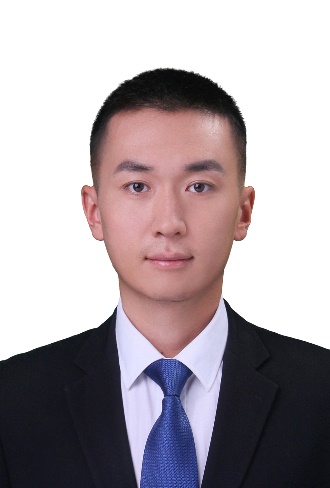 Jiafeng Li (李嘉锋)合作论文数Information Department, Beijing University of Technology8Shuai Fang (方帅)合作论文数School of Computer Science and Information Engineering, Hefei University of Technology8Haibin He (贺海斌)合作论文数Wuhan University7
 Haoyu He (何昊宇)合作论文数Department of DSAI, Faculty of IT, Monash University7
 Zhiwei He (何志伟)合作论文数School of Electronics and Information Engineering, Hangzhou Dianzi University7
 Fuyu Lv合作论文数Alibaba Group7
 Yong Xia (夏勇)合作论文数Northwestern Polytechnical University7
 Jianfei Cai合作论文数Department of Data Science & AI, Faculty of Information Technology, Monash University;Monash Data Futures Institute, Monash University;School of Artificial Intelligence, Xidian University7
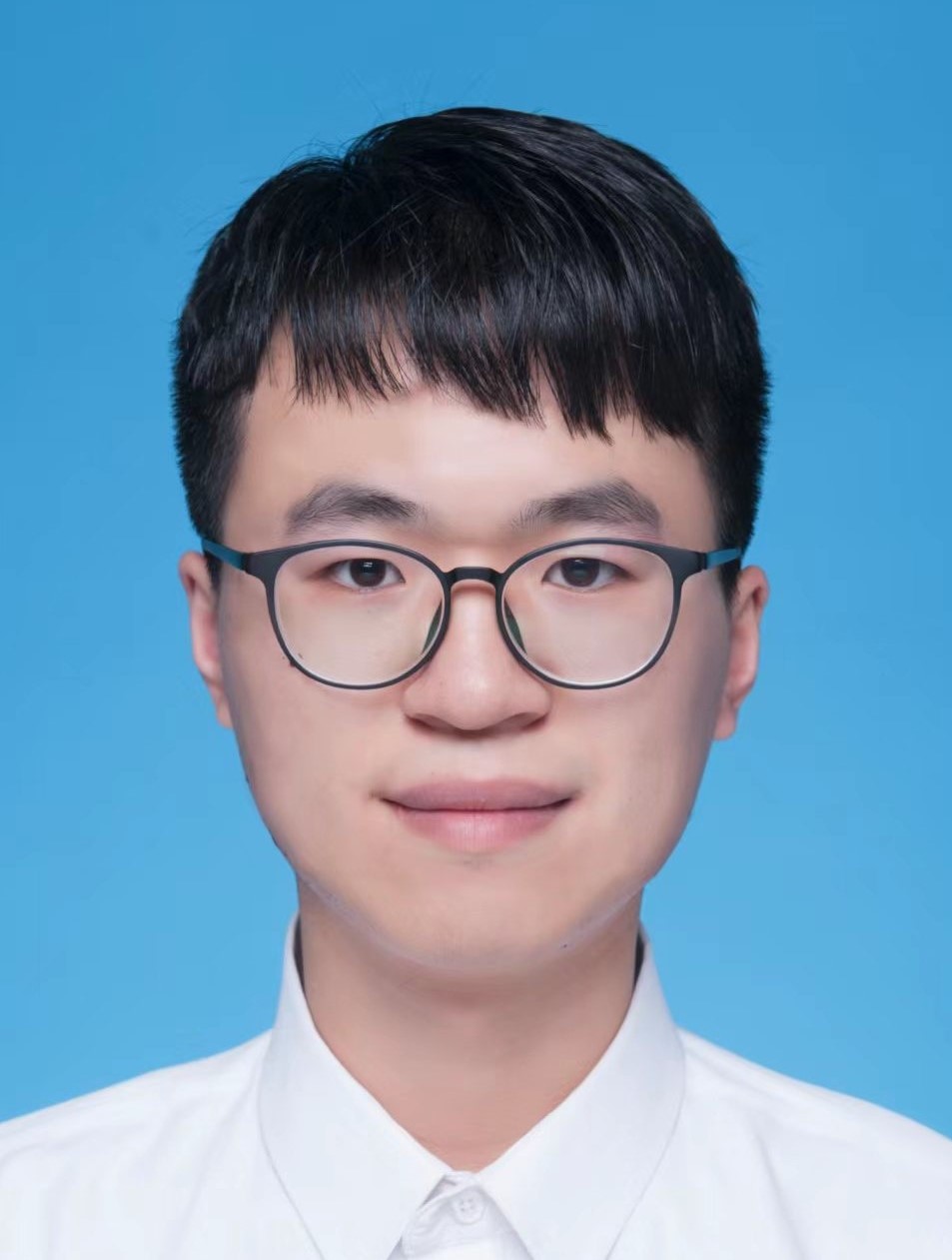 Wen Wang (王文)合作论文数Zhejiang University;Interactive Intelligence Lab, Ant Group7
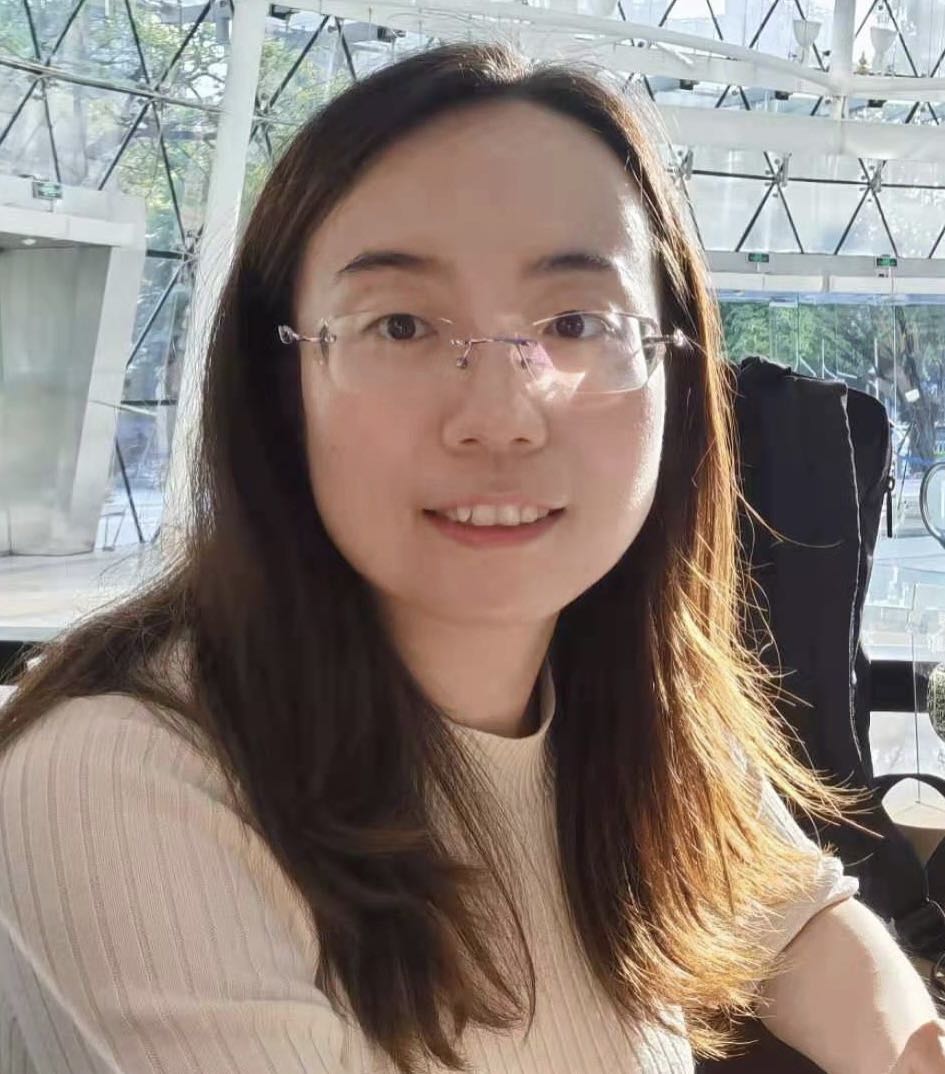 Qiong Cao (曹琼)合作论文数JD Explore Academy7
 Hao Deng合作论文数Alibaba International Digital Commerce Group6Sihan Ma合作论文数UBTECH Sydney Artificial Intelligence Centre, School of Computer Science, Faculty of Engineering and Information Technologies, The University of Sydney, Darlington, NSW, Australia6
 Zengmao Wang (王增茂)合作论文数School of Computer Science, Wuhan University;National Engineering Research Center for Multimedia Software6
 Tao Gao (高涛)合作论文数School of Information Engineering, Chang'an University6
 Li Zhuo (卓力)合作论文数Faculty of Information Technology, Beijing University of Technology;College of Metropolitan Transportation, Beijing University of Technology6
 Wenjing Yang合作论文数Xi an Jiaotong Univ, Xi an Jiaotong Univ6
 Jizhizi Li合作论文数Artificial Intelligence, University of Sydney6Hongchen Luo合作论文数University of Science and Technology of China6
 Yuanhong Zhong (仲元红)合作论文数School of Microelectronics and Communication Engineering, Chongqing University6
 Yunsong Li (李云松)合作论文数School of Telecommunications Engineering, Xidian University6Ting Chen (陈婷)合作论文数长安大学6