Long-horizon dynamical prediction is fundamental in robotics and control, underpinning canonical methods like model predictive control. Yet, many systems and disturbance phenomena are difficult to model due to effects like nonlinearity, chaos, and high-dimensionality. Koopman theory addresses this by modeling the linear evolution of embeddings of the state under an infinite-dimensional linear operator that can be approximated with a suitable finite basis of embedding functions, effectively trading model nonlinearity for representational complexity. However, explicitly computing a good choice of basis is nontrivial, and poor choices may cause inaccurate forecasts or overfitting. To address this, we present Kalman-Implicit Koopman Operator (KALIKO) Learning, a method that leverages the Kalman filter to implicitly learn embeddings corresponding to latent dynamics without requiring an explicit encoder. KALIKO produces interpretable representations consistent with both theory and prior works, yielding high-quality reconstructions and inducing a globally linear latent dynamics. Evaluated on wave data generated by a high-dimensional PDE, KALIKO surpasses several baselines in open-loop prediction and in a demanding closed-loop simulated control task: stabilizing an underactuated manipulator's payload by predicting and compensating for strong wave disturbances.
Standard flow and diffusion pre-training matches the distribution of available data (e.g., molecules), which often covers only a small fraction of the valid design space. In generative discovery, however, one aims to sample valid new-to-nature designs, assigned negligible probability under, and thus inaccessible to, standard models fitted to the observed data. To overcome this limitation, we depart from data distribution matching and view a generative model through its generable set: the region it covers with non-negligible probability. This allows to introduce a new learning principle for out-of-distribution flow modeling: enlarging a model's generable set to increase coverage of the valid design space. We propose Active Flow Expansion (ActFlow), a continued pre-training method that employs verifier feedback to expand a pre-trained model over new valid regions by iteratively adapting to synthetic data generated through active exploration in the learned flow representation. Theoretically, we establish to our knowledge first-of-their-kind statistical learning guarantees for out-of-distribution flow modeling, analyzing generable set expansion as a local-to-global reachability process over a learned representation. Empirically, we assess ActFlow with suitable out-of-distribution generative modeling metrics across small organic molecules, mid-sized drug-like molecules, therapeutic peptides, and protein sequence design tasks. Results show that ActFlow expands valid coverage far beyond the region modeled by the initial pre-trained model, significantly outperforming widely adopted synthetic flow pre-training methods.
Large language model (LLM) coding agents increasingly operate at the repository level, motivating benchmarks that evaluate their ability to optimize entire codebases under realistic constraints. Existing code benchmarks largely rely on synthetic tasks, binary correctness signals, or single-objective evaluation, limiting their ability to assess holistic optimization behavior. We introduce FormulaCode, a benchmark for evaluating agentic optimization on large, real-world codebases with fine-grained, multi-objective performance metrics. FormulaCode comprises 957 performance bottlenecks mined from scientific Python repositories on GitHub, each paired with expert-authored patches and 264.6 community-maintained performance workloads per task, enabling evaluation of the full optimization lifecycle—triage, diagnosis, and resolution—under realistic correctness and performance constraints. Our evaluations reveal that repository-scale, multi-objective optimization remains a major challenge for frontier LLM agents.
Large language model (LLM) coding agents increasingly operate at the repository level, motivating benchmarks that evaluate their ability to optimize entire codebases under realistic constraints. Existing code benchmarks largely rely on synthetic tasks, binary correctness signals, or single-objective evaluation, limiting their ability to assess holistic optimization behavior. We introduce FormulaCode, a benchmark for evaluating agentic optimization on large, real-world codebases with fine-grained, multi-objective performance metrics. FormulaCode comprises 957 performance bottlenecks mined from scientific Python repositories on GitHub, each paired with expert-authored patches and, on average, 264.6 community-maintained performance workloads per task, enabling the holistic ability of LLM agents to optimize codebases under realistic correctness and performance constraints. Our evaluations reveal that repository-scale, multi-objective optimization remains a major challenge for frontier LLM agents. Project website at: https://formula-code.github.io
Discrete diffusion models have demonstrated great promise in modeling various sequence data, ranging from human language to biological sequences. Inspired by the success of RL in language models, there is growing interest in further improving the models by alignment with a certain reward. In this work, we propose an offline preference optimization method to approach trajectory alignment for discrete diffusion models. Instead of applying the reward on the final output and backpropagating the gradient to the entire denoising process, we decompose the problem into a set of stepwise alignment objectives by matching the per-step posterior. This framework enables efficient diffusion optimization, is compatible with arbitrary reward functions, and importantly, yields an equivalent optimal solution under additive factorization of the trajectory reward. Experiments across multiple domains including DNA sequence design, protein inverse folding, and language modeling consistently demonstrate the superiority of our approach. Notably, it achieves an up to 12\% improvement over the most competitive RL-based baseline in terms of predicted activity on DNA sequence design, and further improves the GSM8K score from 78.6 to 81.2 on LLaDA-8B-Instruct for language modeling.
Fixed-wing unmanned aerial vehicles (UAVs) offer endurance and efficiency but lack low-speed agility because its highly-coupled dynamical model. We present an end-to-end sensing-to-control pipeline that combines bio-inspired hardware instrumentation, physics-informed dynamics learning, and convex control allocation. Measuring oncoming flow on a small airframe is difficult as near-body aerodynamics, propeller slipstream, control surfaces actuation, and the present of gusts would distort pressures and make sensor signals input dependent variables. To raise the signal-to-noise ratio, and to gain invaluable response time, inspired by the Narwhal's tusk, we protrude our in-house developed multi-hole probes far ahead into the upstream, and complement it with sparse yet carefully placed wing pressure sensors for local flow measurement, with systematically-introduced gust of significant magnitude. A data-driven calibration maps pressures signal of the probes to airspeed and flow angles. We then learn a control-affine model of aerodynamic forces with a soft left/right symmetry regularizer that improves identifiability under partial observability and limits confounding between wing pressures and aileron inputs. Desired wrenches (forces output) are realized by a regularized least-squares optimizer that yields smooth, trimmed actuation. Wind-tunnel studies across multiple airspeeds and gust conditions show that adding wing pressures reduces force-estimation error by 25%30%, the proposed model degrades far less under distribution shift (about 12% versus 44% for an unstructured baseline), and force tracking improves with smoother inputs, including a 27% reduction in normal-force RMSE relative to a plain affine model and 34% relative to an unstructured baseline.
There is a vast literature on representation learning based on principles such as coding efficiency, statistical independence, causality, controllability, or symmetry. In this paper we propose to learn representations from sequence data by factorizing the transformations of the latent variables into sparse components. Input data are first encoded as distributions of latent activations and subsequently transformed using a probability flow model, before being decoded to predict a future input state. The flow model is decomposed into a number of rotational (divergence-free) vector fields and a number of potential flow (curl-free) fields. Our sparsity prior encourages only a small number of these fields to be active at any instant and infers the speed with which the probability flows along these fields. Training this model is completely unsupervised using a standard variational objective and results in a new form of disentangled representations where the input is not only represented by a combination of independent factors, but also by a combination of independent transformation primitives given by the learned flow fields. When viewing the transformations as symmetries one may interpret this as learning approximately equivariant representations. Empirically we demonstrate that this model achieves state of the art in terms of both data likelihood and unsupervised approximate equivariance errors on datasets composed of sequence transformations.
Video diffusion models have enabled remarkable progress in video generation and editing. However, content preservation remains a core challenge: existing methods regenerate every pixel and often alter elements that should remain unchanged, such as characters or background scenes. We introduce Vera, a layered diffusion framework for content-preserving video editing. Instead of regenerating the entire video, Vera generates an edit layer along with an alpha matte for compositing with the source video, separating creative editing from content preservation by design. To encourage coherent composition with the source video, we extend the text-to-video DiT into a Mixture-of-Transformers (MoT) architecture, with separate DiTs for each layer that interact through joint self-attention. To support the training of Vera, we further construct a high-quality layered dataset with accurate alpha mattes, diverse scenes and dynamics, and visual effects. Across our quantitative benchmark and human preference study, Vera outperforms leading open-source video editing models in content preservation while remaining competitive in edit quality, using 486K frames of layered training data.
Molecular optimization often starts from a pretrained generative model that captures a broad prior over valid molecular structures. At test time, however, the goal is not to sample from this prior, but to use a limited oracle budget to shift generation toward task-specific high-reward molecules. We study this adaptation problem for discrete diffusion models. Each online round couples several choices. The loop must decide which candidates to evaluate, how rewards become model updates, which feedback to reuse, and how far to move beyond the pretrained prior. These choices have mostly been studied in isolation, leaving open whether they complement one another, become redundant, or interfere inside a full online adaptation loop. We conduct controlled studies across six small-molecule binding-affinity tasks and three protein-fitness tasks. We find that acquisition, reward shaping, and model debiasing provide complementary routes to higher reward, especially for small molecules. Replay further stabilizes learning, while validity penalties keep small-molecule exploration on the valid molecular manifold. Together, these findings point to a practical recipe for feedback-efficient molecular optimization: online fine-tuning with acquisition, reward shaping, debiasing, replay, and validity control. This recipe outperforms offline fine-tuning and inference-time search baselines under matched oracle-call budgets and GPU-hour accounting. The gains are largest when high-reward candidates require larger shifts from the pretrained prior.
We present Scalable Pixel-anchored End-to-end Diffusion (SpeeDiff), a latent diffusion method that jointly trains the VAE and the diffusion model from scratch. In principle, joint training allows the diffusion loss gradient to directly guide the VAE encoder, encouraging the formation of a generation-friendly latent space and potentially yielding faster convergence than the conventional two-stage approach with a pretrained frozen VAE. However, a naive end-to-end implementation severely degrades performance, as unrestricted backpropagation of the diffusion loss leads to latent space collapse. Our main technical contribution is a simple yet effective Tweedie Pixel Reconstruction (TPR) loss, which provides additional pixel-level feedback by decoding a predicted clean latent from an intermediate noisy state using Tweedie's formula, thereby alleviating collapse. Furthermore, our method enables jointly scaling a fully transformer-based architecture and enhances representation alignment within the end-to-end framework. Our SpeeDiff-XL model achieves over 140× and 61× faster training compared to Vanilla SiT and REPA, respectively, while attaining an FID of 1.50 without guidance on ImageNet 256×256 generation. With a more efficient 32× compressed VAE, our model further reaches an FID of 1.53 without guidance on ImageNet 512×512 generation.
Post-training large foundation models with reinforcement learning typically relies on massive and heterogeneous datasets, making effective curriculum learning both critical and challenging. In this work, we propose ACTOR-CURATOR, a scalable and fully automated curriculum learning framework for reinforcement learning post-training of large language models (LLMs). ACTOR-CURATOR learns a neural curator that dynamically selects training problems from large problem banks by directly optimizing for expected policy performance improvement. We formulate problem selection as a non-stationary stochastic bandit problem, derive a principled loss function based on online stochastic mirror descent, and establish regret guarantees under partial feedback. Empirically, ACTOR-CURATOR consistently outperforms uniform sampling and strong curriculum baselines across a wide range of challenging reasoning benchmarks, demonstrating improved training stability and efficiency. Notably, it achieves relative gains of 28.6
Reinforcement learning (RL) has shown promise in generating robust locomotion policies for bipedal robots, but often suffers from tedious reward design and sensitivity to poorly shaped objectives. In this work, we propose a structured reward shaping framework that leverages model-based trajectory generation and control Lyapunov functions (CLFs) to guide policy learning. We explore two model-based planners for generating reference trajectories: a reduced-order linear inverted pendulum (LIP) model for velocity-conditioned motion planning, and a precomputed gait library based on hybrid zero dynamics (HZD) using full-order dynamics. These planners define desired end-effector and joint trajectories, which are used to construct CLF-based rewards that penalize tracking error and encourage rapid convergence. This formulation provides meaningful intermediate rewards, and is straightforward to implement once a reference is available. Both the reference trajectories and CLF shaping are used only during training, resulting in a lightweight policy at deployment. We validate our method both in simulation and through extensive real-world experiments on a Unitree G1 robot. CLF-RL demonstrates significantly improved robustness relative to the baseline RL policy and better performance than a classic tracking reward RL formulation.
Self-improving AI systems typically treat the agent as the object that improves, by optimizing prompts, workflows, harnesses, or even the agent's own code. This agent-centric view can make improvements expensive to maintain and difficult to transfer, because gains become tied to a particular agent design, task distribution, or adaptation run. We study a complementary paradigm: knowledge-centric self-improvement, in which agents remain generic and disposable while the persistent object is a curated knowledge base that agents can leverage for future tasks. We conduct controlled case studies to operationalize this idea via a simple protocol. Agents attempt one task, then contribute evidence-grounded insights to a shared knowledge base via task-level and cross-task forums, followed by knowledge distillation. Because self-improvement is contained in the knowledge rather than the agent, improvement can be more inspectable, transferable, and portable. Across abstract reasoning, coding, and terminal benchmarks, this protocol improves solve rates while reducing dollar cost relative to agent-centric baselines. The resulting distilled knowledge also transfers to held-out tasks and across LLM families, indicating that the improvement is not merely an LLM- or run-specific behavior. These results support a new view of self-improving agentic systems: progress can be driven primarily by the curated persistent knowledge. Code is available at https://github.com/recursive-knowledge/KSI.
Adapting production-level computer vision tools to bespoke scientific datasets is a critical "last mile" bottleneck. Current solutions are impractical: fine-tuning requires large annotated datasets scientists often lack, while manual code adaptation costs scientists weeks to months of effort. We consider using AI agents to automate this manual coding, and focus on the open question of optimal agent design for this targeted task. We introduce a systematic evaluation framework for agentic code optimization and use it to study three production-level biomedical imaging pipelines. We demonstrate that a simple agent framework consistently generates adaptation code that outperforms human-expert solutions. Our analysis reveals that common, complex agent architectures are not universally beneficial, leading to a practical roadmap for agent design. We open source our framework and validate our approach by deploying agent-generated functions into a production pipeline, demonstrating a clear pathway for real-world impact.
Advanced air mobility operations hold the potential to enhance and expand regional transportation of both people and goods in populated areas. However, hazardous flight conditions arising from interactions between wind and the built environment remain a significant challenge for aerial vehicles in urban settings. This work proposes a novel framework towards safe flight planning of aerial vehicles in windy urban environments. A learning-based surrogate model is trained to rapidly predict flow fields from readily available information such as building geometry and incident wind. This surrogate prediction is used to calculate a volumetric flight challenge scalar field based on critical flow parameters and proximity to structures. A safe, flow-informed flight trajectory is then identified through a cost-minimizing pathfinder. The complete system is demonstrated experimentally through flight tests of a micro aerial vehicle through a model urban geometry placed in a large fan-array wind tunnel. Comparing this approach to trajectories generated without knowledge of the wind field, we find the flow-informed approach reduces undesired vehicle displacement and improves flight stability. This work is among the first practical demonstrations of safe, wind-aware methodologies for advanced air mobility in urban environments.
The recent advancement of Large Language Models (LLMs) has established their potential as autonomous interactive agents. However, they often struggle in strategic games of incomplete information, such as bilateral price negotiation. In this paper, we investigate if Reinforcement Learning from Verifiable Rewards (RLVR) can effectively teach LLMs to negotiate. Specifically, we explore the strategic behaviors that emerge during the learning process. We introduce a framework that trains a mid-sized buyer agent against a regulated LLM seller across a wide distribution of real-world products. By grounding reward signals directly in the maximization of economic surplus and strict adherence to private budget constraints, we reveal a novel four-phase strategic evolution. The agent progresses from naive bargaining to using aggressive starting prices, moves through a phase of deadlock, and ultimately develops sophisticated persuasive skills. Our results demonstrate that this verifiable training allows a 30B agent to significantly outperform frontier models over ten times its size in extracting surplus. Furthermore, the trained agent generalizes robustly to stronger counterparties unseen during training and remains effective even when facing hostile, adversarial seller personas.
This paper presents DataSciBench, a comprehensive benchmark for evaluating Large Language Model (LLM) capabilities in data science. Recent related benchmarks have primarily focused on single tasks, easily obtainable ground truth, and straightforward evaluation metrics, which limits the scope of tasks that can be evaluated. In contrast, DataSciBench is constructed based on a more comprehensive and curated collection of natural and challenging prompts for uncertain ground truth and evaluation metrics. We develop a semi-automated pipeline for generating ground truth (GT) and validating evaluation metrics. This pipeline utilizes and implements an LLM-based self-consistency and human verification strategy to produce accurate GT by leveraging collected prompts, predefined task types, and aggregate functions (metrics). Furthermore, we propose an innovative Task - Function - Code (TFC) framework to assess each code execution outcome based on precisely defined metrics and programmatic rules. Our experimental framework involves testing 6 API-based models, 8 open-source general models, and 9 open-source code generation models using the diverse set of prompts we have gathered. This approach aims to provide a more comprehensive and rigorous evaluation of LLMs in data science, revealing their strengths and weaknesses. Experimental results demonstrate that API-based models outperform open-sourced models on all metrics and Deepseek-Coder-33B-Instruct achieves the highest score among open-sourced models. We release all code and data at https://github.com/THUDM/DataSciBench.
The surface and subsurface of worlds beyond Mars remain largely unexplored. Yet these worlds hold keys to fundamental questions in planetary science - from potentially habitable subsurface oceans on icy moons to ancient records preserved in Kuiper Belt objects. NASA's success in Mars exploration was achieved through incrementalism: 22 progressively sophisticated missions over decades. This paradigm, which we call Planetary Exploration 2.0 (PE 2.0), is untenable for the outer Solar System, where cruise times of a decade or more make iterative missions infeasible. We propose Planetary Exploration 3.0 (PE 3.0): a paradigm in which unvisited worlds are explored by a single or a few missions with radically adaptive space systems. A PE 3.0 mission conducts both initial exploratory science and follow-on hypothesis-driven science based on its own in situ data returns, evolving spacecraft capabilities to work resiliently in previously unseen environments. The key enabler of PE 3.0 is software-defined space systems (SDSSs) - systems that can adapt their functions at all levels through software updates. This paper presents findings from a Keck Institute for Space Studies (KISS) workshop on PE 3.0, covering: (1) PE 3.0 systems engineering including science definition, architecture, design methods, and verification validation; (2) software-defined space system technologies including reconfigurable hardware, multi-functionality, and modularity; (3) onboard intelligence including autonomous science, navigation, controls, and embodied AI; and (4) three PE 3.0 mission concepts: a Neptune/Triton smart flyby, an ocean world explorer, and an Oort cloud reconnaissance mission.
Autoregressive image modeling relies on visual tokenizers to compress images into compact latent representations. We design an end-to-end training pipeline that jointly optimizes reconstruction and generation, enabling direct supervision from generation results to the tokenizer. This contrasts with prior two-stage approaches that train tokenizers and generative models separately. We further investigate leveraging vision foundation models to improve 1D tokenizers for autoregressive modeling. Our autoregressive generative model achieves strong empirical results, including a state-of-the-art FID score of 1.48 without guidance on ImageNet 256×256 generation.
We introduce NitroGen, a video-action foundation model for generalist gaming agents, trained on 40,000 hours of gameplay videos across more than 1000 games. We incorporate three key ingredients: 1) an internet-scale video-action dataset constructed by automatically extracting player actions from publicly available gameplay videos, 2) a multi-game benchmark environment that can measure cross-game generalization, and 3) a unified vision-action model trained with large-scale behavior cloning. NitroGen exhibits strong competence across diverse domains, including combat encounters in 3D action games, high-precision control in 2D platformers, and exploration in procedurally generated worlds. It transfers effectively to unseen games, achieving up to 52% relative improvement in success rates over models trained from scratch. We release the dataset, benchmark, and model weights to advance research on generalist embodied agents.
 Aaron D. Ames合作论文数Advanced Mechanical Bipedal Experimental Robotics Lab, Department of Mechanical and Civil Engineering, Department of Computing and Mathematical Sciences, California Institute of Technology27
 Anima Anandkumar合作论文数Anima AI + Science Lab, California Institute of Technology;Division of Engineering and Applied Science, California Institute of Technology;Department of Computing and Mathematical Sciences, California Institute of Technology24
 Soon-Jo Chung合作论文数Department of Computing and Mathematical Sciences, California Institute of Technology;Autonomous Robotics and Control Lab, California Institute of Technology;NASA Jet Propulsion Laboratory, California Institute of Technology20
 Pietro Perona合作论文数Department of Computing & Mathematical Sciences, Division of Engineering and Applied Science, California Institute of Technology18
 Guanya Shi (石冠亚)合作论文数15
 Jialin Song合作论文数NVIDIA14
 Jennifer J. Sun合作论文数Computer Science Department, Cornell University14
 Swarat Chaudhuri合作论文数Department of Computer Science, College of Natural Sciences, The University of Texas at Austin13
 Stephan Tao Zheng合作论文数Asari AI12
 Patrick Lucey合作论文数Stats Perform12
 Ziniu Hu (胡子牛)合作论文数Meta10
 Adam Wierman合作论文数Department of Computing + Mathematical Sciences, Division of Engineering and Applied Science, California Institute of Technology10
 Joel W. Burdick合作论文数Division of Engineering and Applied Science, California Institute of Technology10
 Thorsten Joachims合作论文数Department of Computer Science, Cornell University;Department of Information Science, Cornell University10
 Iain Matthews合作论文数Epic Games;Robotics Institute, Carnegie Mellon University;University of East Anglia10
 Yuxin Chen (陈宇新)合作论文数Department of Computer Science, University of Chicago10
 Yanan Sui (眭亚楠)合作论文数Learning & Neural Systems Group, Institute of Human-Machine-Environment Engineering, School of Aerospace Engineering, Tsinghua University9
 Eric Zhan合作论文数Latitude AI9
 Kamyar Azizzadenesheli合作论文数Nvidia Corporation9
 Rose Yu (虞琦)合作论文数Department of Computer Science and Engineering, Jacobs School of Engineering, University of Californ, San Diego9
 Jeremy Bernstein合作论文数Thinking Machines Lab9
 Peter Carr合作论文数Latitude AI9
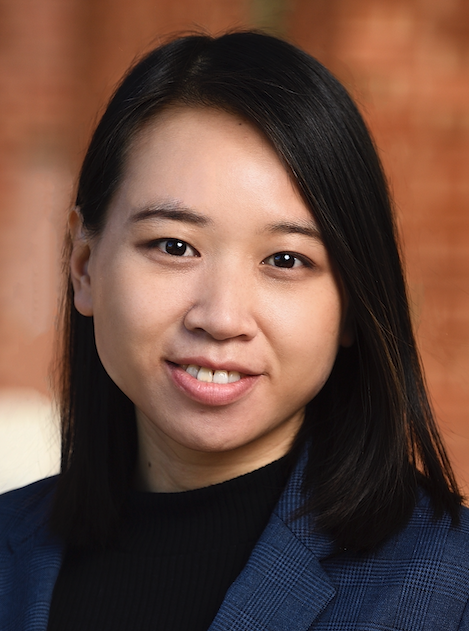 Anqi (Angie) Liu (刘安琪)合作论文数Department of Computer Science, Whiting School of Engineering, Johns Hopkins University;Mathematical Institute for Data Science, Johns Hopkins University9
 Georgia Gkioxari合作论文数Computing + Mathematical Sciences Department, Division of Engineering and Applied Science, California Institute of Technology8
 Andrew J. Taylor合作论文数Motional AD8
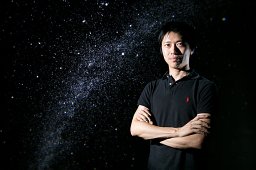 Masahiro Ono合作论文数Massachusetts Institute of Technology8
 Ivan D. Jimenez Rodriguez合作论文数The Computing + Mathematical Sciences Department, Division of Engineering and Applied Science, California Institute of Technology8
 Maegan Tucker合作论文数Department of Mechanical and Civil Engineering, California Institute of Technology7
 Sabera Talukder合作论文数California Institute of Technology7
 Atharva Sehgal合作论文数California Institute of Technology7
 Victor D. Dorobantu合作论文数CALTECH, Dept Comp & Math Sci, Pasadena, CA 91125 USA7
 Ann Kennedy合作论文数Department of Neuroscience, The Scripps Research Institute7
 Hao Liu合作论文数Computing + Mathematical Sciences Department, Division of Engineering and Applied Science, California Institute of Technology7
 Frances H. Arnold合作论文数Division of Chemistry and Chemical Engineering, California Institute of Technology7
 Hoang M. Le合作论文数6Michael O'Connell合作论文数California Institute of Technology6Kejun Li合作论文数California Inst. of Technology6
 Oisin Mac Aodha合作论文数Institute for Adaptive and Neural Computation, School of Informatics, The University of Edinburgh6
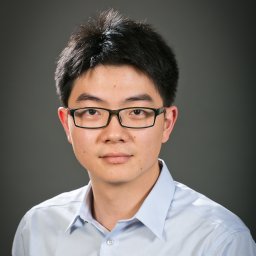 Xichen Shi合作论文数Waymo Inc6
 Katie Bouman合作论文数Department of Computing + Mathematical Sciences, Division of Engineering and Applied Science, California Institute of Technology6
 Jason Yang合作论文数California Institute of Technology5Jonathan Light合作论文数5
 Dan Zhang (张丹)合作论文数School of Computing, National University of Singapore5
 Cameron Voloshin合作论文数Latitude AI5
 Ellen Novoseller合作论文数5
 Raul Astudillo合作论文数Cornell University5
 Abhinav Verma合作论文数Department of Computer Science and Engineering, Pennsylvania State University5
 Zachary E. Ross合作论文数Seismological Laboratory, Division of Geological and Planetary Sciences, California Institute of Technology5
 David Van Valen合作论文数Division of Biology and Biological Engineering, California Institute of Technology;Heritage Medical Research Institute, California Institute of Technology;Xtrava5