As pedestrian accidents are increasing in frequency, the use of smartphones while walking has emerged as a critical issue in traffic safety. Through a case study in Seoul, this research aims to reveal the impact of smartphone activity on pedestrian safety. To this end, this study constructs a wide range of datasets, encompassing smartphone activity data, as well as transportation and social-economic data. The primary smartphone activities of pedestrian are identified through a survey of 1,000 Seoul citizens, resulting in 12 categories with 81 smartphone applications. To depict pedestrian accidents based on the collected data, this research employs deep learning models and compares their performance with conventional multiple regression models. The analysis results indicate that deep learning models utilizing smartphone data achieve better performance, particularly in estimating the rate of pedestrian accidents, which is derived without the dominant factor of the living population. Using the developed model, this research estimates pedestrian accidents under scenarios of increased smartphone usage. The estimation results suggest that accidents will likely increase with the rise of popular smartphone activities such as watching videos, riding electric scooters, or using delivery services. Rational regulations for pedestrian smartphone usage should be considered to alleviate the negative impacts of smartphone usage on pedestrian safety.
Traffic breakdown involves complicated vehicle behavior, and is regarded as a probabilistic event with macroscopic traffic data from fixed detectors. However, with the advent of connected vehicle technologies, traffic data will develop to the vehicle-level, such as trajectory data, and provide unprecedented opportunities to better understand various traffic phenomena. Using novel vehicle-level data from drone videos, this research explores the traffic breakdown by interactions between vehicles. Specifically, this paper categorizes the typical behavior of individual vehicles that causes or resolves traffic congestion. Based on the behavior that occurred in the extensive time–space domain, this research develops a novel measurement method to quantify the behavior as temporal delay or spatial residual. With real-world data, this research verifies the vehicle-level congestion can be estimated from specific vehicle behavior, and their aggregation could describe the change in flow speed or traffic breakdown. The proposed framework can address the traffic phenomenon better when more extensive data is available.
With the advent of autonomous vehicles (AVs) and advanced driving assistance systems (ADAS), there has been a growing interest in studying driving behaviors within the field of transportation science. Given that the transition period of mixed traffic is expected to continue for more than 30 years, it is crucial to evolve AV technology to resemble human driving, especially in the freeway weaving sections. Lane-changing (LC) maneuvers in these sections could cause problems for traffic flow, such as traffic breakdown, oscillation, or bottleneck activation. This study proposes an interpretable LC implementation model for naturalistic driving behaviors of AVs based on vehicle-to-vehicle (V2V) communication. To achieve this objective, a systematic selection process is adopted to find optimal V2V features that resemble how human drivers assess LC situations. Based on the minimum redundancy maximum relevance (mRMR) algorithm, seven V2V features have been selected out of 25 candidates. Then, a support vector machine (SVM) is employed to investigate how these features exhibit in each of LC and lane-keeping (LK) situations. The proposed model was applied in a field case of a weaving Section on freeway US 101. Performance measures of simple accuracy, precision, recall, and F1-score show high accuracy of 0.9814, 0.9150, 0.7955, and 0.8511, respectively. Subsequently, a strategy for naturalistic LC behaviors of AVs was simulated. The proposed model outperforms high prediction accuracy compared to other existing models. Particularly, errors in the lateral movements have significantly improved. These results suggest that the proposed model effectively simulates naturalistic LC behaviors based on V2V communication.
Connected automated vehicles (CAVs) hold promise to replace current traffic detection systems in the near future. However, traffic state estimation, particularly flow rate, poses a major challenge at low CAV penetration rates without other supporting infrastructure of sensors. This paper proposes flow rate estimation methods using headway data from CAVs. Specifically, Bayesian inference and deep learning based methods are developed and compared with a naïve method based on a simple arithmetic mean of observed headways. The proposed methods are investigated via numerical experiments to evaluate their performance with respect to the CAV penetration rate, traffic demand, and availability of historical data. The methods are further validated with real data. The results show that the Bayesian inference based method, which estimates the flow rate distribution by integrating current (real-time) data and previous knowledge, can perform well even at low penetration rates with good prior information. However, in high CAV penetration, its relative advantage to the other methods diminishes because the prior information always influences the flow rate estimation. The deep learning based method can be effective with a large amount of data to train the model; however, in low CAV penetration, it tends to converge to the mean of target output values regardless of the observed data. At last, in relatively high CAV penetration, the relative advantage of the advanced methods is negligible and in fact, the naïve method is preferred in terms of accuracy as well as efficiency.
Public bike-sharing systems in many countries provide convenience as users can rent or return a bike freely at any station, but this may cause a demand–supply imbalance of the bike inventory for certain stations. To solve this issue, this research develops a bike-relocation strategy including both demand prediction and relocating route optimization. First, the bike demand is estimated by a least-square boosting algorithm, and numbers of relocating bikes are decided comparing bike inventories at each station. Second, based on predicted demand, the number of transporting vehicles and relocating routes are optimized by genetic algorithm. The strategy aims to minimize service vehicle numbers and relocating time with selective pick-up and delivery. The proposed strategy is evaluated by applying it to a real-world public bike system in Gangnam-district in Seoul, South Korea, and the results show the system can be improved significantly. Specifically, the bike demand satisfaction ratio increases from 0.87 to 1.00 in the morning peak hour, which shows that the proposed strategy better satisfies the bike demand. The uniformity of spare inventory is also improved, as a coefficient of variation decreases from 0.73 to 0.56. The reasonableness index, which reflects a sufficient number of bike stands, indicates 87% and 92% stations have a proper number of stands at morning peak hour and 24 h, respectively, with respect to predicted demand. The results show that the bike system with the proposed strategy has more reliability with stable inventory, and the operating cost could decrease with fewer relocating vehicles and optimized vehicle routes.
This paper proposes a speed control method termed variable speed release (VSR) to increase bottleneck capacity. The main idea is to increase the speed of vehicles approaching a bottleneck to reduce the probability of traffic breakdown and sustain higher flow, thereby achieving a higher system throughput. This paper provides insight into the mechanism of improvement through modeling and a numerical experiment. The results suggest that the proposed VSR control would be particularly effective with smaller response time, which can be realized by connected and automated vehicle (CAV) technologies. This paper also provides conditions in which VSR control would be effective or should be complemented with other control methods such as variable speed limit and ramp metering control. The results of evaluation by microscopic simulations demonstrate significant improvements of system throughput, particularly in a CAV environment.
This paper proposes a novel breakdown probability model based on microscopic driver behavior for a freeway merge bottleneck. Extending Newell's car following model to describe the transition from free-flow to congested regimes, two elements of breakdown, trigger and propagation, are derived in terms of vehicle headway. Combining these elements, a general breakdown probability is derived in terms of various parameters related to driver behavior and traffic conditions - other than flow - that can be treated as constants or stochastic with probability distributions. The proposed model is validated with real data. It was found that the theoretical breakdown probability distribution accords well with the empirical counterpart within reasonable ranges of parameter values. Our model suggests that the breakdown probability (i) increases with flow (both mainline and merging) as expected, and the merging spacing, (ii) decreases with the merging speed and aggressive driver characteristics, and interestingly, (iii) increases with the deviation in headway. A proactive traffic control method to achieve uniform headway is developed considering low penetration rates of connected automated vehicle technologies. Published by Elsevier Ltd.
The connected vehicle (CV) technology is applied to develop VSL strategies to improve bottleneck discharge rates and reduce system delays. Three VSL control strategies are developed with different levels of complexity and capabilities to enhance traffic stability using: (i) only one CV (per lane) (Strategy 1), (ii) one CV (per lane) coupled with variable message signs (Strategy 2), and (iii) multiple CVs (Strategy 3). We further develop adaptive schemes for the three strategies to remedy potential control failures in real time. These strategies are designed to accommodate different queue detection schemes (by CVs or different sensors) and CV penetration rates. Finally, probability of control failure is formulated for each strategy based on the stochastic features of traffic instability to develop a general framework to (i) estimate expected delay savings, (ii) assess the stability of different VSL control strategies, and (iii) determine optimal control speeds under uncertainty. Compared to VMS-only strategies, the CV-based strategies can effectively impose dynamic control over continuous time and space, enabling (i) faster queue clearance around a bottleneck, (ii) less restrictive control with higher control speed (thus smoother transition), and (iii) simpler control via only one or a small number of CVs. Published by Elsevier Ltd.
Field test results of a variable speed limit (VSL) control algorithm, a speed-controlling algorithm using shock wave theory (SPECIALIST), were analyzed to elucidate driver response and traffic flow evolution under VSL control. Successful VSL control was characterized by nearly constant, or decreasing, demand over time. In contrast, failed VSL control was attributed to ( a) significant increase in demand (during control) and ( b) significant net inflow from ramps. The demand increase was found to be the leading cause of the failed control, underscoring that the efficacy of the VSL control greatly relies on its ability to incorporate demand patterns during control. On the basis of these findings, some potential improvements are offered, including a parameter design strategy that incorporates demand patterns.
This paper proposes a new string controller for puppet which is optimized in terms of the number of motors and its size. To optimize the number of motors needed for generating the essential motions of puppet, the motion of bending a leg is implemented by one string and the walking motion by two legs is implemented by one motor. To minimize the space needed for the controller when generating the essential motions of puppet, cylindrical and articulated joints are used in the controller. The proposed controller is actually implemented to perform various puppet shows and it has been proved that the size of the controller is small enough for two puppets to stand close to shake hands and it is fast enough to simulate fast dance motions.
Marionette controlling robot has a problem that generates interference in rotation and intersection, therefore, the research on the independent shifter to move freely on the stage is required. Connecting omni-directional mobile robot with marionette controlling robot can solve this problem. Omni-directional mobile robot makes itself rotate and translate in 2D plane freely. Magnetic device is used to connect the moving part with the control part of the robot to minimize the intereference generated by the movement of robot. When robot moves, it can move to all directions with the suitalbe setting of banlance power. The moment of inertia is minimized by dividing the robot to the upper and lower parts in the marionette performance stage. Rotation and interference problem of independent omni-wheel Robot can be solved by using the permanent magnet. The efficiency and safety of the marionette controlling robot is proved by the experiment.
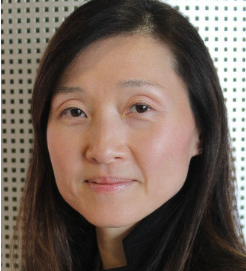 Soyoung Ahn合作论文数Department of Civil and Environmental Engineering, College of Engineering, University of Wisconsin-Madison7
 Danjue Chen合作论文数Georgia Institute of Technology;Department of Civil and Environmental Engineering;Department of Civil and Environmental Engineering, Georgia Institute of Technology3
 Jin-Hak Lee合作论文数2hunsoo hahn合作论文数2
 Euntak Lee合作论文数2Byeong-Yeol Kim合作论文数2
 Andreas Hegyi合作论文数Department of Transport and Planning, Faculty of Civil Engineering and Geosciences, Delft University of Technology2
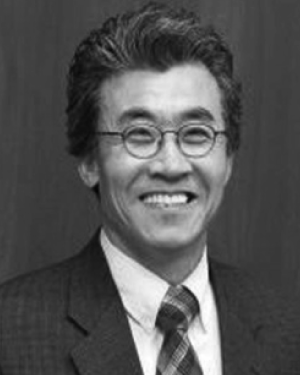 Bongsoo Son合作论文数2
 Ju-Yeon Lee合作论文数1Hasik Lee合作论文数Department of Civil and Environmental Engineering, Seoul National University1Do-Gyeong Kim合作论文数1




