Continuous and reliable estimation of driver cognitive load is essential for improving road safety and supporting adaptive in-vehicle interfaces. Although multimodal methods based on EEG and eye-tracking signals show promise, most existing approaches rely on static statistical feature aggregation and shallow fusion schemes. These limitations hinder the modeling of long-range temporal patterns and the ordinal nature of cognitive load levels. To address these issues, this paper introduces TAMF-Net, a temporal-aware multimodal fusion framework for sequence-level cognitive load inference. This framework integrates three core components: a temporal convolutional encoder that captures long-range dependencies in neuro-behavioral signals, a multi-scale cross-modal fusion module that dynamically synthesizes EEG and eye-movement features, and an ordinal-aware focal loss that enforces consistent predictions across load levels. By operating directly on temporal sequences, this method preserves the evolution of cognitive dynamics rather than collapsing them into static features. Experimental results on the public CL-Drive dataset demonstrate that TAMF-Net achieves a competitive average weighted F1-score of 94.4% +/- 4.7% under subject-independent cross-validation, significantly outperforming established baselines. Furthermore, the model demonstrates strong generalization in cross-dataset testing, achieving an average F1-score of 87.7% +/- 1.3% on the SEED-VIG dataset without additional fine-tuning. These results indicate that TAMF-Net is both effective and interpretable for the real-world monitoring of driver states.
Aiming at the problems of low sorting efficiency and high labor cost in the courier industry, this paper designs and implements a six-degree-of-freedom pneumatic grasping intelligent sorting robot based on SLAM (simultaneous localization and map building) and AI visual recognition. The robot integrates STM32 microcontroller, pneumatic adsorption system, multi-sensor fusion navigation and deep learning algorithms to realize dynamic path planning, high-precision barcode recognition, adaptive grasping and other functions. By adopting the Mecanum wheel omnidirectional chassis, semi-adaptive suspension mechanism and fuzzy PID control strategy, the motion stability and operation accuracy of the robot in the complex environment are significantly improved. The experimental results show that the robot's sorting efficiency reaches 1200 pieces/hour, the barcode recognition success rate is 98.7%, and the response time of path planning is less than 0.5 seconds. This study provides innovative solutions for logistics automation with good application value.
Hospital pharmaceutical distribution faces challenges such as complex routes, strict timeliness, and collision risks in mixed human - robot environments. This paper presents a ROS2-based medical transport robot with multimodal perception. The system employs a quad-coaxial Mecanum wheel chassis for omnidirectional mobility, an STM32F427 for real-time motion control, and an Intel NUC running ROS2 Humble for distributed decision-making. Perception integrates LiDAR SLAM, UWB positioning, and YOLOv5 detection, enabling centimetre-level localisation and semantic obstacle recognition. A ROS2 framework ensures reliable communication, while HIS integration supports secure, real-time synchronisation of medical orders. Experiments in a simulated hospital ward demonstrated $\pm 2 \mathrm{~cm}$ positioning accuracy, 0.3 s path planning, stable navigation through 1.2 m corridors, and a 98.7% obstacle avoidance success rate. Compared with conventional AGVs, path efficiency improved by 60%. These results highlight innovations in Mecanum wheel kinematics, multi-sensor fusion, and HIS-integrated distributed architecture, providing a practical and adaptable solution for smart hospital logistics.
Accurate source characterization and transport parameter estimation is important when seeking to predict the spatiotemporal distribution of dense non-aqueous phase liquid (DNAPL) contaminants in groundwater. However, this is a complex multimodal search problem prone to equifinality and premature convergence, which leads to considerable error. To address this, a sensitivity-relevant dynamic swarm intelligence (SRD-SI) algorithm embedded in a homotopy-variation mechanism is proposed in the present study to rationally balance the inversion processes of sensitivity-varied source characteristics and DNAPL transport parameters. In this approach, global optima are progressively approached in conjunction with the homotopy variation of the search space. Furthermore, to avoid computationally expensive numerical model repetition during the sensitivity analysis and inverse iterations, a Bayesian-based optimization framework that combines multiple kernel functions in a kernel extreme learning machine (KELM) model is designed considering the complex site conditions and statistical characteristics of the input variables, thus creating the Bayesian hybrid KELM (BHK-ELM) model for the reliable surrogate modeling of numerical DNAPL-transport simulations. The results show that the BHKELM model recognizes and effectively reconstructs the complex input - output mapping of the numerical model by increasing the determination coefficient R2 to 0.9988 while improving the computational efficiency approximately 4500-fold. Because source characteristics and boundary conditions are far more sensitive than transport parameters to the contaminant distribution, conventional inverse modeling methods struggle to accurately identify these transport parameters. In contrast, the proposed inverse modeling system combining sensitivity analysis, swarm intelligence, and homotopy variation is more stable and provides significantly more accurate estimations for all unknown variables. Compared with the traditional SI algorithm, the homotopyvariation SRD-SI reduced the maximum inversion relative error from 46.22 % to 9.53 %, while the mean inversion relative error was reduced from 11.09 % to 3.90 %.
Physiological circuits differ across increasing isometric force levels during unilateral contraction. Therefore, we first explored the possibility of predicting the force level based on electroencephalogram (EEG) activity recorded during a single trial of unilateral 5
Hypothetical and real case studies were combined to explore the feasibility and effectiveness of a surrogate-based cyclic feedback updating approach for groundwater contamination source identification (GCSI) at dense non-aqueous-phase liquid (DNAPL)-contaminated sites. Support vector regression (SVR), kriging, and kernel extreme learning machine (KELM) models were integrated to build a surrogate model of the multiphase flow simulation model with a high computational efficiency. A mixed homotopy-differential evolution (DE) algorithm is presented to solve the optimization model, in which the integrated surrogate model was embedded, to obtain the identification results, and a cyclic feedback updating process was developed to gradually improve the results. Finally, GCSI uncertainty analysis was conducted using the Monte Carlo method. The results showed that the integrated surrogate model accurately approximates the simulation model, with a mean relative error of only 2.56%. The combination of the homotopy algorithm and DE algorithm provided an effective improvement over the traditional heuristic algorithm, and the mean relative error of the identified source characteristics was limited to 3.28%. GCSI accuracy was significantly improved after the application of the cyclic feedback updating method by reducing the mean relative error of the final identification results to 2.14%. In addition, the probability distribution characteristics of the identification results were obtained via uncertainty analysis to provide a comprehensive and reliable reference for decision makers. (c) 2020 American Society of Civil Engineers.
Coke dry quenching (CDQ) is widely adopted for waste heat recovery in iron and steel plants. In this work, an economic benefit index was introduced to evaluate the performance of the CDQ system and stacked autoencoder (SAE) based deep neural networks are adopted for CDQ operation prediction. Based on the prediction results, a guidance is provided for online adjustment of the supplementary air flow rate, hence the efficiency and safety of the CDQ system can be improved. The case study on a real plant shows that the proposed method increases the economic efficiency of the CDQ process by 4.39%.
Brain Computer Interface (BCI) is a new way of interaction between the human brain and the outside world. The analysis of EEG(Electroencephalogram) signals is crucial in the field of brain-computer interface. In this paper, a feature selection and classification method based on encapsulated elastic network is proposed in combination with filter banks. The effectiveness of the method is demonstrated by the case of motion-imagining EEG signals in international competition data. At the same time, the method is compared with the conventional band selection method and the filtered elastic network feature selection method to prove the superiority of the method in the classification performance of the BCI system.
Groundwater contamination source identification (GCSI) is critical for taking effective measures to protect groundwater resources, assess risks, mitigate disasters, and design remediation strategies. Simulation-optimization techniques have been effective tools for GCSI. However, previous studies have applied individual surrogate models when replacing simulation models, rather than making efforts to combine various methods to improve the approximation accuracy of the surrogate model over the simulation model. In this study, the kernel extreme learning machine (KELM) model was proposed to enhance the surrogate model, and to approach GCSI problems, especially those of dense nonaqueous phase liquid-contaminated aquifers, more effectively. In addition, a kriging model and a support vector regression (SVR) model were built and compared with the KELM model, and various ensemble surrogate (ES) modeling techniques were applied to establish four ES models. Results showed that the KELM model was more accurate than the kriging and SVR models; however, the ES models performed much better than the three individual surrogate models. The most precise ES model increased the certainty coefficient (R-2) to 0.9837, whereas limiting the maximum relative error to 13.14%. Finally, a mixed-integer nonlinear programming optimization model was established to identify the groundwater contamination source in terms of location and release history, and simultaneously assess aquifer parameters. The ES model developed in this article could reasonably predict the system response under given operation conditions. Replacement of the simulation model by the ES model considerably reduced the computation burden of the simulation-optimization process and simultaneously achieved high computation accuracy.
The original extreme learning machine (ELM) was designed for the balanced data, and it balanced misclassification cost of every sample to get the solution. Weighted extreme learning machine assumed that the balance can be achieved through the equality of misclassification costs. This paper improves previous weighted ELM with decay-weight matrix setting for balance and optimization learning. The decay-weight matrix is based on the sample number of each class, but the weight sum values of each class are not necessarily equal. When the number of samples is reduced, the weight sum is also reduced. By adjusting the decaying velocity, classifier could achieve more appropriate boundary position. From the experimental results, the decay-weighted ELM obtains the better effects in solving the imbalance classification tasks, particularly in multiclass tasks. This method was successfully applied to build the prediction model in the urban traffic congestion prediction system.
Multiset canonical correlation analysis (MsetCCA) has been successfully applied to optimize the reference signals by extracting common features from multiple sets of electroencephalogram (EEG) for steady-state visual evoked potential (SSVEP) recognition in brain-computer interface application. To avoid extracting the possible noise components as common features, this study proposes a sophisticated extension of MsetCCA, called multilayer correlation maximization (MCM) model for further improving SSVEP recognition accuracy. MCM combines advantages of both CCA and MsetCCA by carrying out three layers of correlation maximization processes. The first layer is to extract the stimulus frequency-related information in using CCA between EEG samples and sine-cosine reference signals. The second layer is to learn reference signals by extracting the common features with MsetCCA. The third layer is to re-optimize the reference signals set in using CCA with sine-cosine reference signals again. Experimental study is implemented to validate effectiveness of the proposed MCM model in comparison with the standard CCA and MsetCCA algorithms. Superior performance of MCM demonstrates its promising potential for the development of an improved SSVEP-based brain-computer interface.
Effective common spatial pattern (CSP) feature extraction for motor imagery (MI) electroencephalogram (EEG) recordings usually depends on the filter band selection to a large extent. Subband optimization has been suggested to enhance classification accuracy of MI. Accordingly, this study introduces a new method that implements sparse Bayesian learning of frequency bands (named SBLFB) from EEG for MI classification. CSP features are extracted on a set of signals that are generated by a filter bank with multiple overlapping subbands from raw EEG data. Sparse Bayesian learning is then exploited to implement selection of significant features with a linear discriminant criterion for classification. The effectiveness of SBLFB is demonstrated on the BCI Competition IV IIb dataset, in comparison with several other competing methods. Experimental results indicate that the SBLFB method is promising for development of an effective classifier to improve MI classification.
One of the most important issues for the development of a motor-imagery based brain-computer interface (BCI) is how to design a powerful classifier with strong generalization capability. Extreme learning machine (ELM) has recently proven to be comparable or more efficient than support vector machine for many pattern recognition problems. In this study, we propose a multi-kernel ELM (MKELM)-based method for motor imagery electroencephalogram (EEG) classification. The kernel extension of ELM provides an elegant way to circumvent calculation of the hidden layer outputs and inherently encode it in a kernel matrix. We investigate effects of two different kernel functions (i.e., Gaussian kernel and polynomial kernel) on the performance of kernel ELM. The MKELM method is subsequently developed by integrating these two types of kernels with a multi-kernel learning strategy, which can effectively explore the supplementary information from multiple nonlinear feature spaces for more robust classification of EEG. An extensive experimental comparison with two public EEG datasets indicates that the MKELM method gives higher classification accuracy than those of the other competing algorithms. The experimental results confirm that superiority of the proposed MKELM-based method for accurate classification of EEG associated with motor imagery in BCI applications. Our method also provides a promising and generalized solution to investigate the complex and nonlinear information for various applications in the fields of expert and intelligent systems. (C) 2017 Elsevier Ltd. All rights reserved.
Motor imagery is usually hard to be classified with a high accuracy, since the task-related electroencephalogram (EEG) responses are likely to be contaminated by some ongoing noises. Design of an efficient classifier is considerably important for the realization of a brain-computer interface (BCI) system based on motor imagery. This study introduces a Bayesian extreme learning machine (BELM) based method for accurate classification of motor imagery. By combing ELM and Bayesian inference, BELM achieves the smallest norm of output weights with automatically estimated regularization for alleviating the possible overfitting during calibration procedure. Effectiveness of the BELM-based method is validated on a public BCI dataset, in comparison with other two competing methods.
Effective common spatial pattern (CSP) feature extraction for motor-imagery (MI) EEG recordings usually depends on the filter band selection to a large extent. However, the most proper filter band can hardly be determined manually due to its subject-specific property. This study introduces a sparse support vector machine (SSVM) approach to implement simultaneous CSP feature selection and classification for MI-based brain–computer interface (BCI). In SSVM, CSP features are first extracted on multiple signals that are filtered from raw EEG data at a set of overlapping subbands. SVM with l 1-norm regularization is then proposed to classify MI tasks with automatic selection of filter bands giving the significant CSP features. The effectiveness of SSVM for MI classification is demonstrated on the BCI Competition III dataset IVa, in comparison with several other competing methods. Experimental results indicate that the proposed SSVM method is promising for development of an improved MI-based BCI.
Seizure detection is extremely essential for long-term monitoring of epileptic patients. This paper investigates the detection of epileptic seizures in multi-channel long-term intracranial electroencephalogram( iEEG). The algorithm conducts wavelet decomposition of iEEGs with five scales,and transforms the sum of the three frequency bands into histogram for computing the distance. The proposed method combines a novel feature called EMD-L1,which is an efficient algorithm of earth movers' distance( EMD),with support vector machine( SVM) for binary classification between seizures and non-seizures. The EMD-L1 used in this method is characterized by low time complexity and high processing speed by exploiting the L1 metric structure. The smoothing and collar technique are applied on the raw outputs of SVM classifier to obtain more accurate results. Several evaluation criteria are recommended to compare our algorithm with other conventional methods using the same dataset from the Freiburg EEG database. Experiment results show that the proposed method achieves a high sensitivity,specificity and low false detection rate,which are 95.73%,98. 45% and 0. 33 /h,respectively. This algorithm is characterized by its robustness and high accuracy with the possibility of performing real-time analysis of EEG data,and may serve as a seizure detection tool for monitoring long-term EEG.
As an emerging biometric technology, palmprint recognition has been extensively researched due to its easy collection, user friendliness, high verification accuracy and reliability. Blanket dimension is a commonly used fractal dimension and has the multi-resolution characteristics with which the image texture information can be better extracted. In this work, palmprint recognition with blanket dimension and its expansions was investigated. The efficiencies of horizontally and vertically expanded blanket dimensions for extracting the directional feature of palmprint were compared, and a palmprint recognition algorithm based on horizontally expanded blanket dimension (HEBD) was proposed according to the comparison results. Furthermore, a multi-scale HEBD (MHEBD) algorithm for palmprint recognition was also presented, and the MHEBD was demonstrated to be more effective than the single-scale HEBD for feature extraction. The algorithm was evaluated on Hong Kong Polytechnic University (PolyU) database (v2) and CASIA database. The experimental results indicate that the multi-scale HEBD can extract the palmprint features effectively and efficiently with a high recognition rate and less processing time. (C) 2013 Elsevier B.V. All rights reserved.
Channel interference factor for the identification result is prevalent among the existing speaker recognition algorithms. In order to improve the accuracy of the algorithm, the paper utilizes the technique of latent factor analysis(LFA) to deal with the channel factors in the speaker's Gaussian Mixture Model(GMM). In the endpoint detection phase of speaker recognition, the algorithm introduces the GMM for speech modeling to accurately determine the beginning and ending points of the speech segment, and then establish speaker GMM. The algorithm use factor analysis technique to fit the differences between the speaker characteristics space and the channel space, and removes channel factor in speaker's GMM. And then the algorithm extracts GMM super-vectors as the input of Support Vector Machine(SVM) to obtain recognition results. Experimental results show that the combination of factor analysis and SVM can obtain better recognition rate and ensure the robustness of the recognition algorithm.
The feature analysis of epileptic EEG is very significant in diagnosis of epilepsy. This paper introduces two nonlinear features derived from fractal geometry for epileptic EEG analysis. The features of blanket dimension and fractal intercept are extracted to characterize behavior of EEG activities, and then their discriminatory power for ictal and interictal EEGs are compared by means of statistical methods. It is found that there is significant difference of the blanket dimension and fractal intercept between interictal and ictal EEGs, and the difference of the fractal intercept feature between interictal and ictal EEGs is more noticeable than the blanket dimension feature. Furthermore, these two fractal features at multi-scales are combined with support vector machine (SVM) to achieve accuracies of 97.58% for ictal and interictal EEG classification and 97.13% for normal, ictal and interictal EEG classification.
 Yu Zhang合作论文数5
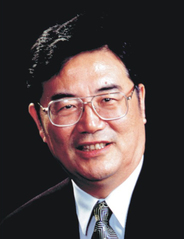 Xingyu Wang (王行愚)合作论文数East China University of Science and Technology5
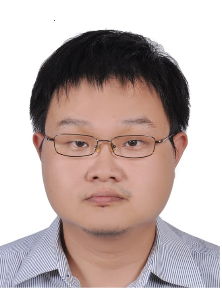 Jing Jin (金晶)合作论文数Department of Automation, School of information Science and Engineering, East China University of Science and Technology;Key Laboratory of Smart Manufacturing in Energy Chemical Process, Ministry of Education, School of information Science and Engineering, East China University of Science and Technology4
 Zeyu Hou (侯泽宇)合作论文数3
 Weidong Zhou (周卫东)合作论文数School of Integrated Circuits, Shandong University;School of Microelectronics, Shandong University3
 Wenxi Lu (卢文喜)合作论文数College of New Energy and Environment, Jilin University3
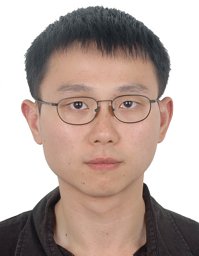 Yuan Yao (姚远)合作论文数2
 Wangmei Lao合作论文数2
 Bei Wang (王蓓)合作论文数School of Information Science and Engineering, East China University of Science and Technology;Key Laboratory of Smart Manufacturing in Energy Chemical Process, Ministry of Education, East China University of Science and Technology2
 Jianguo Wang (王建国)合作论文数School of Mechatronic Engineering and Automation, Shanghai University2Haipeng Chen (陈海鹏)合作论文数College of Computer Science and Technology, Jilin University;Key Laboratory of Symbolic Computation and Knowledge Engineering of Ministry of Education, Jilin University1Chaolin Xiong (熊超琳)合作论文数1Xue-Zhi Cai合作论文数1Tingjun Xie合作论文数1Yujie Zhai合作论文数1Yuzhong Liu合作论文数1Hualiang Li合作论文数1Xuanjing Shen合作论文数1
 Jiahui Liu合作论文数1Ruoyi Liu合作论文数1Xupeng Ye合作论文数Jinan University, College of Information Science and Technology, Guangzhou, China1Yong Jiao合作论文数East China Univ Sci & Technol, Key Lab Adv Control & Optimizat Chem Proc, Shanghai, Peoples R China1Yali Shen合作论文数Key Laboratory of Occupational Health and Safety of Guangdong Power Grid Co., Ltd.1
 Qi Yuan合作论文数Shandong Univ, Sch Informat Sci & Engn, Jinan 250100, Peoples R China1Qiru Wang合作论文数1
 Jiwen Wang (王纪文)合作论文数Shanghai Children's Medical Center1
 Zhenxue Dai (戴振学)合作论文数College Of Construction Engineering, Jilin University1
 Xiumei Guo (郭秀梅)合作论文数School of Northeast Asia Studies, Shandong University1
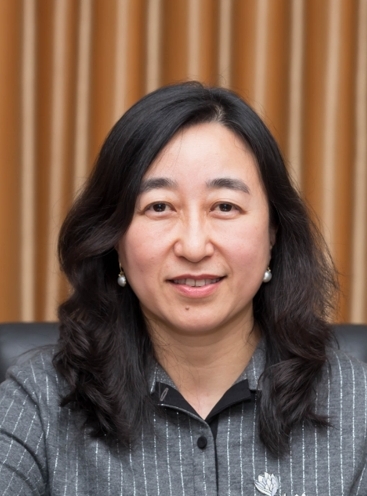 Xiaojuan Ban (班晓娟)合作论文数Institute of Artificial Intelligence, University of Science and Technology Beijing1
 Jinyi Long (龙锦益)合作论文数College of Information Science and Technoligy of Jinan Univerisity;College of Cyber Security of Jinan Univerisity1Kai Liu (刘凯)合作论文数1Xiuhe Zhao合作论文数1
 Shiwei Ma (马世伟)合作论文数School of Mechatronic Engineering and Automation, Shanghai University1Jiannan Chi (迟健男)合作论文数School of Automation And Electeical Engineering, University of Science and Technology Beijing1
 Banghua Yang (杨帮华)合作论文数School of Mechatronic Engineering and Automation, Shanghai University1Xueli Li合作论文数1
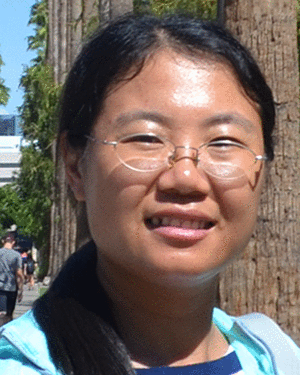 Qingfang Meng合作论文数1
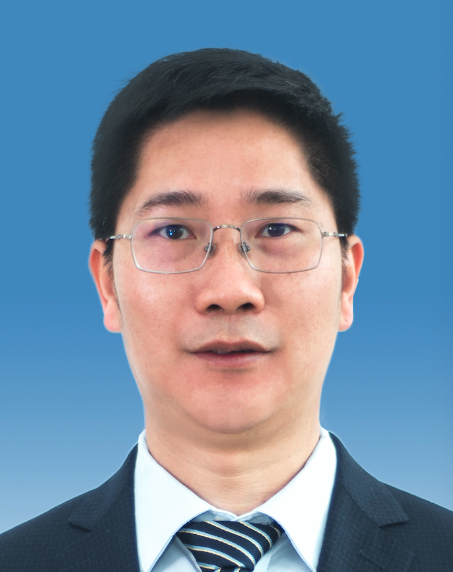 Guoxu Zhou (周郭许)合作论文数School of Automation, Guangdong University of Technology1
 Andrzej Cichocki合作论文数Peraton Labs;Systems Research Institute Polish Academy of Sciences1Qing Shen (沈晴)合作论文数北京科技大学1




