Racism, discriminatory practices, institutional bias, and systematic exclusion can take lasting physical form in the built environment. There has been growing attention to the long-term consequences of housing policies and practices on social and economic outcomes, including residential segregation, but comparatively less attention to other aspects of the built environment, such as road networks and spatial (dis)connectivity. In this article, the authors introduce a novel method that constructs counterfactual road networks by identifying missing road segments that would be expected to exist in a city's road network, given the surrounding infrastructure. The authors demonstrate the empirical application of the method by analyzing differences in racial composition and residential segregation for the observed and counterfactual road networks of five U.S. cities. The authors find that unexpected disconnectivity in a city's road network is associated with greater differences in the racial composition of nearby areas and higher levels of segregation at the local and city levels. The present findings suggest that road networks warrant more attention as a factor that may contribute to the persistence of segregation.
The pre-ranking stage in industrial recommendation systems faces a fundamental conflict between efficiency and effectiveness. While powerful models like Target Attention (TA) excel at capturing complex feature interactions in the ranking stage, their high computational cost makes them infeasible for pre-ranking, which often relies on simplistic vector-product models. This disparity creates a significant performance bottleneck for the entire system. To bridge this gap, we propose TARQ, a novel pre-ranking framework. Inspired by generative models, TARQ's key innovation is to equip pre-ranking with an architecture approximate to TA by Residual Quantization. This allows us to bring the modeling power of TA into the latency-critical pre-ranking stage for the first time, establishing a new state-of-the-art trade-off between accuracy and efficiency. Extensive offline experiments and large-scale online A/B tests at Taobao demonstrate TARQ's significant improvements in ranking performance. Consequently, our model has been fully deployed in production, serving tens of millions of daily active users and yielding substantial business improvements.
Cell image segmentation is usually implemented using fully supervised deep learning methods, which heavily rely on extensive annotated training data. Yet, due to the complexity of cell morphology and the requirement for specialized knowledge, pixel-level annotation of cell images has become a highly labor-intensive task. To address the above problems, we propose an active learning framework for cell segmentation using bounding box annotations, which greatly reduces the data annotation cost of cell segmentation algorithms. First, we generate a box-supervised learning method (denoted as YOLO-SAM) by combining the YOLOv8 detector with the Segment Anything Model (SAM), which effectively reduces the complexity of data annotation. Furthermore, it is integrated into an active learning framework that employs the MC DropBlock method to train the segmentation model with fewer box-annotated samples. Extensive experiments demonstrate that our model saves more than ninety percent of data annotation time compared to mask-supervised deep learning methods.
With the increasing popularity of graph-based methods for dimensionality reduction and representation learning, node embedding functions have become important objects of study in the literature. In this paper, we take an axiomatic approach to understanding node embedding methods, first stating three properties for embedding dissimilarity networks, then proving that all three cannot be satisfied simultaneously by any node embedding method. Similar to existing results on the impossibility of clustering under certain axiomatic assumptions, this points to fundamental difficulties inherent to node embedding tasks. Once these difficulties are identified, we then relax these axioms to allow for certain node embedding methods to be admissible in our framework.
A widely established set of unsupervised node embedding methods can be interpreted as consisting of two distinctive steps: i) the definition of a similarity matrix based on the graph of interest followed by ii) an explicit or implicit factorization of such matrix. Inspired by this viewpoint, we propose improvements in both steps of the framework. On the one hand, we propose to encode node similarities based on the free energy distance, which interpolates between the shortest path and the commute time distances, thus, providing an additional degree of flexibility. On the other hand, we propose a matrix factorization method based on a loss function that generalizes that of the skip-gram model with negative sampling to arbitrary similarity matrices. Compared with factorizations based on the widely used $\ell _{2}$ loss, the proposed method can better preserve node pairs associated with higher similarity scores. Moreover, it can be easily implemented using advanced automatic differentiation toolkits and computed efficiently by leveraging GPU resources. Node clustering, node classification, and link prediction experiments on real-world datasets demonstrate the effectiveness of incorporating free-energy-based similarities as well as the proposed matrix factorization compared with state-of-the-art alternatives.
We study p-Laplacians and spectral clustering for a recently proposed hypergraph model that incorporates edge-dependent vertex weights (EDVW). These weights can reflect different importance of vertices within a hyperedge, thus conferring the hypergraph model higher expressivity and flexibility. By constructing submodular EDVW-based splitting functions, we convert hypergraphs with EDVW into submodular hypergraphs for which the spectral theory is better developed. In this way, existing concepts and theorems such as p-Laplacians and Cheeger inequalities proposed under the submodular hypergraph setting can be directly extended to hypergraphs with EDVW. For submodular hypergraphs with EDVW-based splitting functions, we propose an efficient algorithm to compute the eigenvector associated with the second smallest eigenvalue of the hypergraph 1-Laplacian. We then utilize this eigenvector to cluster the vertices, achieving higher clustering accuracy than traditional spectral clustering based on the 2-Laplacian. More broadly, the proposed algorithm works for all submodular hypergraphs that are graph reducible. Numerical experiments using real-world data demonstrate the effectiveness of combining spectral clustering based on the 1-Laplacian and EDVW.
MOTIVATION:Model organisms are widely used to better understand the molecular causes of human disease. While sequence similarity greatly aids this cross-species transfer, sequence similarity does not imply functional similarity, and thus, several current approaches incorporate protein-protein interactions to help map findings between species. Existing transfer methods either formulate the alignment problem as a matching problem which pits network features against known orthology, or more recently, as a joint embedding problem. RESULTS:We propose a novel state-of-the-art joint embedding solution: Embeddings to Network Alignment (ETNA). ETNA generates individual network embeddings based on network topological structure and then uses a Natural Language Processing-inspired cross-training approach to align the two embeddings using sequence-based orthologs. The final embedding preserves both within and between species gene functional relationships, and we demonstrate that it captures both pairwise and group functional relevance. In addition, ETNA's embeddings can be used to transfer genetic interactions across species and identify phenotypic alignments, laying the groundwork for potential opportunities for drug repurposing and translational studies. AVAILABILITY AND IMPLEMENTATION:https://github.com/ylaboratory/ETNA.
By using the hourly data of O 3 concentration from June 2016 to September 2017 at Guiyang env i-ronmental monitoring station and the meteorological observation data at the corresponding time, based on the systematic analysis of the characteristics of the ozone concentration change in Guiyang, the BP neural network model was used to predict O 3 concentration. The results showed that: 1) The O 3 concentration in Guiyang showed a fluctuating characteristic, the value was high in spring and summer and low in autumn and winter, with an annual average value of 58 μg/m 3 ; May (86 μg/m 3 ) and November (40 μg/m 3 ) were the highest and the lowest months respectively. On the seasonal time scale, the characteristics are spring > summer > winter > autumn. The average value of summer is significantly higher than which of the other three seasons. The daily variation was characterized by a single peak, with a peak at 18:00 (82 μg/m 3 ); 2) O 3 concentration was ne-gatively correlated with air pressure and relative humidity, and positively correlated with tem-perature and wind speed, the correlation coefficients were − 0.61, −0.75, 0.81 and 0.76 respectiv e-ly; The BP neural network of the two input schemes can predict the O 3 mass concentration well, the correlation coefficient of the measured O 3 mass concentration and predicted O 3 mass conce n-tration was 0.69 of the former, and was 0.81 of the latter. The average absolut e error between the predicted results of both w as 40.2% and 29.6% respectively. The result of the input scheme that takes into account the dual factors of weather a n d pollution was better than the result of the input scheme which only considers the meteorological factors.
We develop a spectral clustering algorithm for general submodular hypergraphs based on their 1-Laplacians. More precisely, we utilize the eigenvector associated with the second smallest eigenvalue of the hypergraph 1-Laplacian to cluster the vertices. The computation of the eigenvector is based on the inverse power method, the key of which is to solve its inner-loop optimization problem. Efficient solutions to this inner problem exist when submodular hypergraphs are equipped with hyperedge splitting functions with special structures such as when they are cardinality based or graph reducible. In this paper, we present a solution to the inner problem for general submodular splitting functions by adopting a random coordinate descent method together with the Fujishige-Wolfe algorithm. Numerical experiments using real-world data demonstrate the effectiveness of the proposed clustering algorithm.
We develop a framework for incorporating edge-dependent vertex weights (EDVWs) into the hypergraph minimum s-t cut problem. These weights are able to reflect different importance of vertices within a hyperedge, thus leading to better characterized cut properties. More precisely, we introduce a new class of hyperedge splitting functions that we call EDVWs-based, where the penalty of splitting a hyperedge depends only on the sum of EDVWs associated with the vertices on each side of the split. Moreover, we provide a way to construct submodular EDVWs-based splitting functions and prove that a hypergraph equipped with such splitting functions can be reduced to a graph sharing the same cut properties. In this case, the hypergraph minimum s-t cut problem can be solved using well-developed solutions to the graph minimum s-t cut problem. In addition, we show that an existing sparsification technique can be easily extended to our case and makes the reduced graph smaller and sparser, thus further accelerating the algorithms applied to the reduced graph. Numerical experiments using real-world data demonstrate the effectiveness of our proposed EDVWs-based splitting functions in comparison with the all-or-nothing splitting function and cardinality-based splitting functions commonly adopted in existing work.
We propose a flexible framework for defining the 1-Laplacian of a hypergraph that incorporates edge-dependent vertex weights. These weights are able to reflect varying importance of vertices within a hyperedge, thus conferring the hypergraph model higher expressivity than homogeneous hypergraphs. We then utilize the eigenvector associated with the second smallest eigenvalue of the hypergraph 1-Laplacian to cluster the vertices. From a theoretical standpoint based on an adequately defined normalized Cheeger cut, this procedure is expected to achieve higher clustering accuracy than that based on the traditional Laplacian. Indeed, we confirm that this is the case using real-world datasets to demonstrate the effectiveness of the proposed spectral clustering approach. Moreover, we show that for a special case within our framework, the corresponding hypergraph 1-Laplacian is equivalent to the 1-Laplacian of a related graph, whose eigenvectors can be computed more efficiently, facilitating the adoption on larger datasets.
We propose a flexible framework for defining the 1-Laplacian of a hypergraph that incorporates edge-dependent vertex weights. These weights are able to reflect varying importance of vertices within a hyperedge, thus conferring the hypergraph model higher expressivity than homogeneous hypergraphs. We then utilize the eigenvector associated with the second smallest eigenvalue of the hypergraph 1-Laplacian to cluster the vertices. From a theoretical standpoint based on an adequately defined normalized Cheeger cut, this procedure is expected to achieve higher clustering accuracy than that based on the traditional Laplacian. Indeed, we confirm that this is the case using real-world datasets to demonstrate the effectiveness of the proposed spectral clustering approach. Moreover, we show that for a special case within our framework, the corresponding hypergraph 1-Laplacian is equivalent to the 1-Laplacian of a related graph, whose eigenvectors can be computed more efficiently, facilitating the adoption on larger datasets.
We propose a novel unsupervised node embedding method leveraging the free energy distance. More precisely, we build a matrix to encode pairwise node similarities based on the free energy distance, which interpolates between the shortest path distance and the commute time distance, thus providing an additional degree of flexibility. Moreover, we propose a method to factorize the constructed similarity matrix by generalizing the loss function of the skip-gram model with negative sampling to arbitrary similarity matrices. The proposed matrix factorization method can be easily implemented using advanced automatic differentiation toolkits and computed efficiently by leveraging GPU resources. Numerical experiments on four real-world datasets demonstrate that the proposed embedding method outperforms five state-of-the-art alternatives in tasks of node classification and link prediction.
We propose a novel method to co-cluster the vertices and hyperedges of hypergraphs with edge-dependent vertex weights (EDVWs). In this hypergraph model, the contribution of every vertex to each of its incident hyperedges is represented through an edge-dependent weight, conferring the model higher expressivity than the classical hypergraph. In our method, we leverage random walks with EDVWs to construct a hypergraph Laplacian and use its spectral properties to embed vertices and hyperedges in a common space. We then cluster these embeddings to obtain our proposed co-clustering method, of particular relevance in applications requiring the simultaneous clustering of data entities and features. Numerical experiments using real-world data demonstrate the effectiveness of our proposed approach in comparison with state-of-the-art alternatives.
A common challenge in personalized user preference prediction is the cold-start problem. Due to the lack of user-item interactions, directly learning from the new users' log data causes serious over-fitting problem. Recently, many existing studies regard the cold-start personalized preference prediction as a few-shot learning problem, where each user is the task and recommended items are the classes, and the gradient-based meta learning method (MAML) is leveraged to address this challenge. However, in real-world application, the users are not uniformly distributed (i.e., different users may have different browsing history, recommended items, and user profiles. We define the major users as the users in the groups with large numbers of users sharing similar user information, and other users are the minor users), existing MAML approaches tend to fit the major users and ignore the minor users. To address this cold-start task-overfitting problem, we propose a novel personalized adaptive meta learning approach to consider both the major and the minor users with three key contributions: 1) We are the first to present a personalized adaptive learning rate meta-learning approach to improve the performance of MAML by focusing on both the major and minor users. 2) To provide better personalized learning rates for each user, we introduce a similarity-based method to find similar users as a reference and a tree-based method to store users' features for fast search. 3) To reduce the memory usage, we design a memory agnostic regularizer to further reduce the space complexity to constant while maintain the performance. Experiments on MovieLens, BookCrossing, and real-world production datasets reveal that our method outperforms the state-of-the-art methods dramatically for both the minor and major users.
In this tutorial, we provide a didactic treatment of the emerging topic of signal processing on higher-order networks. Drawing analogies from discrete and graph signal processing, we introduce the building blocks for processing data on simplicial complexes and hypergraphs, two common higher-order network abstractions that can incorporate polyadic relationships. We provide brief introductions to simplicial complexes and hypergraphs, with a special emphasis on the concepts needed for the processing of signals supported on these structures. Specifically, we discuss Fourier analysis, signal denoising, signal interpolation, node embeddings, and nonlinear processing through neural networks, using these two higher-order network models. In the context of simplicial complexes, we specifically focus on signal processing using the Hodge Laplacian matrix, a multi-relational operator that leverages the special structure of simplicial complexes and generalizes desirable properties of the Laplacian matrix in graph signal processing. For hypergraphs, we present both matrix and tensor representations, and discuss the trade-offs in adopting one or the other. We also highlight limitations and potential research avenues, both to inform practitioners and to motivate the contribution of new researchers to the area.
We explore the problem of inferring the graph Laplacian of a weighted, undirected network from snapshots of a single or multiple discrete-time consensus dynamics, subject to parameter uncertainty, taking place on the network. Specifically, we consider three problems in which we assume different levels of knowledge about the diffusion rates, observation times, and the input signal power of the dynamics. To solve these underdetermined problems, we propose a set of algorithms that leverage the spectral properties of the observed data and tools from convex optimization. Furthermore, we provide theoretical performance guarantees associated with these algorithms. We complement our theoretical work with numerical experiments, that demonstrate how our proposed methods outperform current state-of-the-art algorithms and showcase their effectiveness in recovering both synthetic and real-world networks.
This paper studies the problem of jointly estimating multiple network processes driven by a common unknown input, thus effectively generalizing the classical blind multi-channel identification problem to graphs. More precisely, we model network processes as graph filters and consider the observation of multiple graph signals corresponding to outputs of different filters defined on a common graph and driven by the same input. Assuming that the underlying graph is known and the input is unknown, our goal is to recover the specifications of the network processes, namely the coefficients of the graph filters, only relying on the observation of the outputs. Being generated by the same input, these outputs are intimately related and we leverage this relationship for our estimation purposes. Two settings are considered, one where the orders of the filters are known and another one where they are not known. For the former setting, we present a least-squares approach and provide conditions for recovery. For the latter scenario, we propose a sparse recovery algorithm with theoretical performance guarantees. Numerical experiments illustrate the effectiveness of the proposed algorithms, the influence of different parameter settings on the estimation performance, and the validity of our theoretical claims.
In recommender systems, cold-start issues are situations where no previous events, e.g., ratings, are known for certain users or items. In this paper, we focus on the item cold-start problem. Both content information (e.g., item attributes) and initial user ratings are valuable for seizing users’ preferences on a new item. However, previous methods for the item cold-start problem either (1) incorporate content information into collaborative filtering to perform hybrid recommendation, or (2) actively select users to rate the new item without considering content information and then do collaborative filtering. In this paper, we propose a novel recommendation scheme for the item cold-start problem by leveraging both active learning and items’ attribute information. Specifically, we design useful user selection criteria based on items’ attributes and users’ rating history, and combine the criteria in an optimization framework for selecting users. By exploiting the feedback ratings, users’ previous ratings and items’ attributes, we then generate accurate rating predictions for the other unselected users. Experimental results on two real-world datasets show the superiority of our proposed method over traditional methods.
Recently, interactive recommender systems are becoming increasingly popular. The insight is that, with the interaction between users and the system, (1) users can actively intervene the recommendation results rather than passively receive them, and (2) the system learns more about users so as to provide better recommendation. We focus on the single-round interaction, i.e. the system asks the user a question (Step 1), and exploits his feedback to generate better recommendation (Step 2). A novel query-based interactive recommender system is proposed in this paper, where personalized questions are accurately generated from millions of automatically constructed questions in Step 1, and the recommendation is ensured to be closely-related to users' feedback in Step 2. We achieve this by transforming Step 1 into a query recommendation task and Step 2 into a retrieval task. The former task is our key challenge. We firstly propose a model based on Meta-Path to efficiently retrieve hundreds of query candidates from the large query pool. Then an adapted Attention-GRU model is developed to effectively rank these candidates for recommendation. Offline and online experiments on Taobao, a large-scale e-commerce platform in China, verify the effectiveness of our interactive system. The system has already gone into production in the homepage of Taobao App since Nov. 11, 2018 (see https://youtu.be/hAkXDOf2dDU on how it works online). Our code is public in https://github.com/zyody/QueryQR.
 Santiago Segarra合作论文数Department of Electrical and Computer Engineering, George R. Brown School of Engineering and Computing, Rice University14
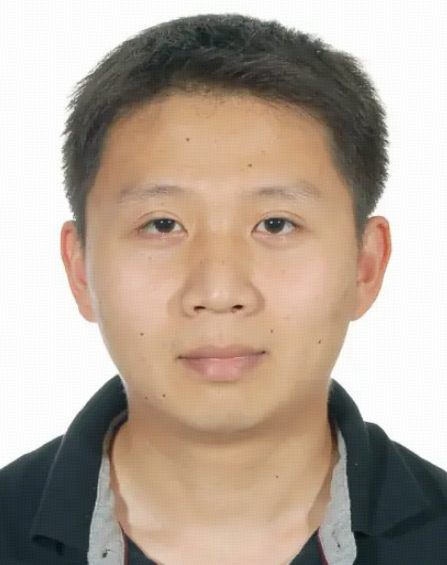 Ziyu Guan (管子玉)合作论文数School of Computer Science and Technology, Xidian University11
 Deng Cai (蔡登)合作论文数College of Computer Science and Technology, Zhejiang University10
 Beidou Wang合作论文数Google8
 Wenwu Ou合作论文数Alibaba Group4
 Yu Gong (龚禹)合作论文数Alibaba Group4
 Boning Li合作论文数Rice University4
 Junxiong Zhu合作论文数Alibaba Group3
 Jiajun Bu (卜佳俊)合作论文数College of Computer Science and Technology, Zhejiang University;School of Software Technology, Zhejiang University;Alibaba-Zhejiang University Joint Institute of Frontier Technologies3
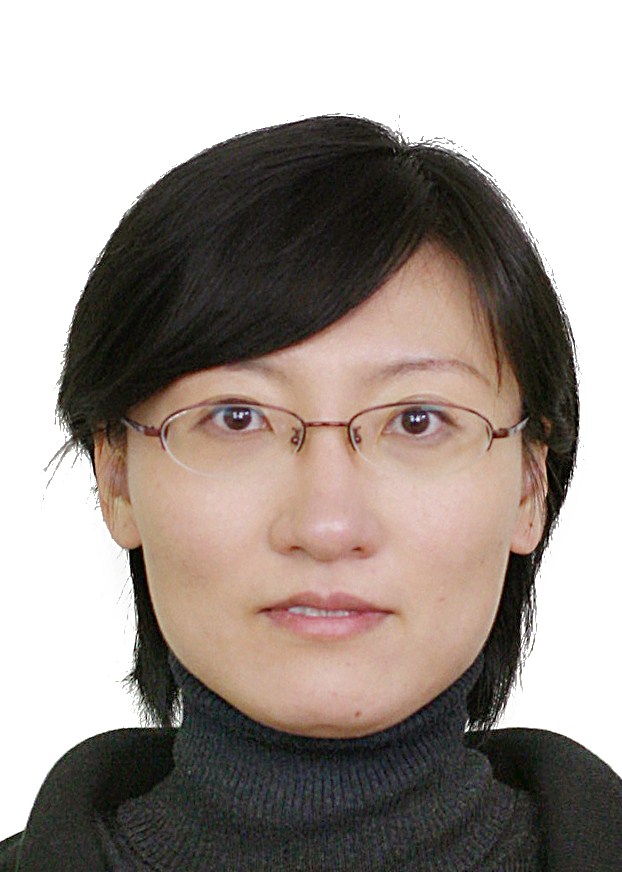 Haifeng Liu (刘海风)合作论文数Institute of Computer System Architecture and Network Security, College of Computer Science and Technology, Zhejiang University3
 Martin Ester合作论文数School of Computing Science, Faculty of Applied Sciences, Simon Fraser University;Databases & Data Mining Lab, Simon Fraser University3
 Yikang Liao合作论文数2Jie Hou合作论文数2Lu Duan合作论文数2Yongliang Li合作论文数2
 Michael Schaub合作论文数Department of Computer Science, RWTH Aachen University2
 Xinggao Liu (刘兴高)合作论文数State Key Laboratory of Industrial Control Technology, College of Control Science and Engineering, Zhejiang University2
 Mitch Roddenberry合作论文数Department of Electrical and Computer Engineering, Rice University2
 Fei Sun (孙飞)合作论文数Institute of Computing Technology, Chinese Academy of Sciences2
 Xiaofei He (何晓飞)合作论文数State Key Lab of CAD&CG, College of Computer Science and Technology, Zhejiang University2
 Ananthram Swami合作论文数DEVCOM Army Research Laboratory2
 Kenny Qili Zhu (朱其立)合作论文数Dept. of Computer Science & Engineering, University of Texas at Arlington2Yutong Li合作论文数Taobao & Tmall Group, Alibaba1Tong Liu合作论文数1
 Cong Fu合作论文数Shopee;Alibaba.com1Hao Li合作论文数1
 Weichen Shen合作论文数1
 Lechuan Li合作论文数1Nathaniel Hejduk合作论文数1Fernando J. Iglesias Garcia合作论文数1Jean-Baptiste Seby合作论文数1
 Yufei Feng合作论文数alibaba group1Elizabeth Roberto合作论文数1Vicky Yao合作论文数1
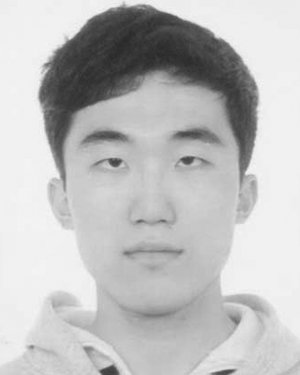 Jinghao Lin合作论文数Zhejiang University1PingHua Chen (陈平华)合作论文数1Zhiyong Zhou (周智勇)合作论文数杭州杭氧股份有限公司1Wei Qian合作论文数Dept. of Radiol., Univ. of South Florida;c1
 Xin Guo合作论文数Collaborat Innovat Ctr Suzhou Nano Sci & Technol, Xi An Jiao Tong Univ1
 Fuyu Lv合作论文数Alibaba Group1
 Xusheng Luo (骆徐圣)合作论文数Alibaba Group1
 Menghan Wang合作论文数Ebay Inc.1
 Zhao Li (李朝)合作论文数Zhejiang Lab;Hangzhou Yugu Technology Co.,Ltd1Xu Li合作论文数1Bo Zheng (郑波)合作论文数1Keping Yang合作论文数Alibaba Group1
 Runsheng Yu合作论文数ByteDance1Xu He合作论文数Nanyang Technological University1




