Mobile manipulation is a fundamental robotics task and has advanced rapidly in recent years, enabling robots to navigate, reach, and interact with objects in complex environments. However, mobile manipulation of dynamic objects remains highly challenging, as robots must coordinate the mobile base and arm while adapting to continuously evolving target poses. A key challenge lies in predicting temporally consistent short-horizon grasp trajectories from dynamic observations. In this work, we propose , a dynamic mobile manipulation framework that couples instantaneous grasp trajectory prediction with whole-body control policy. Our predictor uses an anchor-based diffusion model to generate temporally consistent short-horizon grasp trajectories conditioned on historical observations. The predicted trajectories are then encoded as compact features and fed to a whole-body reinforcement learning policy, which controls the mobile manipulator for dynamic grasping. We further introduce a anticipation-guided reward that equips the policy with an anticipatory grasping horizon by adaptively shifting the target from the current grasp observation to the instantaneously predicted grasp trajectory. Through extensive experiments in Isaac Gym simulation, we show that our method achieves strong performance in mobile manipulation of dynamic objects across diverse settings and grasping metrics. Furthermore, our predictor and policy demonstrate strong generalizability in real-world experiments.
Cross-domain few-annotation object detection (CFOD) faces significant challenges due to environmental variations and limited annotations in the target domain. This paper introduces a novel Memory Storage-to-Adaptation (MS2A) mechanism that leverages comprehensive prior knowledge from massive unlabeled data, representative of the target domain. The MS2A framework comprises two key components: a memory storage module for aggregating prior knowledge encompassing foreground object attributes and background context, and a memory adaptation module for integrating this memory into feature learning, resulting in discriminative representations. Experiments on both constructed and publicly available datasets demonstrate that MS2A achieves state-of-the-art performance, exceeding existing methods by up to 10.4 https://github.com/GuHuangAI/MS2A .
World foundation models (WFMs) are powerful simulators, yet they predominantly operate in a single-view setting and lack the multi-view 3D consistency required for robotic manipulation. While robotic systems rely on multiple cameras (egocentric, eye-to-hand, and wrist-mounted) for policy learning, current multi-view world models simply concatenate view tokens without explicit geometric reasoning. This causes cross-view object drift, depth inconsistency, and texture misalignment. We trace these failures to two deficiencies: the absence of an explicit inter-view communication mechanism and the lack of a 3D geometric prior. We argue that resolving both simultaneously is necessary and sufficient. To address this, we present PAIWorld, a framework that augments diffusion-transformer world models via three core components: (1) Geometry-Aware Cross-View Attention blocks that establish an explicit pathway across views, (2) Geometric Rotary Position Embedding that encodes camera ray directions and extrinsic poses into the attention mechanism, and (3) Latent 3D-REPA, which distills 3D-aware features from frozen 3D foundation models to ensure 3D consistency. Built upon a DiT-based world foundation model, PAIWorld achieves state-of-the-art multi-view 3D consistency on robotic manipulation benchmarks, ranking 1st on the WorldArena leaderboard and 2nd on the AgiBot-Challenge2026 leaderboard, while enabling downstream applications such as model-based planning, world action models, and multi-view policy post-training.
We introduce a diffusion-based cross-domain image translator in the absence of paired training data. Unlike GAN-based methods, our approach integrates diffusion models to learn the image translation process, allowing for more coverable modeling of the data distribution and performance improvement of the cross-domain translation. However, incorporating the translation process within the diffusion process is still challenging since the two processes are not aligned exactly, i.e., the diffusion process is applied to the noisy signal while the translation process is conducted on the clean signal. As a result, recent diffusion-based studies employ separate training or shallow integration to learn the two processes, yet this may cause the local minimal of the translation optimization, constraining the effectiveness of diffusion models. To address the problem, we propose a novel joint learning framework that aligns the diffusion and the translation process, thereby improving the global optimality. Specifically, we propose to extract the image components with diffusion models to represent the clean signal and employ the translation process with the image components, enabling an end-to- end joint learning manner. On the other hand, we introduce a time-dependent translation network to learn the complex translation mapping, resulting in effective translation learning and significant performance improvement. Benefiting from the design of joint learning, our method enables global optimization of both processes, enhancing the optimality and achieving improved fidelity and structural consistency. We have conducted extensive experiments on RGB↔RGB and diverse cross-modality translation tasks including RGB↔Edge, RGB↔Semantics and RGB↔Depth, showcasing better generative performances than the state of the arts. Especially, our method achieves the best FID score in widely-adopted tasks and outperforms the second-best method with an improved FID of 19.61 and 19.67 on Dog→Cat and Dog→Wild respectively.
Robotic grasping perception is a fundamental prerequisite for autonomous manipulation and embodied intelligence.The technical paradigm is undergoing a profound shift from analytical methods based on explicit geometric modeling to intelligent perception frameworks driven by data-driven learning and enhanced semantic reasoning.Research on robotic grasping perception was systematically reviewed along the lines of paradigm evolution.The evolutionary process was described through three progressive stages:analytical geometry-driven methods,visual data-driven methods,and semantic understanding and reasoning enhancement.Representative algorithms and key technical pathways for each stage were examined and analyzed.Through a comparative analysis of input modalities,data requirements,generalization ability,and task adaptability across different paradigms,the advantages and limitations of various methods in unstructured environments were summarized.Furthermore,the evolution of grasping datasets from planar benchmarks to large-scale comprehensive data was systematically traced,and the quantitative evaluation system composed of task reliability and proposal accuracy was analyzed.Prevailing challenges,including sim-to-real transfer,inference efficiency,cross-modal information fusion,and the extension to complex tasks,were identified.Future development trends that integrate embodied foundation models with dexterous manipulation were discussed to provide references for building general-purpose robotic grasping systems with high generalization performance and robust task comprehension.
This article introduces a novel latent 3D diffusion model for generating neural voxel fields with precise part-aware structures and high-quality textures. In comparison to existing methods, this approach incorporates two key designs to guarantee high-quality and accurate part-aware generation. On one hand, we introduce a latent 3D diffusion process for neural voxel fields, incorporating part-aware information into the diffusion process and allowing generation at significantly higher resolutions to capture rich textural and geometric details accurately. On the other hand, a part-aware shape decoder is introduced to integrate the part codes into the neural voxel fields, guiding accurate part decomposition and producing high-quality rendering results. Importantly, part-aware learning establishes structural relationships to generate texture information for similar regions, thereby facilitating high-quality rendering results. We evaluate our approach across eight different data classes through extensive experimentation and comparisons with state-of-the-art methods. The results demonstrate that our proposed method has superior generative capabilities in part-aware shape generation, outperforming existing state-of-the-art methods. Moreover, we have conducted image- and text-guided shape generation via the conditioned diffusion process, showcasing the advanced potential in multi-modal guided shape generation.
World Foundation Models (WFMs) offer remarkable visual dynamics simulation capabilities, yet their application to precise robotic control remains limited by the gap between generative realism and control-oriented precision. While existing approaches use WFMs as synthetic data generators, they suffer from high computational costs and underutilization of pre-trained VLA policies. We introduce AdaPower (Adapt and Empower), a lightweight adaptation framework that transforms general-purpose WFMs into specialist world models through two novel components: Temporal-Spatial Test-Time Training (TS-TTT) for inference-time adaptation and Memory Persistence (MP) for long-horizon consistency. Integrated within a Model Predictive Control framework, our adapted world model empowers pre-trained VLAs, achieving over 41% improvement in task success rates on LIBERO benchmarks without policy retraining, while preserving computational efficiency and generalist capabilities.
Low-level 3D representations, such as point clouds, meshes, NeRFs and 3D Gaussians, are commonly used for modeling 3D objects and scenes. However, cognitive studies indicate that human perception operates at higher levels and interprets 3D environments by decomposing them into meaningful structural parts, rather than low-level elements like points or voxels. Structured geometric decomposition enhances scene interpretability and facilitates downstream tasks requiring component-level manipulation. In this work, we introduce PartGS, a self-supervised part-aware reconstruction framework that integrates 2D Gaussians and superquadrics to parse objects and scenes into an interpretable decomposition, leveraging multi-view image inputs to uncover 3D structural information. Our method jointly optimizes superquadric meshes and Gaussians by coupling their parameters within a hybrid representation. On one hand, superquadrics enable the representation of a wide range of shape primitives, facilitating flexible and meaningful decompositions. On the other hand, 2D Gaussians capture detailed texture and geometric details, ensuring high-fidelity appearance and geometry reconstruction. Operating in a self-supervised manner, our approach demonstrates superior performance compared to state-of-the-art methods across extensive experiments on the DTU, ShapeNet, and real-world datasets.
This paper introduces EA6D, a novel diffusion-based framework for 6D pose estimation that operates effectively in any environment. Traditional pose estimation methods struggle with the variability and complexity of real-world scenarios, often leading to overfitting on controlled datasets and poor generalization to new scenes. To address these challenges, we propose a generative pose estimation paradigm that generates environment-independent object representations for pose estimation, which are robust to environmental variations such as illumination, occlusion, and background clutter. Specifically, we propose the novel Environment Decoupling Diffusion Model (EDDM) which separates object representations from environmental factors while enabling efficient few-step sampling by leveraging input image priors instead of pure noise initialization. We validate our approach on four standard benchmarks and a self-made dataset DiverseScenes. The results demonstrate that EA6D, trained using only synthetic data, can outperform the state-of-the-art methods with both synthetic and realistic data. In particular, for fair comparisons with synthetic data, we can exceed the previous SOTA by 18.1 % and 33.5 % on Linemod and Linemod-Occluded datasets respectively. Project page: https://github.com/acmff22/EA6D
Predictive manipulation has recently gained considerable attention in the Embodied AI community due to its potential to improve robot policy performance by leveraging predicted states. However, generating accurate future visual states of robot-object interactions from world models remains a well-known challenge, particularly in achieving high-quality pixel-level representations. To this end, we propose LaDi-WM, a world model that predicts the latent space of future states using diffusion modeling. Specifically, LaDi-WM leverages the well-established latent space aligned with pre-trained Visual Foundation Models (VFMs), which comprises both geometric features (DINO-based) and semantic features (CLIP-based). We find that predicting the evolution of the latent space is easier to learn and more generalizable than directly predicting pixel-level images. Building on LaDi-WM, we design a diffusion policy that iteratively refines output actions by incorporating forecasted states, thereby generating more consistent and accurate results. Extensive experiments on both synthetic and real-world benchmarks demonstrate that LaDi-WM significantly enhances policy performance by 27.9% on the LIBERO-LONG benchmark and 20% on the real-world scenario. Furthermore, our world model and policies achieve impressive generalizability in real-world experiments. The source code will be public at: https://github.com/GuHuangAI/LaDiWM.
This paper proposes decoupled diffusion models (DDMs), featuring a new diffusion paradigm that allows for high-quality (un)conditioned image generation in less than 10 function evaluations. In a nutshell, DDMs decouple the forward image-to-noise mapping into image-to-zero mapping and zero-to-noise mapping. Under this framework, we mathematically derive 1) the training objectives and %and mathematically show that DDMs learn noise and image components separately. 2) for reverse time the sampling formula based on an analytic transition probability which models image to zero transition. The former enables DDMs to learn noise and image components separately which simplifies learning. Importantly, because of the latter's analyticity in the zero-to-image sampling function, DDMs can avoid the ordinary differential equation based accelerators and instead naturally perform sampling with an arbitrary step size. Under the few function evaluation setup, DDMs experimentally yield very competitive performance compared with the state of the art in 1) unconditioned image generation, e.g., CIFAR-10 and CelebA-HQ-256 and 2) image-conditioned downstream tasks such as super-resolution, saliency detection, and image inpainting.
We introduce MaskEditor, an object-level 3D neural field editing method based on text instructions. Different from manipulating the whole scene, local editing needs accurate locating and proper field fusion to provide a realistic object-level replacement. We utilize a 3D mask grid to accurately localize the target object leveraging the 2D segmentation information provided by the Segment Anything Model (SAM). The whole scene is divided into the object field and background field based on the learned 3D mask. Subsequently, we apply the Variational Score Distillation (VSD) to optimize the object field and leave the background field unaltered, which achieves editing results aligned with text instructions. Furthermore, we implement composited rendering and coarse-to-fine editing strategy to enhance the editing quality and the consistency of the edited object with the original scene. Qualitative and quantitative evaluations confirm that MaskEditor achieves more precise and superior local editing compared to baselines.
In Multiple Object Tracking, objects often exhibit nonlinear motion of acceleration and deceleration, with irregular direction changes. Tacking-by-detection (TBD) trackers with Kalman Filter motion prediction work well in pedestrian-dominant scenarios but fall short in complex situations when multiple objects perform non-linear and diverse motion simultaneously. To tackle the complex nonlinear motion, we propose a real-time diffusion-based MOT approach named DiffMOT. Specifically, for the motion predictor component, we propose a novel Decoupled Diffusion-based Motion Predictor (D2MP). It models the entire distribution of various motion presented by the data as a whole. It also predicts an individual object's motion conditioning on an individual's historical motion information. Furthermore, it optimizes the diffusion process with much fewer sampling steps. As a MOT tracker, the DiffMOT is real-time at 22.7FPS, and also outperforms the state-of-the-art on DanceTrack[30] and SportsMOT[6] datasets with 62.3% and 76.2% in HOTA metrics, respectively. To the best of our knowledge, DiffMOT is the first to introduce a diffusion probabilistic model into the MOT to tackle non-linear motion prediction.
Far Memory System(FMS) allows applications to access memory on remote machines(called memory nodes). However, existing FMSs can't deal with large loads and have low efficiency in utilizing far memory, which leads to the inability to share memory nodes among multiple processes, limiting the scalability of FMS. In this paper, we propose Sharry, an efficient Sharing FMS. Sharry manages memory objects from multiple processes within a unified address space, avoiding the overhead of space switching. Sharry also optimizes the utilization of far memory with fine-grained memory management. Additionally, Sharry offloads memory allocation to dedicated CPU core in order to handle larger loads in the sharing scenario. Compared to state-of-the-art FMS, Sharry improves memory utilisation by 45%, causing only 9% performance degradation when multiple processes sharing single memory node.
Limited by the encoder-decoder architecture, learning-based edge detectors usually have difficulty predicting edge maps that satisfy both correctness and crispness. With the recent success of the diffusion probabilistic model (DPM), we found it is especially suitable for accurate and crisp edge detection since the denoising process is directly applied to the original image size. Therefore, we propose the first diffusion model for the task of general edge detection, which we call DiffusionEdge. To avoid expensive computational resources while retaining the final performance, we apply DPM in the latent space and enable the classic cross-entropy loss which is uncertainty-aware in pixel level to directly optimize the parameters in latent space in a distillation manner. We also adopt a decoupled architecture to speed up the denoising process and propose a corresponding adaptive Fourier filter to adjust the latent features of specific frequencies. With all the technical designs, DiffusionEdge can be stably trained with limited resources, predicting crisp and accurate edge maps with much fewer augmentation strategies. Extensive experiments on four edge detection benchmarks demonstrate the superiority of DiffusionEdge both in correctness and crispness. On the NYUDv2 dataset, compared to the second best, we increase the ODS, OIS (without post-processing) and AC by 30.2%, 28.1% and 65.1%, respectively. Code: https://github.com/GuHuangAI/DiffusionEdge.
Recent diffusion probabilistic models (DPMs) have shown remarkable abilities of generated content, however, they often suffer from complex forward processes, resulting in inefficient solutions for the reversed process and prolonged sampling times. In this paper, we aim to address the aforementioned challenges by focusing on the diffusion process itself that we propose to decouple the intricate diffusion process into two comparatively simpler process to improve the generative efficacy and speed. In particular, we present a novel diffusion paradigm named DDM (Decoupled Diffusion Models) based on the Ito diffusion process, in which the image distribution is approximated by an explicit transition probability while the noise path is controlled by the standard Wiener process. We find that decoupling the diffusion process reduces the learning difficulty and the explicit transition probability improves the generative speed significantly. We prove a new training objective for DPM, which enables the model to learn to predict the noise and image components separately. Moreover, given the novel forward diffusion equation, we derive the reverse denoising formula of DDM that naturally supports fewer steps of generation without ordinary differential equation (ODE) based accelerators. Our experiments demonstrate that DDM outperforms previous DPMs by a large margin in fewer function evaluations setting and gets comparable performances in long function evaluations setting. We also show that our framework can be applied to image-conditioned generation and high-resolution image synthesis, and that it can generate high-quality images with only 10 function evaluations.
Recent studies have demonstrated that the forward diffusion process is crucial for the effectiveness of diffusion models in terms of generative quality and sampling efficiency. We propose incorporating an analytical image attenuation process into the forward diffusion process for high-quality (un)conditioned image generation with significantly fewer denoising steps compared to the vanilla diffusion model requiring thousands of steps. In a nutshell, our method represents the forward image-to-noise mapping as simultaneous image-to-zero mapping and zero-to-noise mapping. Under this framework, we mathematically derive 1) the training objectives and 2) for the reverse time the sampling formula based on an analytical attenuation function which models image to zero mapping. The former enables our method to learn noise and image components simultaneously which simplifies learning. Importantly, because of the latter's analyticity in the zero-to-image sampling function, we can avoid the ordinary differential equation-based accelerators and instead naturally perform sampling with an arbitrary step size. We have conducted extensive experiments on unconditioned image generation, e.g., CIFAR-10 and CelebA-HQ-256, and image-conditioned downstream tasks such as super-resolution, saliency detection, edge detection, and image inpainting. The proposed diffusion models achieve competitive generative quality with much fewer denoising steps compared to the state of the art, thus greatly accelerating the generation speed. In particular, to generate images of comparable quality, our models require only one-twentieth of the denoising steps compared to the baseline denoising diffusion probabilistic models. Moreover, we achieve state-of-the-art performances on the image-conditioned tasks using only no more than 10 steps.
As a representative self-supervised method, contrastive learning has achieved great successes in unsupervised training of representations. It trains an encoder by distinguishing positive samples from negative ones given query anchors. These positive and negative samples play critical roles in defining the objective to learn the discriminative encoder, avoiding it from learning trivial features. While existing methods heuristically choose these samples, we present a principled method where both positive and negative samples are directly learnable end-to-end with the encoder. We show that the positive and negative samples can be cooperatively and adversarially learned by minimizing and maximizing the contrastive loss, respectively. This yields cooperative positives and adversarial negatives with respect to the encoder, which are updated to continuously track the learned representation of the query anchors over mini-batches. The proposed method achieves 71.3% and 75.3% in top-1 accuracy respectively over 200 and 800 epochs of pre-training ResNet-50 backbone on ImageNet1K without tricks such as multi-crop or stronger augmentations. With Multi-Crop, it can be further boosted into 75.7%. The source code and pre-trained model are released in https://github.com/maple-research-lab/caco.
 Kai (Kevin) Xu (徐凯)合作论文数Institute of AI for Industries, Chinese Academy of Sciences14
 Xinwang Liu (刘新旺)合作论文数School of Computer, National University of Defense Technology9
 Renjiao Yi (易任娇)合作论文数National University of Defense Technology;Department of Computing Science, School of Applied Science, Simon Fraser University7
 Chenyang Zhu (朱晨阳)合作论文数College of Computer Science and Technology, National University of Defense Technology;School of Computing Science, National University of Defense Technology;Igrape Lab, National University of Defense Technology6
 Dan Zeng (曾丹)合作论文数School of Communication & Information Engineering, Shanghai University5
 Jiazhao Zhang (张嘉曌)合作论文数Center on Frontiers of Computing Studies, Peking University;School of Computer Science, Peking University;Galbot4
 Fangle Chang合作论文数Department of Agricultural and Biological Engineering, Penn State University3
 Bao Qian合作论文数JD AI Research;JD Explore Academy3
 Ruizhen Hu (胡瑞珍)合作论文数College of Computer Science and Software Engineering, Shenzhen University3
 Wu Liu (刘武)合作论文数Department of Electronic Engineering and Information Science, School of Information Science and Technology, The Division of Information and Intelligence, University of Science and Technology of China3
 Hongye Su (苏宏业)合作论文数College of Control Science and Engineering, Zhejiang University;Institute of Cyber-Systems and Control, Zhejiang University3
 Longhua Ma (马龙华)合作论文数NingboTech University3
 Junjie Zhang合作论文数Shanghai University2
 Ludi Wu合作论文数2
 Weize Feng合作论文数2Kaiping Xu合作论文数Tsinghua Univ, Sch Software, Beijing, Peoples R China2
 Zheng Qin (覃征)合作论文数School of Software, Tsinghua University2
 Tiesong Zhao (赵铁松)合作论文数College of Physics and Information Engineering, Fuzhou University2SHilong Zou合作论文数1
 Zhirui Gao (高志锐)合作论文数School of Computer Science and Technology, National University of Defense Technology1Hang Zhao合作论文数1Weiyi Lv合作论文数1
 Yunfan Ye合作论文数1
 Sam Tak Wu Kwong (鄺得互)合作论文数School of Graduate Studies, Lingnan University;Division of Artificial Intelligence, Lingnan University1Shuyan Liu合作论文数1Shuaitao Zhao合作论文数1
 Ying Fang合作论文数1
 Tao Yu合作论文数1Hongji Zeng合作论文数1Yuxuan ZHAI (翟宇轩)合作论文数1
 Liqun Lin (林丽群)合作论文数College of Physics and Information Engineering, Fuzhou University;Department of Information Engineering, Zhicheng College, Fuzhou University1
 Xuesong Xu (徐雪松)合作论文数College of Advanced Interdisciplinary Studies, Hunan University of Technology and Business1
 Chi Su (苏驰)合作论文数SmartMore Co., Ltd1
 Zhiping Cai (蔡志平)合作论文数National University of Defense Technology1
 Ning Zhang合作论文数1
 Liang Zheng (郑良)合作论文数School of Computing, Australian National University;Canva1Zhao Yangfan合作论文数1
 Wanqing Zhao (赵万青)合作论文数School of Information Science and Technology, Northwest University1
 Kun Liu (刘坤)合作论文数School of Artificial Intelligence, Hebei University of Technology1
 Xiao Wang合作论文数TikTok1
 Guo-Jun Qi (齐国君)合作论文数Laboratory for Machine Perception and Learning, School of Engineering, Westlake University;Seattle Research Center, OPPO;Futurewei Technologies, Inc.1
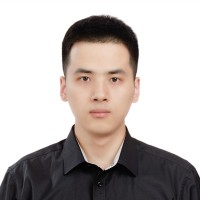 Wei Chen (陈伟)合作论文数School of Computer Science, University of Birmingham1
 Jianwei Yin (尹建伟)合作论文数Center for Data Science, Zhejiang University;College of Computer Science and Technology, Zhejiang University;School of Software Technology, Zhejiang University;Zhejiang Provincial Key Laboratory of Digital Intelligent Services Technologies, Zhejiang University1
 Ming Xu (徐明)合作论文数Graduate School, Peking University Health Science Center;Peking University Third Hospital1
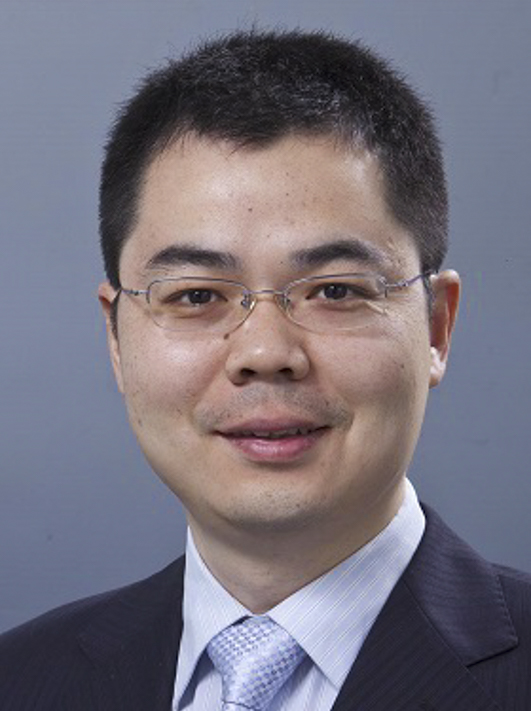 Lei Xie (谢磊)合作论文数College of Control Science and Engineering, Zhejiang University1
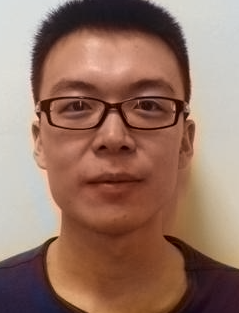 Wei Zhao合作论文数Key Laboratory of Intelligent Perception and Image Understanding of the Ministry of Education, Xidian University1Yiwen Xu (徐艺文)合作论文数福州大学物理与信息工程学院1
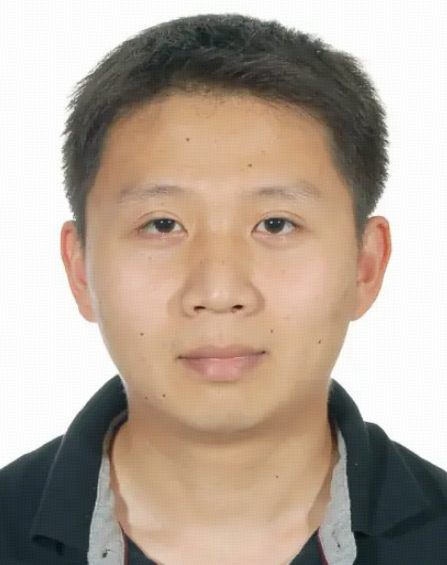 Ziyu Guan (管子玉)合作论文数School of Computer Science and Technology, Xidian University1




