Sensitive and specific methodology is required for the detection and characterization of anti-drug antibodies (ADAs). High-quality ADA data enables the evaluation of potential impact of ADAs on the drug pharmacokinetic profile, patient safety, and efficacious response to the drug. Immunogenicity assessments are typically initiated at early stages in preclinical studies and continue throughout the drug development program. One of the potential bioanalytical challenges encountered with ADA testing is the need to identify and mitigate the interference mediated by the presence of soluble drug target. A drug target, when present at sufficiently high circulating concentrations, can potentially interfere with the performance of ADA and neutralizing antibody (NAb) assays, leading to either false-positive or, in some cases, false-negative ADA and NAb assay results. This publication describes various mechanisms of assay interference by soluble drug target, as well as strategies to recognize and mitigate such target interference. Pertinent examples are presented to illustrate the impact of target interference on ADA and NAb assays as well as several mitigation strategies, including the use of anti-target antibodies, soluble versions of the receptors, target-binding proteins, lectins, and solid-phase removal of targets. Furthermore, recommendations for detection and mitigation of such interference in different formats of ADA and NAb assays are provided.
Moringa oleifera is a promising plant species for oil and forage, but its genetic improvement is limited. Our current breeding program in this species focuses on exploiting the functional genes associated with important agronomical traits. Here, we screened reliable reference genes for accurately quantifying the expression of target genes using the technique of real-time quantitative polymerase chain reaction (RT-qPCR) in M. oleifera. Eighteen candidate reference genes were selected from a transcriptome database, and their expression stabilities were examined in 90 samples collected from the pods in different developmental stages, various tissues, and the roots and leaves under different conditions (low or high temperature, sodium chloride (NaCl)- or polyethyleneglycol (PEG)- simulated water stress). Analyses with geNorm, NormFinder and BestKeeper algorithms revealed that the reliable reference genes differed across sample designs and that ribosomal protein L1 (RPL1) and acyl carrier protein 2 (ACP2) were the most suitable reference genes in all tested samples. The experiment results demonstrated the significance of using the properly validated reference genes and suggested the use of more than one reference gene to achieve reliable expression profiles. In addition, we applied three isotypes of the superoxide dismutase (SOD) gene that are associated with plant adaptation to abiotic stress to confirm the efficacy of the validated reference genes under NaCl and PEG water stresses. Our results provide a valuable reference for future studies on identifying important functional genes from their transcriptional expressions via RT-qPCR technique in M. oleifera.
[目的]研究不同处理条件对辣木种子萌发的影响,从而提高种子的萌发率.[方法]以从尼日利亚采收的传统印度辣木种子为试验材料,研究不同浸种温度和时间、培养温度、光照、种子脱壳、多菌灵处理等对辣木种子发芽率、发芽势及污染率的影响,探讨辣木种子最佳萌发条件.[结果]20℃和40 ℃条件下浸种,种子萌发效果最好,从第2天开始萌发,到第7天结束萌发,萌发率最高;在试验范围内浸种时间对萌发率没有明显影响;32℃条件下培养,种子萌发效果最好,种子在第2天开始萌发,萌发率最高;多菌灵能够抑制种子的污染,但是不同浓度处理之间的种子萌发率和污染率没有显著影响;全天光照和全天黑暗对种子萌发率和发茅势并没有明显的影响;种子剥壳后培养萌发早,出苗整齐,到第4天萌发率达到最大值.[结论]辣木种子最佳萌发的培养温度为32℃左右;选用1 000倍的多菌灵浸泡种子即可达到杀菌的目的;光照和有无种壳对种子萌发率没有明显影响.
The use of novel biomarkers has become a prominent component of decision-making processes in drug development. They are used in the in vitro and preclinical models and early clinical phase for quick-hit and early-attrition decisions. This article focuses on quantitative method validation and assay for biomarker characterization to support drug development using the fit-for-purpose approach. Keywords: biomarkers; in vitro models; fit-for-purpose approach; protein expression
Developing a process that generates robust immunoassays that can be used to support studies with tight timelines is a common challenge for bioanalytical laboratories. Design of experiments (DOEs) is a tool that has been used by many industries for the purpose of optimizing processes. The approach is capable of identifying critical factors and their interactions with a minimal number of experiments. The challenge for implementing this tool in the bioanalytical laboratory is to develop a user-friendly approach that scientists can understand and apply. We have successfully addressed these challenges by eliminating the screening design, introducing automation, and applying a simple mathematical approach for the output parameter.A modified central composite design (CCD) was applied to three ligand binding assays. The intra-plate factors selected were coating, detection antibody concentration, and streptavidin-HRP concentrations. The inter-plate factors included incubation times for each step. The objective was to maximize the log S/B (S/B) of the low standard to the blank. The maximum desirable conditions were determined using JMP 7.0. To verify the validity of the predictions, the log S/B prediction was compared against the observed log S/B during pre-study validation experiments.The three assays were optimized using the multi-factorial DOE. The total error for all three methods was less than 20% which indicated method robustness. DOE identified interactions in one of the methods. The model predictions for log S/B were within 25% of the observed pre-study validation values for all methods tested. The comparison between the CCD and hybrid screening design yielded comparable parameter estimates.The user-friendly design enables effective application of multi-factorial DOE to optimize ligand binding assays for therapeutic proteins. The approach allows for identification of interactions between factors, consistency in optimal parameter determination, and reduced method development time. (c) 2008 Elsevier B.V. All rights reserved.
A commercial kit assay of tartrate-resistant acid phosphatase (TRACP 5b) used for the diagnosis of bone resorption was modified with a 'Fit-For-Purpose' approach for drug development of anti-resorptive therapeutics. The modifications included changing the standard matrix from buffer to serum, using a consistent bulk reference material to prepare standards and quality controls (QC), and adding sample controls (SC) prepared from authentic sample pools. Method validation experiments were conducted for: inter- and intra-assay accuracy and precision, establishment of SC, range finding of different population groups, selectivity tests, parallelism and stability. The analytical range was 1.00-10.0 U/L and the total errors of lower limit of quantification (LLOQ) and upper limit of quantification (ULOQ) validation samples were 8% and 21%, respectively. Data of range finding experiment showed that serum samples should be collected in tubes instead of bags. Selectivity results showed accurate spike recovery among the majority of test samples from target populations. Samples were demonstrated to be stable for up to four freeze/thaw cycles and for 24 months at -70+/-10 degrees C. Our results show that the modified TRACP 5b method is reliable for the quantification of TRACP 5b in human serum samples to support clinical trials of bone resorptive effect reflected by TRACP 5b activities. The method was robust with similar assay performance characteristics shown in three bioanalytical laboratories.
 Shuqi Li合作论文数2
 Mengfei Lin合作论文数2
 Hanbin Chen合作论文数2
 Liting Deng (邓丽婷)合作论文数Faculty of Science and Engineering, Macquarie University2MeiMei Ding (丁美美)合作论文数2
 Jean Lee合作论文数2Adrienne Clements-Egan合作论文数1Manoj Rajadhyaksha合作论文数1Judy Shih合作论文数1Chad Ray合作论文数1Vimal Patel合作论文数1
 Junjie Zhang (张俊杰)合作论文数College of Forestry and Landscape Architecture, South China Agricultural University1Jun-jie ZHANG (张俊杰)合作论文数1
 Juncheng Li (李俊成)合作论文数1
 Xin-Sheng Hu合作论文数1Theobald Valerie合作论文数1Zhong Zhandong Don合作论文数1Sumner Giane合作论文数1Jin Wang合作论文数1
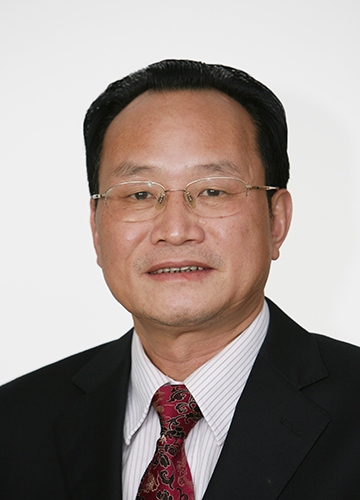 Xiaoyang Chen (陈晓阳)合作论文数华南农业大学林学院1
 Binodh DeSilva合作论文数1Mark Ma合作论文数1
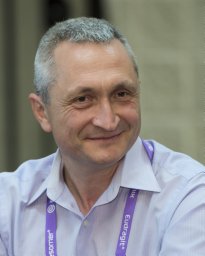 Boris Gorovits合作论文数Pfizer (formally Drug Safety and Metabolism, Wyeth Research),1Theingi M. Thway合作论文数1
 Kunxi Ouyang (欧阳昆唏)合作论文数College of Forestry and Landscape Architecture, South China Agricultural University1
 Mauricio Maia合作论文数Departamento de Oftalmologia, Escola Paulista de Medicina, Universidade Federal de São Paulo;Instituto Paulista de Estudos e Pesquisas em Oftalmologia;Escola Paulista de Medicina;Allergan Brasil;Kemin;Bayer;Bausch and Lomb;Centro Tecnologico Nacional;Hospital de Olhos Oeste Paulista;Instituto Braqsileiro de Combate a Cegueira;Instituto Israelita de Ensino e Pesquisa Albert Einstein1Chris Macaraeg合作论文数Pharmacokinetics and Drug Metabolism, Amgen Inc1




