Picornavirales is a hyperdiverse order of viruses that infect assorted hosts, including arthropods. Members of this group contain a positive-sense, single-stranded RNA genome with a polyadenylated tail. As such, they are often sequenced as "bycatch" in RNA-seq experiments targeting other organisms. We developed a simple-to-follow bioinformatic pipeline to assemble and annotate genomes of the order Picornavirales using publicly available insect metatranscriptome data sets. Using our pipeline, 40 novel viruses were discovered, including putative new members of the families Dicistroviridae, Iflaviridae, and Polycipiviridae. The hosts of the new picornaviruses include beetles (two families), crickets, parasitic wasps, sap-sucking hemipterans (members of all suborders), and thrips. We validated each virus as new in silico by performing a sequence similarity (BLAST) search of each virus against the NCBI non-redundant database and by phylogenetic reconstruction of the RNA-dependent RNA polymerase amino acid sequence from each novel virus and other members of the order Picornavirales. Three taxa classified as iflaviruses by the International Committee on Taxonomy of Viruses that infect Lepidoptera (butterflies and moths) render Iflaviridae paraphyletic, and their taxonomic status should be reevaluated. Two of the newly identified iflaviruses are dicistronic, the first genomes with this phenotype in the family Iflaviridae. A newly characterized psyllid iflavirus displays an inverted genome architecture and forms a clade with other psyllid-infecting iflaviruses that share this feature. We also detected and sequenced two of the novel iflaviruses, GnV2 and DcV1, in wild-captured Graminella nigrifrons and purchased Delphastus catalinae, demonstrating their presence in populations beyond those previously sequenced. Our pipeline provides an additional method by which novel viruses can be discovered, assembled, annotated, and submitted to nucleotide sequence archives.IMPORTANCEInsects are the most abundant group of animals on Earth and serve as reservoirs for myriad microscopic organisms, including viruses. Just a fraction of this viral diversity has been characterized despite some having considerable consequences to human and animal health, agricultural production, and overall ecological stability. In this study, we illustrate a bioinformatic viral discovery pipeline using single-stranded, positive-sense RNA viruses of the order Picornavirales as a case study. Picornaviruses are some of the 'dark taxa' of the virosphere that are ubiquitous in arthropods, including the vectors of serious plant diseases. Discoveries of these viruses have been accelerated by the advent of next-generation sequencing technologies, opening potential research avenues that could be exploited for pest control.
Family, tribal and generic concepts of some taxa within, or historically associated with, Aphelinidae are revised. At the family level, we transfer Noyesaphytis from Aphelinidae to Azotidae, and we remove Encarsia gallicola and Encarsia metallica from Encarsia and place them in Galeopsomyia (Eulophidae: Tetrastichinae) as nomina dubia. At the subfamily level, we synonymise Eriaphytinae with Coccophaginae and retain Eriaphytini as a tribe therein. At the tribal level, we revive the status of Prospaltellini and establish the tribes Euxanthellini trib. n. and Prococcophagini trib. n. all within Coccophaginae. At the generic level, we revive the status of Euxanthellus stat. rev. and Prococcophagus stat. rev. In addition, we propose the following new generic synonymies: Allomymar syn. n. as a junior synonym of Encarsia, Prophyscus syn. n. as a junior synonym of Coccobius, and Metanthemus syn. n. as a junior synonym of Eretmocerus. Additionally, Coccobius desantisi, Oenrobia kinabaluensis and Timberlakiella applanatonervus are redescribed, and the holotype of Eretmocerus aureus comb. n. is photographed for the first time. Phtuaria and Verekia are treated as incertae sedis within Chalcidoidea, and Encarsia orangae is regarded as a nomen nudum due to the lack of an original description or type depository. Encarsia taitae is treated as a nomen dubium. A new species, Prococcobius platycephala sp. n. is described from South Africa.http://www.zoobank.org/urn:lsid:zoobank.org:pub:E03B39C4-275E-4BA2-9FAC-654A3C35844A
A new species of Megaphragma Timberlake (Hymenoptera: Chalcidoidea: Trichogrammatidae), Megaphragma wolfi Lahey & Polaszek, is described from Costa Rica and the southeastern United States. Both sexes are completely apterous (wingless), representing the first occurrence of this phenomenon in the genus and the first apterous female of the family Trichogrammatidae. Morphological features, and a molecular analysis of two gene sequences (28S rDNA, COI mtDNA), place the new species in the recently established M. polychaetum-group.
Begomoviruses (Geminiviridae) are economically important, high consequence plant viruses transmitted by members of the Bemisia tabaci (Gennadius) (Hemiptera: Aleyrodidae) cryptic species complex. One of the most economically significant begomoviruses is tomato yellow leaf curl virus (TYLCV), which is efficiently transmitted by B. tabaci Middle East–Asia Minor 1 (MEAM1), one of the most destructive agricultural pests globally. The purpose of this study is to determine the gene expression profiles of non-viruliferous and viruliferous MEAM1 after TYLCV acquisition access feeding. Adult whiteflies were fed on healthy or TYLCV infected tomato plants for 12, 36, or 60 hours, followed by a 12-hour gut clearing period on collard, a TYLCV non-host. Differential expression analyses (read mapping and transcript quantification) from RNA-seq data derived from ribodepleted total RNA were performed to determine gene expression patterns associated with TYLCV acquisition. In total, 37 differentially expressed genes were identified, including two horizontally acquired from plants. Elucidating the transcriptional response of MEAM1 to virus acquisition can inform the development of novel genomics-assisted whitefly transmitted virus management strategies.
Aphelinids are minute parasitoids belonging to the wasp superfamily Chalcidoidea. Typical hosts of Aphelinidae include soft-bodied Hemiptera, such as aphids, scale insects, and whiteflies, but some species are oophagous or hyperparasitic on other parasitoids. The family currently contains 37 genera and approximately 1,500 species, although the latter is a gross underrepresentation of their true diversity. The bionomics of Aphelinidae was last reviewed 40 years ago. Since then, phylogenomic analyses and high-quality taxonomic works have clarified relationships between and within different lineages of Aphelinidae, and knowledge of their interactions with their environment and hosts has increased considerably. In this review, we summarize this research, with an emphasis on the recognition, morphology, systematics, biology, genomics, and economic importance of aphelinids as biological control agents. Finally, we present future issues regarding this important family of parasitoids.
A female and male of a potential new species of the Metaphycus omega-group (Hymenoptera: Chalcidoidea: Encyrtidae) were reared from the puparia (i.e., 4th instar nymph) of a whitefly belonging to the Bemisia tabaci (Gennadius) complex (Hemiptera: Aleyrodidae) from central and southwest Florida as part of ongoing whitefly parasitoid surveys throughout the southeastern United States. The D2 and D3 regions of the 28S ribosomal DNA (rDNA) and a portion of the cytochrome oxidase I (COI) gene were sequenced from a single male specimen that was subjected to non-destructive DNA extraction followed by slide mounting in Canada balsam. The behavior of the male parasitoid larva within the whitefly nymph is described, an updated key to the species of Metaphycus Mercet that attack whiteflies is provided, and the genera of the chalcidoid family Encyrtidae reportedly reared from whiteflies are reviewed.
The pine moth, Dendrolimus houi (Lajonquiere), is a notorious insect pest of coniferous trees in South China. A gregarious egg parasitoid in the family Scelionidae shows great potential to be mass-reared for the biological control of D. houi. This parasitoid is identified as Telenomus dendrolimi (Matsumura) based on comparison to paratype specimens of Telenomus dendrolimusi Chu, a junior synonym of T. dendrolimi. Telenomus dendrolimi is redescribed and included in a molecular analysis. In addition to parasitizing D. houi, T. dendrolimi was found to successfully parasitize six other species under laboratory conditions, with Antheraea pernyi (Guérin-Méneville) the most suitable host for mass-rearing.
In the past decade, several species of platygastroid wasps were found to be adventive in North America and Europe while under evaluation in quarantine as biological control agents of invasive pests. The scope and relative risk of this phenomenon is not fully known, but it is clearly a trend with implications for classical biological control. As a means of assessing the issue and to provide a global baseline, we implemented a data-mining approach with DNA sequences in the Barcode of Life Database, yielding 201 platygastroid BINs with intercontinental and island distributions. At least fifty-five BINs displayed exact COI barcode matches across continents, with many more BINs scored as inconclusive due to sequence length variation. These intercontinental and island BINs include biocontrol agents known to be adventive, as well as many species identified only to genus with uncertain geographic origins. We provide 2,500 identifications for platygastroid BOLD BINs, 88% to genus, to encourage additional research on this distributional phenomenon. The intercontinental BOLD BINs were compared to literature records and GBIF occurrences of cosmopolitan species to identify gaps and discordance across data sources. Smaller COI barcode datasets from localities in Florida and Germany, including topotypical specimens, revealed more intercontinental matches. We analyzed COI sequences in BOLD for the entirety of Insecta and Araneae to assess this phenomenon more broadly and because these taxa contain many hosts for platygastroid wasps. This method revealed that the intercontinental distribution phenomenon is widespread with implications for assessing biological diversity, taxonomic methodology and regulatory frameworks.
The sweetpotato weevil, Cylas formicarius elegantulus (Summers) (Coleoptera: Brentidae), is one of the most destructive pests of sweetpotato worldwide. Genomic analyses of sweetpotato weevils can provide insights into their genetic diversity, population structure, and dispersal as well as provide information to support management strategies. Adult sweetpotato weevils were collected by various methods from Ipomoea batatas L. (sweetpotato) or I. coccinea L. (red morning glory) in the U.S. states of Georgia, Hawaii, South Carolina, and Texas. Genomic DNA was extracted from individual weevil specimens and sequenced using Illumina NovaSeq. A total of 181 GB of 150 base pair (bp) paired-end reads were generated for 40 specimens. Mitochondrial genomes were assembled for each specimen via reference mapping and annotated using Geneious Prime. Full mitochondrial genome sequences range from 17,141 to 17,152 bp with an average GC content of 21.8% and average coverage of 3307 × . A maximum likelihood phylogenetic analysis considering the mitochondrial protein coding genes is provided. Mitochondrial genomes and assembled reads are deposited in NCBI GenBank, providing 40 mitogenomes of C. formicarius elegantulus collected in the U.S.
Trissolcus basalis (Wollaston) is a minute parasitic wasp that develops in the eggs of stink bugs. Over the past 30 years, Tr. basalis has become a model organism for studying host finding, patch defense behavior, and chemical ecology. As an entry point to better understand the molecular basis of these factors, in addition to filling a critical gap in the genomic resources available for parasitic Hymenoptera, we sequenced and assembled the genome of Tr. basalis using short (454, Illumina) and long read (Oxford Nanopore) sequencing technologies. The three sequencing methods produced 32 million reads (4.10 Gb; 27.9×), which were assembled into 7,586 scaffolds. The 147 Mb (N50: 42.8 kb) assembly contains complete sequences for 93.1% of the insect BUSCO dataset, and an extensive annotation protocol resulted in 14,158 protein-coding gene models, 12,197 (86%) of which had a blast hit in GenBank. Repetitive elements comprised 13.8% of the genome, and a phylogenomic analysis recovered Tr. basalis as sister to Chalcidoidea, a result in line with other studies. We identified 174 rapidly evolving gene families in Tr. basalis , including olfactory receptors and pheromone/general odorant binding proteins. These genetic elements are an obligatory portion of the parasitoid-host relationship, and the draft genome of Tr. basalis has and will continue to be useful in elucidating these relationships at finer resolution.
 Lubomir Masner合作论文数Institute of Biology, ČSAV137
 Elijah J Talamas合作论文数Department of Entomology, The Ohio State University96
 Norman Johnson合作论文数Department of Evolution, Ecology and Organismal Biology, College of Arts and Sciences, Ohio State University92
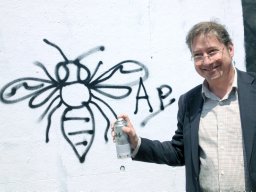 Andrew Polaszek合作论文数International Institute of Entomology71
 Ovidiu Alin Popovici合作论文数Faculty of Biology, University 'Al. I. Cuza' Iasi;Romania.;Faculty of Biology, University 'Al. I. Cuza' Iasi51
 Simon van Noort合作论文数Natural History Department, Iziko South African Museum46
 Andrew Austin合作论文数School of Biological Sciences, Faculty of Sciences, Engineering and Technology, The University of Adelaide31Luciana Musetti合作论文数13
 Sharon A. Andreason合作论文数US Vegetable Lab, USDA10Alvin M. Simmons合作论文数9Hua-Yan Chen合作论文数6Lynn A. Combee合作论文数4Cheryl G. Roberts合作论文数4Natalie McGathey合作论文数4Jonathan S. Bremer合作论文数4Moore Matthew Robert合作论文数Department of Biological Sciences, Wichita State University4Alexander V. Timokhov合作论文数3Cheng-Jin Yan (闫成进)合作论文数3
 Marie-Claude Bon合作论文数European Biological Control Laboratory, USDA-ARS3
 Evelyne Hougardy合作论文数3
 Mark Dowton合作论文数Department of Biology, University of Wollongong3Brian N. Hogg合作论文数Center for Biological Control, University of California3
 Philip A. Stansly合作论文数university of florida2Katherine Mejia-Guerra合作论文数1Christian O Ayala-Ortiz合作论文数1
 Jessica Awad合作论文数State Museum Nat Hist Stuttgart1A. Simmons合作论文数1CiDing Lu (卢赐鼎)合作论文数1
 Dongyan Zhao合作论文数Plant Biotechnology Resource and Outreach Center, Michigan State University1
 James Fulton合作论文数Department of Marine Chemistry and Geochemistry, Woods Hole Oceanographic Institution1
 Hans Klompen合作论文数1
 Ian C W Hardy合作论文数Department of Agricultural Sciences, University of Helsinki1
 Burks Roger A合作论文数Department of Evolution, Ecology, and Organismal Biology, The Ohio State University1
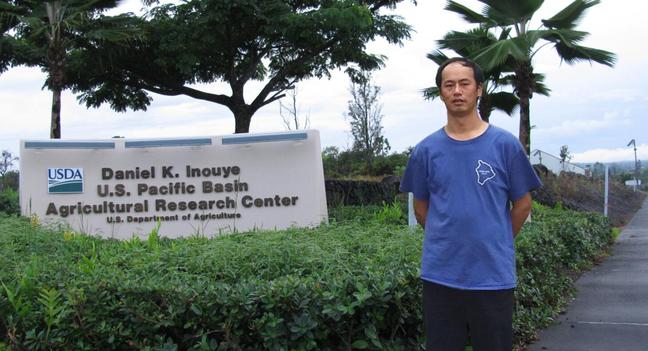 Guanghong Liang (粱光红)合作论文数福建农林大学林学院1Livy Williams合作论文数1
 James B. Woolley合作论文数Texas A and M University1
 Lucian Fusu合作论文数Faculty of Biology1
 John M. Heraty合作论文数Department of Entomology and the Institute for Integrative Genome Biology, University of California1Phillip A. Wadl合作论文数Virginia Polytechnic Institute, State University1
 Moira J. Sheehan合作论文数Boyce Thompson Institute, Cornell University1
 Jason L Mottern合作论文数1Alejandro A. Valerio合作论文数1
 Heather J. Mcauslane合作论文数Department of Chemical Ecology, Göteborg University1
 John S. Noyes合作论文数1




