为提升组织综合实力和核心竞争力,实现组织价值提升,研究所以导入卓越项目管理为试点,全面推行“中国航天卓越绩效管理模式”.通过实施有效的绩效测量和持续改进,实现了追求卓越绩效从理念到实践的落地,并取得了质量与经营方面的显著效果.通过梳理和回顾研究所导入与推行航天卓越项目管理与卓越绩效管理模式的过程,启发对卓越绩效模式的深层领悟,以利今后的改进和创新,实现持续成功.
为实现高热流环境下高温燃气流超声速风洞系统的重复使用,采用数值方法对扩压器热环境进行了分析,采用沸腾换热方法对扩压器进行了热防护设计,并通过试验验证了沸腾换热理论应用的可行性.结果表明,沸腾换热在水流速2 m/s的情况下可实现热流2 MW/m2的热防护,应用沸腾换热可以有效降低设计难度,在较低的速度和压力损失下达到更好的换热效果.
In the companion article (Part I), simplified compact model of components in a system level model was established based on heat transfer path and thermal resistance network analysis. In this article, component level simulation and lead level simulation was conducted by assiging the boundary conditions from the data of the higher level simulation, and effects of different boundary conditions on numerical accuracy and stability are studied. Comparison shows that multiscale thermal modeling methodology can save 87% of the total computation time compared with full simulation with a fine grid system, and can greatly improve the resolution of the calculation result. Mainly based on the multiscale simulation five improvements for the reduction of the maximum PCB temperature are proposed. This article also provides an example that by a careful numerical thermal design, a passive cooling mode can sometimes meet the cooling requirement of a PCB with high power input in some extent.
In the companion article (Part I), simplified compact model of components in a system level model was established based on heat transfer path and thermal resistance network analysis. In this article, component level simulation and lead level simulation was conducted by assiging the boundary conditions from the data of the higher level simulation, and effects of different boundary conditions on numerical accuracy and stability are studied. Comparison shows that multiscale thermal modeling methodology can save 87% of the total computation time compared with full simulation with a fine grid system, and can greatly improve the resolution of the calculation result. Mainly based on the multiscale simulation five improvements for the reduction of the maximum PCB temperature are proposed. This article also provides an example that by a careful numerical thermal design, a passive cooling mode can sometimes meet …
Passive cooling schemes, such as natural convection, are the most reliable heat dissipation apprpaches for electronic equipment. Some times, the highest temperature of the printed circuit board (PCB), rather than the highest of chips, is very much concern because of some technological reasons. In order to reduce the maximum PCB temperature, this article analyze the PCB temperature distribution by multiscale simulation. A top-to-down approach is adopted in order to reveal the details of temperature distribution of some interested local position. In the top-to-down approach, the system level simulation by a not-too-fine grid system is the key to obtain a reliable solution. In order to reach such a goal each component of the PCB should be reasonably simplified. The thermal analysis method is proposed to simplify the components, and the implementation details are provided for three types of components. In the companion article, the settlement of boundary conditions from the data of system level simulation and several improvements in heat transfer by numerical simulation will be presented.
通过改进太阳罩结构,改变PCB安装形式,设置隔热等方式,对大功率PCB在大空间极限热环境下的散热方式进行了优化和数值模拟.研究结果表明,根据不同发热电子元件的功率及其在PCB上的安装位置及与PCB的连接形式,采用上述措施,可以显著改善散热效果.
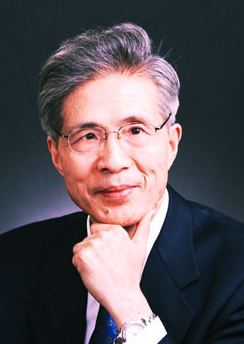 Wenquan Tao (陶文铨)合作论文数MOE Key Laboratory of Thermo-Fluid Science and Engineering, School of Energy and Power Engineering, Xi'an Jiaotong University;Xi’an Jiaotong-Liverpool University5
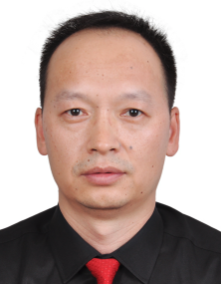 Zengyao Li (李增耀)合作论文数School of Energy and Power Engineering, Xi'an Jiaotong University;Key Laboratory of Thermo-Fluid Science and Engineering, Ministry of Education, Xi'an Jiaotong University5
 Chao Wei合作论文数3
 Yaling He (何雅玲)合作论文数School of Energy and Power Engineering, Xi'an Jiaotong University2chao wei (魏超)合作论文数2YangHui Zou (邹样辉)合作论文数2Bin Qi (齐斌)合作论文数2Ning Tian (田宁)合作论文数2
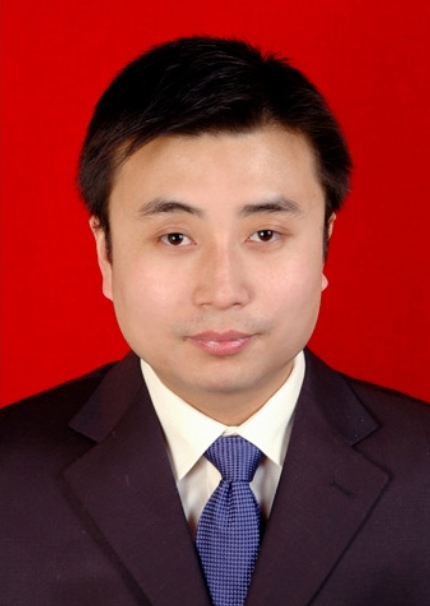 Zhiguo Qu (屈治国)合作论文数School of Energy and Power Engineering, Xi'an Jiaotong University2qingjun sun (孙庆军)合作论文数1Bing Zhang (张兵)合作论文数1Shusen Huang (黄书森)合作论文数1Zhiqing Liu (刘智卿)合作论文数1




