Palmprint recognition technology has been widely applied in the field of security authentication. However, complex lighting conditions and diverse non-contact hand postures pose significant challenges to the accuracy and stability of recognition. To address the challenges of complex lighting conditions and the diversity of non-contact gestures in recognition, we propose a palmprint recognition method based on the SMA-ConvNeXt model. Firstly, we introduce an efficient gated self-attention mechanism, which enables dynamic weighting between global features and local details, effectively alleviating the feature deviation caused by different hand postures. In addition, we design an adaptive channel enhancement module, while dynamically adjusting channel weights, the key channel information is enhanced, effectively addressing the problem of channel feature collapse under complex lighting conditions. Finally, we propose a multi-scale hybrid encoder to tackle detail loss and blurring issues under complex lighting conditions, significantly improving texture recognition performance. Experimental results demonstrate that our proposed model outperforms the original model by more than 2% in accuracy and reduces the equal error rate by over 50% on four widely used palmprint datasets, providing valuable insights for the relevant field.
The rapid advancement of intelligent assisted driving technology has significantly enhanced transportation convenience in society and contributed to the mitigation of traffic safety hazards. Addressing the potential for drivers to experience abnormal physical conditions during the driving process, an enhanced lightweight network model based on YOLOv5 for detecting abnormal facial expressions of drivers is proposed in this paper. Initially, the lightweighting of the YOLOv5 backbone network is achieved by integrating the FasterNet Block, a lightweight module from the FasterNet network, with the C3 module in the main network. This combination forms the C3-faster module. Subsequently, the original convolutional modules in the YOLOv5 model are replaced with the improved GSConvns module to reduce computational load. Building upon the GSConvns module, the VoV-GSCSP module is constructed to ensure the lightweighting of the neck network while maintaining detection accuracy. Finally, channel pruning and fine-tuning operations are applied to the entire model. Channel pruning involves removing channels with minimal impact on output results, further reducing the model’s computational load, parameters, and size. The fine-tuning operation compensates for any potential loss in detection accuracy. Experimental results demonstrate that the proposed model achieves a substantial reduction in both parameter count and computational load while maintaining a high detection accuracy of 84.5%. The improved model has a compact size of only 4.6 MB, making it more conducive to the efficient operation of onboard computers.
In response to negative impacts such as personal and property safety hazards caused by drivers being distracted while driving on the road, this article proposes a driver’s attention state-detection method based on the improved You Only Look Once version five (YOLOv5). Both fatigue and distracted behavior can cause a driver’s attention to be diverted during the driving process. Firstly, key facial points of the driver are located, and the aspect ratio of the eyes and mouth is calculated. Through the examination of relevant information and repeated experimental verification, threshold values for the aspect ratio of the eyes and mouth under fatigue conditions, corresponding to closed eyes and yawning, are established. By calculating the aspect ratio of the driver’s eyes and mouth, it is possible to accurately detect whether the driver is in a state of fatigue. Secondly, distracted abnormal behavior is detected using an improved YOLOv5 model. The backbone network feature extraction element is modified by adding specific modules to obtain different receptive fields through multiple convolution operations on the input feature map, thereby enhancing the feature extraction ability of the network. The introduction of Swin Transformer modules in the feature fusion network replaces the Bottleneck modules in the C3 module, reducing the computational complexity of the model while increasing its receptive field. Additionally, the network connection in the feature fusion element has been modified to enhance its ability to fuse information from feature maps of different sizes. Three datasets were created of distracting behaviors commonly observed during driving: smoking, drinking water, and using a mobile phone. These datasets were used to train and test the model. After testing, the mAP (mean average precision) has improved by 2.4% compared to the model before improvement. Finally, through comparison and ablation experiments, the feasibility of this method has been verified, which can effectively detect fatigue and distracted abnormal behavior.
To reduce the injury caused by the fall and solve the problems of low efficiency and low accuracy of traditional fall prediction methods, an optimized BP neural network fall prediction model based on the Sparrow Search Algorithm (SSA) is established. Taking sliding window to extract discrete features, selecting the maximum value, minimum value, mean value, and variance as the output indicator, the three-axis acceleration and resultant acceleration as the input of influencing factors, the fall prediction model is established for error prediction after data preprocessing. Experimental results show that the improved BP neural network could avoid falling into the locally optimal solution, and the convergence speed is faster, the fall detection accuracy of 98.3%, 92.0% and 96.1% based on DLR, Smart Fall and URFall datasets, respectively. This study may provide technical supports for wearable fall detection that can adapt to different environmental requirements, portable and low power consumption.
The Hammerstein-Wiener model is a nonlinear system with three blocks where a dynamic linear block is sandwiched between two static nonlinear blocks. For parameter learning of the Hammerstein- Wiener model, the synchronous parameter learning methods are proposed to learn the model parameters by constructing hybrid model of the three series block, such as over parameterization method, subspace method and maximum likelihood method. It should be pointed out that the aforementioned methods appeared the product term of model parameters in the process of parameter learning, and parameter separation method is further adopted to separate hybrid parameters, which increases the complexity of parameter learning. To address this issue, a novel three-stage parameter learning method of the neurofuzzy based Hammerstein-Wiener model corrupted by process noise using combined signals is developed in this paper. The combined signals are designed to completely separate the parameter learning issues of the static input nonlinear block, the linear dynamic block and the static output nonlinear block, which effectively simplifies the process of parameter learning of the Hammerstein-Wiener model. Parameter learning of the Hammerstein-Wiener model are summarized into the following three aspects: The first one is to learn the output static nonlinear block parameters using two sets of separable signals with different sizes. The second one is to estimate the linear dynamic block parameters by means of the correlation analysis method, the unmeasurable intermediate variable information problem is effectively handled. The final one is to determine the parameters of the static input nonlinear block and the moving average noise model using recursive extended least square scheme. The simulation results are presented to illustrate that the proposed learning approach yields high learning accuracy and good robustness for the Hammerstein-Wiener model corrupted by process noise. (c) 2021 The Franklin Institute. Published by Elsevier Ltd. All rights reserved.
深度学习目标检测算法在对图像进行识别时会对图像进行压缩,造成小目标特征丢失导致无法检测到小目标信息.针对小目标检测难题,提出基于改进YOLO v4的小目标检测方法,通过使用深度可分离卷积模块和增加多尺度检测网络,提升检测效果,同时改进生成先验框方法,对高分辨率图像进行分割增加小目标的特征信息.使用改进方法对布匹瑕疵检测,准确率达到89%,mAP73.56%;火灾识别准确率达95%,mAP值88%.
Aimed at muti-target assignment in the muti-fighters cooperative combat, the paper compares and evaluates several typical 3-g fighters’ air combat performance in the BVR combat using on the constructed BP neural network; based on which the assignment model of cooperative priority and how to calculate the cooperative priority. The simulation proves the validity of the model.
In order to use linear filtering algorithm, many linear Kalman filter models are based on linear hypothesis and assumption of small quantities. In order to improve the robustness of the Kalman filter algorithm in the initial alignment, the influence of the feedback coefficient on the initial alignment based on the state feedback Kalman filter algorithm is analyzed and the recommended values of feedback coefficients are given in this paper. In order to improve the accuracy of the measurement noise covariance matrix of Kalman filter, an improved algorithm based on adaptive and fading schemes for the matrix is proposed in this paper, and the matrix is diagonalized during the filtering process. The improved algorithms are verified by initial alignment simulation and turntable experiment, and the error precisions of misalignment angles are improved by one order of magnitude compared with traditional Kalman filter.
Due to the risk of failure of LED luminaries induced by the driver power, performance testing is especially important to driver power in some critical industries production and acceptance of work. A test system of LED driver based on LabVIEW is proposed to detect multiple physical parameters, including input voltage, output current, driver power efficiency, peak factor of current ripple and total harmonic distortion etc. The component selection of the system was investigated and the framework of the proposed system was presented. The hardware of this system mainly consists of signal conditioning modules, data acquisition card, test cables and computer. The software is designed by LabVIEW to realize the calculation, display and analysis of the collected data. The experimental results show that the system can realize the test of LED driver, and real-time grade determination of the test results according to relevant standards or the exact level specified by client. In addition, the system has simple structure and high expansibility, which is convenient for early use and later maintenance. The stability and bias was carried out to evaluate the proposed system by Minitab software, which ensured the measurement accuracy.
针对液压支架底座偏载时承受的应力较大,设计时改变筋板的厚度必须重新计算其疲劳寿命耗时耗力的问题.提出使用神经网络对液压支架底座疲劳寿命进行预测的方法.首先选取对底座疲劳寿命影响较大的4个设计参数,使用ANSYS计算其30组参数水平下的疲劳寿命.再用神经网络对前25组数据进行训练建立神经网络黑箱模型.最后用5组数据验证建立的BP神经网络疲劳寿命模型的预测精度.结果表明,神经网络能快速估算出底座疲劳寿命,并且估算的疲劳寿命平均相对误差较为理想,完全满足工程实际要求,为液压支架底座的高效准确的设计和优化提供了方法参考.
针对纺织行业布匹在实际生产过程中产生的色差问题,提出了一种色差检测方法.在相同光照条件下,对标准样布匹和被测样布匹同时采集图像并进行预处理,将图像自定义分隔成M×N块,以每一块为单元进行色差检测,在基于CIELAB颜色空间下进行求平均的方式计算色差值,通过与设定的阈值比较判断该布匹有无色差,同时对存在色差的位置进行标定.实验结果表明:通过该方法可以有效的对布匹尤其是纹理较明显的布匹进行色差检测.
A medium lift-to-drag ratio lunar return vehicle with trim-flaps is presented in this paper. The trajectory optimization design under heat-rate constrain for skip entry lunar return vehicle is analyzed. The optimization problem with a first-order state constraint is introduced. The trajectory applying the Pontryagin maximum principle under the performance of minimum heat is optimized, and the optimal expression of lift coefficient is derived. The simulation studies show that this research method can decrease the heat-rate effectively.
提出一个具有2个参数的含指数项混沌系统,进行了对称性、耗散性以及平衡点稳定性等基本特性的理论分析,并利用相轨图、Lyapunov指数谱和分岔图等动力学工具进行了仿真研究.结果表明,系统对其中1个参数能保持恒定Lyapunov指数谱鲁棒混沌状态,在理论论证的基础上,位置平移控制特性得以揭示,而对另一个参数,除个别窗口外均保持鲁棒混沌状态.最后,基于四阶Runge-Kutta算法完成离散化后,采用微控制器对系统进行实验验证并获得与仿真结果一致的实验结果.
用光纤激光器和阵列波导光栅搭建多通道自混合干涉系统,用光谱分析仪监测环路中的光谱特性.研究了多通道自混合干涉时的环路中光谱的特性以及温度对自混合干涉效应的影响.实验结果显示:环路中无光反馈时,其光谱是多个峰值,各峰值与阵列波导光栅通道特性对应,其包络与掺铒光纤激光器的自由增益谱吻合;有光反馈时,该通道光强减弱,多个通道同时引入光反馈时,光路中能量泄露到其他增益较高的通道,形成尖锋;当靶面距离光纤端面较近时,形成强反馈,该通道中会产生自激现象;当环境温度较高时,与AWG对应的各通道都能形成明显的波峰和波谷,温度较低时,波长较短部分波形较平坦,不适合作为传感通道.结果表明,多通道自混合干涉系统用于传感网络是可行的.
将测量和分析不同部位的外周动脉脉搏波波形,作为一种无创评估动脉僵硬度的方法,已经受到中外医学界的广泛重视.脉搏波传导时间已经被用来作为评价动脉僵硬度的有效指标,其无创评估动脉硬化的有效价值也得到重视.本文是通过容易获取的桡动脉波形计算全桡动脉脉搏波传导时间(FRPTT),将其与已经成熟的动脉僵硬度指标作对比分析研究,来判断FRPTT是否可以用来评估人体的动脉僵硬度.对248位合格样本人员的桡动脉脉搏波波形数据进行计算分析,同时测量其身高、体重、手腕处动脉血压,计算身体质量指数、桡动脉增益指数、射血时间、FRPTT.通过对采集到的20s时间内桡动脉波形进行二次微分,用自编的软件算法自动检测出点b(心脏开始射血点)和e(左心射血的停止点)的位置,计算FRPTT.通过对算出的FRPTT值与已知的心率、脉压、增益指数三个参数进行分析和比较,发现其与心率和增益指数两个参数(P<0.001)显著相关;另外,女性组的FRPTT值跟脉压显示弱的负相关性,男性组没有相关性.结果表明,FRPTT可以作为一个衡量动脉硬化的指标.
The next generation of the reentry vehicle is envisioned to have the onboard capability of real-time trajectory planning to overcome in-flight vehicle damage or various disturbances.The main feature of neural dy-namic optimization (NDO)is that it enables neural networks to approximate the optimal feedback solution.The NDO can avoid the problem of guessing the initial state of costate variables.The principle of the method is intro-duced and the detail of the optimization process is presented.Simulation results show that using NDO can avoid the guessing initial state of costate variables of the problem.The properly trained NDO has strong robustness which can meet the real-time requirements.
In this paper, a T-S fuzzy model of the NSV (Nearspace Vehicle) kinematic model is established based on fuzzy approximation theory, and a new fuzzy robust tracking control law is designed in reference to the feedforward control of the linear system. In order to account for a case in which no augmented matrix is introduced, the control law is designed as a compound form of feedback and feedforward, and the gains of feedback and feedforward are solved by LMI (Linear Matrix Inequalities). The strategy is applied to the anti-interference control of NSV attitudes, and the convergence of tracking errors is analyzed according to the Lyapunov method. Simulation results based on the NSV demonstrate the validity of the proposed method.
针对航天器携带的两副旋转机构同时姿态机动的精确控制问题提出一种鲁棒自适应控制方法。从关联系统的角度建立系统动力学模型,有效精确描述系统内各刚体动力学耦合项与非耦合项。采用"航天器本体姿态稳定、同时各旋转机构姿态机动"的复合控制策略:考虑到航天器本体转动惯量参数无法精确获得,应用非确定等价自适应控制方法设计姿态稳定控制器,在确保姿态全局渐近稳定的同时有效令不确定参数估计值精确逼近真实值或进入特定集合;考虑到各旋转机构姿态机动时受到航天器本体动力学耦合的影响,设计了鲁棒H∞姿态机动控制器以抑制动力学耦合的作用。仿真结果验证了所提出方法的有效性。
为在高超声速飞行器设计初期快速地获得推力和推力矩,以满足控制相关分析和建模需要.提出一种推进系统建模方法,基于激波/膨胀波相交理论来建模与机身耦合的进气道模型;用有摩擦变截面加热管来描述双模态燃烧室;将内喷管建模成一维变截面摩擦管,采用动量定理估算推力,并通过曲线拟合得到推力的解析表达式.与CFD计算结果相比,该模型计算得到双模态冲压发动机入口气流马赫数和温度误差小于5%,压强误差小于10%;计算得到的推力随马赫数、燃油当量比和迎角的增大而增加,随高度增加而减小,单个状态平均计算时间小于0.5s.计算结果表明:该建模方法满足面向控制建模的效率和精度需求,有助于此类飞行器设计初期的动力学和控制相关的分析和设计.
研究了伸缩翼飞机变形飞行过程的动力学建模与鲁棒控制问题,以分析机翼变形对飞机性能的影响机理,并实现机翼变形时的平稳飞行。首先通过气动仿真分析构建了伸缩翼飞机气动参数与机翼变形的关联函数,进而建立了变形飞行的动力学模型。在此基础上提出了一种新的滑模变增益控制(sliding mode gain-scheduled control,SMGSC)策略,更好地保证闭环系统的全局稳定和鲁棒性能。仿真结果表明,机翼伸缩能直接改变飞机的气动特性和运动模态;SMGSC能更好地保持伸缩翼飞机变形飞行时的状态稳定,并消除复合干扰的影响;伸缩翼飞机通过机翼变形可以减少50%的燃油消耗实现同样的飞行任务,具有重要的性能优势。
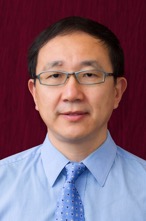 Yuping Lu (陆宇平)合作论文数College of Automation Engineering, Nanjing University of Aeronautics and Astronautics16
 Yanbin Liu (刘燕斌)合作论文数College of Astronautics, Nanjing University of Aeronautics and Astronautics12
 Yinsheng Luo (罗印升)合作论文数江苏技术师范学院电气与信息工程学院3Feng Li合作论文数Viasat Inc.3XIAO Di-bo (肖地波)合作论文数2Xiaojie Liu合作论文数2Xiaolan Wang (王小兰)合作论文数2Tian-hu WANG (王田虎)合作论文数2XiaoYong Zhou (周小勇)合作论文数2Lei Zhu (朱雷)合作论文数2
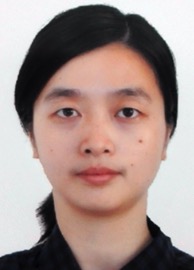 Zhen He (何真)合作论文数College of Automation Engineering, Nanjing University of Aeronautics and Astronautics2Ming Yin (殷明)合作论文数2Xiaohua Qiao (乔晓华)合作论文数2Naibao He合作论文数2Bo-yi CHEN (陈柏屹)合作论文数1Lin Shen合作论文数1ting rui合作论文数1Wang Baoqiang合作论文数1Shen Yunzhe合作论文数1Yue Hu合作论文数1
 Jinwu Tong合作论文数1Yin WANG (王银)合作论文数1
 Yin Wang (王寅)合作论文数College of Astronautics, Nanjing University of Aeronautics and Astronautics1YinZhong Yang (杨银忠)合作论文数1Shan Chang (常珊)合作论文数1YuRong Guo (郭豫荣)合作论文数1Qian Gao (高倩)合作论文数1
 Zhao Yang合作论文数School of Life Science, Shandong University1Deng Jun合作论文数1
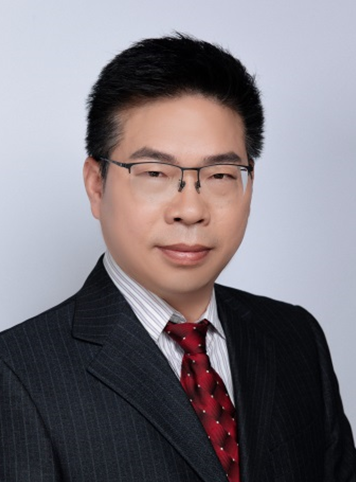 Changsheng Jiang (江长胜)合作论文数College of Resources and Environment, Southwest University1
 Li Jia (贾立)合作论文数School of Mechatronic Engineering and Automation, Shanghai University1Chen Xu (许晨)合作论文数1Ding Li (李玎)合作论文数1
 Zhiyong Li (李志勇)合作论文数School of Biological Science & Medical Engineering, Southeast University1Sufen Liu (刘素芬)合作论文数1Xiajuan Dai合作论文数1




