The method is based on transcapillary penetration of fluorescent fluid (EpoDye colorant) in the finest cavities and flaws on the surface of polished sections. Luminophor-filed voids become visible under UV light and optical microscope. The voids are estimated with respect to their kinds, sizes and area. The estimates and the statistical property of void distribution are described.
The problem of rock abrasiveness testing consists in the incompatibility of data obtained using different methods. To this effect, the author offers a method for qualitative evaluation of potential abrasiveness of rocks using their physico-mechanical properties arranged on the canonical scale of structure-and-hierarchy representation.
A new method to test rock abrasiveness is proposed based upon the dependence of rock abrasiveness on their structural and physico-mechanical properties. The article describes the procedure of presentation of properties that govern rock abrasiveness on a canonical scale by dimensionless components, and the integrated estimation of the properties by a generalized index. The obtained results are compared with the known classifications of rock abrasiveness.
The paper presents laboratory and in situ research data on interaction of geomechanical and physicochemical processes in Kuzbass coal of various ranks, considering temperature effect. Under analysis is the relation of stress-strain state, temperature and infrared radiation of coal. The authors study the role of temperature and microstructure of coal in energy and mass exchange processes (variation of mass, volatile yield, specific surface, internal energy of methane adsorption capacity decrease and moisture content). Interrelation of outburst hazard and fire hazard in coal is discussed from the viewpoint of uniform stagewise thermomechanics and thermochemistry of coal behavior in the course of coal formation and extraction. The article introduces a generalized factor for quantitative description of petrographic properties of coal. Using this factor, the authors classify and describe petrographic groups of Kuzbass coal.
The paper describes a new estimation method for rock abrasivity as a function of grain size, porosity, rock-forming mineral hardness, structural bond strength and humidity. The cumulative effect of these properties on the rock abrasive ability is represented as a sum of dimensionless indexes in the canonical structural-hierarchical scale.
The paper presents canonical ranking of natural structural units in rocks by sizes from 1.10 -3 to 4.10 3 mm depending on the geo-structure hierarchy level. Based on this ranking, the authors constructed classifications of main genotypes of rocks.
A multifactor classification of rocks by drillability is proposed based on canonical representation of the mechanical and structural properties of rocks by the dimensionless characteristics of rock fracture resistance.
A tremendous upgrowth of experimental and theoretical studies in the field of nonlinear geomechanics, observed in recent decade, arises from consideration and description of the role of rockmass structure factor in complex self-organizing processes of variation in their stress-strain state. One of the leaders of this research trend is the Siberian School of Geomechanics, whose semicentenary experience bases upon fundamental results obtained by T. Gorbachev, N. Chinakal, S. Khristianovich and other prominent scientific men early at the origin of the Siberian Branch of the USSR Academy of Sciences. The present paper emphasizes the fundamental importance of the canonical scale of structural-hierarchical representation of physical and geomechanical information for the description of structural-hierarchical arrangement of rocks and for rock classifications by the rock strength parameters. The authors have shown that the applied scale of the structural-hierarchical representations, as such, levels out the differences of the discussed classifications.
It is shown that formation of hollows in bowels of the Kuznetsk Coal Basin (Kuzbass), induced by opencut and underground mining has reached an intensity of 1.3–1.5 million m 3 /day. In the conditions of high concentration of mines and open-cuts in small areas, a regional monitoring network is required in view of a generated geomechanical space, hazardous in geodynamic manifestations. A developed information support of this netwoprk is presented, including information models of a geological environment and database obtained from instrumental observations on geomechanical processes. The equations of connection between structural and strength characteristics of rocks, their metamorphization grade and occurrence depth are given for five geological-tectonic zones of the Kuzbass as a way of prediction of their properties.
Based on the quantitative estimations, it is demonstrated that available classifications of rocks by drillability disagree on the scales. Empirical formulae are obtained to compare the scales depending on uniaxial compressive strength of rocks.
Methods of drilling in quarries are analyzed. The possibilities are estimated for the downhole pneumatic punchers designed in the Institute of Mining of the Siberian Branch of the Russian Academy of Sciences with a new working cycle and increased energy parameters. It is shown that the percussive-rotary drilling improves the quality of rock mass crushing and the productivity of excavators as well as favors upgrading of mining systems.
Using the statistical data as the base, the empirical dependences are obtained for quantitative estimation of interrelations between the indices of rock strength.
A procedure is proposed for creating the computer data base of structural and strength properties of enclosing rocks of coal deposits with respect to lithologic layers using the regularities of association with geological and genetic signs. The data base is formed at the stage of designing the open-pits for the purpose of constructing the spatial models of the rock mass and separating the overburden stratum into benches.
The problems arisen in open coal mining by the early 1990s are considered. The structure of productive capacity arrangement, relations between the reserves and the intensity of their mining, quality of produced coals, as well as resource-intensity and replacement of technological machine stock are studied.
Results are presented or the first stage of the use of laser systems in coal opencasts to determine the “rock-coal” contact boundaries in the rock mass, as well as to create systems that will automatically update databases on the spatial position of workings in order to calculate the volumes of rock that have been moved.
In order to solve a complex of mining-geometric problems in a three-dimensional statement, triangulation models of the interfaces are used that differ from known models by excluding the requirement of uniformity for the support network and the application of structure-forming elements of deposits: planes of tectonic disturbances, borders of geological blocks, etc. The problem is formulated for evaluating the locations of opencast fields within their finite boundaries, and also in the dynamics of working. Algorithms are given for fulfilling the basic graphical and analytical operations in three-dimensional space, including dialog operations. Traditional parameters for analyzing mining operation regime are supplemented by new ones, i.e., physically required work for moving rock mass by means of transport and rehandling of overburden by draglines, and these parameters are determined for each stage of mining.
The possibilities of using the mined-out space of opencasts for placing the overburden in internal dumps are studied. It is established that on completion of mining flat and inclined strata there are free capacities in the mined-out space consisting of 40–70% of its volume which are a resource for placing the overburden from other opencasts with substantiation of the sequence of mining large deposits. A complex criterion is suggested that takes account of energy expenditures for mining a deposit and the energy damage caused to the environment. A procedure is given for solving the problem and results are presented of calculations for the Taldinsk and the Tomusinsk deposits.
Traditional evaluation of the energy intensity of the technological processes of strip coal mining with respect to direct energy consumption is not exhaustive, since energy expenditures for the production of required resources in accompanying branches of industry, and the mining of fuel for the production of energy, the amount of which should be significantly higher than the sum directly expended for the mining and creation of the facilities for its execution are not considered.
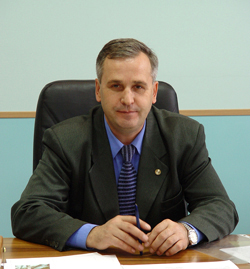 Victor N. Oparin合作论文数N.A. Chinakal Institute of Mining Siberian Branch Russian Academy of Sciences7
 Mv Kurlenya合作论文数3A. A. Botvinnik合作论文数3E. I. Vasil'Ev合作论文数2V. I. Cheskidov合作论文数2V. P. Potapov合作论文数2A. A. Glukhov合作论文数1а с трифонов合作论文数1в в туманов合作论文数1в а середович合作论文数1ю в чугуй合作论文数1г е яковицкая合作论文数1A. V. Krivetskii合作论文数1Ю. В. Федотова合作论文数1степан николаевич савченко合作论文数1а а бизяев合作论文数1в и юшин合作论文数1н и геза合作论文数1б в поллер合作论文数1V. F. Yushkin合作论文数1E. A. Maksimovsky合作论文数1V. N. Fedorinin合作论文数1в и панин合作论文数1эдуард варужанович каспарьян合作论文数1v g ivanov合作论文数1O. A. Persidskaya合作论文数1T. A. Kiryaeva合作论文数1a a malovichko合作论文数1i v grenev合作论文数1G. I. Kulakov合作论文数1V. Yu. Gavrilov合作论文数1Aleksandr V. Leont'Ev合作论文数1Sergey V Plotnikov合作论文数1R. A. Shutilov合作论文数1
 A. A. Kozyrev合作论文数Saratov State Technical University1Vladimir P. Efimov合作论文数1Sergei N Bagaev合作论文数1A. P. Kovchavtsev合作论文数1
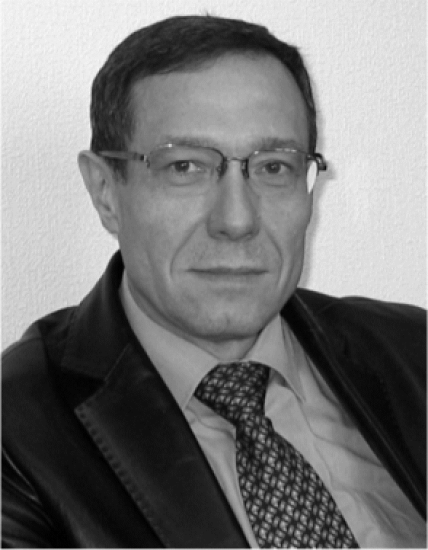 Aleksey G Vostretsov合作论文数1V. I. Vostrikov合作论文数1V M Semibalamut合作论文数1E. V. Tetenov合作论文数1A. K. Potashnikov合作论文数1A. V. Antsiferov合作论文数1




