代表朱子"中和新说"的文献中暗含有对张栻"未发之旨"的回应.朱张之间的互动从张栻向朱子寄送《吕氏中庸辨》开始,直到朱子给张栻的书信《诸说例蒙印可》为止,贯穿了朱子"己丑之悟"的整个过程.张栻"未发之旨"的要义包括"心之昭昭分为已发"和"喜怒哀乐之中与寂然不动不同"两点,而这极有可能是触发朱子与蔡元定1169年中的问辨,进而触发朱子"己丑之悟"的原因.
学界围绕朱子"道统论"的争论集中在两点上:第一点争论是"道统"内容上的"传什么"之争.朱子提出"道统论"的目的在于凝定儒学主题,他区分了前贤对于"传什么"的"创立者"与"传述者"之不同,认为"创立者"决定"传什么"的内涵,而"传述者"则在"推本尧舜以来相传之意"而传播之."传什么"的创立遵循"继天立极"原则,"传什么"则紧扣理学的主题.第二点争论是"道统"的传承谱系之争,焦点在于周敦颐是否可入道统谱系."道统论"这两点争论相互关联、不可分割.概言之,朱子有意将周敦颐纳入道统谱系,但缺少强有力的证据来坐实其主张.
心性大小之辨是张载心性思想的重要一环.程颐批评张载的"以体会为非心"是主张将见闻排斥在心之外,意味着"心小性大"、析心与理为二.据二程弟子时紫芝的注释,程颐的这一批评系针对张载的"心御见闻,不弘于性"而发.程颐的批评建立在将"御"字释为"扞格""防御"之上,但这一解释并不符合张载的本意:一方面,张载"心御见闻"中的"御"字当为"桎梏""滞碍"之意,故不能从"心御见闻,不弘于性"中推出其主张析心与理为二的结论;另一方面,张载又确实有"心又大于心"的主张,但此论并不意味着完全排斥见闻.张载的心性大小之辨的本质是天人之辨,既包含天人、心性的本末源流、分合同异、主从关系之辨,具体涉及对于心与见闻、诚与心、道与身的关系之辨;又包含天人、心性的自在与自为之辨.由此,张载的天人、心性之辨就动态的展开为由本源层面的无分,到当前实际表现层面的有分,再到极致表现层面的重回无分的复杂过程,而人积极主动修养工夫是实现从天人、心性在实际表现上的相分重回极致表现上的无分的不二法门,此即"心能尽性"说.张载此论从万物一体的高度推进了儒学对于天人关系的理解,也是对孟子尽心尽性思想的继承与发展.
方以智多次提到“一在二中”,这也是其处理超越者与现实世界之关系的基本思路.在讨论“一”和“二”的关系时,方以智一反宋儒强调有本到末,由体达用的思维模式,转而把重心放在“二”上,甚至主张“止有后天,并无先天”,有以现实世界为先、为本的倾向.以此为基础,方以智对于理学所讨论的一系列重要问题予以了回应,也体现出了重视思辨和强调智识的一面.不过,方以智的回应颇有深受庄学和佛学影响的痕迹,与理学的主流观点有较大的不同.
杨儒宾提出朱子慎言德性之知的问题,本文以理学发展的脉络为线索,认为朱子这一态度是其扬弃张载和二程相关论“知”思想的结果.张载首创德性之知与闻见之知之分,这是其以本末二分模式论本体、心性之必然结果.程颐虽也强调德性之知与闻见之知的区分,却强调“正心诚意”工夫必须在“格物致知”上落实,这在一定程度上消解了德性之知与闻见之知的对立.朱子慎言德性之知,与其以“理一分殊”模式来构建自己的理论体系有关.朱子强调德性之知与闻见之知在本源上相通、在分殊上相异,因此“格致”工夫就不可预设德性之知与闻见之知的对立,而应在“分殊”上见“理一”.与此相对,阳明强调“此知之外更无知”,良知必以见闻为发用.阳明此论,旨在批评朱子的“析心与理为二”,也没有预设德性之知与闻见之知的对立.
朱子强调“理气为二,理在气先”,却反对“道物为二,道在物先”;强调“理无动静”,却主张“道体”不息,有时又将“理”“太极”与“道”的概念相混同.这反映出朱子在论“理”与论“道”上的分裂,也对其“理实体化”的立场带来了冲击.由此,朱子的“道体论”与“理气论”是否一体,以及其“道体论”内部究竟是保留形上-形下、道-物的二分,还是主张“流行全体即是道体之本然”,就成为理解朱子哲学的关键问题.对此,黄榦选择慎言理气先后问题,通过引申朱子“流行全体即是道体之本然”的说法,转而强调“道体”的即体即用、即存有又活动.这在一定程度上消解了朱子哲学中的难题,并在实际上开启了理学思维去实体化的路向.
契嵩思想的主流是援儒入佛,而非佛学儒化.他认为,作为出世间教,佛教也有教辅之效.另外,他对中庸和孝道的个性化诠释,以及他在《非韩》中对韩愈排佛言论的反驳,都表明他试图通过对某些儒学概念的重新释读来宣扬佛学本位的思想.
“中和问题”是我们审视理学发展脉络的绝佳视角.程颐、吕大临、朱子、王阳明论“未发之中”,或基于直觉的立场,或基于理性主义的立场,但都注意把区分儒释之别放在优先地位,强调通过修养功夫实现学以成圣.通过对诸贤论“未发之中”问题的梳理,可以揭示出理学在论“未发之中”上问题意识上的变化及其原因.
在朱子的文献中,“太极说”一词的使用较为含混,其具体所指有四:其一,是指朱子自己所作的《太极解义》;其二,是指《朱子文集》卷六十七中所收录的《太极说》一文;其三,是指张栻所作的《太极图说解义》;其四,是指周敦颐所作的《太极图说》.此外,在张栻、吕祖谦、汪应辰等人与朱子之间的书信中,也有把他们对于周敦颐作品的注释之作笼统称为“太极说”或是“太极解”的例子.我们认为,朱子等人对于“太极说”的这种含混用法,只是一种“方便之举”,而他们后来在刊刻其相关的著作时,则又为其取了不同的名称,以示区别.
明末清初,学术思想发生了巨大的变化,道德和知识的关系也随着学风流变的转向出现了变化.在反对明末腐朽学风的思潮中,涌现了一批批判理学末流、重新阐释儒学经典,旨在经世致用的哲学家及其著作,黄宗羲与《孟子师说》就是其中的代表.现拟从实学角度看《孟子师说》,意在阐述清初实学之风和《孟子师说》的关系,说明经世致用思想在《孟子师说》中的体现.
清儒毛奇龄提出,《太极图》的第三层图,窃自于《周易参同契》之“三五至精图”.这一说法目前无法从版本学的角度予以验证.对此问题,我们试图从比较《太极图》与《周易参同契》和《悟真篇》这三部著作对于“三五”思想的不同表述入手做出回答.我们认为:首先,毛奇龄在论证《太极图》与《周易参同契》在“三五”思想上存在一定的渊源关系时,误将《悟真篇》的表述等同于了《周易参同契》的说法,论证极不严谨.其次,《太极图》的第三层图对五行思想的表述,与《周易参同契》和《悟真篇》对“三五”思想的表述,均有所不同.再次,《太极图》的第三层图与《太极图说》中“五行一阴阳也”的表述一致,从而体现出相当的原创性.从这个角度判断,我们认为《太极图》当出自周敦颐本人之手,与道教思想并无直接性的渊源关系.
There are many views on the exact time and author about Yinfujing now which can be reduced to it that Yinfujing came from Li Quan or earlier ones.However the later view becomes more accepted.This arti-cle shows that we still don’ t find any convictive evidence to show that Yinfu-jing don’t came from Li Quan.This paper also shows that those six Commen-tary on Yinfujing from Tai Gong,Fan Li and so on may be written by Li Quan.
通常认为,《墨子》书中《经上》、《经下》、《经说上》、《经说下》、《大取》、《小取》六篇(即所谓墨辩)为墨家后期的作品,属于科学、逻辑学和论辩学之作.如谭戒甫即强调,墨辩六篇充其量只能算是“术”,而“术”是要为“道”服务的,①墨家的“道”则在《兼爱》、《非攻》等篇中.我们则认为,墨辩学派有从逻辑的角度来澄清和发展墨家伦理的因素,墨辩学派伦理思想应该进人我们的考察视野.
So far the investigations on the early versions of the Tongshu(A Book Penetrating [the Classic of Changes]) in the academic circle basically have always been focusing on the so-called the Cheng's brothers' version and the Jiujiang version.Yet according to some documents related,the Chongling version redacted and inscribed at Zhou Dunyi's hometown was the earliest one.Both the Chongling and the Jiujiang versions belong to the series of "old version at hometown" and neither of them included the Taiji tu,which attests to the guess that the Taiji tu was appended by the Cheng's brothers' version.This also provides us with valuable clues to analyze the disseminations of the early version as well as the relationship between Cheng's brothers and Zhou Dunyi.
This paper is a response to the conclusion that Zhu Xi had bowdlerized the text of Zhouyi can tong qi.According to this conclusion,Zhu Xi(1130-1200) took the prenatal thought which was alleged not coming into being until the Song dynasty(960-1279) as his fundamental orientation in interpreting Can tong qi,and to solve the contradiction between the Text and his interpretations Zhu Xi bowdlerized the Text.This paper refutes this conclusion from its main testimonies.Aiming to the inference of the conclusion that before the time of Zhu Xi the text of Can tong qi had not been finalized,this paper demonstrates that the text of Can tong qi had already been fundamentally stabilized in the Tang dynasty(618-907) and a great number of works interpreting Can tong qi came out in the turn between the Tang and Song dynasties which led to the mixture of the Text and interpretations.Aiming to the viewpoint that Zhu Xi first imposed the idea of prenatal positions credited to Chen Tuan(871-989) and Shao Yong(1011-1077) to Can tong qi,this paper points out that before Zhu Xi there had been not few cases interpreting Can tong qi with so-called the prenatal positions and Can tong qi itself was one of the sources of Chen and Shao's idea of the prenatal positions.At last,this paper also illustrates and analyzes some items from the assertion that Zhu Xi had bowdlerized Can tong qi so as to verify the mistakes made in the conclusion.
在传统中国哲学领域,价值的问题并非仅是哲学的一个部门,而是贯通于所有哲学问题并规定了这些问题之本质的核心,这是由传统中国哲学自身特色所决定的。与主流的传统中国哲学把人的价值实现视为核心价值不同,名家哲学更强调对纯"名言之域"与"现象世界"的区分,更专注于"名言之域"。虽然同样重视"正名实"问题,但是名家与儒家在此问题上的态度有根本的不同,更体现出一种"爱智"倾向。我们可以将之视为名家哲学的精神特质与核心价值。
Wang Shouren's theory of a mind neither good or evil seems to contradict in logic Chu Hsi's theory of emotions shown or latent,which he discussed time and again.In effect,Wang's theory of mind has inherent relations with the Neo-Confucian theory of "emotions shown or latent".Wang's understanding of mind,nature and Qi,which brings out idea of the sameness of mind and natural law,has much in common with Chu Hsi's argument that "it can be called Zhong(neutral) when emotions like happiness,anger,sadness are not shown" although they are different from each other.He insists that the concept of a mind neither good nor evil is closely related to such ideas of "good","conscience" and "prevalence of natural law" via the media of the "neutral" concept of "emotions latent".The concept of "mind being neither good nor evil" and the concept of "intention being either good or evil" are but two sides of one things.
Many people believe the author who draws Taijitu,must writes Taijitushuo either.However,if absolutely insist the above viewpoint,we will ignore some important materials.According to some materials by QI Kuan and ZHU Xi,the first version of Tongshu incorporates Taijitushuo.To clarify the relation between Taijitu and Taijitushuo,we still need to re-exam his epitaph written by PAN Xing-si,the original appearance of Taijitu and the relation between Taijitu,Taijitushuo and Daoism.In the last part,this paper further analyse the original version of Tongshu by comparing the version of Zhurumingdaoji and the version arranged by ZHU Xi.
Zhu Xi’s thought of "Benevolence",is not only based on the spirit of Xian Qin’s "Benevolent School",but made great progress from it.Also it was the self-conscious response to the thought of Buddhism and Taoism of that time.On one hand,Zhu discussed "benevolence" under the frame of "Oneness of Heaven and Man",aimed to show the ontological character of "Benevolence".On the other hand,he argued that it cannot relate "Benevolence" to nihility,nor discuss this phrase without discussing "Qi","Wu" and "Qing".The spirit of Zhu’s thought of "Benevolence" is to emphasize the comparison between "Xu" and "Shi".
The Textual Research on Yinfu by Zhu Xi is usually considered as Confucian appearance with Taoist essence.However the writers compare with other works of Zhu Xi,and argue that Zhu Xi performs the annotation of the Yinfu,and Taiji in the extremely similar way with the features of Confucianism.
 DongDong Hu (胡东东)合作论文数2Dongdong Hu (胡东东)合作论文数2Ya-zhou CHEN (陈亚洲)合作论文数1HongHai Wang (王宏海)合作论文数1Xue Han (韩雪)合作论文数1
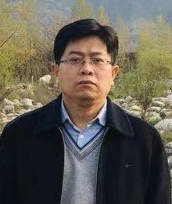 Shuming Cao (曹树明)合作论文数School of Philosophy and Government, Shaanxi Normal University1
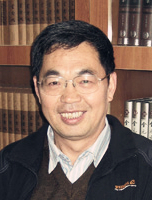 Jinglin Li (李景林)合作论文数Philosophy Department, Sichuan University;School of Philosophy, Beijing Normal University1




