Sequential recommender systems, representing an advanced approach in modeling user behavior sequences, excel in capturing the dynamic evolution of user interests. However, challenges such as data sparsity, noise, and bias significantly impair the accuracy of these recommendations. This study introduces a novel counterfactual sequence generation algorithm, anchored on pivotal items. It innovates by navigating the counterfactual domain of user behavior sequences, employing a strategy to simulate alternative product selection pathways. This approach generates a variety of counterfactual sequences, thereby enriching the dataset for model training. Additionally, we present a counterfactual generation mechanism that delineates the scope of counterfactual exploration, enhancing sequence plausibility through strategic key item delineation and the incorporation of stochastic perturbations. Addressing sequence generation challenges, we propose a contrastive learning framework designed to discern and preserve the “invariance” within user interests, thus bolstering model resilience. To further refine the algorithm, we incorporate principles of alignment and uniformity within the counterfactual domain, reinforcing the algorithm's precision and overall performance. Empirical validation across four public datasets corroborates the algorithm's effectiveness, demonstrating notable advancements in recommendation accuracy and robustness.
Recommender systems not only serve users but also affect user preferences through personalized recommendations. Recent researches investigate the effects of the entire recommender system on user preferences, i.e., system-level effects, and find that recommendations may lead to problems such as echo chambers and filter bubbles. To properly alleviate the problems, it is necessary to estimate the effects of recommending a specific item on user preferences, i.e., item-level effects. For example, by understanding whether recommending an item aggravates echo chambers, we can better decide whether to recommend it or not. This work designs a method to estimate the item-level effects from the causal perspective. We resort to causal graphs to characterize the average treatment effect of recommending an item on the preference of another item. The key to estimating the effects lies in mitigating the confounding bias of time and user features without the costly randomized control trials. Towards the goal, we estimate the causal effects from historical observations through a method with stratification and matching to address the two confounders, respectively. Nevertheless, directly implementing stratification and matching is intractable, which requires high computational cost due to the large sample size. We thus propose efficient approximations of stratification and matching to reduce the computation complexity. Extensive experimental results on two real-world datasets validate the effectiveness and efficiency of our method. We also show a simple example of using the item-level effects to provide insights for mitigating echo chambers.
本科层次职业教育是职业教育迈向提质培优、增值赋能的必经之路,因为这种类型的教育存在四个方面的价值,分别是在教育分层中扭转职业教育被动的地位、完善职业教育体系的生态结构、提高职业教育的科研能力与社会服务能力、满足国民经济发展对职业教育的需求.在本科层次职业教育建设的过程中,存在六个难点与困境,分别为缺乏完善的政策支持、缺乏健全的法律保障、缺乏科学的办学指标、缺乏明确的培养目标、缺乏学位制度、缺乏有效的考试招生方式.针对每个难点与困境,提出相应的解决措施.
Sequential recommendation has attracted a lot of attention from both academia and industry. Since item embeddings directly affect the recommendation results, their learning process is very important. However, most existing sequential models may introduce bias when updating the item embeddings. For example, in a sequence where all items are endorsed by a same celebrity, the co-occurrence of two items only indicates their similarity in terms of endorser, and is independent of the other aspects such as category and color. The existing models often update the entire item as a whole or update different aspects of the item without distinction, which fails to capture the contributions of different aspects to the co-occurrence pattern. To overcome the above limitations, we propose aspect re-distribution (ARD) to focus on updating the aspects that are important for co-occurrence. Specifically, we represent an item using several aspect embeddings with the same initial importance. We then re-calculate the importance of each aspect according to the other items in the sequence. Finally, we aggregate these aspect embeddings into a single aspect-aware embedding according to their importance. The aspect-aware embedding can be provided as input to a successor sequential model. Updates of the aspect-aware embedding are passed back to the aspect embeddings based on their importance. Therefore, different from the existing models, our method pays more attention to updating the important aspects. In our experiments, we choose self-attention networks as the successor model. The experimental results on four real-world datasets indicate that our method achieves very promising performance in comparison with seven state-of-the-art models.
介绍了资历框架的实质与进展、1+X证书制度的实质与试点工作进展.从四个方面梳理了资历框架与1+X证书制度的关联关系,如两者均为国家标准、存在包含与被包含的关系、资历框架有助于实现书证衔接融通、1+X证书制度对资历框架建设起到促进作用等.指出资历框架建设推进1+X证书制度工作的原因,并从强化顶层设计、深化教育改革两大方面提出具体的推进举措.
职业教育国家学分银行对于推进职业教育改革、优化职业教育体系具有深远的影响.通过对职业教育国家学分银行信息平台的建设情况进行描述,分析学分银行的建设现状.从缺乏健全的法律保障和政策支持、缺乏统一的协调机制、对职业教育国家学分银行建设的认识模糊、成果转换为学分的标准不统一、社会对学分银行的需求度不高等五个方面论述学分银行建设面临的困境.针对上述困境,提出相应的对策.
阐述了终身职业技能培训制度的诉求及成为国家意志的根本原因,对终身的含义进行了描述.从国家顶层设计的部署、地方政府的贯彻落实与精心组织等两个方面论述了推行制度工作的政府积极举措.在研究构建终身职业技能培训体系、基础平台、保障措施等内容的基础上,对《关于推行终身职业技能培训制度的意见》中尚未提及又起到关键性优化作用的内容展开了详细的描述,包括培训标准体制的建设、国家终身职业技能培训"学分银行"的建设、与1+X证书制度工作相融通等三部分内容,这对于制度工作的顺利推进具有现实意义.
This paper focuses on the multi-behavior recommendation problem, i.e., generating personalized recommendation based on multiple types of user behaviors. Methods proposed recently usually leverage the ordinal assumption, which means that users? different types of behaviors should take place in a fixed order. However, this assumption may be too strong in some scenarios. In this paper, a more general model named Multiplex Graph Neural Network (MGNN) is proposed as a remedy. MGNN tackles the multi-behavior recommendation problem from a novel perspective, i.e., the perspective of link prediction in multiplex networks. By taking advantage of both the multiplex network structure and graph representation learning techniques, MGNN learns shared embeddings and behavior-specific embeddings for users and items to model the collective effect of multiple types of behaviors. Experiments conducted on both ordinal-behavior datasets and generic-behavior datasets demonstrate the effectiveness of the proposed MGNN model.
Utilizing knowledge graphs (KGs) to improve the performance of recommender systems has attracted increasing attention recently. Existing path-based methods rely heavily on manually designed meta-paths, while embedding-based methods focus on incorporating the knowledge graph embeddings (KGE) into recommender systems, but rarely model user-entity interactions, which can be used to enhance the performance of recommendation. To overcome the shortcomings of previous works, we propose SARC, an embedding-based model that utilizes a novel Split-And-ReCombine strategy for knowledge-based recommendation. Firstly, SARC splits the user-item-entity interactions into three 2-way interactions, i.e., the user-item, user-entity and item-entity interactions. Each of the 2-way interactions can be cast as a graph, and we use Graph Neural Networks (GNN) and KGE to model them. Secondly, SARC recombines the representation of users and items learned from the first step to generates recommendation. In order to distinguish the informative part and meaningless part of the representations, we utilize a gated fusion mechanism. The advantage of our SARC model is that through splitting, we can easily handle and make full use of the 2-way interactions, especially the user-entity interactions, and through recombining, we can extract the most useful information for recommendation. Extensive experiments on three real-world datasets demonstrate that SARC outperforms several state-of-the-art baselines.
企业新型学徒制作为一种新型的职业教育模式,对于技能岗位新招用和转岗人员的培养起到了关键作用.为了实现对该领域科学、规范的研究,从满足高质量经济发展对人才的需要、解决就业结构性矛盾、促进企业主观能动性的发挥等三个方面,梳理了企业新型学徒制的发展诉求.比较与现代学徒制的异同点,提出实施企业新型学徒制的步骤,包括确定培养任务和培养计划、培养对象和培训单位、签订合作协议及培养协议、实施培养过程、考核鉴定与评价等五方面内容.分析在实施过程中三个方面的困境,并给予解决措施.
One-class collaborative filtering and item cold-start are two of the most important and challenging problems in recommender systems. In this paper, we focus on addressing these two issues by taking item category information into account. Item categories embody rich information about product attributes, which are available in most E-commerce websites. However, existing methods usually ignore such information or utilize them at a shallow level. For example, the category information is used to regularize model parameters or to extract hand-crafted features. As a response, we propose to model users’ different preference spaces over different item domains. Specifically, we design a unified method called CatRec in order to model the complex interactions among a user, an item and the item’s category information. Empirically, our method consistently outperforms the state-of-the-art methods on two real-world datasets.
In session-based recommendation scenarios where user profiles are not available, predicting their behaviors is a challenging problem. Previous dominant methods to solve this problem are RNN-based models. Recently, attention mechanisms that allow higher parallelization have shown significant improvement on this issue. However, none of the existing attention-based methods explicitly takes advantage of both the position information and context information in a sequence. We assume that one item usually exhibits different levels of importance when it appears in different positions in a sequence. Therefore, a position-aware context attention (PACA) model is proposed as a remedy, which improves the recommendation performance by taking into account both the position information and the context information of items. PACA introduces positional vectors to model the position information and utilizes a pooling function to generate the context feature vectors. Then the two vectors are combined to generate the attention weight for each item in a session. To further improve the performance, we use a multi-head method to combine several parallel attention modules. Extensive experiments on two real-world datasets show that the proposed attention model is able to achieve very promising performance in comparison with the state-of-the-art methods. Finally, we visualize the positional vectors to explicitly analyze the importance of each position in a sequence.
随着云计算技术的发展和普及,人们越来越多地在云端存储数据和执行计算任务,隐私保护面临很多新挑战,其中之一是在云端对数据进行隐私保护处理的计算过程本身也可能受到攻击,这增加了隐私泄露的风险和规避风险的难度.为此,首次提出了基于全同态加密和全域泛化的匿名化算法,贡献有三点:第一,提出云环境下保护隐私的k-anonymous数据共享模型,对云端存储的加密数据直接进行基于全域泛化的匿名化处理,该模型优点是能够支持多种应用、多种保护原则和技术参数;第二,提出适用于全同态加密计算特点的搜索全域泛化最优解的四个优化策略,设计适合于全域泛化的数据加密存储形式,从效率上保障所提出模型的可用性;第三,提出基于全同态加密和全域泛化的匿名化算法,针对云服务提供商可能成为隐私攻击者的情况,设计匿名化算法的云端运行协议.利用分别三代全同态加密方案的开源代码项目,选用隐私保护研究常用的人口统计数据集,针对所提出的四个优化策略和匿名化算法在多种全同态加密方案下进行实验评估,表明所提出模型、策略、算法是有效的.
Convolutional neural networks (CNN) are widely used on sequential data since it can capture local context dependencies and temporal order information inside sequences. Attention (ATT) mechanisms have also attracted enormous interests due to its capability of capturing the important parts of a sequence. These two neural networks can extract different features from sequences. In order to combine the advantages of CNN and ATT, we propose a convolutional attention network (CAN), which merges the structure of CNN and ATT into a single neural network and can serve as a new basic module in complex neural networks. Based on CAN, we then build a sequence encoding model with hierarchical structure, "hierarchical convolutional attention network (HiCAN)", to tackle sequence modeling problems. It can explicitly capture both the local and global context dependencies and temporal order information in sequences. Extensive experiments conducted on session-based recommendation (Recommender Systems) demonstrate that HiCAN is able to outperform state-of-the-art methods and show higher computational efficiency. Furthermore, we conduct extended experiments on text classification (Natural Language Processing). The results show that our model can also achieve competitive performance on NLP tasks.
阐述了现代学徒制的起源,分析其与德国双元制的相似点及区别.提出我国现代学徒制产生的三个原因以及产生的历程.通过文献统计分析现代学徒制的研究规律,采用不同案例来描述目前现代学徒制试点工作的发展现状,由三个试点方案文件分析得出现代学徒制教育的核心思想及工作导向.从灵活的办学模式、搭建校企合作育人平台、深化产教融合、现代学徒制管理制度建设等四个方面探讨了实施现代学徒制的核心内容.提出实施现代学徒制中存在的四个主要困境,并给与相关的解决措施.
The task of session-based recommendation aims to predict users' future interests based on anonymous historical sessions. Recent works have shown that memory models, which capture user preference from previous interaction sequence with long short-term or short-term memory, can lead to encouraging results in this problem. However, most existing memory models tend to regard each item as a memory unit, which neglect n-gram features and are insufficient to learn the user's feature-level preferences. In this paper, we aim to leverage n-gram features and model users' feature-level preferences in an explicit and effective manner. To this end, we present a memory model with multi-scale feature memory for session-based recommendation. A densely connected convolutional neural network (CNN) with short-cut path between upstream and downstream convolutional blocks is applied to build multi-scale features from item representations, and features in the same scale are combined with memory mechanism to capture users' feature-level preferences. Furthermore, attention is used to adaptively select users' multi-scale feature-level preferences for recommendation. Extensive experiments conducted on two benchmark datasets demonstrate the effectiveness of the proposed model in comparison with competitive baselines.
Recommender systems are aimed at generating a personalized ranked list of items that an end user might be interested in. With the unprecedented success of deep learning in computer vision and speech recognition, recently it has been a hot topic to bridge the gap between recommender systems and deep neural network. And deep learning methods have been shown to achieve state-of-the-art on many recommendation tasks. For example, a recent model, NeuMF, first projects users and items into some shared low-dimensional latent feature space, and then employs neural nets to model the interaction between the user and item latent features to obtain state-of-the-art performance on the recommendation tasks. NeuMF assumes that the non-interacted items are inherent negative and uses negative sampling to relax this assumption. In this paper, we examine an alternative approach which does not assume that the non-interacted items are necessarily negative, just that they are less preferred than interacted items. Specifically, we develop a new classification strategy based on the widely used pairwise ranking assumption. We combine our classification strategy with the recently proposed neural collaborative filtering framework, and propose a general collaborative ranking framework called Neural Network based Collaborative Ranking (NCR). We resort to a neural network architecture to model a user's pairwise preference between items, with the belief that neural network will effectively capture the latent structure of latent factors. The experimental results on two real-world datasets show the superior performance of our models in comparison with several state-of-the-art approaches.
This paper expounds the difference between open online courses and MOOCs and points out the advantages of open on-line courses. It also discusses the construction work of open online courses from five aspects such as education contents and resource. It tells about the use and maintenance of the courses from four aspects such as the organic combination of online teaching and offline teaching. It introduces video production,plug-in Web pages,automated assessment system and mobile application development apply to the construction of open online courses. Taking"Java language programming"as an example,this paper introduces the practice process of open online courses. Finally,it points out the hot spots which people should pay attention to.
文章阐述了创客教育的起源与优势,通过国务院到教育部逐层递进的文件,再到地方高校及中小学的尝试与发展,描述了我国创客教育的发展背景.从国家战略人才需要、社会价值需要及文化发展需要三个方面详细论述了创客教育的诉求与价值,进而提出在我国实施创客教育过程中必备的五个要素,即创客空间、课程、教师、认证体系和评价体系,以及实践创客教育的三种主要形式,即体验式、素养式和平台式,最后指出创客教育未来发展的重点.
By restricting the iterate on a nonlinear manifold, the recently proposed Riemannian optimization methods prove to be both efficient and effective in low rank tensor completion problems. However, existing methods fail to exploit the easily accessible side information, due to their format mismatch. Consequently, there is still room for improvement. To fill the gap, in this paper, a novel Riemannian model is proposed to tightly integrate the original model and the side information by overcoming their inconsistency. For this model, an efficient Riemannian conjugate gradient descent solver is devised based on a new metric that captures the curvature of the objective. Numerical experiments suggest that our method is more accurate than the state-of-the-art without compromising the efficiency.
 ShuTong Cheng (程舒通)合作论文数12
 Yunhe Pan (潘云鹤)合作论文数Gaoling School of Artificial Intelligence, Renmin University of China11
 Weike Pan (潘微科)合作论文数Department of Computer Science and Technology, College of Computer Science and Software Engineering, Shenzhen University;Software Engineering Research Center, College of Computer Science and Software Engineering, Shenzhen University9
 Yong Liu (刘勇)合作论文数Institute of Cyber-Systems and Control, College of Control Science and Engineering, Zhejiang University;Advanced Perception on Robotics and Intelligent Learning Lab, Zhejiang University8
 Xin Wang (王鑫)合作论文数Institute of Human-Computer Interaction and Media Integration, Department of Computer Science and Technology, Tsinghua University7
 Yunhui Guo合作论文数Department of Computer Science, University of Texas at Dallas6Jun He (何俊)合作论文数6
 Yi Cao (曹毅)合作论文数浙江省中医院6Weifeng Zhang合作论文数College of Computer Science and Technology, Zhejiang University5
 Zhiyong Yan (闫志勇)合作论文数5Bo Song合作论文数5
 Yunliang Jiang (姜运良)合作论文数山东农业大学动物科技学院5Fen Yuan (袁芬)合作论文数4
 Hui Qian (钱徽)合作论文数Institute of Artificial Intelligence, College of Computer Science and Technology, Zhejiang University4
 Xueyu Geng合作论文数School of Engineering, University of Warwick4
 Yueting Zhuang (庄越挺)合作论文数College of Artificial Intelligence, Zhejiang University;AI Collaboration & Innovation Center of Ministry of Education, Zhejiang University4Hongwei Dan合作论文数4Yi-nv JIANG (蒋益女)合作论文数3Bao-Jun Su合作论文数3
 Hao Zhong合作论文数Zhejiang Agriculture and Forestry University, Zhejiang Agriculture and Forestry University3Yafang Chen合作论文数3
 Zhihua Zhang (张志华)合作论文数School of Mathematical Sciences, Peking University3
 Jinlong Wang (王金龙)合作论文数Army Engineering University of PLA3Tengfei Zhou合作论文数3
 Zhong Ming (明仲)合作论文数College of Computer Science and Software Engineering, Shenzhen University;Guangming Laboratory3Zhi Yin合作论文数2Hanzhang Song合作论文数2Jingwen Mao合作论文数2
 Zebang Shen (沈泽邦)合作论文数Department of Computer Science, Eidgenössische Technische Hochschule Zürich;Institute for Machine Learning, Eidgenössische Technische Hochschule Zürich2Jing Fan (范晶)合作论文数2
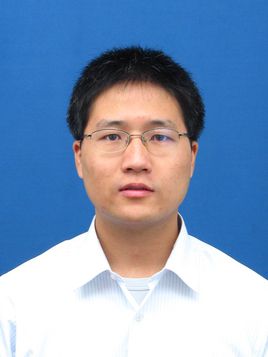 Shijian Li (李石坚)合作论文数College of Computer Science and Technology, Zhejiang University2
 Songhua Xu (徐颂华)合作论文数School of Mathematics and Statistics, Xi'an Jiaotong University2
 Weidong Geng (耿卫东)合作论文数College of Computer Science and Technology, Zhejiang University2Chunliang Hao (郝春亮)合作论文数2Kevin Chiew合作论文数2
 Shuiqiao Chen (陈水桥)合作论文数School of Physics, Zhejiang University2Wei Cai合作论文数1Yunhe PAN (潘云鹤)合作论文数1Ting LI (李挺)合作论文数1weidong geng (耿卫东)合作论文数1Hui Zhao (赵晖)合作论文数1Zhechao Yu合作论文数1
 Surong Yan合作论文数Zhejiang Univ Finance & Econ, Sch Informat Management & Artificial Intelligence, Hangzhou 310018, Peoples R China1Fengping He (贺锋萍)合作论文数1Yongqiang He合作论文数1Hao-miao LIU (刘浩淼)合作论文数1




