Rapidly improving AI capabilities and autonomy hold significant promise of transformation, but are also driving vigorous debate on how to ensure that AI is safe, i.e., trustworthy, reliable, and secure. Building a trusted ecosystem is therefore essential – it helps people embrace AI with confidence and gives maximal space for innovation while avoiding backlash. The "2025 Singapore Conference on AI (SCAI): International Scientific Exchange on AI Safety" aimed to support research in this space by bringing together AI scientists across geographies to identify and synthesise research priorities in AI safety. This resulting report builds on the International AI Safety Report chaired by Yoshua Bengio and backed by 33 governments. By adopting a defence-in-depth model, this report organises AI safety research domains into three types: challenges with creating trustworthy AI systems (Development), challenges with evaluating their risks (Assessment), and challenges with monitoring and intervening after deployment (Control).
Nickel disulfide is used as anode material for sodium-ion batteries, with low cost, abundant reserves, and a wide variety of theoretical specific capacities as high as 870 mAh g-1. However, large volume expansion and low ionic conductivity during Na+ intercalation and deintercalation lead to poor electrochemical perfor-mance. This work has synthesized carbon layer-coated and N-doped NiS2 nanospheres through PVP-assisted hydrothermal and subsequent annealing processes, reducing volume expansion and improving electrical conductivity and Na+ storage activity, increasing ion diffusion kinetics during electrochemical charge -dis-charge in excellent specific capacity and cycle stability. When evaluated as a negative electrode for Sodium -ion batteries (SIBs), it exhibits excellent specific capacity (554.3 mAh g-1 at 0.2 A g-1, first-cycle coulombic efficiency of 92.3 %), and excellent long-cycle stability (436.3 mAh g-1 at 1 A g-1 for 800 cycles), demon-strating the potential of NiS2@NC as an ideal anode material for SIBs.(c) 2022 Elsevier B.V. All rights reserved.
A method for traffic light recognition in a miniature environment is proposed in this paper, which provides theoretical basis and technical support for the study in a general realistic environment. First, a source image is segmented to reduce the amount of calculation. Then colour space is converted and candidate regions of traffic lights are extracted. Afterwards morphological filtering and edge extraction are conducted, then circles detected by Hough transform. Finally, detection results are obtained by taking account of geometric features.
视觉特征空间中的大规模聚类问题是图像识别和检索中亟待解决的问题.当前最好的算法是近似k-means算法,它是Lloyd算法的近似算法,只能依靠采用高准确率的近似搜索近似地保证聚类结果的性能.为此针对近似k-means算法提出改进的基本不增加时间、空间代价新算法,具有更好的算法收敛性和聚类性能.该算法利用了迭代求解过程中更多的信息,更有效地更新子类划分,使得聚类损失单调不增并且快速减小.理论证明,采用任意准确率的近似搜索,该算法都可以在有限轮迭代后收敛到Lloyd算法的收敛解.实验结果表明,分别采用最优参数产生同等性能结果时,所提出的算法比近似k-means算法快10倍.此外,通过比较全局特征聚类实验中的子类的图像,也直观地验证了其聚类效果.
Representation and Retrieval of Video Data in Multimedia Systems brings together in one place important contributions and up-to-date research results in this important area. Representation and Retrieval of Video Data in Multimedia Systems serves as an excellent reference, providing insight into some of the most important research issues in the field.
Hashing-based approximate nearest-neighbor search may well realize scalable content-based image retrieval. The existing semantic-preserving hashing methods leverage the labeled data to learn a fixed set of semantic-aware hash functions. However, a fixed hash function set is unable to well encode all semantic information simultaneously, and ignores the specific user's search intention conveyed by the query. In this article, we propose a query-adaptive hashing method which is able to generate the most appropriate binary codes for different queries. Specifically, a set of semantic-biased discriminant projection matrices are first learnt for each of the semantic concepts, through which a semantic-adaptable hash function set is learnt via a joint sparsity variable selection model. At query time, we further use the sparsity representation procedure to select the most appropriate hash function subset that is informative to the semantic information conveyed by the query. Extensive experiments over three benchmark image datasets well demonstrate the superiority of our proposed query-adaptive hashing method over the state-of-the-art ones in terms of retrieval accuracy.
The 2012 winner of the prestigious Association for Computing Machinery (ACM) Special Interest Group on Multimedia (SIGMM) award for Outstanding Technical Contributions to Multimedia Computing, Communications and Applications is Dr. HongJiang Zhang. He is currently Chief Executive Officer at Kingsoft. He also holds guest professorships at Tsinghua University and Harbin Institute of Technology. The ACM SIGMM Technical Achievement award, given in recognition of outstanding contributions over a researcher's career, cites Dr. Zhang's "pioneering contributions to and leadership in media computing including content-based media analysis and retrieval, and their applications." The SIGMM award will be presented at the ACM International Conference on Multimedia 2012 that will be held Oct 29 -- Nov 2 2012 in Nara, Japan.
This chapter summarizes several important research directions which potentially have big impacts on the development of applicable content-based multimedia search and management systems in the future. The incredible proliferation of multimedia documents leads to a strong and emergent demand on effective and efficient multimedia search and management tools for facilitating users' consumption of the large amount of multimedia data. Multimedia search and management is a broad, multidisciplinary research topic, built on top of computer vision, natural language processing, information retrieval, and machine learning. With the explosion of video and image data available on the Internet, desktops, and mobile devices, multimedia search and management is becoming more and more important. Moreover, mining semantics and other useful information from large-scale multimedia data to facilitate online and local multimedia search, management, and other related applications has also gained more and more attention from both academia and industry.
Effective image parsing needs a representation that is both selective (to inter-class variations) and invariant (to intra-class variations). CodeBook from bag-of-visual-words representation addresses the invariance, and part-based models can potentially address the selectivity. However, existing part-based approaches either require expensive manual object-level labeling or make strong assumptions not applicable to real-world images. In this paper, we propose a PartBook approach that simultaneously overcomes the above two difficulties. Furthermore, we present an effective framework that integrates CodeBook and PartBook, which achieves both intra-class invariance and inter-class selectivity. Specifically, a set of candidate regions are first selected from heat map-like representations obtained by a SVM classifier trained for each category. Then the regions are clustered based on the dense matching-based similarity, and a part detector is learned from each cluster and further refined by utilizing a latent SVM. The learned PartBook summarizes the most representative mid-level patterns of each category, and can be readily used for image parsing tasks to identify not only objects but also different parts of an object. Extensive experimental results on real-world images show that the automatically learned parts are semantically meaningful, and demonstrate the effectiveness of ParkBook in image parsing tasks at different levels.
Recent years have witnessed a great success of social media websites. Tag-based image search is an important approach to access the image content of interest on these websites. However, the existing ranking methods for tag-based image search frequently return results that are irrelevant or lack of diversity. This chapter presents a diverse relevance ranking scheme which simultaneously takes relevance and diversity into account by exploring the content of images and their associated tags. First, it estimates the relevance scores of images with respect to the query term based on both visual information of images and semantic information of associated tags. Then semantic similarities of social images are estimated based on their tags. Based on the relevance scores and the similarities, the ranking list is generated by a greedy ordering algorithm which optimizes Average Diverse Precision (ADP), a novel measure that is extended from the conventional Average Precision (AP). Comprehensive experiments and user studies demonstrate the effectiveness of the approach.
Learning a satisfactory object detector generally requires sufficient training data to cover the most variations of the object. In this paper, we show that the performance of object detector is severely degraded when training examples are limited. We propose an approach to handle this issue by exploring a set of pretrained auxiliary detectors for other categories. By mining the global and local relationships between the target object category and auxiliary objects, a robust detector can be learned with very few training examples. We adopt the deformable part model proposed by Felzenszwalb and simultaneously explore the root and part filters in the auxiliary object detectors under the guidance of the few training examples from the target object category. An iterative solution is introduced for such a process. The extensive experiments on the PASCAL VOC 2007 challenge data set show the encouraging performance of the new detector assembled from those related auxiliary detectors.
Tags have been demonstrated to be effective and efficient for organizing and searching social image content. However, these human-provided keywords are far from a comprehensive description of the image content, which limits their effectiveness in tag-based image search. In this paper, we propose an automatic scheme called tag tagging to supplement semantic image descriptions by associating a group of property tags with each existing tag. For example, an initial tag "tiger" may be further tagged with "white", "stripes", and "bottom-right" along three tag properties: color, texture, and location, respectively. In this way, the descriptive ability of the existing tags can be greatly enhanced. In the proposed scheme, a lazy learning approach is first applied to estimate the corresponding image regions of each initial tag, and then a set of property tags that correspond to six properties, including location, color, texture, size, shape, and dominance, are derived for each initial tag. These tag properties enable much more precise image search especially when certain tag properties are included in the query. The results of the empirical evaluation show that tag properties remarkably boost the performance of social image retrieval.
 Mingjing Li合作论文数Microsoft94
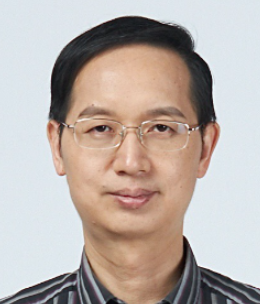 Xiansheng Hua (华先胜)合作论文数School of Mechanical Engineering, Tongji University;Institute of AI for Engineering, Tongji University78
 Wei-Ying Ma (马维英)合作论文数Institute for AI Industry Research, Tsinghua University;Hong Kong Institute of AI for Science, City University of Hong Kong;Department of Computer Science, College of Computing, City University of Hong Kong57
 Lie Lu合作论文数Dolby Laboratories50
 smoliar stephen w c合作论文数36
 Wenyin Liu (刘文印)合作论文数School of Computer Science and Technology, Guangdong University of Technology36
 Shuicheng Yan (颜水成)合作论文数Department of Computer Science, School of Computing, National University of Singapore34
 Stan Z. Li (李子青)合作论文数School of Engineering, Westlake University32
 Lei Zhang (张磊)合作论文数International Digital Economy Academy22
 Meng Wang (汪萌)合作论文数School of Computer Science and Information Engineering, Hefei University of Technology20
 Feng Jing合作论文数Waqu16
 Zheng Chen合作论文数16
 Guo-Jun Qi (齐国君)合作论文数Laboratory for Machine Perception and Learning, School of Engineering, Westlake University;Seattle Research Center, OPPO;Futurewei Technologies, Inc.15
 Xing Xie (谢幸)合作论文数Microsoft Research Asia15
 Dong Liu合作论文数Department of Electrical Engineering, Columbia University in the City of New York15
 Changhu Wang (王长虎)合作论文数ByteDance14
 Changshui Zhang (张长水)合作论文数Department of Automation, Tsinghua University14
 Yong Rui (芮勇)合作论文数Lenovo13
 Xiaofei He (何晓飞)合作论文数State Key Lab of CAD&CG, College of Computer Science and Technology, Zhejiang University13
 Borko Furht合作论文数Center for Advance Knowledge Enablement, Department of Electrical Engineering and Computer Science, College of Engineering & Computer Science, Florida Atlantic University13
 Zhong Su合作论文数13
 Dong Xu合作论文数Department of Computer Science, The University of Hong Kong12
 Ji-Rong Wen (文继荣)合作论文数Gaoling School of Artificial Intelligence, Renmin University of China12
 Kuiyuan Yang合作论文数Xiaomi Technology12
 Qiansheng Cheng合作论文数11
 Jingrui He (何京芮)合作论文数School of Information Sciences, University of Illinois Urbana-Champaign;Computer Science Department, University of Illinois Urbana-Champaign11
 Hanghang Tong (童行行)合作论文数Department of Computer Science, University of Illinois at Urbana-Champaign;Siebel School of Computing and Data Science, The Grainger College of Engineering, University of Illinois at Urbana-Champaign11
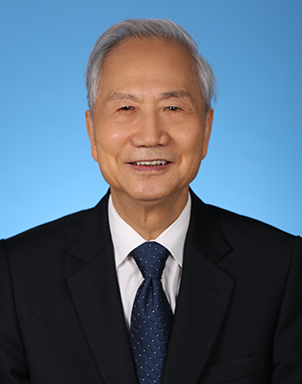 Bo Zhang (张钹)合作论文数Department of Computer Science and Technology, School of Information Science and Technology, Tsinghua University11Chien Yong Low合作论文数11Yuxiao Hu合作论文数11Xiangrong Chen合作论文数10
 Qiang Yang (杨强)合作论文数Department of Data Science and Artificial Intelligence, Faculty of Computer and Mathematical Sciences, Hong Kong Polytechnic University10
 Yanfeng Sun (孙艳丰)合作论文数Faculty of Information Technology, Beijing University of Technology10
 Jinhui Tang (唐金辉)合作论文数College of Information Science and Technology & Artificial Intelligence, Nanjing Forestry University9
 Yufei Ma (马欲飞)合作论文数School of Astronautics, Harbin Institute of Technology8
 Hao Jiang合作论文数Facebook Reality Labs8Tong Lin合作论文数7
 Anil K. Jain (阿尼尔·库马尔·贾恩)合作论文数Department of Computer Science & Engineering, College of Engineering, Michigan State University7
 Shiqiang Yang (杨士强)合作论文数Department of Computer Science and Technology, Tsinghua University7
 Longbin Chen合作论文数Pinterest7
 Chong-Wah Ngo合作论文数School of Computing and Information Systems, Singapore Management University7Wei Qi合作论文数6
 Atreyi Kankanhalli合作论文数Department of Information Systems and Analytics, School of Computing, National University of Singapore6
 Shipeng Li (李世鹏)合作论文数School of Data Science, The Chinese University of Hong Kong, Shenzhen;Shenzhen Institute of Artificial Intelligence and Robotics for Society6
 Shaoping Ma (马少平)合作论文数State Key Laboratory of Intelligent Technology and Systems, Department of Computer Science and Technology, Tsinghua University6Linjun Yang合作论文数Microsoft6
 Tie-Yan Liu (刘铁岩)合作论文数Zhongguancun Academy6
 Yu Chen合作论文数Microsoft Research
6
Yu Chen合作论文数Microsoft Research
6