In this paper we introduce a new class of integrable 3D lattice models, possessing continuous families of commuting layer-to-layer transfer matrices. Algebraically, this commutativity is based on a very special construction of local Boltzmann weights in terms of quantum dilogarithms satisfying the inversion and pentagon identities. We give three examples of such quantum dilogarithms, leading to integrable 3D lattice models. The partition function per site in these models can be exactly calculated in the limit of an infinite lattice by using the functional relations, symmetry and factorization properties of the transfer matrix. The results of such calculations for 3D models associated with the Faddeev modular quantum dilogarithm are briefly presented.
In this paper we discuss an example of classical integrable equation with rather unusual ‘B’-type Kadomtsev–Petviashvili (KP) soliton hierarchy.
In this paper we present a new solution of the star-triangle relation having positive Boltzmann weights. The solution defines an exactly solvable two-dimensional Ising-type (edge interaction) model of statistical mechanics where the local "spin variables" can take arbitrary integer values, i.e., the number of possible spin states at each site of the lattice is infinite. There is also an equivalent "dual" formulation of the model, where the spins take continuous real values on the circle. From algebraic point of view this model is closely related to the to the 6-vertex model. It is connected with the construction of an intertwiner for two infinite-dimensional representations of the quantum affine algebra $U_q(\widehat{sl}(2))$ without the highest and lowest weights. The partition function of the model in the large lattice limit is calculated by the inversion relation method. Amazingly, it coincides with the partition function of the off-critical 8-vertex free-fermion model.
There is a sub-class of the solutions to Quantum Tetrahedron Equation related to the algebraical Pentagon Equation. The Quantum Tetrahedron Equation defines an evolution operator in wholly discrete three dimensional space-time. In this paper we establish the Liouville integrability of one particular quantum evolution model/classical integrable model on cubic lattice. The key feature of the model is that it has two independent quantum/classical spectral curves. In particular, on the classical level its Hamiltonian equations of motion decouple into two independent Hirota equations.
In this paper we discuss some properties of Baxter's TQ equation for the eight-vertex elliptic Sklyanin algebra it its compact representation based on the elliptic Gamma-functions. As the main result, we establish the structure of the spectrum of the corresponding quantum integrable model.
First physics results of the BM@N experiment at the Nuclotron/NICA complex are presented on π+ and K+ meson production in interactions of an argon beam with fixed targets of C, Al, Cu, Sn and Pb at 3.2 A GeV. Transverse momentum distributions, rapidity spectra and multiplicities of π+ and K+ mesons are measured. The results are compared with predictions of theoretical models and with other measurements at lower energies.
We show that the celebrated six-vertex model of statistical mechanics (along with its multistate generalizations) can be reformulated as an Ising-type model with only a two-spin interaction. Such a reformulation unravels remarkable factorization properties for row to row transfer matrices, allowing one to uniformly derive all functional relations for their eigenvalues and present the coordinate Bethe ansatz for the eigenvectors for all higher spin generalizations of the six-vertex model. The possibility of the Ising-type formulation of these models raises questions about the precedence of the traditional quantum group description of the vertex models. Indeed, the role of a primary integrability condition is now played by the star-triangle relation, which is not entirely natural in the standard quantum group setting, but implies the vertex-type Yang-Baxter equation and commutativity of transfer matrices as simple corollaries. As a mathematical identity the emerging star-triangle relation is equivalent to the Pfaff-Saalschütz-Jackson summation formula, originally discovered by J. F. Pfaff in 1797. Plausibly, all vertex models associated with quantized affine Lie algebras and superalgebras can be reformulated as Ising-type models with only two-spin interactions.
The Rogers-Ramanujan identity for |_1ψ_1 ∑_n∈ℤ(a;q)_n/(b;q)_n z^n = (q,b/a,az,q/az;q)_∞/(b,q/a,z,b/az;q)_∞ can be classified as one related to the Bethe Ansatz for “chain length N=1, ground state XXZ model with an arbitrary negative spin”.
A new approach to improve the light-emitting efficiency of Ge(Si) quantum dots (QDs) by the formation of an ordered array of QDs on a pit-patterned silicon-on-insulator (SOI) substrate is presented. This approach makes it possible to use the same pre-patterned substrate both for the growth of spatially ordered QDs and for the formation of photonic crystal (PhC) in which QDs are embedded. The periodic array of deep pits on the SOI substrate simultaneously serves as a template for spatially ordering of QDs and the basis for two-dimensional PhCs. As a result of theoretical and experimental studies, the main regularities of the QD nucleation on the pre-patterned surface with deep pits were revealed. The parameters of the pit-patterned substrate (the period of the location of the pits, the pit shape, and depth) providing a significant increase of the QD luminescence intensity due to the effective interaction of QD emission with the PhC modes are found.
A large classof3-dim ensionalintegrable lattice spin m odels isconstructed. The startingpointisan invertiblecanonicalm appingoperatorR 1;2;3 in thespaceofatriple W eylalgebra.R 1;2;3 isderived postulatingacurrentbranchingprincipletogetherwith a Baxter Z-invariance. The tetrahedron equation for R 1;2;3 follows without further calculation. Ifthe W eylparam eteristaken to be a rootofunity,R 1;2;3 decom poses into a m atrix conjugation operatorR 1;2;3 and a c-num berfunctionalm apping R (f) 1;2;3 . The operator R 1;2;3 satis es a m odi ed tetrahedron equation (M TE) in which the "rapidities"aresolutionsofaclassicalintegrableHirota-typeequations.R 1;2;3 can be represented in term softheBazhanov-BaxterFerm atcurvecyclicfunctions,oralternatively in term sofG aussfunctions.Thepapersum m arizesseveralrecentpublications on the subject.
The photoresponse is investigated in the frequency range of 0.15–15 THz in HgCdTe epitaxial layers with a cadmium concentration from 15.2 to 19.2% grown by molecular-beam epitaxy. It is shown that narrow-gap and gapless HgCdTe solid solutions can be used as detectors of both terahertz and sub-terahertz radiation with a characteristic response time of 2–4 ns and with a sensitivity approaching n-InSb-based detectors widely used in this range.
Photoluminescence (PL) properties of arrays of spatially ordered single Ge(Si) self-assembled islands, including embedded in two-dimensional photonic crystals (PhC), was studied. Incorporation of an array of ordered single islands and their groups into PhC significantly increases the intensity of their PL signal. The most pronounced increase in intensity (up to 30 times at nitrogen temperatures) is observed for an ordered array of single islands. The increase in PL intensity is associated with interaction of island emission with the radiation modes of the PhC, which is more efficient for an array of spatially ordered single islands. As result PL from single ordered Ge(Si) islands embedded in PhC was observed up to room temperature.
The results of studies of the luminescence properties of two-dimensional photonic crystals formed on the basis of silicon structures with self-assembled Ge(Si) nanoislands are reported. The possibilities of substantially enhancing the luminescence response of the active medium (Ge(Si) nanoislands) in the wavelength range 1.2–1.6 μm are shown for such structures. The specific features of the luminescence response of a photonic crystal in the vicinity of the Γ point of its Brillouin zone are studied. It is shown that, along with the broadband response characteristic of the radiative modes of photonic crystals, high-Q resonances, for which the Q factor exceeds 103, can also be observed in such structures. The last-mentioned resonances are observed in a certain range of lattice parameters of photonic crystals.
The results of studies of the spectral and kinetic characteristics of the photoluminescence of photonic crystals formed on the basis of structures with self-assembled Ge(Si) nanoislands are reported. The experimentally observed enhancement of the photoluminescence-signal intensity of the nanoislands in the spectral range 1.1–1.6 μm due to interaction with the radiative modes of photonic crystals in the vicinity of the Γ point of the Brillouin zone and the effect of such interaction on the probability of radiative recombination in Ge(Si) nanoislands are considered.
We address the spectral problem of the formally normal quantum mechanical operator associated with the quantised mirror curve of the toric (almost) del Pezzo Calabi-Yau threefold called local P 2 in the case of complex values of Planck's constant. We show that the problem can be approached in terms of the Bethe ansatz-type highly transcendental equations.
The luminescence properties of arrays of spatially ordered self-assembled solitary Ge(Si) nanoislands and their groups, including those embedded in two-dimensional photonic crystals, are studied. It is shown that the incorporation of an array of ordered solitary Ge(Si) islands and their groups into photonic crystals results in an increase in the intensity of their photoluminescence signal at liquid-nitrogen temperature. The maximum increase in the intensity (by a factor of up to ~30) is observed for an ordered array of solitary Ge(Si) islands. The increase in the intensity is attributed to the interaction of emission from islands with photonic-crystal radiative modes. This interaction is more efficient in the case of an array of solitary islands. Due to such interaction the luminescence signal from ordered solitary Ge(Si) islands incorporated into photonic crystals is observed at up to room temperature.
Abstract The photoresponse is investigated in the frequency range of 0.15–15 THz in HgCdTe epitaxial layers with a cadmium concentration from 15.2 to 19.2% grown by molecular-beam epitaxy. It is shown that narrow-gap and gapless HgCdTe solid solutions can be used as detectors of both terahertz and sub-terahertz radiation with a characteristic response time of 2–4 ns and with a sensitivity approaching n -InSb-based detectors widely used in this range.
Investigations of the photoluminescence (PL) response of 2D photonic crystal slabs with embedded Ge(Si) quantum dots are reported. It was shown that it is possible to obtain the large enhancement of the PL intensity from the active medium (Ge(Si) quantum dots) in the wavelength range of 1.2-1.6 mkm. Features of the PL response associated with the interaction with photonic crystal modes located near the Γ point of the Brillouin zone are studied. It was shown that both relatively wide lines associated with the leaky modes of the photonic crystal and rather narrow resonances with the Q factor exceeding 103 could be observed. The latter sharp resonances could be detected in the specific range of the photonic crystal lattice parameters.
Представлены результаты исследования спектрально-кинетических характеристик фотолюминесценции двумерных фотонных кристаллов, полученных на основе структур c самоформирующимися наноостровками Ge(Si). Рассматривается наблюдаемое в таких структурах увеличение интенсивности сигнала фотолюминесценции наноостровков в спектральном диапазоне 1.1-1.6 мкм в результате взаимодействия с излучательными модами фотонных кристаллов вблизи точки зоны Бриллюэна и влияние такого взаимодействия на вероятность излучательной рекомбинации в наноостровках Ge(Si). Ключевые слова: наноостровки Ge(Si), фотонные кристаллы, фотолюминесценция, кинетика фотолюминесценции, эффект Парселла.
В работе исследованы люминесцентные свойства фотонных кристаллов (ФК) и фотоннокристаллических резонаторов, сформированных на кремниевых структурах с самоформирующимисянаноостровками Ge(Si). Интерес к таким структурам с вызван с одной стороны - их излучательнойспособностью в диапазоне длин волн 1.2 – 1.6 мкм, с другой – совместимостью со стандартнымиКМОП технологиями, что делает их перспективными для схем кремниевой оптоэлектроники. Вданной работе рассмотрены возможности управления излучательными свойствами таких структур вфотонных кристаллах и ФК резонаторах за счет эффектов взаимодействия активной среды срезонансными и радиационными модами фотонного кристалла.Фотонные кристаллы и ФК резонаторы с линейной (L3) геометрией дефекта формировались намногослойной структуре, содержащей 5 слоев наноостровков Ge(Si), выращенных на подложках SOI.Выращенная многослойная структура представляла собой планарный одномодовый волноводтолщиной 250 нм. Методами электронно-лучевой литографии и плазмохимического травления вструктуре формировались фотонные кристаллы с периодом решетки (a), варьируемым в интервале от350 до 800 нм. Радиус отверстий ФК (r) определялся соотношением r/a = 0.2 0.4. Резонаторыформировались пропуском 3-х ближайших отверстий фотонного кристалла.Результаты исследований, полученные методом микро-ФЛ с высоким пространственным (до 2мкм) и спектральным (> 0.05 см-1) разрешением, показывают наличие в таких структурахзначительного (более чем на порядок величины) усиления сигнала ФЛ наноостровков Ge(Si) прикомнатной температуре. В зависимости от параметров ФК в структурах наблюдаются как явленияусиления на резонансных модах ФК резонатора, так и на радиационных модах ФК. Усиление сигналаФЛ на оптически активных модах фотонно-кристаллического резонатора наблюдается в резонаторахс периодом решетки ФК, не превышающим 500 нм, и имеет место при условии прецизионнойфокусировки лазерного луча в области резонатора. В ФК и ФК резонаторах с периодом решеткиболее 500 нм наблюдаемое усиление сигнала ФЛ не зависит от области возбуждения и обусловленоявлениями взаимодействия оптически активной среды с радиационными модами ФК. В условияхусиления на радиационных модах наблюдается как значительное увеличение сигнала ФЛ вмаксимуме интенсивности, так и значительный (вплоть до порядка величины) рост интегральнойинтенсивности сигнала ФЛ.Полученные экспериментальные результаты хорошо описываются в рамках теоретическихмоделей, позволяющих проанализировать зонную структуру исследованных ФК и особенностимодового состава ФК резонаторов. Моделирование проводилось методом матрицы рассеяния иметодом конечных элементов (FEM) с использованием программного пакета COMSOL Multiphysics
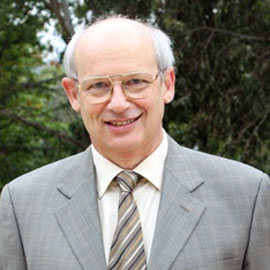 Vladimir Bazhanov合作论文数Department of Fundamental & Theoretical Physics, Research School of Physics, College of Science, Australian National University14
 Vladimir V. Mangazeev合作论文数Department of Theoretical Physics;School of Physical Sciences and Engineering, Research;Australian National University;Research School of Physical Sciences and Engineering, Australian National University13Stanislav Pakuliak合作论文数11
 M. V. Stepikhova合作论文数Russian Academy of Sciences Institute for Physics of Microstructures Nizhni Novgorod9
 A. V. Novikov合作论文数8A Steinmetz合作论文数7I. Savin合作论文数7B. Mayes合作论文数7J. Oberski合作论文数7Jukka Kyynäräinen合作论文数7a rijllart合作论文数7Hj Kessler合作论文数7C. Dulya合作论文数7A. Karev合作论文数7a witzmann合作论文数7A. Kishi合作论文数7N. Horikawa合作论文数7T. Pussieux合作论文数7
 Anna Maria Zanetti合作论文数7Kabuss E-M合作论文数7Jc Faivre合作论文数7Shourichi Yishimoto (石本正一)合作论文数日本千叶县米可多化工株式会社7D. V. Peshekhonov合作论文数Veksler and Baldin Laboratory of High Energy Physics, Joint Institute for Nuclear Research7M. Velasco合作论文数7
 Andrzej Sandacz合作论文数7p bjorkholm合作论文数7J. Lichtenstadt合作论文数7Yu. Kisselev合作论文数7
 Wojciech Wislicki合作论文数National Centre for Nuclear Research7D. Miller合作论文数7N. Hayashi合作论文数7
 Ulrich Landgraf合作论文数Institute of Physics, University of Freiburg7
 Matthias Grosse Perdekamp合作论文数Department of Physics, The Grainger College of Engineering, University of Illinois at Urbana-Champaign7A. Staude合作论文数7M. Lamanna合作论文数7
 Shivanshu Dhawan合作论文数7T. Iwata合作论文数7F. Feinstein合作论文数7J. Nassalski合作论文数7
 Jack Cranshaw合作论文数7Alain Magnon合作论文数7R. Birsa合作论文数7Barbara Badelek合作论文数7
 Stephane Platchkov合作论文数7D. Pose合作论文数7P. Schiavon合作论文数7Etienne Burtin合作论文数Département de Physique des Particules, CEA;Fundamental Research Division, Institute of research into the fundamental laws of the Universe, CEA7to Niinikoski合作论文数7
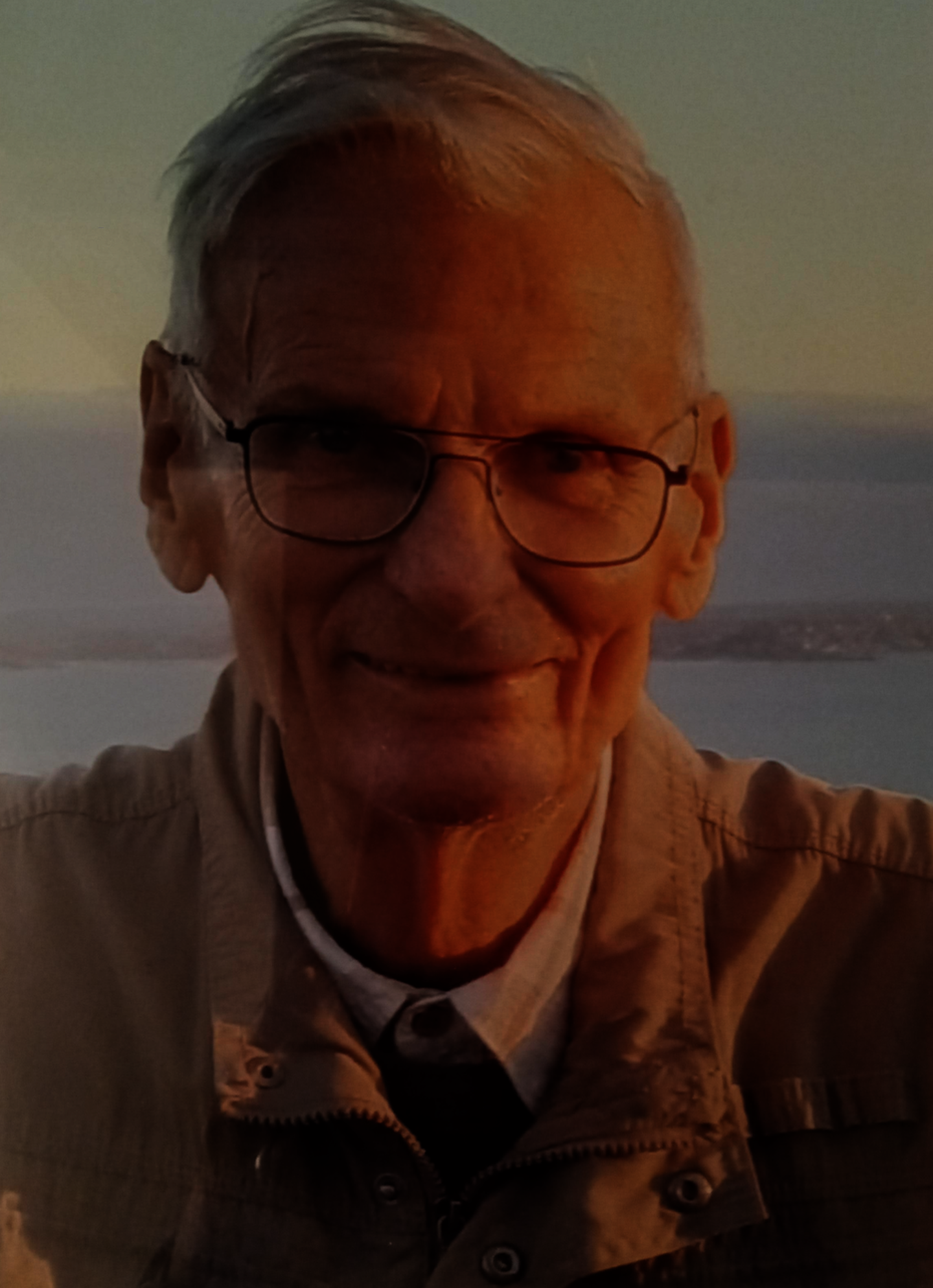 Roland Windmolders合作论文数CERN7




