A new approach was proposed for the synthesis of 5-chloro-, 5-bromo-, and 5-iodo-6-aminouracils in high yields by halogenation of 6-aminouracil with the corresponding N-halosuccinimides. For the first time, the constants and thermodynamic characteristics of the acid-base equilibrium of 6-aminouracil and its 5-halogen-substituted derivatives were determined by potentiometric titration in aqueous solutions. The effect of the nature of halogen atoms on the acid-base properties of 6-aminouracil was shown. For the first time, the solubility values in aqueous buffer systems with pH 2.0 and 7.4 at 25 and 37°C, as well as the lipophilicity values of 5-halogen-substituted 6-aminouracils, were determined by high-performance liquid chromatography.
The first-stage acid-base equilibrium of 5,5,6-trihydroxy-6-methyldihydropyrimidine-2,4(1H,3H)-dione was studied for the first time in aqueous solutions. Its constant (pKa1 = 9.23 +/- 0.03) and thermodynamic parameters (Delta G 298 = 52 +/- 1 kJmol-1, Delta H = 83 +/- 1 kJmol-1, and Delta S 298 = 103 +/- 4 Jmol-1K-1) were determined by potentiometric titration. Computational analysis, including molecular dynamics (MD) simulations and quantum chemical calculations, was conducted to evaluate solvation effects and proton dissociation sites. MD simulations identified distinct solvation shells and interactions with water molecules, while quantum chemical calculations highlighted the primary deprotonation site. Fuzzy bond order (FBO) analysis and energy calculations of anionic forms corroborated these findings, demonstrating a strong correlation between the Delta E and FBO values. The research established the dissociation sequence for conformational R - and S -isomers of the title compound and validated the FBO method as an efficient tool for assessing dissociation processes in polybasic acids.
Salicylic acid (SA) is a phytohormone and phenolic antioxidant that plays a role in various physiological and protective responses to biotic and abiotic stresses, including salinity. In this study, we analyzed the influence of 50 μM SA on wheat plants (Triticum aestivum L.) under 100 mM NaCl in a controlled growing experiment. Seed priming resulted in an increased activation of phenylalanine ammonia-lyase (PAL), tyrosine ammonia-lyase (TAL), and guaiacol peroxidase (GPX), as well as the accumulation of endogenous SA and lignin. It is likely that the accumulation of SA is responsible for the growth-stimulating effect of the phytohormone. SA priming led to the accumulation of reduced (GSH) and oxidized glutathione (GSSG) in a balanced manner, without altering the GSH/GSSG ratio, as well as the accumulation of ascorbic acid (ASA), hydrogen peroxide (H2O2), and the activation of glutathione reductase (GR) and ascorbate peroxidase (APX). In addition, these plants also exhibit a slight accumulation of carotenoids (Car) and proline. Under SA treatment, there is a decrease in stress-induced SA accumulation, along with additional lignin accumulation compared to the stress levels. This is accompanied by a decrease in stress-induced activation of PAL, TAL, and GPX. Strengthening the barrier properties of cell walls reduced the damaging effects of salinity on plants. This is evidenced by indicators such as the GSH/GSSG ratio, ASA and H2O2 content, Car levels, and the activation of APX and GR enzymes. Additionally, the state of membrane structures (MDA content and electrolyte leakage) and growth indicators also support this finding. The obtained data conclusively point to the realization that physiological and protective effects of SA are attributed to its ability to regulate its endogenous content, modify cell wall state, and reduce the damaging effects of stress on the state of the ascorbate-glutathione complex in wheat plants.
Nitric oxide (NO) is a multifunctional, gaseous signaling molecule implicated in both physiological and protective responses to biotic and abiotic stresses, including salinity. In this work, we studied the effects of 200 µM exogenous sodium nitroprusside (SNP, a donor of NO) on the components of the phenylpropanoid pathway, such as lignin and salicylic acid (SA), and its relationship with wheat seedling growth under normal and salinity (2% NaCl) conditions. It was established that exogenous SNP contributed to the accumulation of endogenous SA and increased the level of transcription of the pathogenesis-related protein 1 (PR1) gene. It was found that endogenous SA played an important role in the growth-stimulating effect of SNP, as evidenced by the growth parameters. In addition, under the influence of SNP, the activation of phenylalanine ammonia lyase (PAL), tyrosine ammonia lyase (TAL), and peroxidase (POD), an increase in the level of transcription of the TaPAL and TaPRX genes, and the acceleration of lignin accumulation in the cell walls of roots were revealed. Such an increase in the barrier properties of the cell walls during the period of preadaptation played an important role in protection against salinity stress. Salinity led to significant SA accumulation and lignin deposition in the roots, strong activation of TAL, PAL, and POD, and suppression of seedling growth. Pretreatment with SNP under salinity conditions resulted in additional lignification of the root cell walls, decreased stress-induced endogenous SA generation, and lower PAL, TAL, and POD activities in comparison to untreated stressed plants. Thus, the obtained data suggested that during pretreatment with SNP, phenylpropanoid metabolism was activated (i.e., lignin and SA), which contributed to reducing the negative effects of salinity stress, as evidenced by the improved plant growth parameters.
The thermodynamic stability of the axial ( а ) and equatorial ( е ) forms of the S - and R -enantiomers of 5,5,6-trihydroxy-6-methyldihydropyrimidine-2,4(1Н,3Н)-dione was studied by quantum-chemical methods. The equilibrium geometrical parameters and thermodynamic characteristics were determined by the DFT method using the TPSS functional combined with the 6-311+G( d , p ) split-valence basis set including the d and p type polarization functions. The Chemcraft and VMD programs were used to visualize the geometrical structure. The most stable forms of 5,5,6-trihydroxy-6-methyldihydropyrimidine-2,4(1 Н ,3 Н )-dione are S e and R e in both the gas phase and aqueous and organic (DMSO) media. The activation barrier of the rearrangement inside the ring is 21.22–24.93 kJ/mol depending on the medium.
The nature of the influence of the silicon atom on remote nitrogen and oxygen atoms in the molecules of 4-(dimethylamino)-1,1-diethylsilacyclopentan-3-ol and 2-(dimethylamino)-5-trimethylsilylcyclohexan-1-ol has been studied in the framework of the MO LCAO theory by the TPSS/cc-pVTZ, Hirshfeld and NBO analysis methods. Being more pronounced in the 4-(dimethylamino)-1,1-diethylsilacyclopentan-3-ol molecule, this effect is determined by the geometric parameters (endocyclic arrangement of the silicon atom) which favor the formation of MOs with a large Si contribution. According to the NBO analysis, the interaction between the orbitals of the Si–C5 bonds and the orbitals of the C3–N and C1–O bonds in the silacyclopentane fragment of the 4-(dimethylamino)-1,1-diethylsilacyclopentan-3-ol molecule has donor-acceptor nature. The calculated data are in qualitative agreement with the results of 1H and 29Si NMR spectroscopy.
Квантово-химическими методами изучена термодинамическая устойчивость для аксиальной ( а ) и экваториальной ( е ) формы S - и R -энантиомеров 5,5,6-тригидрокси-6-метилдигидропиримидин-2,4(1Н,3Н)-диона. Поиск равновесных геометрических параметров и вычисление термодинамических характеристик проводились методом DFT с использованием функционала TPSS в сочетании с валентно-расщепленным базисным набором с включением поляризационных функций d - и p -типа – 6-311+G( d,p ). Для визуализации геометрического строения использовались программы Chemcraft и VMD. Установлено, что наиболее стабильной формой 5,5,6-тригидрокси-6-метилдигидропиримидин-2,4(1Н,3Н)-диона как в газовой фазе, так и в водной и органической (ДМСО) средах, являются S e и R e . Активационный барьер перегруппировки внутри цикла составляет 21.22–24.93 кДж/моль в зависимости от среды.
Isodontia nigella (F. Smith, 1856) is native to the Eastern Palaearctic, Oriental region, and Australia. A sheaf of reed canes installed as a trap nest in the Crimea was occupied with 73 nests of this species in 2021. The nests contained one to eight cells separated by partitions made of packed fragments of grass stalks and blades; the closing plug was made of the same materials. In some cases, there was no visible partition between two subsequent cells. The prey consisted of three orthopteran species with the predomination of the tree cricket Oecanthus pellucens (Scopoli, 1763) amounted to 95.1% of the identified specimens; three to 15 victims were stored per cell. Sex ratio was strongly male-biased, about 1♀:4♂. The species had two generations per year. Prepupae of the second generation overwintered and imagines emerged in 2022: males on 12–19 June, females on 17 June–5 July. Melittobia acasta (Walker, 1839) and an unidentified bombyliid fly were recorded as parasitoids that damaged only three cells. The reproductive success of the wasp was 65.2%; most deaths of the progeny were for unknown causes. This is the first record of I. nigella in Europe, outside its native range. Isodontia nigella is the second invasive species of the genus in Europe after I. mexicana (de Saussure, 1867) and the fifth invasive species of the family Sphecidae in the Crimea.
The spectral fluorescence characteristics of 5-aminouracil (5AU) and 6-aminouracil (6AU) in neutral and alkaline aqueous solutions have been studied. With the use of the density functional theory, it has been shown that uracils preferentially dissociate at the N1–H bond. The acid–base equilibrium constants p K a1 (5AU) = 9.4 and p K a1 (6AU) = 8.95 were determined by a fluorescence method. It was concluded that the ultrashort lifetime of the excited singlets of 5AU and 6AU prevents the measurement of the acid–base equilibrium constant of uracils in an electronically excited state.
The structure of 5,5,6-trihydroxy-6-methyldihydropyrimidine-2,4(1Н,3Н)-dione in dimethyl sulfoxide was proved by 13С, 1Н, and 15N NMR spectroscopy. It was shown that this compound has a structure similar to 5,5,6-trihydroxy-6-methyldihydropyrimidine-2,4(1Н,3Н)-dione.
Nesting of a Katamenes sichelii (de Saussure, 1852) female was observed with timekeeping of its activity. The nest was located on a rock outcrop. The cell walls were built by the wasp from small pebbles that were glued to each other and to the substrate with earthen mastic made by moistening dry clay with regurgitated liquid. The vault and neck of the cell were made of pure mastic without pebbles. After oviposition the female hunted for caterpillars of one species of the family Erebidae. Three such larvae were found in the cell. The wasp sealed the cell neck with a portion of earthen mastic, covered it with a pebble, and then tiled the sealed cell with additional pebbles. The wasp apparently died during the provisioning of the second cell of its nest. Adult feeding was recorded on flowers of two plant species; moreover, the female apparently fed on the captured caterpillars as well. The nesting biology of K. sichelii is discussed in comparison with other species of the genus.
The structure of 5,5,6-trihydroxy-6-methyldihydropyrimidine-2,4(1H,3H)-dione (2) was proven using 13C, 1H, and 15N NMR spectroscopy. A new form (2a) was detected and shown to have a structure similar to dione 2.
A study is performed of the possibility of using gas–liquid chromatography (GLC) to determine the composition of solutions of lithium salts in aprotic dipolar solvents and solvate ionic liquids. The objects of study are solutions of lithium perchlorate and lithium trifluoromethanesulfonate in sulfolane and solvate complexes of lithium perchlorate with sulfolane obtained in two ways: direct interaction of the initial components in a given molar ratio and interaction of the components in a common solvent with its subsequent removal via evaporation. It is shown that GLC is a convenient way of determining the content of a solvating solvent in the composition of solutions and solvate ionic liquids. The presence of lithium salt in the analyzed solutions does not affect the period of retention; instead, it raises the degree of asymmetry of the chromatographic peak of the solvent and manifestation of the tailing effect. It is found that the presence of salt in the considered system also does not reduce the accuracy of determining the solvent content. The error in determining the content of solvent in solutions of lithium salts and solvate complexes by GLC is no greater than 1%.
Spectrophotometric and fluorescent (FL) methods have been used to study solutions of N -methyl derivatives of 5-fluorouracil (FU): 1-methyl-5-fluorouracil (1M-FU), 3-methyl-5-fluorouracil (3M-FU), and 1,3-dimethyl-5-fluorouracil (1,3DM-FU) in neutral (pH 6.8) and alkaline (pH 11) aqueous media. Fluorescence parameters, such as FL spectrum and quantum yield (φ), of 1M-FU, 3M-FU, 1,3DM-FU, and their anionic forms were recorded for the first time. Bathofluoric shifts in the FL maxima and an increase in the FL quantum yields of these compounds compared to unsubstituted FU at pH 6.8 and pH 11 have been observed. Interpretation of the revealed features is presented.
The constants of acid-base equilibrium of 6-methyluracil-5-carbonitrile in water were determined spectrophotometrically. For the first time, 1,6-dimethyluracil-5-carbonitrile and 3,6-dimethyluracil-5-carbonitrile were obtained, their structures were proved by 1H, 13C, and 15N NMR spectroscopy. Based on the pKa values obtained for all three compounds, the sequence of dissociation in the 6-methyluracil-5-carbonitrile molecule in alkaline aqueous solutions was determined.
Endophytic Bacillus subtilis is a non-pathogenic beneficial bacterium which promotes plant growth and tolerance to abiotic stresses, including drought. However, the underlying physiological mechanisms are not well understood. In this study, the potential role that endogenous salicylic acid (SA) plays in regulating endophytic B. subtilis-mediated drought tolerance in wheat (Triticum aestivum L.) was examined. The study was conducted on genotypes with contrasting levels of intrinsic drought tolerance (drought-tolerant (DT) cv. Ekada70; drought-susceptible (DS) cv. Salavat Yulaev). It was revealed that B. subtilis 10-4 promoted endogenous SA accumulation and increased the relative level of transcripts of the PR-1 gene, a marker of the SA-dependent defense pathway, but two wheat cultivars responded differently, with the highest levels exhibited in DT wheat seedlings. These had a positive correlation with the ability of strain 10-4 to effectively protect DT wheat seedlings against drought injury by decreasing osmotic and oxidative damages (i.e., proline, water holding capacity (WHC), and malondialdehyde (MDA)). However, the use of the SA biosynthesis inhibitor 1-aminobenzotriazole prevented endogenous SA accumulation under normal conditions and the maintenance of its increased level under stress as well as abolished the effects of B. subtilis treatment. Particularly, the suppression of strain 10-4-induced effects on proline and WHC, which are both contributing factors to dehydration tolerance, was found. Moreover, the prevention of strain 10-4-induced wheat tolerance to the adverse impacts of drought, as judged by the degree of membrane lipid peroxidation (MDA) and plant growth (length, biomass), was revealed. Thus, these data provide an argument in favor of a key role of endogenous SA as a hormone intermediate in triggering the defense responses by B. subtilis 10-4, which also afford the foundation for the development of the bacterial-induced tolerance of these two different wheat genotypes under dehydration.
5-Hydroxy-6-methyluracil was found to be oxidized by molecular oxygen in an alkaline aqueous solution. The effect of temperature, concentration of alkali and oxygen on the reaction rate was revealed by UV spectroscopy and differential manometry. The reaction stoichiometry with respect to oxygen approaches 1 with an increase in the alkali concentration. Using methylated model compounds, it was shown that the consumption of 5-hydroxy-6-methyluracil in an aqueous alkaline medium is associated with the formation of the anionic form at the hydroxyl group.
The constants and thermodynamic characteristics of the acid-base equilibrium between the first synthesized 6-methyluracil derivative with a 1,2,3-triazole ring at the C(5) atom of the uracil ring-5-(1-pentyl-4-methyl-1,2,3-triazol-4-yl)-6-methyluracil (1)-and its model compound 5,6-dimethyluracil were determined by potentiometric titration in aqueous solutions. It was shown that the 1,2,3-triazole ring does not significantly affect the acid-base properties of the uracil fragment in compound 1. The deprotonation sites of compound 1 in aqueous alkaline and DMSO solutions were suggested. The structure of compound 1 was proved by NMR and IR spectroscopy and elemental analysis.
The pharmacokinetic properties of a finished dosage form (FDF) of a combination of lappaconitine, glycyrrhizic acid, and methyluracil (LGM) possessing antiarrhythmic activity were studied. The FDF of LGM upon a single intragastric administration in various doses [1680, 3360, and 6720 mg/kg in terms of lappaconitine (LC)] was rapidly absorbed from the gastrointestinal tract with the maximum blood-plasma concentration of LC being reached 15 min after drug intake. LC had a short elimination half-life and retention time in the body. The drug was extensively distributed throughout organs and tissues and exhibited tropism for the kidneys, liver, and myocardium. LC was metabolized to form N-deacetyllappaconitine (N-DLC). Its metabolite was detected in urine for at least 72 h, which indicated predominant excretion of the drug through the kidneys. The pharmacokinetic profile of N-DLC was similar to that of LC.
 Alexander Lobov合作论文数Laboratory of Physicochemical Methods of Analysis, Ufa Institute of Chemistry, Russian Academy of Sciences20
 T. R. Nugumanov合作论文数19
 Alexander V. Fateryga合作论文数18
 Yu. I. Murinov合作论文数15С. Ф. Петрова合作论文数15Edward M Khamitov合作论文数15
 Sergey Khursan合作论文数15I. G. Konkina合作论文数14
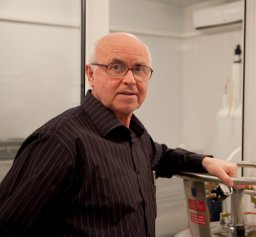 L. V. Spirikhin合作论文数Institute of Organic Chemistry, the Russian Academy of Sciences10к ю муринов合作论文数8
 Evgeniy V. Rumyantsev合作论文数Ivanovo State University of Chemical Technology Ivanovo8
 A. A. Akhiyarov合作论文数7
 G. S. Abdrakhimova合作论文数6
 Vladimir Gus'kov合作论文数6
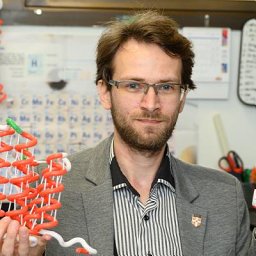 Alexey V. Solomonov合作论文数Department of Inorganic Chemistry, Ivanovo State University of Chemistry and Technology (ISUCT),6T. I. Lukmanov合作论文数5A. G. Mustafin合作论文数5Rk Gaifutdinova合作论文数4
 Oksana V Lastochkina合作论文数4Alexander S Timin合作论文数4Sergey S. Ostakhov合作论文数4Ionova Irina a合作论文数4F. Kh. Kudasheva合作论文数4F. A. Zarudii合作论文数3L. M. Karachurina合作论文数3E. V. Vasil'eva合作论文数3Yu. Yu. Gainullina合作论文数3Dilara Maslennikova合作论文数3semen n sergeev合作论文数3R. R. Kayumova合作论文数3
 Boris Alexander Kochergin合作论文数3A. A. Fatykhov合作论文数3R. R. Muslukhov合作论文数Ufa Scientific Center Russian Federation, Russian Academy of Sciences Institute of Organic Chemistry3V. A. Davydova合作论文数3
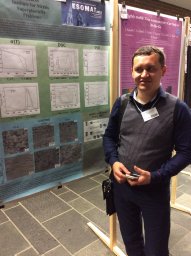 Ирек Ильфирович Мусабиров合作论文数Institute of Problems of Metal Superplasticity, Russian Academy of Sciences3E. M. Tsyrlina合作论文数Ufa, Russian Academy of Sciences Institute of Organic Chemistry3I. E. Alekhina合作论文数2R. R. Vil’danova合作论文数2M. G. Il’ina合作论文数2Marat S. Yunusov合作论文数2Yulya N. Biglova合作论文数2L. M. Gubaidullina合作论文数2О. А. Князева合作论文数2
 I. I. Buchinskaya合作论文数2Darya Garshina合作论文数2Svetlana Petrova合作论文数2
 Natalia Sigaeva合作论文数2G. Yu. Ishmuratov合作论文数2V. Yu. Zhidkov合作论文数2




