We consider the task of training a neural network to anticipate human actions in video. This task is challenging given the complexity of video data, the stochastic nature of the future, and the limited amount of annotated training data. In this paper, we propose a novel knowledge distillation framework that uses an action recognition network to supervise the training of an action anticipation network, guiding the latter to attend to the relevant information needed for correctly anticipating the future actions. This framework is possible thanks to a novel loss function to account for positional shifts of semantic concepts in a dynamic video. The knowledge distillation framework is a form of self-supervised learning, and it takes advantage of unlabeled data. Experimental results on JHMDB and EPIC-KITCHENS dataset show the effectiveness of our approach.
We present Hand-CNN, a novel convolutional network architecture for detecting hand masks and predicting hand orientations in unconstrained images. Hand-CNN extends MaskRCNN with a novel attention mechanism to incorporate contextual cues in the detection process. This attention mechanism can be implemented as an efficient network module that captures non-local dependencies between features. This network module can be inserted at different stages of an object detection network, and the entire detector can be trained end-to-end. We also introduce a large-scale annotated hand dataset containing hands in unconstrained images for training and evaluation. We show that Hand-CNN outperforms existing methods on several datasets, including our hand detection benchmark and the publicly available PASCAL VOC human layout challenge. We also conduct ablation studies on hand detection to show the effectiveness of the proposed contextual attention module.
Research has shown that students' responses to conceptual questions correlate with their eye movements. However, to what extent is it possible to predict whether a particular learner might answer a question correctly by monitoring their eye movements in real time? To answer this question, we used spatial-temporal eye-movement data from about 400 participants, as well as their responses to four conceptual physics questions with diagrams. Half of these data were used as a training set for a machine learning algorithm (MLA) that would predict the correctness of students' responses to these questions. The other half of the data were used as a test set to determine the performance of the MLA in terms of the accuracy of the prediction. We will discuss the results of our study with specific attention to the prediction accuracy of the MLA under different conditions.
In this paper, we propose UnOS, an unified system for unsupervised optical flow and stereo depth estimation using convolutional neural network (CNN) by taking advantages of their inherent geometrical consistency based on the rigid-scene assumption. UnOS significantly outperforms other state-of-the-art (SOTA) unsupervised approaches that treated the two tasks independently. Specifically, given two consecutive stereo image pairs from a video, UnOS estimates per-pixel stereo depth images, camera ego-motion and optical flow with three parallel CNNs. Based on these quantities, UnOS computes rigid optical flow and compares it against the optical flow estimated from the FlowNet, yielding pixels satisfying the rigid-scene assumption. Then, we encourage geometrical consistency between the two estimated flows within rigid regions, from which we derive a rigid-aware direct visual odometry (RDVO) module. We also propose rigid and occlusion-aware flow-consistency losses for the learning of UnOS. We evaluated our results on the popular KITTI dataset over 4 related tasks, \ie stereo depth, optical flow, visual odometry and motion segmentation.
We propose a method for human action recognition, one that can localize the spatiotemporal regions that `define' the actions. This is a challenging task due to the subtlety of human actions in video and the co-occurrence of contextual elements. To address this challenge, we utilize conjugate samples of human actions, which are video clips that are contextually similar to human action samples but do not contain the action. We introduce a novel attentional mechanism that can spatially and temporally separate human actions from the co-occurring contextual factors. The separation of the action and context factors is weakly supervised, eliminating the need for laboriously detailed annotation of these two factors in training samples. Our method can be used to build human action classifiers with higher accuracy and better interpretability. Experiments on several human action recognition datasets demonstrate the quantitative and qualitative benefits of our approach.
The whole system was implemented using Tensorflow [1]. When minimizing Eq. 5 in the RDVO module, we used the 3D representation described as in the last line of Eq. 6. When calculating the rigid-aware flow consistency loss term in Eq. 9, the 2D representation in the first line of Eq. 6 was adopted. In the first stage of training, the smoothness loss of optical flow was applied across the entire image, i.e. Lfs = Ls(Ft→s, 1, 2). In the third stage of training, the smoothness loss of optical flow was only applied on the moving region, i.e. Lfs = Ls(Ft→s, 1−Mt, 2)
The ability to recognize human actions in video has many potential applications. Human action recognition, however, is tremendously challenging for computers due to the complexity of video data and the subtlety of human actions. Most current recognition systems flounder on the inability to separate human actions from co-occurring factors that usually dominate subtle human actions. In this paper, we propose a novel approach for training a human action recognizer, one that can: (1) explicitly factorize human actions from the co-occurring factors; (2) deliberately build a model for human actions and a separate model for all correlated contextual elements; and (3) effectively combine the models for human action recognition. Our approach exploits the benefits of conjugate samples of human actions, which are video clips that are contextually similar to human action samples, but do not contain the action. Experiments on ActionThread, PASCAL VOC, UCF101, and Hollywood2 datasets demonstrate the ability to separate action from context of the proposed approach.
It has been recently shown that a convolutional neural network can learn optical flow estimation with unsupervised learning. However, the performance of the unsupervised methods still has a relatively large gap compared to its supervised counterpart. Occlusion and large motion are some of the major factors that limit the current unsupervised learning of optical flow methods. In this work we introduce a new method which models occlusion explicitly and a new warping way that facilitates the learning of large motion. Our method shows promising results on Flying Chairs, MPI-Sintel and KITTI benchmark datasets. Especially on KITTI dataset where abundant unlabeled samples exist, our unsupervised method outperforms its counterpart trained with supervised learning.
Learning to estimate 3D geometry in a single image by watching unlabeled videos via deep convolutional network is attracting significant attention. In this paper, we introduce a "3D as-smooth-as-possible (3D-ASAP)" prior inside the pipeline, which enables joint estimation of edges and 3D scene, yielding results with significant improvement in accuracy for fine detailed structures. Specifically, we define the 3D-ASAP prior by requiring that any two points recovered in 3D from an image should lie on an existing planar surface if no other cues provided. We design an unsupervised framework that Learns Edges and Geometry (depth, normal) all at Once (LEGO). The predicted edges are embedded into depth and surface normal smoothness terms, where pixels without edges in-between are constrained to satisfy the prior. In our framework, the predicted depths, normals and edges are forced to be consistent all the time. We conduct experiments on KITTI to evaluate our estimated geometry and CityScapes to perform edge evaluation. We show that in all of the tasks, i.e.depth, normal and edge, our algorithm vastly outperforms other state-of-the-art (SOTA) algorithms, demonstrating the benefits of our approach.
We introduce Eigen Evolution Pooling, an efficient method to aggregate a sequence of feature vectors. Eigen evolution pooling is designed to produce compact feature representations for a sequence of feature vectors, while maximally preserving as much information about the sequence as possible, especially the temporal evolution of the features over time. Eigen evolution pooling is a general pooling method that can be applied to any sequence of feature vectors, from low-level RGB values to high-level Convolutional Neural Network (CNN) feature vectors. We show that eigen evolution pooling is more effective than average, max, and rank pooling for encoding the dynamics of human actions in video. We demonstrate the power of eigen evolution pooling on UCF101 and Hollywood2 datasets, two human action recognition benchmarks, and achieve state-of-the-art performance.
Recently, deep learning visualization gained a lot of attentions for understanding deep neural networks. However, there is a missing focus on the visualization of deep model training process. To bridge the gap, in this paper, we firstly define a discriminability metric to evaluate neuron evolution and a density metric to investigate output feature maps. Based on these metrics, a level-ofdetail visual analytics framework is proposed to locally and globally inspect the evolution of deep neural networks. Finally, we demonstrate the effectiveness of our system with two real world case studies.
miRNAs have been regarded as the key regulator in post transcriptional modification involved in broad biological process. Identifying miRNA targets is one of the core challenges in studying miRNA function. Previous miRNA target prediction algorithms are mainly based on physical interaction mechanism such as sequence match and free energy. In our paper, we proposed SVM ensemble classifier based method to integrate functional information from Gene Ontology with sequence information. To supplement our method, we constructed comprehensive positive data and high quality negative data from micro-array data. Performance evaluation shows significant improvement of the proposed method in both prediction performance and the coverage of miRNA-mRNA pairs. Further analysis of the GO features used for prediction suggests they appropriately represent the functional information of miRNA target genes.
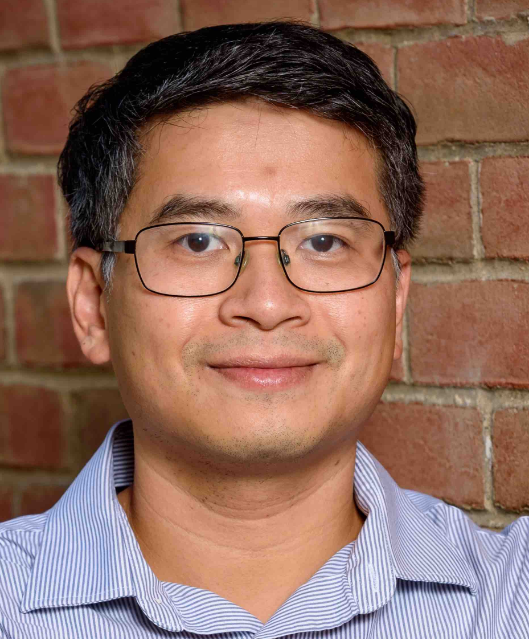 Minh Hoai Nguyen合作论文数Australian Institute for Machine Learning, School of Computer and Mathematical Sciences, The University of Adelaide6
 Zhenheng Yang (杨振恒)合作论文数4
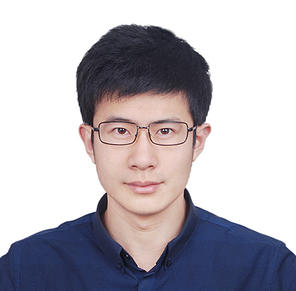 Peng Wang (王鹏)合作论文数ByteDance4
 Vinh Q. Tran合作论文数Google3
 Wei Xu合作论文数Horizon Robotics3
 Yi Yang (杨亿)合作论文数2
 Chenxu Luo (罗晨旭)合作论文数2
 Zhengwei Wei合作论文数1Zekun Zhang合作论文数1
 Shenghui Cheng (成生辉)合作论文数School of Journalism & Communication, Jinan University1Yuan Zhong合作论文数Facebook Inc1Ning Wang合作论文数Sch Informat Sci & Technol, Univ Sci & Technol China1Tianlong Zu合作论文数1Yi Shen合作论文数1
 John Hutson合作论文数Dept Learning Sci, Georgia State Univ1
 Justin K Zhang合作论文数Dept Neurol Surg, Washington Univ1
 Wen Zhong合作论文数1
 Gedas Bertasius合作论文数Facebook AI1
 Cong Xie合作论文数Stony Brook University1
 Yaodong Yang (杨耀东)合作论文数Institute for Artificial Intelligence, Peking University1
 Liang Zhao合作论文数Mu Tech1
 Klaus Mueller合作论文数Department of Computer Science, Stony Brook University;12bit AI;Akai Kaeru1
 Ao Li (李骜)合作论文数Centers for Biomedical Engineering, School of Information Science and Technology, University of Science and Technology of China1
 Ram Nevatia合作论文数Viterbi School of Engineering, University of Southern California;Thomas Lord Department of Computer Science, University of Southern California;Ming Hsieh Department of Electrical and Computer Engineering, University of Southern California1
 Lester Loschky合作论文数Kansas State University1
 N. Sanjay Rebello合作论文数Physics Department;Kansas State University;Physics Department, Kansas State University1
 Lorenzo Torresani合作论文数Northeastern University;Meta1
 Supreeth Narasimhaswamy合作论文数Adobe Applied Research1




