Accurate delineation of liver tumors is the key to medical image-guided precision radiotherapy. In this paper we propose and study an automatic biological target delineation algorithm based on RASUnet. We propose innovative optimization schemes at the data set level and network architecture level, and verify the effect of the improved scheme through experiments. We apply the residual idea to the Unet network architecture to form the ResUnet network, which speeds up the network convergence process. To introduce an attention gate for ResUnet, we form a RAUnet network, which can “emphasize regions of interest and suppress irrelevant regions” on the input image. Finally, we add the compression activation mechanism to form the ResSE optimization module, and improve the network to RASUnet. This method brings a weighting mechanism acting on the feature channel, which further improves the attention performance. The experimental results show that RASUnet has the best accuracy in the optimal delineation, and has high accuracy and robustness in the automatic segmentation and delineation of tumor biological targets.
It is difficult to segment Glioma and its internal structure because the Glioma boundaries have edemas and complex internal structures. This paper proposes a new optimized, integrated 3D U-Net network to achieve accurate segmentation of Glioma and internal subareas. The contribution of this paper is twofold, it studies the clinical path of patients with Glioma and constructs an optimized 3D U-Net deep learning algorithm by combining them with the radiologic feature set. The proposed model was validated in the published Glioma operation data set of multi-modal MRI resonance images and clinicians manual segmentation data. The model can accurately segment the MRI multi-modality images of Glioma and intra-tumour nodes and achieve the multi-modality prediction of the overall survival period of patients. The experimental results further indicated that the segmentation accuracy of the proposed method was higher than other sophisticated methods. The Dice similarity coefficients of the whole tumor (WT) region, the core tumor (CT) region, and the augmentation / enhanced tumor (ET) region, were 0.9632, 0.8763, and 0.8421, respectively, which are better than the clinical experts’ manual segmentation results. Hence, this research can effectively promote the development of deep learning clinical precise diagnosis and medical technology for Glioma.
Aiming at the difference in the segmentation performance of the three segmentation target regions in the glioma image segmentation task based on the fully convolutional neural network, we propose a comprehensive evaluation method of neural network performance based on four evaluation indices. In addition, we analyze the performance and characteristics of neural network in the segmentation task of glioma, study the segmentation performance of neural network in the whole tumor (WT), tumor core (TC) and enhanced tumor (ET) regions, and propose a deep learning algorithm based on multiple networks in parallel. In this paper, the input image of the two-dimensional neural network is sliced, and the input of the three-dimensional neural network is processed in two ways: overlapping and non-overlapping, and in the image post-processing part, the three-dimensional image is reconstructed before the evaluation index is calculated. This article uses four evaluation indexes, which are Dice, Sensitivity, PPV, and Hausdorff, for the three segmentation target regions, and performs RSR* weight calculation, and finally performs a comprehensive evaluation. Experimental results show that Vnet has the best comprehensive segmentation performance, FCN-8s has the best segmentation performance in the TC area, Unet++ has the best segmentation performance in the ET area, and Vnet has the best segmentation performance in the WT area. Based on this, we propose a FUV multi-network parallel algorithm, combined with a reverse attention mechanism to improve the segmentation accuracy of the three segmentation target regions.
该文针对现今RFID系统应用的安全威胁进行了分析,分析了RFID的安全系统对于硬件设计的需求,基于DES加密算法的理论,提出并设计了一个适用于RFID系统的加密模块,保护RFID标签和读写器通信过程间的通信数据,使用ModelSim软件对设计出的模块进行自底向上的仿真测试,保证每一个子模块满足整体模块完成加密算法的功能.并使用ISE硬件设计软件对代码进行综合设计,获得综合生成的模块电路.设计技术指标达到860~960M、95dBm、40~640kbps,实现了将明文/密文进行加密/解密的方式,达到提高RFID通信安全性的目标.
为了解决自行车被盗的现象,应用RFID电子射频技术,结合门禁控制系统,开发了一种自行车防盗系统。简述了RFID的工作原理,并且详细地介绍了系统的软硬件设计及其实现的各种功能。该系统能快速地读取自行车的车辆信息,并且在读卡器上面设置加密操作,通过控制计算机管理门禁控制器的正常工作,从而达到了给自行车安装"电子身份证",有效地解决了小区、学校和停车场自行车被盗的问题。
为了适应医院发展的需要,推进医院信息化建设,采用RFID技术,充分结合医院信息管理系统,开发一种基于RFID的患者信息管理系统。本文简述了RFID技术及其工作原理,并详细地介绍了系统的软硬件设计及其功能。该系统能快速、准确的确认病人身份并提供患者的信息,对患者快速实施急诊、保证患者安全、切实提高医疗质量、减少医疗差错将发挥巨大的作用。
In this paper, we evaluate the performance of anti-collision algorithm of RFID system. We research dynamic framed slotted algorithm (DFSA) based on EPC Gen2 protocol based on this we studied a kind of framed time slot improvement algorithm (EDFSA) this algorithm absorb the merit of dynamic framed time slot algorithm , this algorithm solve the problem. When huge number of label quantity need to be identified the system efficiency will reduced. Through the simulation experiment we compared the advantage and disadvantage of EDFSA, BFSA and DFSA three algorithm performances and then we draw the following conclusion. When identify 1000 tags time cost of EDFSA algorithms changes 85%, 92% separately compare the BFSA algorithm and the DFSA algorithm ,and when identify more tags EDFSA will obtain a better performance.
The size of text and weight of elements in feature vectors may affect text classification rule.In order to improve the classification accuracy,new concepts of the weighted frequent items and a weighted frequent item-set mining algorithm to highlight great weight items were proposed.A pre-processing method for feature vectors was proposed to eliminate ill effects of the size of text on generating classification rules.Experiments demonstrated utility and feasibility of the method.
为提高粒子群优化算法在优化问题中的效率,本文提出了并行粒子群优化算法(BLP-SO).基本思想是并行机制+最佳粒子共享+分层搜索.主要工作包括(1)信息共享机制中引入了区域学习,使粒子更新能参考其他粒子的信息;(2)提出了粒子群两层划分模型,底层利于扩大搜索范围,上层利于全局精细搜索;(3)证明了关于粒子群和并行粒子群收敛性定理;(4)在4个基准函数上的优化实验表明,新方法比经典的IPPSO并行粒子群算法在解的精度上提高了51.93%到96.10%.
It is generally accepted that dynamic voltage scaling (DVS) is one of the most effective techniques in saving energy consumption. But in the process of applying DVS technique, some details must be taken into account so that the model can approach real system and the optimal result can be got in the analysis. This paper presents a new model with taking account of delay and energy dissipation caused by voltage transition to analyze energy consumption and improve algorithm, achieving purpose of minimizing energy consumption at last. The contribution is to proposed criterion of allocating transition interval.
AC frequency conversation timing technique is getting a lot of attentions now.According to vector control's principle and method,we used MATLAB/SIMULINK module to build an AC speed regulation system which had rotor speed closed loop and flux open loop.Through the simulation results we obtained speed,stator line voltage,stator current and electromagnetic torque four key performance indicators that vary followed by the change of time.The validity of proposed method is testified though MATLAB simulation.New approach have exploited in the field of technique research.
In order to solve the problem that Gene Expression Programming(GEP) has not still turn up trumps to the mining rapidity and precision of RFID and Economy Statistical Time Sequence Data in symbol regression and class domain,the definition of Statistical-Gene,Statistical-Chromosome,Statistical-fitness and the integration amelioration to traditional GEP time Sequence model were proposed.The novel mining algorithm of single-variable and multi-variable time sequence mining algorithm were given to heighten the mining rapidity and precision of GEP economy time sequence model.The effectiveness of new algorithm was demonstrated by extensive experiments and the result showed that the mining rapidity of multi-variable time sequence mining algorithm was rapidness and the forecast precision was heighten up 5% compared with traditional GEP and single-variable GEP time sequence mining algorithm.New algorithm was appropriate for RFID and other economy system as well.
This paper proposed a novel self-adaptive genetic algorithm SIGA(Self-adaptive Immune Genetic Algorithm) based on immunity to overcome the shortage of traditional genetic algorithms that the converging speed is slow and the solution is a local optimum.The algorithm improved the genetic operators and proposed self-adaptive crossover and mutation operators in case of keeping individual diversity and avoiding prematurity;proposed an immune selection algorithm based on selection probability of similarity and vector distance in order to keep individual diversity and improve the level of fitness.The results of the experiments indicate that SIGA can improve the converging speed by three to ninety times,enhance the precision which reaches to 10-3,and avoid prematurity to some extent compared with traditional genetic algorithms and immune algorithms.
Function discovery is an important research direction in data mining and economic statistical target forecast. Gene expression programming (GEP) is a new tool to discovery the function in economic target analysis field. To overcome the deficiency such as pre-maturity and biggish stagnancy generation in GEP, this study (1) Introduces a dynamic mutation operator ( DM-GEP ) and flexibility controlling of population scale (FC-GEP) for more faster jumping local optimum trap and shortening average convergence generation in evolution, (2) Proposes a genome diversity-guided of grading evolution strategy for stakeout and melioration of GEP evolution process, (3) implements a multi-genome child-population parallel genetic strategy and a PED- GEP algorithm for increasing average maximal fitness and success ratio, and (4) demonstrates the effectiveness and efficiency of the new algorithm by extensive experiments, Comparising with transitional GEP, the average convergence generation is decrease to 35 % at least, and average maximal fitness increases 8 %leastways.
Many clustering algorithms have to need a number of clusters before clustering.In order to tackle this problem,a novel GEP-Cluster(Gene Expression Programming-clustering) algorithm was proposed.The main contributions include: 1) proposing the GEP-Cluster algorithm to find the best clustering via GEP evolution,2) proposing AMCA algorithm to auto merge cluster,3) finding the best clustering without any priori knowledge by the GEP-Cluster algorithm.Extensive experiments showed that GEP-Cluster algorithm is effective in clustering without any domain knowledge,and the average clustering accuracy is almost 96%.
In this paper,GEP,a genotype/phenotype genetic algorithm,is applied to solve the prediction of multiple variables and it can mine the pre-unkonwn and valuable function model.According to the data cases of practical problem between the costs of fuels and the cost of spending electricity,GEP mines the function express between data input and data output,and it compares with the multiple variables linear regression in terms of accuracy and efficiency.Experiments show that GEP has better predicative results than the multiple variables linear regression,the output values of prediction using GEP algorithms are more near the actual values.So GEP is an efficient search method in prediction.
The traditional Attribute-Oriented Induction (AOI) technique is weak at efficiency and coarseness of generalization. In order to satisfy the complex requirements in Chinese medicine prescription mining, this study proposed a new algorithm based on attribute relevancy generalizing driven by Chinese medicine data, established concept-tree for relevancy-dimension, utilized pertinence of relevancy-attribute and benchmark-attribute to enhance efficiency of induction, and implemented a new data mining system TCMDBMiner based on attribute-oriented relevancy induction. Experimental results show that new algorithm is 23% faster than traditional method and the mining results are consistent with the Chinese medicine theory.
This paper proposed a new Two Phase Parallel Particle Swarm Optimization(TP_PPSO) Algorithm based on region and social study of multi-object optimization in economic data analysis and mining. This study(1)changes the traditional particle information sharing mechanism and introduces region study for making that particles can reference other particles information when they updates; and divides particles groups evolution into two classes optimization by the advantage of divided-group strategy .(2)partitions particles swarm evolution into two phase. One phase is propitious to expand the scope of the search and another phase is conducive to the fine overall search. (3)proposes an disturbance strategy Which the best particles in each particles swarm will be initialized in locally around and other particles will initialized in the overall scope, when the un-updated population of global optimal solution is bigger than certain population. (4)proves the convergence of PSO and convergence condition and the rationality of TP_PPSO. (5)demonstrates that of TP_PPSO has improved the accuracy of the solution 60% at least than the classical parallel particles swarm algorithm -- IPPSO by optimization and contrastive experiments using five functions.
The traditional Gene Expression Programming (GEP) has the deficiency of local optimization. In order to solve this problem, VPS-GEP (Various Population Strategy GEP), an algorithm for evolution skipping from local optimization fast, was proposed. It was proved that the time for per-generation evolution increases with the size of population under probability sense. The ability of mining function and efficiency of VPS-GEP was tested by two standard test functions and one standard dataset. The experiments showed that VPS-GEP algorithm decreases the generation-stagnancy over 55%.
本文在系统分析国家公务员绩效考核体系研究现状及实践的基础上,对四川政府机关公务员绩效调查进行客观评价,对现行体系中存在的几个突出问题进行诊断并探讨了相关的对策。
 Changjie Tang (唐常杰)合作论文数College of Computer Science, Sichuan University16
 Qiwei Liu合作论文数9Shaojie Qiao (乔少杰)合作论文数School of Software Engineering, Chengdu University of Information Technology7
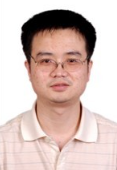 Chuan Li (李川)合作论文数College of Computer Science, Sichuan University6
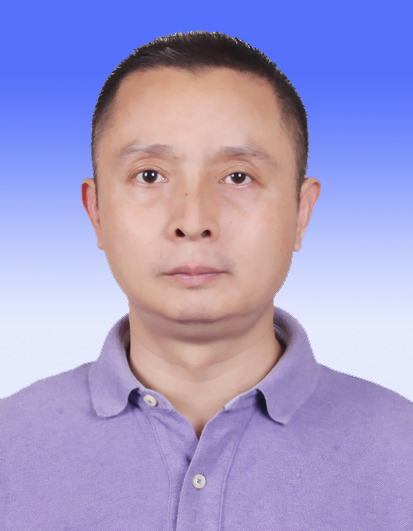 Jiangtao Qiu (邱江涛)合作论文数School of Computing and Artificial Intelligence, Southwestern University of Finance and Economics4Kai Liu合作论文数3
 Tao Zeng (曾涛)合作论文数The College of Life Sciences, Sichuan University3Yu Chen (陈瑜)合作论文数College of Computer Science, Sichuan University3Tiande Li合作论文数3QiWei Liu (刘齐巍)合作论文数2YongGuang Jiang (蒋永光)合作论文数2Xinxin Ding (丁鑫鑫)合作论文数2Jianqiang Lin (林建强)合作论文数2Jing Leng (冷静)合作论文数2Ju Ma (马举)合作论文数2
 Lei Duan (段磊)合作论文数College of Computer Science, Sichuan University2Yintian Liu合作论文数2Wen Fen-Lian合作论文数2Lanju Yang (杨兰菊)合作论文数2
 Jing Cai (蔡璟)合作论文数1
 Jianjun Hu (胡建军)合作论文数College of Civil and Transportation Engineering, Shenzhen university;Institute of Deep Earth Sciences & Green Energy, Shenzhen university1Lin Chen (林晨)合作论文数1Zhi-bin ZHOU (周志斌)合作论文数1Cai-Hong Shen合作论文数1GENG Wei-hua (耿伟华)合作论文数1Hao YANG (杨豪)合作论文数1Zhang Cuixia (张翠霞)合作论文数1TianDe Li (李天德)合作论文数1Yi Jiang (蒋毅)合作论文数1Bin Yi (易彬)合作论文数1
 Suyi Zhang (张宿义)合作论文数泸州老窖集团有限责任公司1
 Liang Zhang (张良)合作论文数泸州老窖股份有限公司1Tianqing Zhang (张天庆)合作论文数College of Computer Science, Sichuan University1
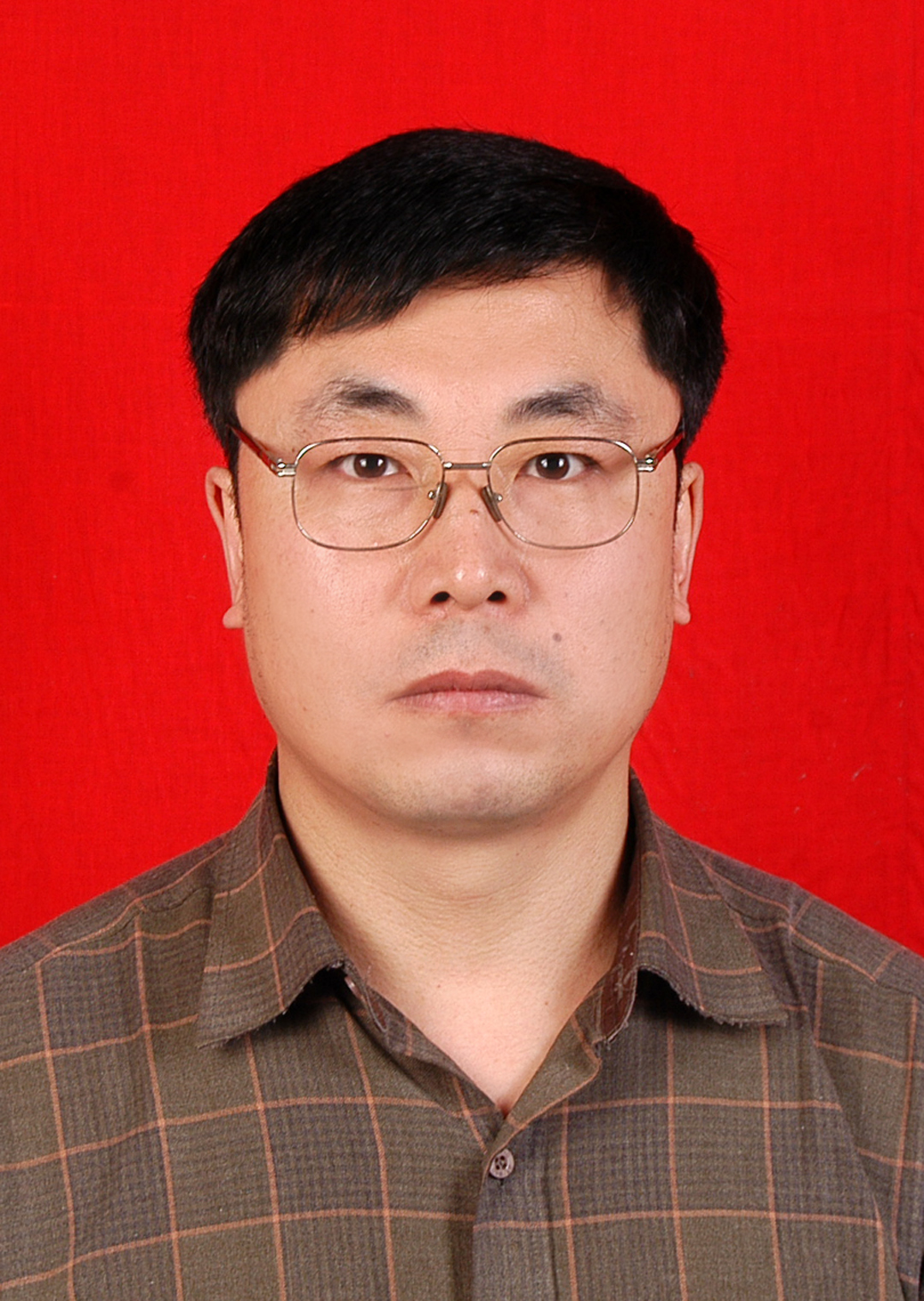 Zhonghua Yu (于中华)合作论文数College of Computer Science, Sichuan University1Shucheng Dai (代术成)合作论文数College of Computer Science, Sichuan University1
 Wu Yanhua合作论文数1Li Chuan合作论文数1Peisong Zhang (张培颂)合作论文数1Guohe Wang (王国鹤)合作论文数1Peng Chen合作论文数1
 Jun Zhu合作论文数1
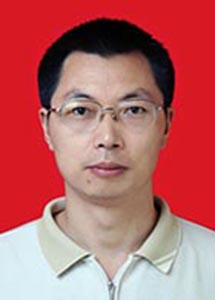 Jiang Wu (吴江)合作论文数SWUFE-UD Institute of Data Science Atswufe, Southwestern University of Finance and Economics1Cui Chen (陈翠)合作论文数1
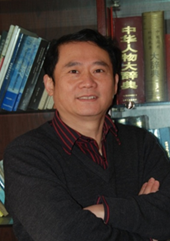 Guangqing Dai (戴光清)合作论文数四川大学水利水电学院1Tengfei Guo (郭腾飞)合作论文数1Yongguang Jiang (蒋永光)合作论文数Chengdu University of Traditional Chinese Medicine1
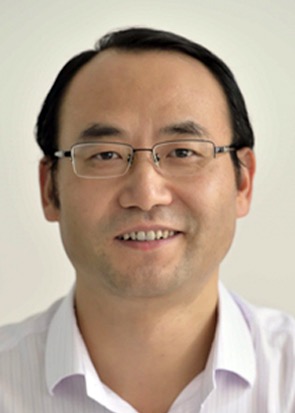 Changan Yuan (元昌安)合作论文数Guangxi Academy of Sciences1
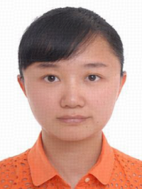 Ling He (何凌)合作论文数College of Biomedical Engineering, Sichuan University1




