Existing image editing methods struggle to perceive where to edit, especially under complex scenes and nuanced spatial instructions. To address this issue, we propose Generative Visual Chain-of-Thought (GVCoT), a unified framework that performs native visual reasoning by first generating spatial cues to localize the target region and then executing the edit. Unlike prior text-only CoT or tool-dependent visual CoT paradigms, GVCoT jointly optimizes visual tokens generated during the reasoning and editing phases in an end-to-end manner. This way fosters the emergence of innate spatial reasoning ability and enables more effective utilization of visual-domain cues. The main challenge of training GCVoT lies in the scarcity of large-scale editing data with precise edit region annotations; to this end, we construct GVCoT-Edit-Instruct, a dataset of 1.8M high-quality samples spanning 19 tasks. We adopt a progressive training strategy: supervised fine-tuning to build foundational localization ability in reasoning trace before final editing, followed by reinforcement learning to further improve reasoning and editing quality. Finally, we introduce SREdit-Bench, a new benchmark designed to comprehensively stress-test models under sophisticated scenes and fine-grained referring expressions. Experiments demonstrate that GVCoT consistently outperforms state-of-the-art models on SREdit-Bench and ImgEdit. We hope our GVCoT will inspire future research toward interpretable and precise image editing.
Most visual generative models compress images into a latent space before applying diffusion or autoregressive modelling. Yet, existing approaches such as VAEs and foundation model aligned encoders implicitly constrain the latent space without explicitly shaping its distribution, making it unclear which types of distributions are optimal for modeling. We introduce (), which explicitly aligns the encoder’s latent distribution with an arbitrary reference distribution via a distribution matching constraint. This generalizes beyond the Gaussian prior of conventional VAEs, enabling alignment with distributions derived from self-supervised features, diffusion noise, or other prior distributions. With DMVAE, we can systematically investigate which latent distributions are more conducive to modeling, and we find that SSL-derived distributions provide an excellent balance between reconstruction fidelity and modeling efficiency, reaching a gFID of 3.2 on ImageNet with only 64 training epochs. Our results suggest that choosing a suitable latent distribution structure (achieved via distribution-level alignment), rather than relying on fixed priors, is key to bridging the gap between easy-to-model latents and high-fidelity image synthesis.
Unified multimodal models (UMMs) integrate visual understanding and generation within a single framework. For text-to-image (T2I) tasks, this unified capability allows UMMs to refine outputs after their initial generation, potentially extending the performance upper bound. Current UMM-based refinement methods primarily follow a refinement-via-editing (RvE) paradigm, where UMMs produce editing instructions to modify misaligned regions while preserving aligned content. However, editing instructions often describe prompt-image misalignment only coarsely, leading to incomplete refinement. Moreover, pixel-level preservation, though necessary for editing, unnecessarily restricts the effective modification space for refinement. To address these limitations, we propose Refinement via Regeneration (RvR), a novel framework that reformulates refinement as conditional image regeneration rather than editing. Instead of relying on editing instructions and enforcing strict content preservation, RvR regenerates images conditioned on the target prompt and the semantic tokens of the initial image, enabling more complete semantic alignment with a larger modification space. Extensive experiments demonstrate the effectiveness of RvR, improving Geneval from 0.78 to 0.91, DPGBench from 84.02 to 87.21, and UniGenBench++ from 61.53 to 77.41.
In-context image generation and editing (ICGE) enables users to specify visual concepts through interleaved image-text prompts, demanding precise understanding and faithful execution of user intent. Although recent unified multimodal models exhibit promising understanding capabilities, these strengths often fail to transfer effectively to image generation. We introduce Re-Align, a unified framework that bridges the gap between understanding and generation through structured reasoning-guided alignment. At its core lies the In-Context Chain-of-Thought (IC-CoT), a structured reasoning paradigm that decouples semantic guidance and reference association, providing clear textual target and mitigating confusion among reference images. Furthermore, Re-Align introduces an effective RL training scheme that leverages a surrogate reward to measure the alignment between structured reasoning text and the generated image, thereby improving the model's overall performance on ICGE tasks. Extensive experiments verify that Re-Align outperforms competitive methods of comparable model scale and resources on both in-context image generation and editing tasks.
Unified multi-modal understanding/generative models have shown improved image editing performance by incorporating fine-grained understanding into their Chain-of-Thought (CoT) process. However, a critical question remains underexplored: what forms of CoT and training strategy can jointly enhance both the understanding granularity and generalization? To address this, we propose Meta-CoT, a paradigm that performs a two-level decomposition of any single-image editing operation with two key properties: (1) Decomposability. We observe that any editing intention can be represented as a triplet — (task, target, required understanding ability). Inspired by this, Meta-CoT decomposes both the editing task and the target, generating task-specific CoT and traversing editing operations on all targets. This decomposition enhances the model's understanding granularity of editing operations and guides it to learn each element of the triplet during training, substantially improving the editing capability.(2) Generalizability. In the second decomposition level, we further break down editing tasks into five fundamental meta-tasks. We find that training on these five meta-tasks, together with the other two elements of the triplet, is sufficient to achieve strong generalization across diverse, unseen editing tasks.To further align the model's editing behavior with its CoT reasoning, we introduce the CoT–Editing Consistency Reward, which encourages more accurate and effective utilization of CoT information during editing. Experiments demonstrate that our method achieves an overall 15.8\% improvement across 21 editing tasks, and generalizes effectively to unseen editing tasks when trained on only a small set of meta-tasks. Our code, benchmark, and model will be released publicly.
The post-training pipeline for diffusion models currently has two stages: supervised fine-tuning (SFT) on curated data and reinforcement learning (RL) with reward models. A fundamental gap separates them. SFT optimizes the denoiser only on ground-truth states sampled from the forward noising process; once inference deviates from these ideal states, subsequent denoising relies on out-of-distribution generalization rather than learned correction, exhibiting the same exposure bias that afflicts autoregressive models, but accumulated along the denoising trajectory instead of the token sequence. RL can in principle address this mismatch, yet its terminal reward signal is sparse, suffers from credit-assignment difficulty, and risks reward hacking. We propose SOAR (Self-Correction for Optimal Alignment and Refinement), a bias-correction post-training method that fills this gap. Starting from a real sample, SOAR performs a single stop-gradient rollout with the current model, re-noises the resulting off-trajectory state, and supervises the model to steer back toward the original clean target. The method is on-policy, reward-free, and provides dense per-timestep supervision with no credit-assignment problem. On SD3.5-Medium, SOAR improves GenEval from 0.70 to 0.78 and OCR from 0.64 to 0.67 over SFT, while simultaneously raising all model-based preference scores. In controlled reward-specific experiments, SOAR surpasses Flow-GRPO in final metric value on both aesthetic and text-image alignment tasks, despite having no access to a reward model. Since SOAR's base loss subsumes the standard SFT objective, it can directly replace SFT as a stronger first post-training stage after pretraining, while remaining fully compatible with subsequent RL alignment.
Unified multimodal models (UMMs) have achieved remarkable progress yet remain constrained by a single-turn interaction paradigm, effectively functioning as solvers for independent requests rather than assistants in continuous dialogue. To bridge this gap, we present ChatUMM. As a conversational unified model, it excels at robust context tracking to sustain interleaved multimodal generation. ChatUMM derives its capabilities from two key innovations: an interleaved multi-turn training strategy that models serialized text-image streams as a continuous conversational flow, and a systematic conversational data synthesis pipeline. This pipeline transforms a diverse set of standard single-turn datasets into fluid dialogues through three progressive stages: constructing basic stateful dialogues, enforcing long-range dependency resolution via “distractor” turns with history-dependent query rewriting, and synthesizing naturally interleaved multimodal responses. Extensive evaluations demonstrate that ChatUMM achieves state-of-the-art performance among open-source unified models on visual understanding and instruction-guided editing benchmarks, while maintaining competitive fidelity in text-to-image generation. Notably, ChatUMM exhibits superior robustness in complex multi-turn scenarios, ensuring fluid, context-aware dialogues.
Agent-based editing models have substantially advanced interactive experiences, processing quality, and creative flexibility. However, two critical challenges persist: (1) instruction hallucination—text-only chain-of-thought (CoT) reasoning cannot fully prevent factual errors due to inherent information bottlenecks; (2) reward hacking—dynamic policy optimization against static reward models allows agents to exploit flaws in reward functions. To address these issues, we propose JarvisEvo, a unified image editing agent that emulates an expert human designer by iteratively editing, selecting appropriate tools, evaluating results, and reflecting on its own decisions to refine outcomes. JarvisEvo offers three key advantages: (1) an interleaved multimodal chain-of-thought (iMCoT) reasoning mechanism that enhances instruction following and editing quality; (2) a synergistic editor–evaluator policy optimization (SEPO) framework that enables self-improvement without external rewards, effectively mitigating reward hacking; and (3) support for both preservative and generative editing through seamless integration of Adobe Lightroom and Qwen-Image-Edit tools. On ArtEdit-Bench, JarvisEvo outperforms Nano-Banana by an average of 18.95% on preservative editing metrics, including a substantial 44.96% improvement in pixel-level content fidelity, while maintaining competitive performance in generative editing tasks.
Video frame interpolation (VFI), which generates intermediate frames from given start and end frames, has become a fundamental function in video generation applications. However, existing generative VFI methods are constrained to synthesizing a fixed number of intermediate frames, lacking the flexibility to adjust generated frame rates or total sequence duration. In this work, we present ArbInterp, a novel generative VFI framework that enables efficient interpolation at any timestamp and of any length. Specifically, to support interpolation at any timestamp, we propose the Timestamp-aware Rotary Position Embedding (TaRoPE), which modulates positions in temporal RoPE to align generated frames with target normalized timestamps. This design enables fine-grained control over frame timestamps, addressing the inflexibility of fixed-position paradigms in prior work. For any-length interpolation, we decompose long-sequence generation into segment-wise frame synthesis. We further design a novel appearance-motion decoupled conditioning strategy: it leverages prior segment endpoints to enforce appearance consistency and temporal semantics to maintain motion coherence, ensuring seamless spatiotemporal transitions across segments. Experimentally, we develop comprehensive benchmarks for multi-scale frame interpolation (2× to 32×) to assess generalizability across arbitrary interpolation factors. Results show that ArbInterp outperforms prior methods across all scenarios with higher fidelity and more seamless spatiotemporal continuity.
Recent large language models have shifted SVG generation from differentiable rendering optimization to autoregressive program synthesis. However, existing approaches still rely on generic byte-level tokenization inherited from natural language processing, which poorly reflects the geometric structure of vector graphics. Numerical coordinates are fragmented into discrete symbols, destroying spatial relationships and introducing severe token redundancy, often leading to coordinate hallucination and inefficient long-sequence generation. To address these challenges, we propose HiVG, a hierarchical SVG tokenization framework tailored for autoregressive vector graphics generation. HiVG decomposes raw SVG strings into structured atomic tokens and further compresses executable command–parameter groups into geometry-constrained segment tokens, substantially improving sequence efficiency while preserving syntactic validity. To further mitigate spatial mismatch, we introduce a Hierarchical Mean–Noise (HMN) initialization strategy that injects numerical ordering signals and semantic priors into new token embeddings. Combined with a curriculum training paradigm that progressively increases program complexity, HiVG enables more stable learning of executable SVG programs. Extensive experiments on both text-to-SVG and image-to-SVG tasks demonstrate improved generation fidelity, spatial consistency, and sequence efficiency compared with conventional tokenization schemes.
Unified image generation and editing models suffer from severe task interference in dense diffusion transformers architectures, where a shared parameter space must compromise between conflicting objectives (e.g., local editing v.s. subject-driven generation). While the sparse Mixture-of-Experts (MoE) paradigm is a promising solution, its gating networks remain task-agnostic, operating based on local features, unaware of global task intent. This task-agnostic nature prevents meaningful specialization and fails to resolve the underlying task interference. In this paper, we propose a novel framework to inject semantic intent into MoE routing. We introduce a Hierarchical Task Semantic Annotation scheme to create structured task descriptors (e.g., scope, type, preservation). We then design Predictive Alignment Regularization to align internal routing decisions with the task's high-level semantics. This regularization evolves the gating network from a task-agnostic executor to a dispatch center. Our model effectively mitigates task interference, outperforming dense baselines in fidelity and quality, and our analysis shows that experts naturally develop clear and semantically correlated specializations.
CLIP is a seminal multimodal model that maps images and text into a shared representation space by contrastive learning on billions of image–caption pairs. Inspired by the rapid progress of large language models (LLMs), we investigate how the superior linguistic understanding and broad world knowledge of LLMs can further strengthen CLIP—particularly in handling long, complex captions. We introduce an efficient fine-tuning framework that embeds an LLM into a pretrained CLIP while incurring almost the same training cost as regular CLIP fine-tuning. Our method first “embedding-izes” the LLM for the CLIP setting, then couples it to the pretrained CLIP vision encoder through a lightweight adaptor trained on only a few million image–caption pairs. With this strategy we achieve large performance gains—without large-scale retraining—over state-of-the-art CLIP variants such as EVA02 and SigLIP-2. The LLM-enhanced CLIP delivers consistent improvements across a wide spectrum of downstream tasks, including linear-probe classification, zero-shot image–text retrieval with both short and long captions (in English and other languages), zero-shot/supervised image segmentation, object detection, and used as tokenizer for multimodal large-model benchmarks.
Recent advancements in text-to-image (T2I) diffusion models have demonstrated remarkable capabilities in generating high-fidelity images. However, these models often struggle to faithfully render complex user prompts, particularly in aspects like attribute binding, negation, and compositional relationships. This leads to a significant mismatch between user intent and the generated output. To address this challenge, we introduce PromptEnhancer, a novel and universal prompt rewriting framework that enhances any pretrained T2I model without requiring modifications to its weights. Unlike prior methods that rely on model-specific fine-tuning or implicit reward signals like image-reward scores, our framework decouples the rewriter from the generator. We achieve this by training a Chain-of-Thought (CoT) rewriter through reinforcement learning, guided by a dedicated reward model we term the AlignEvaluator. The AlignEvaluator is trained to provide explicit and fine-grained feedback based on a systematic taxonomy of 24 key points, which are derived from a comprehensive analysis of common T2I failure modes. By optimizing the CoT rewriter to maximize the reward from our AlignEvaluator, our framework learns to generate prompts that are more precisely interpreted by T2I models. Extensive experiments on the HunyuanImage 2.1 model demonstrate that PromptEnhancer significantly improves image-text alignment across a wide range of semantic and compositional challenges. Furthermore, we introduce a new, high-quality human preference benchmark to facilitate future research in this direction.
Human pose estimation has been greatly advanced in recent years. However, even the best-performing models are not shift equivariant. In particular, a small change in input images often results in drastic alterations in output, which are problematic especially in video applications. The prevalence of top-down approaches, which typically rely on a (non-equivariant) object detector in the first stage, exac-erbates this issue. In this paper, we first demonstrate that the biased keypoint representation and the non-equivariant network components are the two main obstacles to shift equivariant pose estimation. To address the limitation, we propose an unbiased decoding method, and redesign the necessary network components (e.g., APS-ResBlock, SSP). Extensive experiments show that our method not only produces much more stable results with shifting input, but also achieves better metrics with the ability of tolerating in-accurate detector output from the first stage. To our knowledge, this is the first work to address the problem of shift equivariance in the field of pose estimation. Our method could be easily applied to existing CNN-based pose estimation networks.
Monocular 3D human mesh estimation faces challenges due to depth ambiguity and the complexity of mapping images to complex parameter spaces. Recent methods propose to use 3D poses as a proxy representation, which often lose crucial body shape information, leading to mediocre performance. Conversely, advanced motion capture systems, though accurate, are impractical for markerless wild images. Addressing these limitations, we introduce an innovative intermediate representation as virtual markers, which are learned from large-scale mocap data, mimicking the effects of physical markers. Building upon virtual markers, we propose VMarker, which detects virtual markers from wild images, and the intact mesh with realistic shapes can be obtained by simply interpolation from these markers. To address occlusions that obscure 3D virtual marker estimation, we further enhance our method with VMarker-Pro, a probabilistic framework that models the distribution of 3D virtual marker positions using diffusion models, enabling the generation of multiple plausible meshes aligned with images for robust 3D mesh estimation. Our approaches surpass existing methods on three benchmark datasets, particularly demonstrating significant improvements on the SURREAL dataset, which features diverse body shapes. Additionally, VMarker-Pro excels in accurately modeling data distributions, significantly enhancing performance in occluded scenarios.
Recent progress in text-to-image (T2I) generation underscores the importance of reliable benchmarks in evaluating how accurately generated images reflect the semantics of their textual prompt. However, (1) existing benchmarks lack the diversity of prompt scenarios and multilingual support, both essential for real-world applicability; (2) they offer only coarse evaluations across primary dimensions, covering a narrow range of sub-dimensions, and fall short in fine-grained sub-dimension assessment. To address these limitations, we introduce UniGenBench++, a unified semantic assessment benchmark for T2I generation. Specifically, it comprises 600 prompts organized hierarchically to ensure both coverage and efficiency: (1) spans across diverse real-world scenarios, i.e., 5 main prompt themes and 20 subthemes; (2) comprehensively probes T2I models' semantic consistency over 10 primary and 27 sub evaluation criteria, with each prompt assessing multiple testpoints. To rigorously assess model robustness to variations in language and prompt length, we provide both English and Chinese versions of each prompt in short and long forms. Leveraging the general world knowledge and fine-grained image understanding capabilities of a closed-source Multi-modal Large Language Model (MLLM), i.e., Gemini-2.5-Pro, an effective pipeline is developed for reliable benchmark construction and streamlined model assessment. Moreover, to further facilitate community use, we train a robust evaluation model that enables offline assessment of T2I model outputs. Through comprehensive benchmarking of both open- and closed-sourced T2I models, we systematically reveal their strengths and weaknesses across various aspects.
Recent studies have demonstrated the effectiveness of directly aligning diffusion models with human preferences using differentiable reward. However, they exhibit two primary challenges: (1) they rely on multistep denoising with gradient computation for reward scoring, which is computationally expensive, thus restricting optimization to only a few diffusion steps; (2) they often need continuous offline adaptation of reward models in order to achieve desired aesthetic quality, such as photorealism or precise lighting effects. To address the limitation of multistep denoising, we propose Direct-Align, a method that predefines a noise prior to effectively recover original images from any time steps via interpolation, leveraging the equation that diffusion states are interpolations between noise and target images, which effectively avoids over-optimization in late timesteps. Furthermore, we introduce Semantic Relative Preference Optimization (SRPO), in which rewards are formulated as text-conditioned signals. This approach enables online adjustment of rewards in response to positive and negative prompt augmentation, thereby reducing the reliance on offline reward fine-tuning. By fine-tuning the FLUX.1.dev model with optimized denoising and online reward adjustment, we improve its human-evaluated realism and aesthetic quality by over 3x.
This work presents VolumeDiffusion, a novel feed-forward text-to-3D generation framework that directly synthesizes 3D objects from textual descriptions. It bypasses the conventional score distillation loss based or text-to-image-to-3D approaches. To scale up the training data for the diffusion model, a novel 3D volumetric encoder is developed to efficiently acquire feature volumes from multi-view images. The 3D volumes are then trained on a diffusion model for text-to-3D generation using a 3D U-Net. This research further addresses the challenges of inaccurate object captions and high-dimensional feature volumes. The proposed model, trained on the public Objaverse dataset, demonstrates promising outcomes in producing diverse and recognizable samples from text prompts. Notably, it empowers finer control over object part characteristics through textual cues, fostering model creativity by seamlessly combining multiple concepts within a single object. This research significantly contributes to the progress of 3D generation by introducing an efficient, flexible, and scalable representation methodology.
Training text-to-image (T2I) models with detailed captions can significantly improve their generation quality. Existing methods often rely on simplistic metrics like caption length to represent the detailness of the caption in the T2I training set. In this paper, we propose a new metric to estimate caption detailness based on two aspects: image coverage rate (ICR), which evaluates whether the caption covers all regions/objects in the image, and average object detailness (AOD), which quantifies the detailness of each object's description. Through experiments on the COCO dataset using ShareGPT4V captions, we demonstrate that T2I models trained on high-ICR and -AOD captions achieve superior performance on DPG and other benchmarks. Notably, our metric enables more effective data selection-training on only 20 full-dataset training and length-based selection method, improving alignment and reconstruction ability. These findings highlight the critical role of detail-aware metrics over length-based heuristics in caption selection for T2I tasks.
Current learning-based subject customization approaches, predominantly relying on U-Net architectures, suffer from limited generalization ability and compromised image quality. Meanwhile, optimization-based methods require subject-specific fine-tuning, which inevitably degrades textual controllability. To address these challenges, we propose InstantCharacter, a scalable framework for character customization built upon a foundation diffusion transformer. InstantCharacter demonstrates three fundamental advantages: first, it achieves open-domain personalization across diverse character appearances, poses, and styles while maintaining high-fidelity results. Second, the framework introduces a scalable adapter with stacked transformer encoders, which effectively processes open-domain character features and seamlessly interacts with the latent space of modern diffusion transformers. Third, to effectively train the framework, we construct a large-scale character dataset containing 10-million-level samples. The dataset is systematically organized into paired (multi-view character) and unpaired (text-image combinations) subsets. This dual-data structure enables simultaneous optimization of identity consistency and textual editability through distinct learning pathways. Qualitative experiments demonstrate the advanced capabilities of InstantCharacter in generating high-fidelity, text-controllable, and character-consistent images, setting a new benchmark for character-driven image generation. Our source code is available at https://github.com/Tencent/InstantCharacter.
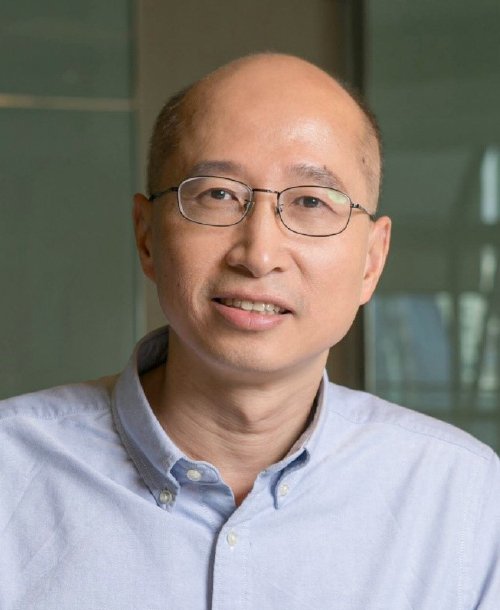 Wenjun (Kevin) Zeng (曾文军)合作论文数21
 Yizhou Wang (王亦洲)合作论文数School of Computer Science, Peking University;Center on Frontier Computing Studies, Peking University20
 YiJi Cheng (程义吉)合作论文数11
 Alan L. Yuille合作论文数Department of Cognitive Science, Krieger School of Arts & Sciences, Johns Hopkins University8
 Baining Guo (郭百宁)合作论文数Microsoft Research Asia8
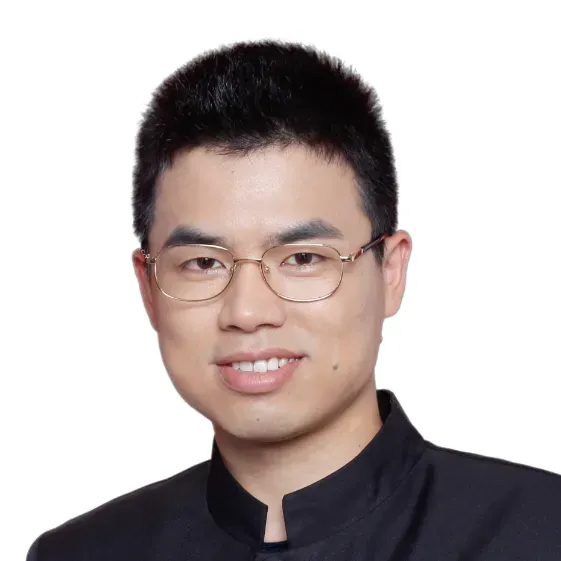 Han Hu (胡瀚)合作论文数7
 Yansong Tang (唐彦嵩)合作论文数7
 Xinggang Wang (王兴刚)合作论文数Artificial Intelligence Institute, School of Electronic Information and Communications, Huazhong University of Science and Technology7
 Wenyu Liu (刘文予)合作论文数School of Electronic Information and Communications, Huazhong University of Science & Technology7
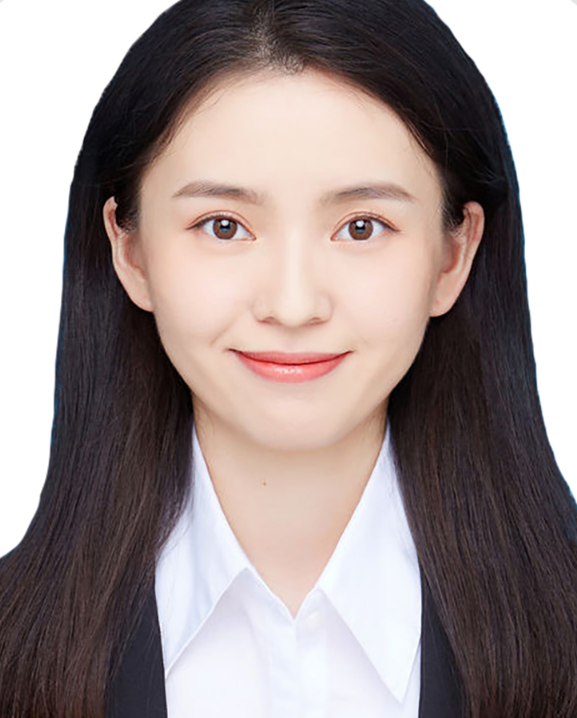 Xiaoxuan Ma (马霄璇)合作论文数CVDA Lab, Center on Frontiers of Computing Studies, Peking University6
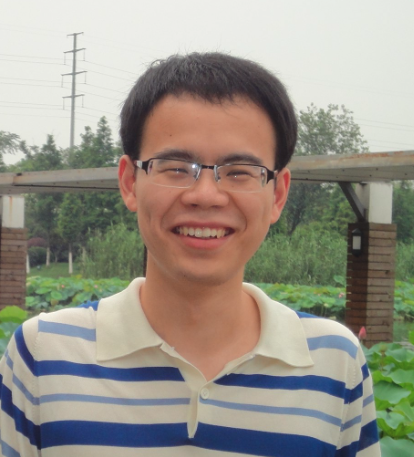 Qi Dai合作论文数Microsoft Research Asia6
 Jianmin Bao (鲍建敏)合作论文数Microsoft Research Asia5
 Dong Chen (陈栋)合作论文数Microsoft Research Asia5
 Chong Luo (罗翀)合作论文数Microsoft Research Asia5
 Zijin Yin合作论文数School of Artificial Intelligence, Beijing University of Posts and Telecommunications4
 Hai Ci合作论文数Show Lab, National University of Singapore;Beijing Institute for General Artificial Intelligence4
 Yifu Zhang (张一夫)合作论文数Baidu4Jiajun Su合作论文数4
 Shuyang Gu合作论文数Microsoft Research Asia4
 Zhiyuan Zhao (赵之源)合作论文数Microsoft Research Asia4
 Yuhui Yuan合作论文数Microsoft Research4
 Jingdong Wang (王井东)合作论文数4
 Fei Xie (谢斐)合作论文数Artificial Intelligence Research Institute, Shanghai Jiao Tong University;Huawei Noah’s Ark Lab3jialiang zhu合作论文数3
 Kongming Liang (梁孔明)合作论文数School of Artificial Intelligence, Beijing University of Posts and Telecommunications3
 Tiankai Hang合作论文数Southeast University;Microsoft Research Asia3Wenxun Dai (代文训)合作论文数3
 Zigang Geng (耿子钢)合作论文数Microsoft Research of Asia;University of Science and Technology of China3
 Ruoyu Feng (冯若愚)合作论文数ByteDance3
 Ting Zhang (张婷)合作论文数School of Artificial Intelligence, Beijing Normal University3
 Wankou Yang (杨万扣)合作论文数School of Automation, Southeast University3
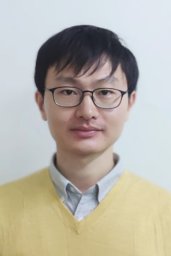 Zhe Zhang合作论文数Southeast University3
 Kai Qiu合作论文数Multimedia Search and Mining Group, Microsoft Research Asia3
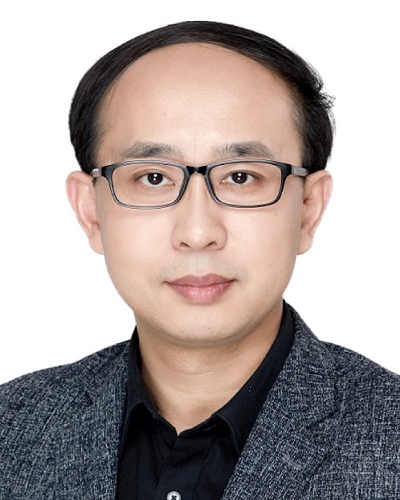 Zhanyu Ma (马占宇)合作论文数PRIS Laboratory, School of Artificial Intelligence, Beijing University of Posts and Telecommunications3
 Dacheng Yin合作论文数University of Science and Technology of China3
 Wentao Zhu (朱文韬)合作论文数Eastern Institute of Technology, Ningbo3Xu Yu合作论文数Tencent3
 Wenhu Qin (秦文虎)合作论文数School of Instrument Science and Engineering, Southeast University;Southeast University Wuxi Campus3
 Rongchang Xie合作论文数Peking University;ByteDance Inc.3
 Feng Zhao (赵峰)合作论文数Department of Automation, School of Information Science and Technology, University of Science and Technology of China3
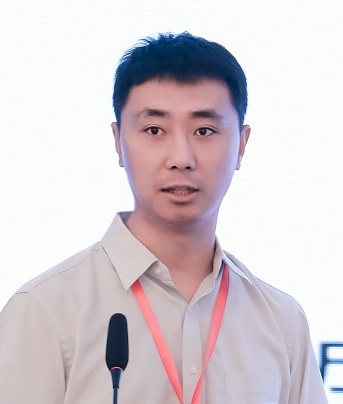 Jiaolong Yang (杨蛟龙)合作论文数Microsoft Research Asia Lab3Shiyi Zhang合作论文数2Yanhui Wang合作论文数2
 Zhiyuan (Leo) Zhao合作论文数Department of Computational Science and Engineering, Georgia Institute of Technology2
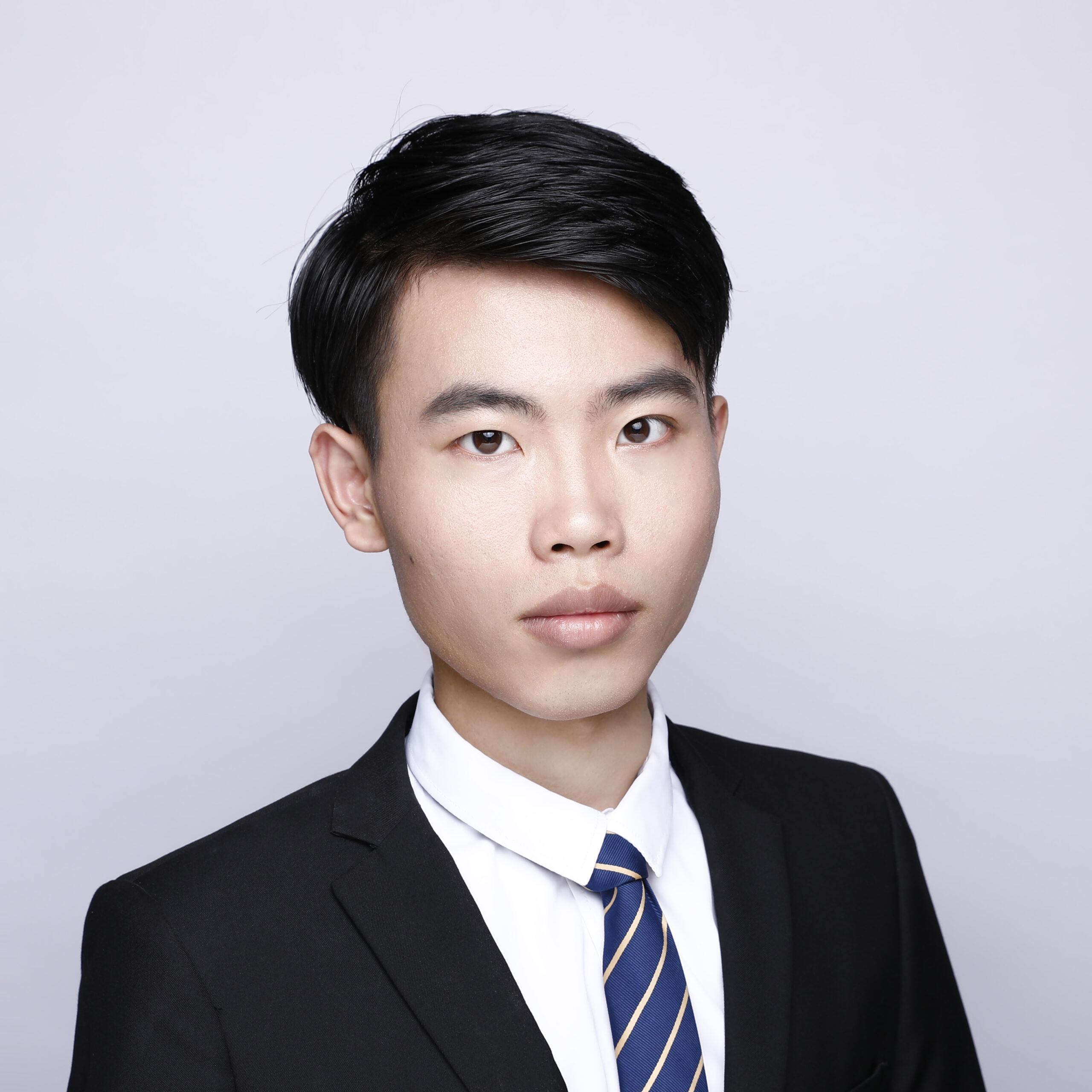 Yifan Yang合作论文数Microsoft Research Asia2Wenming Weng合作论文数2Hanyue Tu合作论文数Microsoft Research Asia2John Flynn合作论文数Google Inc.2
 Liang Hu (胡亮)合作论文数Department of Computer Science and Technology, College of Electronic and Information Engineering, Tongji University;Deepblue2




