The goal of this study was to enhance the utilization of millet straw and reduce N2O emissions, used the semi -interpenetrating (Semi-IPN) technology to develop a novel straw-based material (CSC-g-PAA/PPVA) through the composite integration of modified straw and linear polymer (PPVA). The fourier-transform infrared, x-ray diffraction, x-photoelectron spectroscopy and scanning electron microscopy techniques were be measured to provide evidence of the structure and morphology characterization of CSC-g-PAA/PPVA. The results demon-strated that it exhibited excellent water absorbency and enhanced the adsorption capacity of inorganic nitrogen, with the maximum adsorption of NH4+ and NO3 - were 94.5 mg/g and 70.3 mg/g, respectively. The properties of CSC-g-PAA/PPVA could significantly reduce N2O emissions, which was 42.5-95.7% lower than that of the fertilization groups, demonstrated that the modified material produced in this study had significant potential to reduce greenhouse gas emissions.
In order to enhance utilization of millet straw and reduce fertilizer loss, a novel multifunctional fertilizer (MS-gPAA/PDMUA) was developed using straw cellulose and linear polymer (PDMUA) by semi-interpenetrating technology. The structure and morphology characterization of MS-g-PAA/PDMUA were measured by fouriertransform infrared, x-ray diffraction, x-photoelectron spectroscopy and scanning electron microscopy techniques, to provide evidence of semi-IPNs networks and component interactions, and the results show that the product exhibited excellent water absorbency (562.3 g/g) and enhanced the soil infiltration. Cumulative release of N, P was 49.2% and 55.1%, respectively, after 40 days, coming up to the Committee of European Normalization (CEN) standard. The agricultural application of MS-g-PAA/PDMUA showed that it could promote growth indexes of wheat, which could improve wheat yields. Therefore, desirable water retention, slow-release properties, and wheat growth effects highlight the product's potential for agriculture application.
Chlortetracycline (CTC) pharmaceutical residue with strong acidity and in high CTC concentration is a hazardous solid waste. There is a huge attention but few studies on whether and how the CTC raw residue (CRR) can be degraded in microbiological way. In this study, three self-screened fungi, LJ245, LJ302 and LJ318, were used and thoroughly investigated to remove CTC, strong acidity and biotoxicity in CRR. The result disclosed that the concentration of CTC decreased rapidly in the first seven days and declined slowly subsequently, and the decreasing curve was similar to "L" shape. the corresponding degradation ratios of three strains were 95.73%, 98.53% and 98.07%, respectively. Meanwhile, numerous intermediates in degradation appeared in early days and gradually reduced, and eventually disappeared once the degradation time was long enough, among which eleven intermediates from CTC were identified. Moreover, the strong acidity of CRR declined dramatically using this biological method along with the CTC being metabolized, the pH value increased from 2.30 to 8.32 in the first 7 days. The toxicity of CRR was significantly reduced by LJ302 with inhibition rate from 96.02% to no inhibition effect to Micrococcus luteus. Therefore, CTC, strong acidity and biotoxicity of CRR could be effectively removed simultaneously through a biodegradation process driven with proposed strains.
This study aimed to synthesize the cellulose-modified material [potassium carboxymethylcellulose (CMC-K)] based on wheat straw from straw cellulose by alkalization and etherification so as to enhance the use of waste straw and improve water and fertilizer efficiency. Potassium was introduced through the carboxymethylation of cellulose to supply nutrients to crops. Moreover, the order of influential factors on the water absorption property was determined by an orthogonal experiment. The results showed that the highest water absorbency of 196.2 g/g was achieved for the conditions of 1.5:1 potassium hydroxide to cellulose, 1.5:1 chlomacetic acid to cellulose, 50% potassium hydroxide, and 80% chloroacetic acid. The CMC-K was characterized by Fourier-transform infrared, x-ray diffraction, and scanning electron microscopy techniques, and the results indicated that the product exhibited excellent water-retention ability in the soil and reduced infiltration. The agricultural application of CMC-K promoted the growth indexes of wheat, which improved wheat yields. Moreover, it also increased total nitrogen, ammonium nitrogen, total potassium, and available potassium. The fertilizer efficiency and water-retention behavior of CMC-K encouraged its use as a safe water- and fertilizer-retaining agent and as a soil conditioner in agricultural applications.
To enhance waste straw utilization and improve fertilizer efficiency, a novel semi-interpenetrating polymer network fertilizer (CMCK-g-PAA/PDMUP) was prepared from straw cellulose and linear polymer by solution polymerization. Polydihydroxymethyl-urea potassium phosphate (PDMUP) was included to supply nitrogen, phosphorus, and potassium nutrients. Characterization of CMCK-g-PAA/PDMUP with FTIR, XPS, XRD, and SEM techniques provided evidence for semi-interpenetrating polymer networks (semi-IPNs) and component interactions. The prepared product exhibited excellent water absorbency (681.3 g/g) and enhanced the soil's water-retention capacity. Cumulative release of N, P, and K was 56.1%, 64.3%, and 74.1%, respectively, after 40 days-meeting a Committee of European Normalization (CEN) standard. Agricultural application of CMCK-g-PAA/PDMUP promoted wheat growth. Desirable water retention, slow-release properties, and wheat growth effects highlight the product's potential for improving agriculture.
The reactive nitrogen (N) loss of the rice cropping system in the arid region shows a different pattern from that of subtropical humid region due to different climate types and crop management. However, little attention has been paid to this region. To fill this knowledge gap, a two-year (2009-2010) field observation was conducted in the Ningxia irrigation region, northwest China, to explore the major pathway of N loss following local farmers' optimal practice. Further, we determined the site-specific emission factors of ammonia and nitrous oxide, rate of surface runoff and subsurface (leaching and seepage) to improve the inventory resolution of arid irrigation region. Results showed that ammonia volatilization (45%-49% of total N loss), leaching and seepage (30%-33% of total N loss) were proved to be the primary factors of N loss in rice paddy fields. The emission factor of ammonia (21%) and N leaching rate (7.5%) following farmers' practice were 2.1 and 5.4 times higher than the country-specific default value in China. The country-specific N runoff rate and emission factor of N2O could be directly adopted in this region. A 20% reduction of N fertilizer to farmers' practice (300 kg N ha(-1)) alongside the application of organic fertilizer (30% N in synthetic fertilizer was substituted by pig manure) were considered to be the optimal N rate in this region. Our study can narrow the gap between researches on N loss in arid regions and subtropical humid regions. Meanwhile, the results can provide specific advice on N loss mitigation for policy makers in arid irrigation regions.
To enhance utilization of waste straw and improve fertilizer efficiency, a novel semi-interpenetrating polymer network fertilizer (MSP-g-AA/PVA-APP) synthesized from straw cellulose and linear polymer was prepared by solution polymerization. The ammonium polyphosphate (APP) was introduced to supply nitrogen and phosphorus nutrients. The prepared materials were characterized with scanning electron microscopy (SEM), Fourier transform infrared spectroscopy (FTIR), X-ray photoelectron spectroscopy (XPS), X-ray diffractometry (XRD) and thermogravimetric analysis (TGA). The water absorbency and slow-release behavior of MSP-g-AA/PVA-APP were also studied. The results indicated that MSP-g-AA/PVA-APP exhibited excellent water absorbency of 681.3 g/g in distilled water and enhanced the water retention capacity of soil. The cumulative N and P release rates of MSP-gAA/PVA-APP were 55.1 % and 47.3 % after 30 days in soil, respectively. The effect of MSP-g-AA/PVA-APP on growth of wheat was studied, and the results show that the application products could facilitate the growth of wheat. It could be concluded that the product with water retention and slow-release property, being low costs and friendly to environment, had great potential for application in agricultural.
为解决农业生产中秸秆废弃物不合理的使用导致资源浪费和农业污染问题,探讨秸秆基纤维素保水缓释肥的生产成本、在农业上应用的可行性,对秸秆基保水缓释肥的特性及性能进行了试验研究.以玉米秸秆为主要原料,利用硝酸-水溶液一步提取玉米秸秆纤维素,采用溶液聚合法将玉米秸秆纤维素与丙烯酸、丙烯酰胺单体进行接枝共聚反应,并利用半互穿网络技术制备具有保水功能的缓释肥(MS-CPPC),引入聚磷酸铵作为氮、磷营养物质.运用正交试验对制备条件进行优化,并利用扫描电镜(scanning electron microscopy)、红外光谱(flourier transform infrared spectroscopy)、X射线光电子能谱(X-ray photoelectron spectroscopy)、热重分析技术(thermo gravimetric analysis)对制备的产品进行表征;研究了MS-CPPC的吸水性以及在水和土壤中的氮磷缓释性.结果表明,制备的最优工艺为:纤维素与丙烯酸质量比为1:6、交联剂与纤维素质量比为1:20、引发剂与纤维素质量比为5:1、聚乙烯醇共聚物与纤维素质量比为5:2.该保水缓释肥有良好的吸水性,吸水率为443.2 g/g;混施到土壤中对水分入渗率和累积入渗量都有明显的促进作用,在实际应用中可以防止土壤表层滞水;同时,该产品具有氮磷缓释特性,24 h和30 d的氮、磷累计释放量分别为14.69%、13.01%和67.11%,55.74%,氮磷释放性能符合符合缓释肥料国家标准;土柱试验表明,添加MS-CPPC可以显著减少氮磷淋溶损失.利用玉米秸秆制备的保水性缓释肥具有制造成本低、环境友好等特点,并且可以实现秸秆资源高效利用.
为了描述植物响应养分异质性的普遍规律,解析造成不同研究间的结论存在差异可能原因,本研究收集了55篇已发表的文章进行荟萃分析(meta-analgsis),用以评估植物功能群分类、驯化水平和研究周期对7个有关植物地上部分和根系生长变量(地上部生物量、根系生物量、根冠比、地上部氮累积量、地上部磷累积量、根长密度和根系觅食精度)响应养分异质性环境的影响.分析结果表明,除了根冠比,养分异质性分布对其他6个植物响应变量均有正效应.根系形态的改变比率(26.5%~44.1%)显著高于植物生物量分配(7.3%~13.8%)和地上部养分含量(14.8%~18.0%).非豆科类双子叶植物和禾本科植物相比,养分异质性分布对豆科根系形态的改变比率显著高于禾本科植物,而对植物生物量分配和地上部养分含量没有显著的影响.农作物与野生植物的生物量和养分累积量对养分异质性的响应程度相同,但农作物具有更高的根系觅食精度.养分异质性分布对植物生长响应的正效应表现出随研究周期的延长而呈下降的趋势.
The green development of agricultural economy is a critical in promoting and coordinating ecological protection and economic development in the Qinba Mountain Area. To satisfy the research demand for green and circular development in this area, this study thoroughly analyzed the current situation of the agricultural economy, and summarizes the guiding ideology and strategical targets for the green development of the agricultural economy. Meanwhile, some innovative paths were elaborated from the aspects of agricultural development policy, large-scale land management, directional flow of talents and capital, technological upgrading for rural industries, promotion of labor quality, industry integration, and establishment of the World-Famous Mountain brand. Specifically, some guarantee measures were proposed, including promoting the common understanding and academic studies on regional development, implementing large-scale, branded, and specialized agricultural operation by demonstration, setting up a financial mechanism suitable for rural industries, transforming the functions of local governments, optimizing the role of rural-level organizations, and balancing the space for urban and rural development. Moreover, a specialized economic zone for green economy development should be established in the Qinba Mountain Area, and the ecological system should be innovated to guide the sustainable development of the society, economy, and ecology in this region.
为探究不同花穗整形方式对醉金香葡萄果实品质的影响,筛选出醉金香葡萄省工、优质的整穗方式,以5年生醉金香葡萄为试验材料,在见花前2~3d至见花后2~3d分别进行不同的整穗处理,并对不同处理下醉金香葡萄果实的生长指标、品质指标及工作效率进行测定.结果表明:不同花穗整形方式对醉金香葡萄果实的生长指标及品质指标影响较大.通过主成分分析得出的综合评价结果为留穗尖4 cm>留穗尖5 cm>留穗尖6 cm>去主穗留副穗>留穗尖7 cm>剪短小分枝>留穗尖8 cm>去上去下留中间>留穗尖9 cm.结合生产实际认为醉金香葡萄生产中使用的最适花穗整形方式为留穗尖5 cm.
Biochar application is considered an effective method of reducing nitrous oxide (N2O) emissions in soil. However, the mechanism and temporal effect of different doses of biochar on N2O emissions is still obscure. Here, we conducted a two-year field experiment to test the effects of different input amounts and frequencies of biochar on soil N2O emissions in North China. Biochar was applied in six different treatments in a winter wheat and summer maize rotation system: applications of 0 t/ha biochar (C0), 2.25 t/ha biochar (C1), 4.5 t/ha biochar (C2), 9 t/ha biochar (C3), and 13.5 t/ha biochar (C4) each year, and a single application of 13.5 t/ha biochar (CS) in the first year. The results showed that biochar could inhibit N2O emissions, reaching 20.6% to 60.1% in the wheat season and 18.1% to 39.4% in the maize season. The inhibitory effect of biochar on soil N2O emissions was dependent on amount and time. C3 had the best results in the wheat season, although its inhibitory effect in the maize season was not as good relative to C4 due to the lower biochar application. In addition, CS significantly reduced (27.7%) the cumulative N2O emissions in the first year, although the inhibitory effect disappeared in the second year. Biochar increased the nosZ gene copy numbers and promoted a reduction of N2O in the soil via the denitrification process. In conclusion, the inhibition of N2O emissions during denitrification is an important factor for reducing soil N2O emissions by biochar, and the inhibition of biochar is influenced by the input amount and time.
为明确高品质葡萄需满足的果穗质量和果粒质量条件,为河南地区'阳光玫瑰'葡萄等级评定提供参考,对河南省6个地市20多个'阳光玫瑰'葡萄种植园进行随机采样调查,根据果穗质量和果粒质量进行分级,对不同级别'阳光玫瑰'果实的多个指标进行了测定,并进行了主成分分析和相关性分析.结果表明:'阳光玫瑰'葡萄果穗质量的变化范围为337.62~1415.25 g,果粒质量的变化范围为6~18 g;主成分分析得分较高的果穗质量级别主要为800~900 g,得分较高的果粒质量级别为14~15 g;主成分分析得分与果穗质量和果粒质量均呈显著正相关,而与可溶性固形物含量和总酸含量均呈显著负相关;当'阳光玫瑰'的果穗质量为800~900 g、果粒质量为14~15 g时,其果实的综合品质较好.
ABSTRACTIn this study, novel semiinterpenetrating polymer networks (semi‐IPNs) superabsorbent resins with slow‐release fertilizer (CSC‐g‐AA/APP, CSC‐g‐AA/PVA‐APP), based on corn straw cellulose polymer and linear polyvinyl alcohol (PVA), were prepared by solution polymerization. The nitric acid‐aqueous solution method was adopted to extract cellulose from corn straw. Ammonium polyphosphate (APP) was introduced to supply nitrogen and phosphorus nutrients. The prepared materials were characterized by scanning electron microscopy (SEM), Fourier transform infrared spectroscopy (FTIR), X‐ray photoelectron spectroscopy (XPS), and thermogravimetric analysis (TGA). Moreover, the water absorbency and the slow‐release performance of CSC‐g‐AA/APP and CSC‐g‐AA/PVA‐APP were studied. The results indicated that the two superabsorbent resins exhibited excellent water absorbency of 262.8 and 303.2 g/g in distilled water, enhanced the water‐holding capacity of soil, and also released nutrients slowly. The cumulative N and P release rates of CSC‐g‐AA/PVA‐APP were 64.47 and 53.53% after 25 days in soil, which were lower than those of CSC‐g‐AA/APP. The addition of these products into soil significantly reduced the leaching losses of nutrients. Therefore, it can be concluded that the superabsorbent resins with water‐retaining and slow‐release properties, low production costs, and environment‐friendly characteristics, have great potential for applications in agricultural production. © 2020 Wiley Periodicals, Inc. J. Appl. Polym. Sci. 2020, 137, 48951.
有核葡萄的无核化生产是目前市场上无籽葡萄的重要来源.‘阳光玫瑰’葡萄糖度高、香味浓,深受市场推崇,近几年在我国发展迅猛,但自然坐果率较低、存在大小果,商品性不高,通过植物生长调节剂进行无核、膨大等处理后,果实无核、果肉硬脆、果粒整齐,果实商品性大幅提高.综述了‘阳光玫瑰’葡萄无核化生产概况、无核生产技术,详细分析了‘阳光玫瑰’葡萄无核化生产所用药剂赤霉酸、氯吡脲、噻苯隆和链霉素的使用浓度、处理时间,及处理后对果实品质的影响,以期为‘阳光玫瑰’无核化高效栽培体系提供借鉴或指导.
山东省德州市是我国重要的粮食生产基地,大量施用氮肥以及氮素流失是该地氮素污染的重要原因,设定合理的氮素盈余指标体系迫在眉睫.本研究以田间试验研究和文献荟萃为基础,探究德州市冬小麦-夏玉米轮作氮素盈余情况,建立该地氮盈余指标体系,并运用欧氏距离法对德州市当前氮素管理指标进行评价.结果表明:德州市整个冬小麦-夏玉米轮作体系轮作周期氮素盈余量为196.84 kg N·hm-2·a-1,小麦季氮素盈余量为111.07 kg N·hm-2,玉米季氮素盈余量为85.77 kg N·hm-2.氮素盈余量在30~70 kg N·hm-2·a-1时为德州市整个轮作周期氮素盈余量推荐值;德州市小麦季氮素盈余量推荐值为10~50 kg N·hm-2;德州市玉米季氮素盈余量推荐值为20~60 kg N·hm-2.在氮素的损失方面,氨挥发以及淋洗是氮素损失的主要去向.小麦季的氮素污染程度高,玉米季氮素污染程度相对较低.运用欧氏距离法计算德州市氮素管理水平(A值)为0.63,属于中级管理水平.综上,德州市冬小麦-夏玉米轮作体系农田氮素含量较高,从而导致氮素大量损失.加强氮素管理水平,提高氮素利用率是德州市氮素资源管理的长期任务.
The discrepancy between livestock breeding and crop planting in integrated crop-livestock system (ICLSs) usually cause nutrients surpluses to the arable land. Evaluation of regional land bearing capacity and identification of environmental critical regions associated with livestock in China are benefit to nationally- and regionally-specific livestock rearing. This study was conducted to demonstrates the changes in livestock industry from 1996 to 2016 in China and identify the environmentally critical regions of livestock farming by calculating the indexes of bearing capacity of cropland based on nitrogen (IN) and phosphorus (IP). The results revealed that the scale of livestock and poultry farming, manure production, and manure nutrients has increased over the past two decades. The livestock and poultry breeding quantity was 1290.8 million heads with a manure production of 4238.0 million tons in 2016. The manure N and P were 12.0 and 1.9 million tons with an increase of 5.8% and 5.9%, respectively. The N and P demand of crops from manure were 29.1and 4.5 million tons with an increase of 31.5% and 27.2%, respectively. The bearing capacities based on N and P were 2668.9 and 2554.7 million heads in pig equivalent, respectively. On the national level, the IN and IP were 0.43 and 0.45, respectively, which is categorized as Grade II. Livestock rearing in China was still within the bearing capacity of cropland. Both the Northeast and Northwest regions were categorized as Grade I, while Southeast region, Southwest region, the Middle and Lower Reaches of the Yangtze River and the North China were categorized in Grade II. There is still enough space for expansion of livestock and poultry farming in the Northeast and Northwest regions. In the North China region, Southwest region, the Middle and Lower Reaches of the Yangtze River, and the Southeast region, manure generated can be accommodated without any expansion in livestock breeding quantity. While livestock industry in Sichuan, Yunnan, Beijing and Tianjin need to be strictly controlled because of the grade of IV and V.
以我国华北平原冬小麦-夏玉米轮作农田为研究对象,在常规施肥的情况下,研究了4种不同剂量棉花秸秆生物质炭[CK、C1(2.25 t/hm2生物质炭)、C2(4.5 t/hm2生物质炭)、C3(9.0 t/hm2生物质炭)]对土壤理化性质及温室气体(CH4、N2O)通量的影响,结合作物产量评估了不同处理对全球温室效应和温室气体强度的影响.结果 表明:添加生物质炭不能显著影响土壤CH4的累积排放量.在夏玉米季,仅C2和C3处理可以显著降低土壤N2O累积排放量,分别为37.19%和48.58%;在冬小麦季,添加生物质炭处理均可以显著降低土壤N2O的排放,达24.26%~48.02%.路径分析结果表明,土壤NH4+-N含量是土壤N2O排放通量的主要影响因子.在夏玉米季,C2和C3处理可以显著增加玉米产量,分别达9.46%和10.99%;在冬小麦季,仅C3处理可以显著增加小麦产量,达7.13%.添加4.5 t/hm2和9 t/hm2的生物质炭处理可以显著降低全球增温潜势和温室气体强度,而添加2.25 t/hm2的生物质炭处理仅在冬小麦季可以显著降低全球增温潜势和温室气体强度.综上所述,将棉花秸秆转化为生物质炭用于华北平原农田,既能增加作物产量,又能降低温室气体排放.
以5年生红地球葡萄为试材,分别进行留穗尖8 cm、10 cm、12 cm、14 cm、16 cm及剪短小分枝、去上去下留中间和去主穗留副穗8种整穗处理,研究了不同花穗整形方式对红地球葡萄果实品质的影响,筛选出红地球葡萄省工、优质的整穗方式.结果 表明:留穗尖10 cm的单粒质量最大,留穗尖8 cm、12 cm和16 cm的可溶性固形物含量明显高于其他处理,留穗尖12 cm和14 cm的单宁含量显著低于其他处理,留穗尖8 cm、10cm和12 cm均要比去上去下留中间整穗有利于着色.留穗尖12 cm的综合效率最高,留穗尖14 cm综合效率最低.不同整穗方式的主成分综合评价结果为,留穗尖12 cm>留穗尖10 cm>留穗尖8 cm>去主穗留副穗方式>剪短小分支式整穗>留穗尖14 cm>留穗尖16 cm>去上去下留中间式整穗.确定留穗尖12 cm是红地球葡萄省工、提质的较佳花穗整穗方式,可为我国红地球葡萄花穗整形提供理论依据.
为了探索阳光玫瑰葡萄的最佳整穗方式,以阳光玫瑰常规花期留穗尖6 cm(CK)为对照,研究了在花前14 d留穗尖3 cm(A)、4 cm(B)、5 cm(C),花前7 d留穗尖4 cm(D)、6 cm(E)、8 cm(F),花期留穗尖4 cm(G)、6 cm(H)、8 cm(I)的不同时期、不同留穗尖方式对葡萄果实生长、品质及工作效率的影响。结果表明,不同时期、不同留穗长度的整穗方式在果实生长及品质等指标上均存在一定差异。花前7 d和花期整穗处理中,随着整穗长度的增加坐果数增加。随着整穗时期的延后,坐果数减少,果形指数逐渐变大,可溶性固形物含量和可滴定酸含量逐渐增高。花前7 d整穗处理的果皮颜色的"L"值(亮度)和"C"值(纯度)均最大,"CIRG"值(色泽指数)最小。不同处理无核率和空心率结果表现为花前14 d>花前7 d>花期。通过工作效率的计算可知,整穗时期越晚的处理,疏果用时越少,在生产实际中可达到省工高效的目的。最后,通过主成分分析综合评价筛选最佳的留穗方式,各处理的综合评价排名为D>C>H>B>G>A>F>I>E>CK,即在花前7 d留穗尖4 cm是阳光玫瑰葡萄省工、提质的理想整穗方式。上述结果为我国阳光玫瑰葡萄生产提供指导。
 Shiqi Yang (杨世琦)合作论文数Institute of Environment and Sustainable Development in Agriculture, Chinese Academy of Agricultural Sciences62
 Aiping Zhang (张爱平)合作论文数School of Information Engineering, China University Of Geosciences(Beijing)34
 Qingwen Zhang (张晴雯)合作论文数Institute of Environment and Sustainable Development in Agriculture, Chinese Academy of Agricultural Sciences29RuLiang Liu (刘汝亮)合作论文数24HongYuan Liu (刘宏元)合作论文数11Weishuai Wang合作论文数9YouHong Li (李友宏)合作论文数9YongSheng Wang (王永生)合作论文数8
 Xingren Liu (刘杏认)合作论文数Institute of Environment and Sustainable Development in Agriculture, Chinese Academy of Agricultural Sciences8Yu HONG (洪瑜)合作论文数7RuiYun Han (韩瑞芸)合作论文数7Lei Xing (邢磊)合作论文数7Fang WANG (王芳)合作论文数6DaWei Cheng (程大伟)合作论文数6Hong Gu (顾红)合作论文数6
 Jun Yi (易军)合作论文数College of Urban and Environmental Sciences, Central China Normal University6
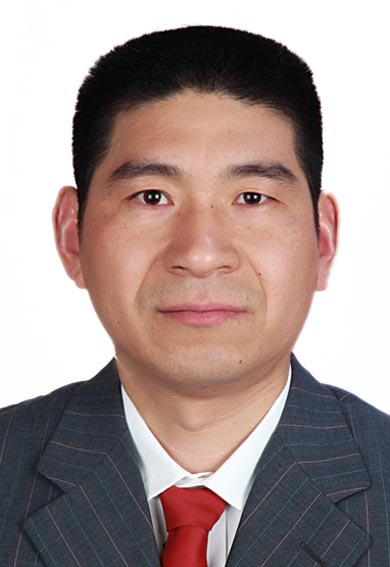 Jinyong Chen (陈锦永)合作论文数中国农业科学院郑州果树研究所6Jin-zhuo HUI (惠锦卓)合作论文数5YANG Shu-jing (杨淑静)合作论文数5XiZhi Guo (郭西智)合作论文数5
 Liangguo Luo (罗良国)合作论文数Institute of Environment and Sustainable Development in Agriculture, Chinese Academy of Agricultural Sciences5Ji Gao合作论文数5Shuai Qi (祁帅)合作论文数4XiaoJun Xie (谢晓军)合作论文数4TianCheng Zhao (赵天成)合作论文数4Yang Zhang (张洋)合作论文数4
 Xurong Mei (梅旭荣)合作论文数Institute of Urban Agriculture, Chinese Academy of Agricultural Sciences4
 Yuequn Dong合作论文数4
 QingZhong Zhang (张庆忠)合作论文数4
 Wangsheng Gao (高旺盛)合作论文数College of Agronomy and Biotechnology, China Agricultural University4
 Gaihe Yang (杨改河)合作论文数College of Agronomy, Northwest A&F University4CHEN Zhe合作论文数3Jian-nan XIAO (肖建南)合作论文数3Jinfeng Yang合作论文数3Yan-li HUO (霍艳丽)合作论文数3Ruixia LI (李瑞霞)合作论文数3LiJian Zhang (章力建)合作论文数3Ming Li (李明)合作论文数3Chen Chen (陈晨)合作论文数3Guoqiang Liu (刘国强)合作论文数中国农业科学院农业环境与可持续发展研究所3
 Zhe Chen (陈哲)合作论文数School of Ecology and Environmental Science, Yunnan University3
 Jianglan Shi (师江澜)合作论文数College of Natural Resources and Environment, Northwest A&F University3Yue Gao (高悦)合作论文数3Hui Zhang (张惠)合作论文数3
 Yongsheng Wang合作论文数3Ziyou Su (苏子友)合作论文数3Peiling Gao合作论文数2




