China's rural revitalization strategy drives transformative interventions in remote ethnic communities, yet its gendered consequences remain critically under-examined. Through longitudinal participatory observation and open-structured interviews (2021-2024) in a Miao village in Southwest China, this study interrogates how development reconfigures household and community gender dynamics. The intersecting forces of ethnicity, patrilineal norms, and modernity co-produce an empowerment paradox: while development projects provide economic resources, women's transformative agency remains unrealized due to systemic entrenchment of patriarchal structures, manifested in the intensification of reproductive labor, dilution of women's economic gains and other cultural-institutional backlashes. Development impacts diverge critically between dual-participant and female-only participant households. These results demonstrate that patriarchal backlash disrupts resource-to-agency conversion, showing that economic interventions alone are insufficient to dismantle structural inequities. Policy imperatives include redistributive care services, interventions through women's cooperatives, and digital asset governance. By centering ethnic minority women's experiences, this research advances an intersectional framework for feminist development praxis, revealing how modernity's promises are mediated by enduring hierarchies of gender and ethnicity.
Does foreign aid change local attitudes toward gender equality? Drawing on a theory of norm diffusion through intervention, we contend that when donors integrate norms into aid projects, such norms can be diffused to individuals in recipient countries. The World Bank and China are two comparable donors to examine this relationship. We matched the geocoded aid projects of the two donors from AidData and Afrobarometer surveys in Africa to test our hypotheses. Our strategy is to compare respondents' attitudes toward gender equality who were near a site where the project had been implemented at the time of the interview to those who were close to a site where the project would be started after the interview. We find that the World Bank aid increases local support for gender equality and the results differ across sectors and gender. Aid going to gender-sensitive sectors has the most significant impact on women's attitudes toward gender equality. In contrast, Chinese aid shows no similar effects. This study sheds light on the linkage between aid and social norm change and is expected to exert implications for policymakers and development practitioners adventuring in the land of aid.
性别研究兼具学术与行动导向,起源于西方女性主义思潮的性别与发展范式为促进性别平等的发展干预项目提供了明确的理论路径和实践指导,在发展过程中逐步呈现出规范、成熟和多元的特点.但随着全球发展格局的变化,以社会性别主流化为主导的性别与发展范式在发展实践中遭遇批判.尽管传统援助国对性别平等方面的投入不断增加,但促进受援国性别平等方面的效果有限.通过分析以往性别(妇女)与发展范式转型过程,并立足于南方国家的实际需求,可构建一个符合全球南方国家妇女发展条件、以妇女为中心、优先与伙伴国政府和妇女组织合作促进妇女经济地位提高(WEGO)的性别与发展实践路径.需要指出的是,该路径并不否认以往性别(妇女)与发展范式的理论价值,而是在剖析其在指导性别与发展实践方面局限性的基础上,探索了一条通过南南合作促进性别平等的有效路径,以期为提升新时代中国国际发展合作在促进全球妇女发展方面的有效性提供借鉴.
Along with the growing economic strength in recent years, China’s foreign aids have developed rapidly both in speed and scale. At the same time, as the world’s largest developing country, China’s foreign aid is significantly different from the traditional Western aids. China has consistently put emphasis on developing win-win and mutually beneficial South-South cooperative relationship with other developing countries, while encouraging sustainable development of aid projects by combining aids with investment and trade, so as to improve the development effectiveness in partner countries. The international academic community has expressed varied opinions on China’s practice in foreign aids. One view regards China’s practice in African countries as a kind of neo-colonialism for the purpose of establishing hegemony (Australia et al. 2008; McMichael 2012), plundering resources under the pretext of aids and investment, and facilitating the rapid economic growth in China (Fisherman 2005; Junger 2007; Rotberg 2008; Wild and Mepham 2006). Another view believes that China advocated and practiced “development partnership” in Africa for the purpose of imparting its own development experience to African countries (Goldstein and Reisen 2006; Le Pere 2007; Taylor 2006). Compared with traditional donor countries, China has paid more attention to the actual situation of recipient countries and introduced a demand-oriented and more effective way of development cooperation, which is more welcome and better received by recipient countries (Moyo 2010). In spite of disparities, all opinions send a common message that China, as an emerging economy, plays a vital role in international development assistance and in bringing about structural changes of international assistance (Bräutigam, 2010). On the whole, these studies did not get away from the traditional binary opposition that defines Sino-African partnership from the black-or-white or zero-sum perspective. The inadequate attention to the recipient countries and the stakeholders in the Sino-Africa interactions has seriously impaired the description and judgment of local phenomena, let alone interpreting the logic beneath the phenomena. From the perspective of methodology, the existing studies of China’s foreign aids mostly adopted discourse analysis or macro-data description. The framework and foundation of the analysis are mostly liberal or neo-liberal, with the local perspective of recipient in neglect (Mohen and Lampert 2012). On the other hand, the Chinese scholars; studies and analysis of China’s foreign aids are largely limited to the macro perspective of international relations, lacking a systematic study into the operation of Chinese aid projects at a specific and micro level. Based on the case study of a flagship agricultural assistance project of China, this chapter follows the anthropological research methodology to present an in-depth understanding of the interaction process between multiple Chinese and African stakeholders during the implementation of China’s foreign aid projects, analyze the logic of Chinese foreign aid projects’ local operation and its impact on Africa, and interpret the underlying economic, social and cultural factors, in a bid to reveal the deep-seated characteristics of China’s foreign aids.
Since the 1960s, dispatch of agricultural experts has been an important aspect in China’s agricultural cooperation with Africa. This form of aid shows different characteristics and involves varied tasks at different times. From the 1960s to the late 1970s, China deployed agricultural experts to assist African countries like Mali and Guinea with 87 agricultural projects, including agrotechnology experimental stations, agrotechnology promotion stations, and some large-scale farms and water conservancy projects (Wang Cheng’an 1995). In 1986, China, as a participant in the United Nations’ multilateral programs, provided technical assistance such as rice cultivation techniques to forty-two African countries (Qi Gubo 2011). Since 1994, China has played an active role in South-South cooperation within the framework of the Special Programme for Food Security (SPFS) launched by the UN Food and Agriculture Organization (FAO), making great contributions to improving the agricultural productivity and strengthening the food security of the recipient countries. In May 2006, the Chinese government and the FAO signed the “Letter of Intent on Establishing a Strategic Alliance for South-South Cooperation” aimed at improving global food security. China also inked tripartite cooperation agreements with the recipient countries through the FAO to take part in SSC programs, pledging to send a number of agricultural experts and technicians to developing countries, especially those in Africa. In November 2006, the Beijing Summit of the Forum on China-Africa Cooperation was held, ushering in a new era for China-Africa agricultural cooperation (Li Anshan 2012). At the summit, China announced to send one hundred senior agrotechnologists to African countries as one of the “eight major initiatives” for the development of China-Africa relations. According to the follow-up documents of the Forum, China would continue to dispatch agrotechnologists as an important measure adopted to help with African agriculture.
For a long time, China’s social scientists with a research interest in Chinese society have conducted their research merely within the country. This, however, might prove inadequate as China, now part of a closely interconnected world, interacts with the rest of the world in a way that is different from the Western society, presenting new materials for researchers. Some scholars have called for a shift of attention from “the civil society” to “the outside world” and advocated a closer look at the world after opening up to it (Gao Bingzhong 2009, 2010, 2014). Others proposed using the “outside world” as a mirror to “examine ourselves,” to better know ourselves through China’s going-global process. Only by a comparison with societies that are different from us in cultures and structures, can we fully and objectively understand ourselves. China is connected with the world in such aspects as economy, trade, political diplomacy, cultural exchanges, immigration, technology transfer, and foreign aid. Among them, foreign aid involves economics, politics, nations, individuals, technology, and culture, and thus makes an “ideal” object of study. What’s equally important is that the current international aid environment makes it significant and possible to compare, reflect, transform and innovate China’s foreign aid. With the transition of some aid receivers to aid givers, the concept of international aid has shifted from the “aid effectiveness” to “development effectiveness.” The conclusion of the Millennium Development Goals was followed by the Post-2015 Development Agenda. In this context, due to the difference in concepts, models and characteristics between China and the traditional Western aid projects, China’s foreign aid has attracted worldwide attention and discussions and became the focus of studies on international aids.
无论从哪个角度讲,俄乌冲突都可看作是自"二战",特别是冷战结束以后,全球地缘政治格局巨变的转折点.虽然这一危机在地缘上仍然属于"西方内部"的冲突,但不可否认的是,1054年7月16日罗马教皇和君士坦丁堡牧首相互开除教籍的"东西大分裂"时刻,实际上已经在西方的"东"和"西"之间埋下了持续千年的深深裂痕.俄乌冲突爆发后,俄罗斯东正教大牧首基里尔明确站在普京一边,以及罗马教皇方济各警告基里尔不要成为"普京的祭坛辅祭",似乎让我们看到了这一冲突的宗教底色.
The notion of ‘ownership’ has occupied a central place in measuring the effectiveness of North–South cooperation. How is it represented in South–South cooperation (SSC) and how does it affect the effectiveness of SSC? There is no clear answer in the existing literature. In this article, we describe the representation of ‘ownership’ in SSC and explain how it has affected the process and impact of SSC projects using case studies of three uniformly designed Chinese agricultural aid projects in Mozambique, Tanzania, and Ethiopia. Based on long-term participatory observation and in-depth interviews, we find that ‘ownership’ in SSC is represented differently from project design to implementation. Divergence and ambiguity exist among different stakeholders on the operation of ‘ownership’. ‘Co-ownership’ of two partners at the local level contributes to the effectiveness of SSC projects while ‘de-ownership’ and ‘forced ownership’ have a negative impact on the survival and sustainable development of SSC projects.
Irrigation system is a scare resource in most of drought-stricken Africa. How to manage and maintain the existing irrigation facilities in Africa is a debatable issue to both policy makers and beneficiaries. Irrigation facilities run by farmer cooperatives are considered ineffective, unsuccessful and dysfunctional in Tanzania by many researchers. A cooperative irrigation scheme is a mechanism that features the collective management of rural irrigation facilities by farmers’ cooperative with some government intervention and external support. There is an increasing emphasis on the roles of cooperative irrigation scheme in the development of the agriculture sector and poverty reduction of smallholder farmers. In this study, the authors investigated the management and services of this scheme and analyzed its contribution to poverty reduction of smallholder rice farmers and community development in Tanzania through both quantitative and qualitative methods. The results showed that the scheme helped smallholder farmers increase the rice production and brought better market opportunities. The farmers’ net income was also increased. Profit generated from rice farming not only improved the livelihoods of smallholder farmers but also created more employment opportunities in the rural communities. The research also revealed that the scheme was faced with a number of challenges due to resource and institutional constraints and low-level human capacity for both management and members. The research provides a feasible approach to effective management of small-scale agricultural infrastructure for poverty reduction in Africa.
This article aims to investigate the recent evolution of China’s development policy and practice. More precisely, how do China’s policymakers and practitioners understand and debate China’s role in international development, specifically in the context of the global Covid-19 pandemic? China’s growing development activities overseas, particularly in the African continent, have spurred intense debate over its role as a rising power in international development. China is viewed in the West both as a threat and as a valuable potential partner in development cooperation. However, differences between Western and Chinese conceptions of development have complicated cooperation and understanding of China’s development policy. Further understanding of these differences is needed, in order to evaluate their implications for low-income countries, and for potential trilateral cooperation.
过去四十年来,南南合作在数量、质量及地理范围覆盖方面都获得了长足的发展,其国际地位不断提高,在国际发展中的作用及对国际发展架构和日程的影响也越来越大.但关于南南合作的信息数据的统计挖掘却远远落后于实践,影响了南南合作发展知识的生产.本文分析了国际上南南合作评估的话语共识和技术分歧,讨论了全球、区域和国别层次南南合作评估框架设计的国际经验,指出与南北合作相比,南南合作评估面临缺乏系统评估技术、制度设计及引领机构的困境.在今后一段时间内,各国根据自己的实际情况设计南南合作评估框架的做法会更为普遍.中国作为南南合作最大的提供国,除了要探索出适合本国国情的报告及监测和评估南南合作的评估框架外,还要积极引领全球层次的南南合作评估机制的建立,参与构建新型国际发展知识.
自1948年成立以来,作为联合国专门负责国际公共卫生事务的指挥和协调机构,世界卫生组织(World Health Organization,以下简称WHO)在监测全球卫生状况,汇集关于疾病和卫生系统的信息,增强对传染病的抗病能力,防范、监测和应对公共卫生突发事件及提供全球性的卫生服务等方面,发挥了重要作用.但与很多“二战”之后成立的国际组织一样,WHO在发挥全球影响力的同时,全球政治经济形势及会员国国内政治的变化,也在不断影响和重塑WHO的理念与实践.
援助有效性评价在西方发展援助中占据核心地位,既是反思援助理念和指导援助实践的客观依据,也是西方发达国家对发展中国家实施新殖民主义的手段和维持政治霸权的话语工具.西方传统援助国及多边援助机构长期以来通过主导发展援助评价机制,不断完善关于发展援助有效性的话语和实践,逐渐建构出一整套国际发展知识体系,确立起该领域的知识霸权.但是,西方国家主导的这种评价机制存在话语与实践的深层次矛盾,客观评价发展援助有效性面临数据与方法上的困境.这为西方国家维持其长期主导且潜藏不平等的“援助-被援助”二元架构提供了空间.随着新兴经济体及更多南方国家的崛起,西方国家主导的这种知识霸权将会遇到越来越多的挑战.
Role theory was applied to analysis of the interaction process of various actors engaged in a Chinese aid project in Africa to explore who drove the implementation process and to reveal the hidden logic of China's foreign aid. The result revealed that the framework imposed by the State created space for actors from China and from Africa to exert agency to achieve common goals. The interaction process was constructed through role consolidation and concessions of different actors, which indicates that the project implementation was not driven by one side but rather by the mutual adaptation of the various actors involved. (c) 2018 John Wiley & Sons, Ltd.
为落实中非合作论坛约翰内斯堡峰会成果、推进中非农业合作,在中非合作论坛中方后续行动委员会的支持下,中国农业大学人文与发展学院于2016年6月26日举办了主题为“中非农业合作助推非洲农业现代化——中非农业发展政策对话”的国际研讨会.与会人员包括来自非洲14国的政府机构、部分国际组织和机构及国内23家相关单位的70余位官员、学者、媒体及企业界代表.会议围绕中非农业合作的状况、重点领域、途径、存在的问题及对策等进行了深入讨论,提出了不少建设性的意见和建议,以期为中非农业合作的深化和中非全面合作的持续推进提供参考.
The growing involvement of the Chinese state and business in Africa has generated significant debate, about China's Africa strategy and the benefits for Africa's development. What is the nature of Chinese-state capitalism in Africa? This study examines Chinese state-business relations and argues that China's involvement in Africa is more complex than often portrayed. It aims to build a closer understanding of the diverse factors that influence the "Chinese state-business relations as it is implemented in Africa. This paper focuses on how state-business interactions influence agricultural development outcomes, using six case-studies from Zimbabwe and Mozambique. It explores the question of how far the state can control business and direct development by identifying the key relationships that influence the decision-making processes of state and business actors within China and its African engagement. The paper challenges the conventional wisdom of homogenized, unitary relations. It argues that these relations are, in practice, heterogeneous, as a result of the state being disaggregated into a multiplicity of provincial relations and central state agencies, and tensions arising between commercial market and political interests. The active role of African governments in agricultural schemes is also affecting outcomes. China's engagement is multivariate, involving a multiplicity of agencies, operating at different levels, structures, and processes with sometimes contrary interests and goals. The findings of an analysis of six state-business projects in the agricultural sectors of Zimbabwe and Mozambique suggest that where agriculture is concerned, a wide range of Chinese agencies are involved, with businesses being driven by either market forces or national state interests, which together make outcomes less open to generalization. (C) 2016 Published by Elsevier Ltd.
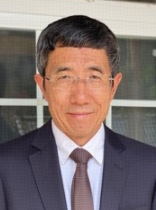 Xiaoyun Li (李小云)合作论文数College of Humanities and Development Studies, China Agricultural University13
 Gubo Qi合作论文数7
 Yue Zhang合作论文数6Jixia Lu合作论文数6
 Lixia Tang (唐丽霞)合作论文数College of Humanities and Development Studies, China Agricultural University6
 Xiuli Xu (徐秀丽)合作论文数College of Humanities and Development Studies, China Agricultural University5
 Qijie Gao (高启杰)合作论文数College of Humanities and Development Studies, China Agricultural University2Jing Gu合作论文数2guo zanfeng合作论文数1langton mukwereza合作论文数1
 m a eneji合作论文数1
 Zhenqian Huang (黄振乾)合作论文数College of Humanities and Development Studies, China Agricultural University;College of International Development and Global Agriculture, China Agricultural University1
 Alcides Vaz合作论文数Universidad Autónoma Metropolitana1
 J. Alexander Nuetah合作论文数College of Economics and Management, China Agricultural University1
 Dawit Alemu合作论文数Ethiopian Institute of Agricultural Research ( EIAR )1




