OBJECTIVE:To describe the surgical technique of direct anterior approach to total hip arthroplasty and to report the early clinical outcomes.METHODS:A series of 100 consecutive, unselected patients who had 116 primary total hip arthroplasty surgeries (16 bilateral) done through direct anterior approach from March 11 2015 to June 21 2016 was reviewed. There were 50 male patients and 50 female patients. The average patient age was 51 years, and the average body mass index was 24.69 kg/m2. The preoperative diagnosis included avascular necrosis of femoral head, hip osteoarthritis, osteoarthritis secondary to acetabular dysplasia, sequelae of hip old infection, ankylosing spondylitis, rheumatoid arthritis and avascular necrosis of femoral head after cannulated screws fixation of femoral neck fracture. There were 7 hips which had surgical history prior to the index hip arthroplasty, including 3 cases with bone graft treatment for avascular necrosis of femoral head through Smith-Peterson approach, 2 cases with acetabular shelf procedures for acetabular dysplasia through Smith-Peterson approach, and 2 cases with cannulated screws fixation for femoral neck fracture (internal fixation residual). All were uncemented hips. The stems used in this study included 67 Triloc stems (DePuy company, USA), 45 Corail stems (DePuy company, USA), 2 Accolade stems (Stryker company, USA), 1 Synergy stem (Smith-Nephew company, USA) and 1 Polarstem (Smith-Nephew company, USA).RESULTS:The average follow up period was 8.5 months, the average incision scar length was 10 cm, and the average postoperative Harris score was 93.62. There was 95% postoperative leg length discrepancy within 3 mm. The average cup inclination angle was 38.7° with 94.8% in the range of 30° to 50°. The average cup anteversion angle was 14.3° with 94.2% within the target range of 5° to 25°.The were 15 (12.9%) operative complications, including two femoral perforations (changing stem from Triloc to Corail), three calcar fractures (treated with cerclage wires), four greater trochanter fractures (2 were treated wire tension band, and 2 nondisplaced fractures untreated), one deep infection (debridement and retaining of the prothesis), one superficial infection (debridement), one hematoma and three wound healing complications (debridement). All the complications were successfully treated without any sequelae at the end of the latest follow-up. There was no postoperative dislocation. There was no major nerve and vascular injuries. There were 35 cases (30.2%) reporting symptoms of lateral femoral cutaneous nerve palsy.CONCLUSION:Direct anterior approach to total hip arthroplasty allows accurate and reproducible cup orientation positioning and leg length restoration and decreases the risk of postoperative dislocation, which is helpful for early rapid postoperative recovery.
Objective To investigate the accuracy of acetabular component inclination and anteversion in direct anterior approach (DAA) total hip arthroplasty(THA).Methods A retrospective study was performed on 81cases (100 hips) of patients who underwent THA surgeries via a DAA by one senior orthopedic surgeon from July 2015 to January 2016.The radiated surgical bed was used in the operation,and the acetabular prosthesis was placed though radiatory combined with acetabular prosthesis guider.The acetabular inclination angle and acetabular anteversion angle were measured through postoperative radiographs of pelvis,which was compared with Lewinneck's safe range(anteversion angle was 30° to 50°,anterior inclination angle was 5° to 25°),and the accuracy of acetabular component inclination and anteversion via DDA was investigated.Results After the surgery,the mean inclination angle was (39.00° ± 4.47°),the mean anteversion angle was(14.29° ±5.50°);91.0% (91/100) inclination angle and anteversion angle were in Lewinnek's safe range;none of the patients had been dislocated for 10 months after surgery.Conclusion Accurately placing the acetabular component can be achieved via DAA THA.
目的 探索新型智能应力测量系统与传统软组织平衡评估方法的相关性.方法 采用一种新型的应力分布电子测量系统,在50例全膝关节置换术(TKA)中实时测量不同屈曲角度下关节内应力分布的变化,同时应用传统间隙测量和内外翻应力试验方法进行软组织平衡的评估.采用秩相关分析方法分别分析内外侧应力差值与内外侧关节间隙宽度差值以及内外翻应力试验差值间的相关关系.结果 膝关节在屈曲0°及90°位,内外侧应力分布差值与内外侧关节间隙测量差值的相关系数r1=-0.727;在屈曲0°,30°,45°,60°,90°位,内外侧应力分布差值与内外翻应力试验差值的相关系数r2=-0.671.结论 关节内应力分布电子测量系统所测得的应力分布与传统软组织平衡的衡量方法相关性较好,并具有较后者更精确和测量状态更接近TKA术后膝关节真实生物力学环境等优势.
Objective To study surgical technique and choice of prosthesis in the second stage revision with infections of artificial hip replacement. Methods From January 1999 to December 2007, 32 patients with infections after unilateral hip replacement underwent the second stage revision, including 19 males and 13 females, with a mean age of 56 years (32-80 years). Bone defect in acetabular side by Paprosky classification were 13 cases(type Ⅰ), 9 cases(Ⅱ A), 5 cases(Ⅱ C), 1 cases(ⅢA), 4 cases(Ⅲ B). Cemeritless prosthesis was applied in 22 cases with type Ⅰ-Ⅱ A bone defect. Cemented prosthesis was applied in 10 cases with type Ⅱ C-Ⅲ B bone defect followed by acetabular reconstruction by allograft, mesh and cage or ring. Bone defect in femoral side by Paprosky classification were 11 cases(Ⅰ), 4 cases(Ⅱ A), 1 case (Ⅱ B), 5 cases(Ⅱ C), 6 cases(Ⅲ A), 3 cases(Ⅲ B), 2 cases(Ⅲ C). Cemented prosthesis was applied in 8 cases with type Ⅱ C (5 cases) and Ⅲ B(3 cases) bone defect. Cementless prosthesis was applied in the other cases, including proximal fixation(5 cases with type Ⅰ ), extensive prouscoating(6 cases with Ⅰ, 4 cases with Ⅱ A, 1 case with Ⅱ B) and distal fixation (6 cases with Ⅲ A, 2 cases with Ⅲ C). Results All cases were followed up i-10 years. Among them, 2 patients suffered recurrent infections, and underwent debridement and conservative treatment, with sinus tract at final follow-up. Harris score were 65 and 78, respectively. The other 30 cases got satisfactory results. Harris score was increased from average 48 (31-78) preoperatively to 85 (80-95) postoperatively. At final follow-up, 30 prosthesis had no subsidence, migration and loosening on X-ray images. Conclusion The success rate of two stage revision with infections of artificial hip replacement is satisfactory. The key point of revision is to choose proper prosthesis according to bone defect type after the infection is under better control.
Objective To study the application and effects of bone cement spacer on the treatment of infections following artificial hip replacement. Methods Among the 36 eases of infections following uni-lateral hip replacement, 20 patients were males and 16 were females. The average age of prosthesis removing was 52 years. The time interval between the hip replacement and the infection varied form 2 weeks to 19 years. 34 eases took out the total hip prosthesis in the first-stage procedure; 1 case took out the acetabular 5 month later due to re-infection; 1 case took out the total hip prosthesis 1 month later due to re-infection. The spacers were made from bone cement mixed by 5%-10% vancomycin, implanted the femoral medullary cav-ity. Lavage the indwelling tubes if there were more purulent secretions. Patients were given routine intra-venous vancomyein, twice a day, or sensitive antibiotics according to the bacterial culture Results . Two weeks later, the medication was changed to other sensitive antibiotics or oral Rifampin for 4 to 8 weeks. The lavage was generally maintained for 3 to 7 days. The patients were allowed to walk unbearing 1 week postoperation, unbearing at least 2 months. Results Infections in 34 patients were effectively controlled after 3 to 19 months respectively. Among them, 2 presented spacer fracture (the stent was the intramedullary pin); 1 showed spacer dislocation; 2 patients (a Steinmann pin and a original femoral prosthesis as the stents for each) rejected revision; 2 patients had continued infections, received spacer removal and Girdstone opera-tion, and then 1 infection was effectively controlled, the other died due to complication. The successful rate was 94.7%. Conclusion Bone cement spacers are able to raise the successful rate to control the infection through slow local release of high-concentration antibiotics significantly and are helpful to maintain joint sta-bility, restrict the formation of scars, avoid lower limb length inequality, reimplant the prosthesis easily.
骨质疏松症是一种与激素、年龄、运动、饮食、体重和种族等诸多因素都有密切关系的退行性疾病,早期的骨质疏松往往是悄无声息的,无明显临床症状和体征.而中晚期骨质疏松症患者除了可能造成呼吸系统障碍外,还可引起腰背部及下肢疼痛、身长缩短及驼背,严重的还可能造成骨折.
Objective To discuss the characteristics and clinical results of rotating platform high flexion(RDHF)total knee replacement TKR. Methods A total of 61 patients(78 knees)including 13males(15 knees)and 48 females(63 knees)at age range of45-79 years(mean 64.3 years)were treated with Sigma(RP-HF)rotating platform high flexion total knee replacement.Osteoarthritis was found in 56patients and rheumatoid arthritis in 5.By medial parapatella approach,denervation and facet repair of the patella were done,without replacing them. Results All 78 knees were followed up for 3-16 months (mean 10.5 months).the X-ray film demonstrated no prosthesis loosening,patella dislocation or subluxation.According to the knee society scoring system,the preoperative score was 48 points(33-72 points)and the knee functional score was 41 points(28-63 points)on average.After surgery,the knee score was 97points(88-100 points),the functional score 96 points(84-99 points),and the range of motion(ROM)130.(110.-150.)on average.No spin-out or infection were detected. Conclusions The Sigma RP-HF knee system provides sufficient contact area.full range of patella locus and sufficient axial rotation,which helps reach a stable and durable high flexion performance.Our short-term clinical follow up result is good but the advantages of low wear and longevity of the Sigma RP-HF prosthesis still need further study.
目的探讨旋转平台人工全膝关节置换术的临床效果。方法对49例患者行70膝的Sigma旋转平台人工全膝关节置换术,其中21例为双侧膝关节置换。男7例,女42例;年龄38~78岁,平均63岁。术前诊断膝骨关节炎42例,类风湿关节炎7例。采用正中切口髌旁内侧人路、后稳定型假体,所有膝关节都未进行髌骨置换,但对髌骨进行去神经化和修复术。结果本组随访时间6~22个月,平均12.7个月,共70膝。影像学显示均无松动,无髌骨脱位。对膝关节临床评定采用美国膝关节学会评分(KSS评分),术前膝评分49分(35~70分),膝功能评分40分(30~60分),术后最后一次随访膝评分为96分(83~100分);功能评分为95分(65~100分),没有旋转平台的旋出,没有翻修或者感染的发生。结论旋转平台人工全膝关节置换术在运动学分析和实验室磨损试验的数据上有潜在的优势,尤其是在年轻的活动能力强的患者,近期随访获得了满意的疗效,远期的疗效还需进一步随访。
目的 探讨在全髋关节置换术后感染Ⅱ期翻修术中使用抗生素骨水泥间隔物的方法和有效性.方法 采用抗生素骨水泥间隔物治疗30例30髋行全髋关节置换术后感染的患者,感染治愈后行Ⅱ期人工关节翻修术并进行随访. 结果 29例用抗生素间隔物治疗,感染得到有效治疗,1例失败.其中27例患者行Ⅱ期翻修术,Harris评分由间隔物置入前的34.6分提高到Ⅱ期置换术后的81.8分,但1例感染复发. 结论 抗生素骨水泥间隔物能有效地治疗感染,维持软组织的张力,为Ⅱ期翻修手术创造良好的条件.
[Objective]To investigate the method and efficiency of operative femoral supracondylar varus osteotomy combined with new blade plate on treatment of valgus deformity of knees.[Method]Thirty-seven patients with 43 knees with valgus deformity were treated with femoral supercondylar varus osteotomy with Giebel blade plate(Link company/Germany)from Oct.2000 to Oct.2005.The study group consisted of seven men with 8 knees and thirty women with 35 knees,the average age of the patients was 31.2 years(range,fifteen to seventy years).Eleven patients with 13 knees had lateralcompartment osteoarthritis,Ahlback stage Ⅰ eight patients with 10 knees and stage Ⅱ three patients 3 knees.The full-length Ap view of the lower extremity and the weightbearing AP view of the knee were obtained before and after operation,as well as the femoral angle and femoral-tibial angle were evaluated.The Giebel blade plates were taken out average 1.5 year after operation and the patients were followed-up,bone union and the change of the correction angles and the pain of the knees were evaluated.[Result]All deformity of the knees were well corrected,the femoral angle were corrected from 71.7°(62°~75°) to 82.1°(78°~85°),the average correction angle was 10.4°(8°~21°).With average 1.5 year follow-up thirty four patients with 40 knees got good bone union,two knees had non-union and we changed the internal fixationwith bone autc-grafting and got good results,as well as lost follow-up for one knee.The pain relieved in 10 knees with lateral osteoarthritis and disappeared in 3 knees after operation.[Conclusion]Femoral supracondylar varus deformity of the knee,the technique is simple and damage is slight,fixation is safety and effective.
目的 回顾性分析AML假体在人工髋关节股骨侧翻修中的应用经验,探讨其应用价值.方法采用AML假体对35例人工髋关节术后股骨侧假体松动、股骨骨缺损Paprosky分型Ⅰ~Ⅲb型的患者进行了翻修.结果平均随访17个月,所有病例的X线表现均无明显变化,无假体下沉、移位和原有骨缺损进一步加重,Harris评分平均由37分提高到92分.结论人工髋关节术后股骨侧假体松动者中,针对Paprosky Ⅰ~Ⅲb型骨缺损的翻修,AML假体是一个良好的选择。
Objective To discuss the midterm results of modular femoral prosthesis in total hip revision surgery for bone defects.Methods From December 2001 to June 2006,by using Link-MP modular femoral prosthesis for muhiple reasons(48 with asepsis loosening,seven with infections using two-stage revision procedure,one with fracture of proximal femur and one with periprosthetie fracture), total hip revision surgery was carried out in 56 eases including 24 males and 32 females with age range of 38-77 years(mean age 58.8years).Causes for revision included sterile prothesis loosening in 48 cases, infection of hip prosthesis in seven and peripheral fracture of femoral stem fracture prosthesis in one.Re- vision for infected femur was all at stageⅡ.Of 56 cases with femoral stem prosthesis loosening,30 had loosening of primary cemented prosthesis and 26 of uncemented prosthesis.According to the Mallory bone defect classification,five eases were with typeⅡbone defect,21 with typeⅢA,28 with typeⅢB and two with typeⅢC.Bone grafting was performed in 12 cases and wire or cable cerelage in 28.Fracture of great trochanter was found in two cases,fracture of femoral stem in three and perforation of femoral stem in one.Results A total of 52 eases half year after operation were followed up for mean 31.78 months (8-56 months).No migration of distal femoral stem was found in all eases except for one ease had 1.5 cm subsidence of proximal femoral stem.The Harris hip score was preoperative 46 scores(21-52)and post- operative 89(79-94).There found no significant limb discrepancy,thigh pain or dislocation.Conclu- sions Total hip revision surgery for femoral bone defect using modular femoral prosthesis has optimal midterm result especially in its advantages of regulating limb length,offset,anteversion,which can help us match the proximal femur with distal femur and achieve initial and long-term stability.
Aim: To investigate the inhibitory effect of hydrogen sulfide on expression of elastin in hypoxic pulmonary hypertensive (HPH) rats. Methods: Twenty-four rats were randomly divided into three groups; control group (n = 8), hypoxic group (n = 8) and hypoxia + NaHS group (n = 8). Pulmonary artery mean pressure (mPAP) of three group rats was measured via right ventricular catheterization. Right ventricle and left ventricle + septum of each rats were isolated from intact rats and weight of right ventricle/ (weight of left ventricle + septum) ratio was calculated. The percentage of muscularized arteries of small pulmonary arteries was measured using a light microscope. The expression of elastin and TGF-β in pulmonary artery smooth muscle cells was observed with immunohistochemistry. Results: mPAP and weight of right ventricle/(weight of left ventricle + septum) ratio were significantly higher in rats of hypoxic group than those of control group (P < 0.01) and they were much lower in rats of hypoxia + NaHS group than those of hypoxic group (P < 0.01). The percentage of muscularized arteries and partly muscularized arteries of small pulmonary arteries was increased in rats of hypoxic group compared with that of control group (P < 0.05, P> 0.01) while the percentage of unmuscularized arteries to small pulmonary arteries was decreased in rats of hypoxic group compared with that of control group (P < 0.01). However, when NaHS was used, the percentage of muscularized arteries and partly muscularized arteries of small pulmonary arteries was decreased in rats of hypoxic + NaHS group compared with that of hypoxic group (P < 0.01). And the percentage of unmuscularized arteries to small pulmonary arteries was increased in rats of hypoxic + NaHS group compared with that of hypoxia group (P < 0.01). The expression of elastin of median and small pulmonary artery smooth muscle cells in hypoxic group significantly increased compared with that in control group (P < 0.01). While, it was decreased in rats of hypoxia + NaHS group compared with that of hypoxic group (P < 0.01). The expression of TGF-β of median and small pulmonary artery smooth muscle cells in hypoxic group significantly increased compared with that in control group (P < 0.01). While, it was decreased in rats of hypoxia + NaHS group compared with that of hypoxic group (P < 0.01). Conclusion: The result of this study showed that hydrogen sulfide might play a modulatory role on hypoxic pulmonary vascular structural remodeling and the development of HPH through inhibiting the expression of elastin of extracelluar matrix from hypoxic rats.
Objective To investigate morbidity of deep venous thromb os is(DVT) in patients with congestive heart failure,cancer,stroke and bone trauma of low extremity,meanwhile,to estimate incidence of pulmonary embolism(PE) among patients with DVT.Methods DVT was detected with Doppler technique i n 430 consecutive patients with cancer(106 cases),stroke(120),bone trauma of low extremity (104) and congestive heart failure(100) who did not accept any antico agulant before.PE was diagnose using radionuclide pulmonary ventilation/perf usio n scan in 36 DVT patients.Results 18 DVT cases were found among 430 patients,the incidence was 4.2%.Of them,5 cases(5%) in congestive heart failure, 3 cases(2.83%) in cancer,2(1.92%) cases in bone trauma of low extremity,8(6.67%) cases in stroke.4 cases of PE were found among 36 patients with DVT.The morbidi t y of PE was 11.11%.Conclusion The morbidities of DVT,PE in investiga ted inpatients were less than those in Western Country.The DVT in right lower ex tremity was likely to lead to PE.\;
 Yixin Zhou (周一新)合作论文数Beijing Jishuitan Hospital;Peking University Health Science Center9
 YiXiong Zhou (周乙雄)合作论文数7Deyong Huang合作论文数6JianHua Yin (殷建华)合作论文数6
 Hui Xu (徐辉)合作论文数Beijing Jishuitan Hospital5Ye Huang (黄野)合作论文数4YuJun Li (李玉军)合作论文数4
 Wei Li (李为)合作论文数Beijing Jishuitan Hospital4
 Hong Zhang (张洪)合作论文数Fourth Medical Center of PLA General Hospital3
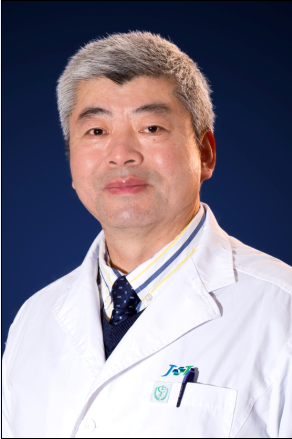 Xiaozhong Guo (郭晓忠)合作论文数Beijing Jishuitan Hospital3Yi Jiang (蒋毅)合作论文数2dufan ge (葛笃凡)合作论文数1shuangying feng (冯双英)合作论文数1yongjun wang (王拥军)合作论文数1xin ma (马欣)合作论文数1M Lv合作论文数1Dejin Yang (杨德金)合作论文数1Da-cheng WANG (王达成)合作论文数1XingShan Wang (王兴山)合作论文数1ShengJie Guo (郭盛杰)合作论文数1ShuJun Liu (刘淑俊)合作论文数1BaoXin Dou (窦宝信)合作论文数1Qing Liu (刘庆)合作论文数1JinQing Zhang (张金庆)合作论文数1Ming Lv (吕明)合作论文数1Jian Wu (吴坚)合作论文数1Hong Chen (陈虹)合作论文数1
 Hao Tang合作论文数Fourth Clinical College, Peking University1Wu Jian合作论文数1
 ChangMing Xiong (熊长明)合作论文数Pulmonary and Vascular Disease Center, Fuwai Cardiovascular Hospital, Chinese Academy of Medical Sciences1
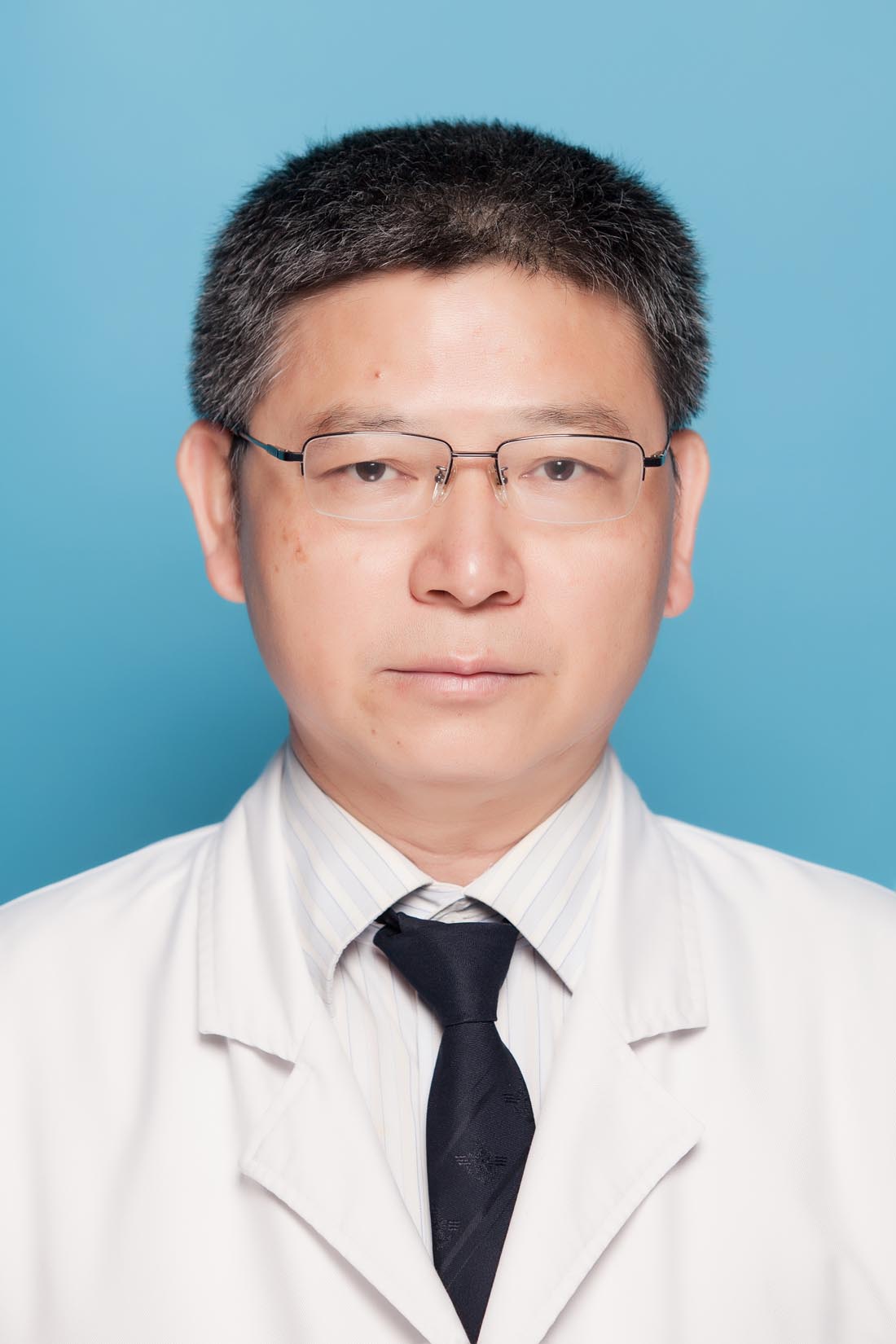 Jianguo He (何建国)合作论文数Fuwai Hospital, Chinese Academy of Medical Sciences1
 Xinmin Liu (刘新民)合作论文数Peking University First Hospital1Bin Zhao (赵斌)合作论文数1
 Junbao Du (杜军保)合作论文数Peking University First Hospital1
 Cong Wang (王聪)合作论文数Beijing Jishuitan Hospital1
 Xiansheng Cheng (程显声)合作论文数Fuwai Hospital, Chinese Academy of Medical Sciences1
 Lijun Di (邸立军)合作论文数北京大学肿瘤医院乳腺肿瘤内科1
 Haiying Wang合作论文数VYCON, Inc.1Hongyi Shao合作论文数1




