Objective:To investigate the effect of low tourniquet on ankle fracture surgery.Methods:The data of 44 patients with ankle fracture (21 males and 23 females) who were admitted between April 2018 and May 2020 in Tongji Hospital Affiliated to Tongji University were retrospectively analyzed. The patients were aged 18-57 years (average of 42.8 years). The patients were equally divided into two groups, namely, the high and low tourniquet groups, according to the location of tourniquet binding. Both groups were treated with open reduction and internal fixation. Operation time, tourniquet time, intraoperative and postoperative bleeding, and complications (ecchymosis, soft tissue mass, blister, skin ulcer, and lower extremity deep venous thrombosis) were also observed. Pain in the affected limb was evaluated by visual analog scale (VAS) on the 1st, 3rd, 7th, and 14th days after operation. Ankle flexion, back extension, ankle range of motion, and ankle-hindfoot function with American Orthopedic Foot and Ankle Association (AOFAS) score were observed for 4 weeks, 12 weeks, 6 months, and 12 months postoperatively.Results:The operation was successfully completed in both groups. No significant differences in operation time, tourniquet time, and bleeding volume were observed (all P values >0.05). In the high tourniquet group, one case of ecchymosis at the tourniquet compression site, one case of soft tissue mass, and one case of deep venous thrombosis were found by color Doppler ultrasonography. No related complications occurred in the low tourniquet group. No significant differences in the VAS scores of limb pain between the two groups were noted on the 1st, 3rd, and 7th days after operation (all P values >0.05). On the 14th day after operation, the VAS score of the low tourniquet group was lower than that of the high tourniquet group ( t=2.41, P=0.020). All patients were followed up for 6-24 months with an average of 15.8 months. During follow-up, incisions in the two groups had no infection and healed. No complications, such as loosening and fracture of the internal fixation, occurred. No significant difference in fracture healing time was found between the two groups ( t=0.94, P=0.351). At 4 weeks after operation, the ankle flexion, back extension, ankle range of motion, and AOFAS ankle hindfoot score of the low tourniquet group were significantly higher than those in the high tourniquet group (all P values < 0.05). No significant differences in ankle flexion, back extension, ankle range of motion, and AOFAS ankle-hindfoot score were found between the two groups at 12 weeks, 6 months, and 12 months after operation (all P values >0.05). Conclusion:The application of low tourniquet in ankle fracture surgery can ensure a good operation interface, improve the early range of motion and clinical function of the ankle joint after operation, and reduce the occurrence of limb pain and related complications caused by traditional tourniquet. Thus, low tourniquet is a new method worthy of recommendation.
目的 探讨基于快速康复外科理念的路径化护理在膝关节置换术患者中的应用效果.方法 选取我院2017年5月至2019年5月收治的行膝关节置换术患者84例为研究对象,按照随机数字表法将其等分为对照组和观察组,对照组实施常规护理,观察组实施基于快速康复外科理念的路径化护理.比较两组患者膝关节功能(HSS)评分及Zung焦虑自评量表(SAS)、抑郁自评量表(SDS)评分.结果 观察组各阶段HSS评分明显高于对照组(P<0.05);SAS,SDS评分均明显低于对照组(P<0.05).结论 基于快速康复外科理念的路径化护理在膝关节置换术患者中的应用,能改善患者负性情绪,促进膝关节功能恢复.
目的 了解加速康复外科理念应用于髋关节置换手术患者的护理中对住院时间长短、髋关节功能及患者满意度的影响.方法 选取该院2016年1月~2016年12月实施人工髋关节置换术30例患者(观察组)应用加速康复外科理念,同期选取实施相同手术的30例(对照组)进行对照,对比两组患者髋关节功能、住院时间长短及患者满意度.结果 观察组患者的髋关节功能优于对照组,其住院时间较对照组缩短,满意度较高,差异有统计学意义(均P<0. 05) .结论 快速康复外科理念的应用对髋关节置换术患者功能恢复更有益,可以有效缩短住院时间,提高髋关节功能和患者满意度.
目的 探讨尿失禁知识宣教对老年腰椎间盘突出症围术期尿失禁患者排尿功能的影响.方法 采用非概率抽样的方法,选取2018年9月1日-12月31日上海市某三级甲等医院诊断为腰椎间盘突出症围术期出现尿失禁症状的老年患者,将前两个月收治的38例患者设为对照组,后两个月收治的37例患者设为观察组.对照组实施常规护理,观察组在对照组的基础上再给予包含运动、饮食、药物、心理、危险因素控制这五大部分的尿失禁知识.以国际尿失禁咨询委员会尿失禁问卷表(ICI-Q-LF)及尿失禁生活质量问卷(I-QOL)作为评估工具.干预12周后比较两组患者排尿功能、尿失禁生活质量评分.结果 观察组患者国际尿失禁问卷简表得分低于对照组(P<0.05),尿失禁生活质量评分明显高于对照组(P<0.05).结论 尿失禁知识宣教可改善老年腰椎间盘突出症围术期尿失禁患者排尿功能、提高患者生活质量.
尿失禁的发病率在全球呈上升趋势,但在骨科领域的研究却不多.老年骨科围术期患者对其认识度与重视度不够,加强对老年骨科围术期患者尿失禁的研究与宣传迫在眉睫.本文通过查阅文献了解老年骨科围术期患者尿失禁发生的原因、种类及流行病学现况,并对尿失禁发生的危险因素及国内外采用的主要治疗与围术期护理进行了总结与分析,为日后根据危险因素对老年骨科围术期患者实施预防尿失禁的干预措施提供指导作用.
Objective To observe the effect of comprehensive nursing intervention on functional exercise compliance of patients after knee joint replacement.Methods By convenience sampling,50 cases were selected and divided into observation group and control group.The control group received routine physical disease nursing and nursing instruction.Patients in the observation group were given routine physical disease nursing and nursing instruction,on the same time give the implementation of comprehensive nursing intervention measures,including cognitive intervention,behavioral intervention,psychological intervention,social support intervention.The compliance of the two groups of patients with postoperative functional exercise were observed.Results Compared with the control group,the frequency dependence and intensity of functional exercise in the observation group were higher than those in the control group,the difference was statistically significant(all P <0.05).Conclusion Comprehensive nursing interventions have a significant effect on improving function exercise compliance in patients with knee replacement surgery.
目的 探讨Pilon骨折分期治疗的围术期临床护理体会及疗效.方法 2013年1月~2015年1月共收治Pilon骨折患者22例.均采用分期治疗方法.围术期对患者进行心理护理,手术前后皮肤软组织肿胀及水疱的护理,跟骨结节牵引及引流管的护理;同时对患者进行疼痛护理和肢体功能的康复护理.结果 术后22例患者获得随访,平均14个月(12~24个月).伤口均Ⅰ期愈合,无感染.采用Mazur评分系统,优17例,良4例,可1例,优良率为95.5%.结论Pilon骨折分期治疗的患者进行合理而全面的围术期护理和康复指导,是手术成功的保障.
<正>股骨颈骨折是老年人最常见的骨折之一。人工股骨头置换术是一种简单、有效、迅速恢复髋关节功能的手术方法。其优点在于手术对患者的创伤较小,可缩短患者卧床时间,早期进行适量的负重活动,可降低因卧床引起的并发症和死亡率[1]。回顾我科2010年1月~2012年9月行人工股骨头置换
<正>跌倒与坠床是医院中较为常见的不安全因素。5%~15%的跌倒会造成脑部损伤、软组织挫伤、骨折和脱臼等伤害[1]。住院患者因身体功能障碍或机体器官功能减退、感觉迟钝、机体平衡失调、身体衰弱等原因,容易发生意外跌倒与坠床。由住院患者跌倒与坠床引起的医疗纠纷、医疗和康复支付、以及并发症使患者日常生活能力的下降,严重影响医疗
目的 总结穿支蒂腓肠神经营养血管皮瓣术后的血液循环特征及其逆向转移修复足踝创面的围手术期护理经验.方法 2005-2009年共施行腓肠神经营养血管皮瓣逆向修复足踝创面术27例,术前根据伤病认知的心理反应特点,将患者分为敏感型和迟钝型,分别进行心理护理;术后观测皮瓣的血循特征(颜色、温度、肿胀、毛细血管充盈时间4项),并进行相应的护理.结果 根据不同心理反应特点进行术前护理指导,患者的术后依从性好;皮瓣肿胀程度是反映术后静脉回流障碍最敏感和最客观的指标;对出现张力水疱的皮瓣,必须寻找原因,进行积极的处理.本组27例皮瓣术后均有不同程度的静脉回流问题,经严密观测、处理,均完全成活.结论 远端穿支蒂腓肠神经营养血管皮瓣优点突出,临床效果优良,配合积极的围手术期观测和护理,有助于提高患者的依从性,减少并发症。
老年髋部骨折是指发生在65岁以上老年人的股骨颈和股骨粗隆间骨折.流行病学调查表明,亚洲国家的老年髋部骨折发生率较欧美国家低.但是随着老龄化的加速发展,我国65岁以上老年人越来越多(2000年已达1.1亿,占总人口的8.5%),老年人髋部骨折的发生率也逐年增加(目前估计为每年30多万例).
目的探讨动静脉泵在跟骨关节内骨折围手术期应用的临床意义.方法32例单侧跟骨关节内骨折,随机平均分为2组:实验组行切开复位内固定辅以动静脉泵治疗;对照组仅行切开复位内固定治疗.结果实验组应用动静脉泵治疗后,足踝部水肿明显减轻,入院至手术平均时间为3.5 d,手术至出院为16.5 d;无1例发生切口感染.对照组入院至手术平均时间为6.5 d,手术至出院为19.5 d;1例发生切口感染.结论动静脉泵能有效地减轻肢体肿胀、缩短住院时间及降低切口感染率.
术后急性疼痛是指机体对疾病和手术造成的组织损伤的一种复杂的生理反应,它表现为心理和行为上的一系列反应以及情感上一种不愉快的经历.
 Juan Dan (单娟)合作论文数3
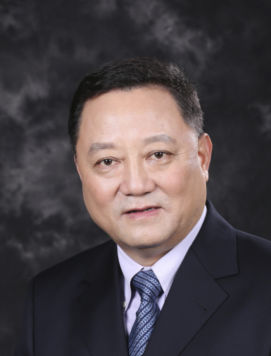 Guangrong Yu (俞光荣)合作论文数Tongji Hospital of Tongji University3Danyu ZHU (朱丹瑜)合作论文数2Weiping ZHU (朱伟平)合作论文数2
 Fanglei Xu (许方蕾)合作论文数School of Medicine, Tongji University;Tongji Hospital of Tongji University2meizhen xu (徐美珍)合作论文数1yan liu (柳燕)合作论文数1Cuihong Zhang合作论文数1Lei Peng合作论文数1Jing SHI (施静)合作论文数1XiaoWen Qi (齐小文)合作论文数1Wei Lu (陆薇)合作论文数1Yanxi Chen (陈雁西)合作论文数上海东方医院1
 Yunfeng Yang (杨云峰)合作论文数Tongji Hospital of Tongji University1
 Jian Fan (樊健)合作论文数Orthopedics Department, Tongji Hospital of Tongji University;School of Medicine, Tongji University1Huiyu Xu (须惠玉)合作论文数1Zhejun Liu (刘哲军)合作论文数1hua shen (沈花)合作论文数1Jiaqian Zhou (周家钤)合作论文数1Hong Xu (徐虹)合作论文数1yufang shen (沈玉芳)合作论文数1Bing Li (李兵)合作论文数Tongji Hospital, Tongji University;School of Medicine, Tongji University1
 Shimin Zhang (张世民)合作论文数Yangpu Hospital of Tongji University;School of Medicine, Tongji University1




