Surface charge accumulation on insulators in HVDC gas-insulated equipment causes electric field distortion, posing flashover risks and threatening operational safety. Precise surface charge density inversion is thus essential for equipment design. This paper proposes a hybrid regularization-based inversion method, combining Tikhonov and total variation regularization advantages for accurate charge density reconstruction. Integrating the LSMR algorithm with Golub-Kahan bidiagonalization significantly reduces computational burdens. The generalized cross-validation (GCV) criterion adaptively determines the regularization coefficient and iteration stopping criterion, effectively suppressing noise interference and preventing semi-convergence. Simulation verification confirms the method achieves high inversion accuracy under varying noise levels, demonstrating excellent robustness. Further validation via insulator charge accumulation simulations using the bipolar charge transport model shows high agreement between inversion results and steady-state charge distributions. The method accurately reconstructs charge discontinuity regions in distributions with abrupt transitions. In conclusion, this hybrid regularization-based inversion algorithm provides an effective solution for precise surface charge density inversion on HVDC gas-insulated equipment insulators, offering significant theoretical value for optimizing insulation design.
Conventional auto-reclosing schemes, relying on fixed delays, exhibit operational blindness that risks secondary system impacts or prolonged outages. This study addresses these limitations through adaptive reclosing technology. The variation characteristics of the fault-pole voltage before and after arc extinction are first analyzed in this study. Fourier decomposition of recovery voltage revealed frequency-specific variations, leading to the definition of a 50 Hz incremental percentage parameter (H₁) as the arc extinction identifier. Adaptive reclosing logic was developed by monitoring H₁ against adaptive thresholds. Implemented in a four-terminal MMC-HVDC PSCAD/EMTDC model simulating DC-side faults, The simulation results demonstrate that this arc extinction time identification method achieves rapid recognition and can accurately capture the moment of fault arc extinction within several milliseconds. The identification error of arc extinction time under various fault conditions is less than 10 ms. The adaptive reclosing strategy, which accounts for arc extinction time identification, enables reliable recognition of the arc extinction moment, effectively shortens the reclosing process, and enhances system reliability.
Modular Multilevel Converters (MMCs) are widely employed in voltage-source converter-high voltage direct current (VSCHVDC) transmission projects. Capacitor voltage imbalance in hybrid MMCs is closely related to the differences in the charging and discharging processes of their submodules (SMs). To address the issue of submodule voltage imbalance caused by uneven energy absorption between half-bridge and full-bridge submodules during over-modulation conditions, a detailed analysis of the impact of second-order harmonic current and third-order harmonic voltage injection on the arm voltage is provided. A dynamic modulation index incorporating multiple harmonics is proposed to enable operation under high modulation ratios across various working conditions. Based on the system power factor, the phase of the multiple harmonic injections is adjusted, thereby shifting the phase of the arm voltage. As a result, the MMC arm current distribution is optimized, the formation of DC circulating currents is counteracted, and circulation uniformity is improved. A double-terminal hybrid MMCHVDC system model was built on the PSCAD/EMTDC platform to validate the effectiveness of the proposed strategy. It is demonstrated by simulation results that the operating range of the capacitor voltages is effectively confined by the proposed dynamic modulation index. Furthermore, the electrical angle at which the HBSM is compelled to discharge energy is adjusted, the excess energy absorbed by the FBSM is reduced, the capacitor voltage imbalance issue is mitigated, and system operational stability is enhanced.
The AC/DC hybrid transmission line is affected by electromagnetic coupling. After the line is failed, the secondary arc is difficult to extinguish, which posed a serious threat to the stable and reliable operation of the line. Taking a 500 kV AC double-circuit and ± 800 kV Yun-Guang UHV DC transmission line on the same tower as an example, this paper is built an AC/DC hybrid transmission line model through PSCAD, studied the influence of coupling section length and fault point location on the transient characteristics of the secondary arc, and analyzed the suppression effect of the DC line coupling operation mode on the secondary arc. According to the findings, the secondary arc current of AC and DC lines is greatly influenced by the length and location of the coupling section. The AC line fault is located at the midpoint of the coupling section. When the length of the coupling section is 400 m, the amplitude of the secondary arc current has reached the minimum value. When the DC line fault is located at the midpoint of the coupling section, the amplitude of the secondary arc current has reached the maximum value. In addition, the bipolar coupling operation mode of DC lines can effectively limit the amplitude of secondary arc current and recovery voltage of AC and DC lines, and the suppressive effect of secondary arc is obvioused.
梳理了国内外专业群、教育生态学产生、研究现状,分析了应用生态学理论研究职业教育专业群建设的理论和实践意义.在生态学视域中,专业群是专业自身发展和产业经济发展的产物,多样性导致稳定性是专业群的生存基础,自我调整与环境相互协同是专业群发展的动力机制.
资源的融通是产教融合的关键点、落脚点。科学的产业资源转化生成教学资源的路径方法是提高转化效率,保证教学资源质量的重要基础。基于此,通过对产业资源和教学资源内涵特征的分析,以职业教育产教融合理论、课程开发理论为指导,开发了一种“选·解·定·转·整·拓”产业资源转化生成教学资源的路径方法,实现了从生产实践项目,到典型工作项目,再到教学项目,最后到模块化教学资源的融合转化。
The output power curve of the photovoltaic array presents a multi-peak characteristic under partial shading conditions, which causes the traditional maximum power point tracking technology to fail to guarantee the maximum power output of the photovoltaic cell. In response to this problem, this paper proposes to apply the improved Mayfly Optimization Algorithm (MA) to the maximum power tracking control. By introducing the gravity factor and limiting the search space of male mayfly, the optimization accuracy of the algorithm is enhanced, the vibration of the algorithm near the MPP is reduced, and the occurrence of premature phenomenon is avoided. Three test functions are selected to verify the algorithm, and under the conditions of rapid irradiance changes and complex shadow occlusion, an MPPT model based on the Boost circuit is established to verify the effectiveness of the algorithm. The simulation results show that the improved MA algorithm can effectively converge to MPP under complex shading conditions, and the output efficiency of photovoltaic arrays can be maintained above 99.96%. The average tracking time for different shading patterns is about 0.15 s.
针对疫情防控背景下高职院校专业课程教学面临问题,提出通过组建教学团队开展课程资源建设、教学设计,实施协同教学和协同教学管理,保障专业课程线上线下教学有序进行.实践证明,协同教学能够快速适应教学、学习环境的变化,保障了疫情期间学生线上、线下学习效果.
成果导向课程开发和工作过程导向课程开发是职业教育的两大课程开发范式,在世界范围内得到广泛应用。由于我国职业教育现实发展的复杂性,单一的课程开发模式无法解决现实课程开发中存在问题。本文基于范式融合视角,提出了一种以工作过程导向为基本开发路径,融合成果导向理念精华,符合我国国情的课程开发模式,并基于此重构了以工作过程为“明线”、职业能力为“暗线”,思想政治教育、专业技能教育、职业素养教育相融通的“双线、三通、四阶段、三层次”的机电一体化技术专业课程体系,解决了专业人才培养的适应性不高的问题,人才培养质量显著提升。
基于成果导向(OBE)的教育理念,按照反向设计实施原则,构建机电一体化技术课程目标,并以此为基础设计支撑课程目标达成的课程教学内容和教学模式,并建设了结构化的课程资源.在教学实施过程中,依托清华在线网络教学平台、喜鹊移动教学App和YL-335B自动线虚实仿真平台,开展了"课前自学、课中导学、课后助学"的"三段递进"混合式教学改革探索与实践.实践证明,基于OBE理念的混合式教学改革有助于学生知识、技能掌握和综合素质的提升.
The islanding effect is one of the main problems caused by photovoltaic grid-connected power generation technology. Currently, most photovoltaic power plants use active frequency offset detection methods to detect islanding effects. Still, this method interferes with the output power quality, but its detection efficiency is greatly affected by the load. In this paper, the drawbacks of the active frequency offset detection method are improved to obtain the positive feedback operational frequency offset detection method. A simulation model of a single-phase photovoltaic grid-connected system is built based on MATLAB software, and islanding detection is simulated for the two detection schemes. The islanding effect under different conditions is detected by adjusting the parameter settings such as load. Comparing the simulation results before and after the improvement, it is proved that the detection efficiency of the improved scheme is higher.
论文针对12组3V的超级电容器串联型电池组,设计了一款充电电流30A的充电控制器.主要介绍了充电主电路、IGBT驱动控制电路、采样隔离电路的设计,并使用Matlab出对充电控制电路进行仿真分析,性能良好,满足设计要求.
针对当前大型曲轴油孔加工中人工劳动强度大、生产效率低的问题,文章依托某大型柴油机生产企业,开发了一套基于PLC的大型曲轴油孔加工专机控制系统,主要介绍了曲轴油孔加工专机的结构、加工工艺及控制系统的硬件设计和软件设计.实践证明,开发的油孔加工专机系统满足了曲轴油孔工艺精度要求,经济成本低,生产效率高.
依据柴油机曲轴油孔专机工艺要求,开发了以PLC为控制核心、触摸屏为人机交互装置、工业变频器为动力头行走驱动装置、旋转编码器为定位检测装置的自动控制系统,实现了曲轴油孔自动定位控制、一键加工控制、故障诊断等.实践证明,开发的电气控制系统在保证油孔加工精度的基础上,大幅度降低了操作工人的劳动强度,提高了生产效率.
经济新常态下,为适应行业转型升级,高职院校必须对专业群建设进一步优化、 整合.山东工业职业学院通过组建机电一体化技术专业群、 构建"超市模式的学分制"的专业群课程体系、实施以"学徒制"为代表多样化培养模式、建设"企业为主的资源共享式"特色实验实训室、 借力山钢集团国际化战略提升专业国际化水平、 搭建机电一体化技术协同创新平台等措施,开展了机电一体化技术专业群建设实践.
企业群是对现代学徒制人才培养模式的一种创新.在界定企业群概念的基础上,提出了基于企业群的现代学徒制人才培养模式,并以山东工业职业学院教育部现代学徒制试点专业——电气自动化技术专业为例,阐述了基于企业群的现代学徒制人才培养模式的构建思路及实施方案.
该文依据柴油机曲轴油孔加工精度要求,开发了以可编程控制器为控制核心,以触摸屏为人机交互装置,以变频器为动力头行走驱动装置,以旋转编码器为位移检测装置的控制系统,实现了曲轴油孔加工时的自动定位.在保证油孔定位精度满足要求的前提下,大幅度降低了操作工人的劳动强度和技能要求,提高了生产效率.
针对机电一体化技术专业实践教学中存在的教学目标无法持续改进、课程设置与职业能力发展不兼容的问题,应用系统论思想,构建实践教学体系结构模型;基于成果导向教育理念,利用开发的机电一体化技术专业职业能力分级标准模块库,构建机电一体化技术专业实践课程体系,开发实践课程教学大纲、技能点微课视频等实践课程数字资源,开展项目化教学改革,取得了良好效果.
以山东工业职业学院教育部现代学徒制试点专业——电气自动化技术专业为例,分析了自动化类专业实施现代学徒制人才培养模式的现实问题,提出了基于跨企业技术培训中心的现代学徒制人才培养模式,从校企合作、课程体系、实训条件、师资队伍、教学管理等方面阐述了人才培养模式的构建思路及实施方案.
随着经济和高职教育的发展,创新创业教育已成为高职教育改革的必然趋势.以山东工业职业学院为例,分析国内高职院校创新创业教育现状和学院创新创业教育存在的问题,提出通过创新创业教育的改革与实践逐步完善学院创新创业教育体系,形成学院创新创业教育特色.
 baina he合作论文数22ZhaoGang Wei (魏召刚)合作论文数7WenSen Li (李文森)合作论文数4GenLi Dan (单根立)合作论文数4CUI Rongxi (崔荣喜)合作论文数3GuoJuan Shang (商国娟)合作论文数3
 Hengxu Ha合作论文数3Xingmin He合作论文数2Yuan-yong LIU (刘元永)合作论文数2Xinhui Zhang合作论文数2Jinliang GUO (郭金亮)合作论文数2GuiChun Huang (黄桂春)合作论文数2LiYing Peng (彭丽英)合作论文数2
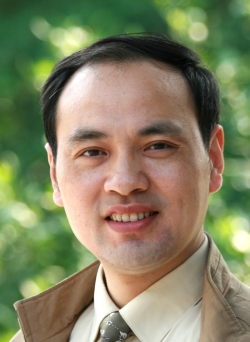 Heyun Lin (林鹤云)合作论文数School of Electrical Engineering, Southeast University2Dongjin Zhang合作论文数1Yuanlong Wei合作论文数1Weihan Dai合作论文数1Lang Fucheng合作论文数1Yanchen Dong合作论文数1yongqing liu合作论文数1WU Shuo (吴硕)合作论文数1
 Liu Yang合作论文数1Jingru Zhang合作论文数1Lian-xin LIU (刘连鑫)合作论文数1Aixia MOU (牟爱霞)合作论文数1Han Xiaodong (韩晓冬)合作论文数1Renzhuo Jiang合作论文数1Hong-jun ZHAO (赵红军)合作论文数1XiaoDong Han (韩晓东)合作论文数1Yuanchao Hu (胡元超)合作论文数1Rongliang Lu (路荣亮)合作论文数1
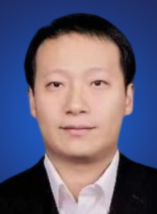 Yu Wang (王羽)合作论文数School of Electrical Engineering and Automation, Wuhan University1Hui Zhao (赵辉)合作论文数1Yijian Wang (王宜建)合作论文数1Hongliang Sun (孙红亮)合作论文数1Fan Tao Meng合作论文数1




