目的 观察不同剂量帕瑞昔布钠对烧伤患者疼痛、炎症因子及认知功能的影响.方法 选择2021年6月至2022年6月武汉市第三医院/武汉大学附属同仁医院收治的中重度烧伤患者120例,年龄18~65岁,体重指数(BMI)18~29 kg/m2,男 76例,女44例,美国麻醉医师学会(ASA)Ⅱ~Ⅲ级,将患者根据随机数字表法分为对照组(C组)、低剂量组(L组)、中剂量组(M组)和高剂量组(H组),每组30例.C组术前及术后静脉注射生理盐水4 mL;L、M及H组术前注射帕瑞昔布钠40 mg,术后分别注射生理盐水4 mL及帕瑞昔布钠20、40 mg.记录各组患者术后12 h内(T1)、术后12~<24 h(T2)及术后24~48 h(T3)自控镇痛泵(PCA)的按压次数;干预前10 min及拔管后12、24、48 h简易精神状态检查(MMSE)量表评分;干预前10 min及拔管后1、48 h患者静脉血白细胞介素-6(IL-6)、肿瘤坏死因子-α(TNF-α)、S-100β和神经元特异性烯醇化酶(NSE)水平.结果 Ti、T2时间段,H、M组PCA按压次数明显低于C组(P<0.01);拔管后24、48 h,H、M组MMSE明显高于C组(P<0.01);拔管后48 h,H、M 组IL-6、TNF-α、S-100β水平明显低于C组(P<0.05),H组NSE水平明显低于C组(P<0.05).结论 帕瑞昔布钠可以减少烧伤患者疼痛评分、炎性因子,改善患者短期认知功能,术前和术后分别静脉注射40 mg帕瑞昔布钠剂量最佳.
Objective:To explore any changes in the topology of the brain′s resting-state functional networks after an ischemic stroke causing cognitive impairment (iPSCI) and their relationship with the impairment.Methods:Twenty-one patients with impaired cognition after a stroke were recruited into an iPSCI group, and 21 healthy counterparts matched in gender, age and the education level formed the control (HC) group. Three-dimensional T1-weighted anatomical images and resting state functional magnetic resonance images of all of the subjects were collected and any differences in brain network topology were analyzed using graph theory. The degree of centrality (DC), between centrality (BC) and the global topological properties of each brain region were compared using independent-sample t-tests. Spearman correlation coefficients were computed to analyze the significance of any correlation between topology differences and Montreal Cognitive Assessment Scale (MoCA) or Mini-Mental Status Examination (MMSE) scores.Results:Compared with the HC group, a significant DC increase was observed in the orbital part of the right of middle frontal gyrus (ORBmid.R), the right hippocampus (HIP.R), and the right thalamus (THA.R). There was a significant decrease in the left Rolandic operculum (ROL.L), the left postcentral gyrus (PoCG.L), the left supramarginal gyrus (SMG.L), the left angular gyrus (ANG.L), the left and right caudate nucleus (CAU.L and CAU.R), the putamen of the left lenticular nucleus (PUT.L), the left Heschl gyrus (HES.L), the left superior temporal gyrus (STG.L), and the temporal pole of the left superior temporal gyrus (TPOsup.L). Compared with the HC group, the brain regions of the iPSCI group in which the BC had increased significantly were the orbital part of the left middle frontal gyrus (ORBmid.L), the left cuneus (CUN.L), and the right precuneus (PCUN.R). DC was significantly decreased in the left caudate nucleus (CAU.L), the left temporal pole of the superior temporal gyrus (TPOsup.L), and the left of inferior temporal gyrus (ITG.L). Compared with the HC group, the area under the receiver operating curve (AUC) of the shortest path length (Lp) and the normalized Lp (λ) of the iPSCI group increased significantly, and the AUC of the normalized clustering coefficient (γ) and small-worldness (σ) decreased significantly. The DCs of the ROL.L, PoCG.L, CAU.L, HES.L, STG.L and TPOsup.L regions showed moderate positive correlation with the MoCA and MMSE scores ( r>0.4), as did the BC of the CAU.L and TPOsup.L regions ( r>0.4). Conclusions:Cognitive impairment is mainly associated with decreased nodal properties in the brain regions related to language and in the caudate nucleus. The topology of the frontal lobe, hippocampus, thalamus, striatum and default networks may self-repair after an iPSCI. The brain′s functional network after an iPSCI still has small-world properties, but with low efficiency and high cost.
目的 比较不同剂量瑞马唑仑对腰-硬联合麻醉(CSEA)下行髋关节置换术老年患者术中镇静效果的影响.方法 选择2021年1—6月在CSEA下行髋关节置换术的老年患者90例,男52例,女38例,年龄65~84岁,BMI 18~31 kg/m2,ASAⅠ—Ⅲ级.随机分为三组:瑞马唑仑2μg·kg-1·min-1组(R2组)、瑞马唑仑3μg·kg-1·min-1组(R3组)和瑞马唑仑4μg·kg-1·min-1组(R4组),每组30例.所有患者在L3-4间隙行CSEA,平面固定在T8后,静注瑞马唑仑0.05 mg/kg,R2组、R3组和R4组分别泵注瑞马唑仑2、3、4μg·kg-1·min-1.使用BIS和改良警觉镇静评分(MOAA/S)评分对患者进行镇静评估.当给药后15 min患者MOAA/S评分>4分,给予瑞马唑仑0.05 mg/kg进行补救,直至MOAA/S≤4分.记录阻滞前、平面固定后、镇静后5、15、30、60 min的BIS值和MOAA/S评分.记录镇静起效时间、补救次数、苏醒时间、术中低氧血症、术后恶心呕吐的发生情况和术后1 d患者满意度情况.结果 镇静后5、15、30、60 min,R2组BIS和MOAA/S评分明显高于R3组和R4组(P<0.05).R2组镇静起效时间明显长于R3组和R4组(P<0.05),补救次数明显多于R3组和R4组(P<0.05).R4组苏醒时间明显长于R2组和R3组(P<0.05).三组术中低氧血症发生率差异无统计学意义.R4组恶心呕吐发生率明显高于R2组和R3组(P<0.05),术后1 d患者非常满意率明显低于R2组和R3组(P<0.05).结论 瑞马唑仑可以安全用于CSEA下髋关节置换术老年患者术中镇静,与泵注瑞马唑仑2和4μg·kg-1·min-1比较,术中泵注瑞马唑仑3μg·kg-1·min-1镇静效果更好,不良反应更少.
目的:系统评价全身振动训练对帕金森病患者运动症状的疗效.方法:检索PubMed、EMbase、Cochrane library、中国知网、中国生物医学文献数据库、维普中文科技期刊数据库和万方数据库中关于全身振动训练治疗帕金森病患者运动症状的随机对照试验.检索时限均为从建库至2021年2月.应用Review Manager 5.3软件进行Meta分析.结果:纳入8篇文献,共255例研究对象(试验组n=138,对照组n=117).Meta分析结果显示,与对照组相比,全身振动训练更能改善患者的平衡功能[SMD=0.58,95%CI(0.07,1.09),P=0.03]及步态表现[SMD=-0.48,95%CI(-0.82,-0.13),P=0.007].结论:全身振动训练可改善帕金森病患者的平衡功能与步态表现,提高患者生活质量.
脑卒中是由于脑部血管突然破裂或因血管阻塞导致血液不能流入大脑而引起脑组织损伤的一组疾病,包括缺血性卒中和出血性卒中.调查显示,我国脑卒中的发病率约为250/10万,居世界第2位且以每年9%的速度上升[1].脑卒中后神经中枢系统受损,可能继发多种临床并发症.为人熟知的运动功能障碍一直广受重视,而较为隐匿的排尿障碍常被忽略.据国外文献报道,脑卒中后排尿障碍的发生率约为32%-79%[2],严重影响患者的生活质量[3],因此,该问题逐步受到人们的重视.目前,针对脑卒中后排尿障碍的治疗尚无一种简便、统一的方法,临床上常采用综合康复治疗.其主要的康复治疗方法包括盆底肌训练、行为疗法、留置或间歇导尿法、中医疗法、电刺激疗法以及生物反馈疗法.
Objective:To systematically review the efficacy of repetitive transcranial magnetic stimulation (rTMS) on patients with Vascular Cognitive Impairment no Dementia (VCIND).Methods:We searched databases including PubMed,EMbase,Cochrane library,CNKI,VIP,CBM and WanFang from inception to August 2017 to collect randomized controlled trials (RCTs) about rTMS for patients with VCIND.Two reviewers independently screened articles according to the inclusion and exclusion criteria,extracted data and evaluated the quality of the included studies.Then,a meta-analysis was performed by using RevMan 5.3 software.Results:A total of 6 RCTsinvolving 246 VCIND patients were included.The results of meta-analysis showed that compared with the control group,low frequency rTMS(Lf-rTMS) treatment could significantly improve the overall cognitive abilities of VCIND patients (SMD =1.15,95 % CI[0.59,1.71],P =0.000 1).The P300's latency were significantly shorter in the LF-rTMS group than in the control group (SMD =-7.68,95 % CI [-11.66,-3.71],P =0.000 1) while MBI were significantly higher (SMD=0.53,95 %CI[0.05,1],P=0.03).Conclusion:LF-rTMS may benefit the cognitive abilities of VCIND patients and improve the patients' self-care ability.
目的 分析舒芬太尼复合氯胺酮麻醉在烧伤患者中的应用价值.方法 以42例ASAⅠ-Ⅱ级的烧伤手术患者为研究对象,使用舒芬太尼复合氯胺酮麻醉,监测手术患者的HR、ECG、MAP、RR、SpO2,并分析患者术前、术中15 min、术毕的动脉血气量及记录患者术后的苏醒时间.结果 HR、MAP、RR、SpO2这四项指标在手术前、术中15 min、术中30min和术毕的差异不明显,无统计学意义(P>0.05).动脉血气量分析结果显示,术中15min的pO2和SaO2浓度均较手术前显著升高(P<0.05);而pH、BE、HCO3-术前、术中15min和术后无明显的变化;患者的平均苏醒时间为8.72min.结论 舒芬太尼复合氯胺酮对于烧伤患者的麻醉效果良好,具有十分优越的使用价值,值得在临床广泛推广.
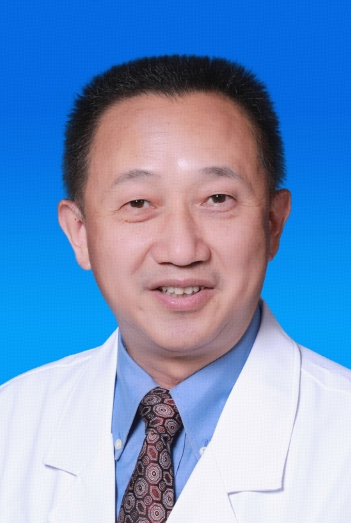 Weijing Liao (廖维靖)合作论文数Zhongnan Hospital of Wuhan University4
 HU Guangjun (胡光俊)合作论文数2Sirui Wang合作论文数2ying li (李颖)合作论文数2guofu miao (苗国富)合作论文数1Biru Wang (王碧茹)合作论文数1WANG Gang (汪刚)合作论文数1Xin ZHANG (章鑫)合作论文数1ChiZi Hao (郝赤子)合作论文数1
 Xiuping Chen (陳修平)合作论文数State Key Laboratory of Quality Research in Chinese Medicine, Institute of Chinese Medical Sciences, University of Macau;Department of Pharmaceutical Sciences, Faculty of Health Sciences, University of Macau1




