药物纳米粒常被用于改善口服给药的生物利用度,但因胃肠道中的黏液层、P糖蛋白(P-gp)外排及紧密连接等生理屏障,纳米粒改善口服药物生物利用度的程度有限.功能性材料修饰的纳米粒因其功能性、可修饰和多样性成为了口服药物载体策略的研究热点.该研究简述了限制药物生物利用度的因素,重点总结了通过改善药物理化性质和克服生物屏障改善药物生物利用度的功能性纳米材料,以期为难溶性药物的载药策略研究提供参考和文献支持.
Nanocrystal technology is a common strategy to enhance the oral bioavailability of poorly-soluble drugs, and how to enlarge the enhancing ability on oral absorption via nanocrystals has become a pharmaceutical research field. In this study, we selected andrographolide (ADR), a typical poorly-soluble drug, as the model drug, and employed sodium dodecyl sulfate and D-alpha-Tocopherol polyethylene glycol 1000 succinate copolymer (SDS-TPGS) to construct novel SDS-TPGS modified andrographolide nanocrystals (S-TANs). We found that the particle sizes of SDS/TPGS physical mixture modified nanocrystals (STANs) were about 553.4 +/- 4.1 nm, while that of SDS-TPGS modified nanocrystals (S-TANs) were 604.6 +/- 5.7 nm. During the production process of nanocrystals, the crystallinity of ADR was slightly decreased. Nanocrystals enhanced the saturation solubility of ADR, and improved oral absorption, Cmax and AUC0-infinity of S-TANs was about 2.10 and 1.24 fold increased, STAN about 2.63, 2.97 fold. In a Real-time distribution study, we found the distribution time of andrographolide, SDS and TPGS in SDS/TPGS physical mixture modified nanocrystals system varies widely, while the distribution times of these materials were similar in SDS-TPGS copolymer modified nanocrystals system. These results indicated that modified with functional stabilizer was an efficient strategy to enlarge the enhancing ability on oral absorption of nanocrystals, and synthesized copolymer containing different functional stabilizers showed higher ability on enhancing oral bioavailability than physical mixtures.
While great progress in nanozyme-enabled analytical chemistry has been made, most current nanozyme-based biosensing platforms are based on peroxidase-like nanozymes. However, peroxidase-like nanozymes with multienzymatic activities can influence the detection sensitivity and accuracy, while the use of unstable hydrogen peroxide (H2O2) in a peroxidase-like catalytic reaction may result in the reproducibility challenge of sensing signals. We envision that constructing biosensing systems by using oxidase-like nanozymes can address these limitations. Herein, we reported that platinum-nickel nanoparticles (Pt-Ni NPs) with Pt-rich shells and Ni-rich cores possessed high oxidase-like catalytic efficiency, exhibiting a 2.18-fold higher maximal reaction velocity (vmax) than initial pure Pt NPs. The oxidase-like Pt-Ni NPs were applied to develop a colorimetric assay for the determination of total antioxidant capacity (TAC). The antioxidant levels of four bioactive small molecules, two antioxidant nanomaterials, and three cells were successfully measured. Our work not only provides new insights for preparing highly active oxidase-like nanozymes but also manifests their applications for TAC analysis.
目的:探索采用高压均质法制备稳定性佳的纯水飞蓟素纳米结晶的可能性,为后续纯药物纳米结晶体内研究奠定试验基础.方法:采用高压均质技术,通过筛选药物投入量、高剪切分散时间、均质压力、均质次数等关键参数,以粒径、多分散指数(PDI)等为指标,筛选出最佳的纯水飞蓟素纳米结晶处方及工艺,并对所制备纳米结晶的粒径、外观形态、晶型、溶解度、溶出行为及稳定性等体外性质进行研究.结果:所优选的纯药物纳米结晶的平均粒径为(449.8±7.56)nm,PDI为0.281±0.017.与含有稳定剂的水飞蓟素纳米结晶相比,纯水飞蓟素纳米结晶显示出相似且良好的稳定性.此外,所制备的纯药物纳米结晶将水飞蓟素在纯水中的溶解度提高了 1.41倍,在不同水性介质均提高了水飞蓟素的溶出速率,其中在纯水中溶出速率增加最为显著,30 min内溶出度由38.5%增加至92.2%.结论:本研究成功制备了稳定的纯水飞蓟素纳米结晶,为后续系统开展纯药物纳米结晶的促口服吸收机制及药动学等研究奠定了工作基础.
Modifying nanocrystals with functional materials have been common strategy to enlarge the enhancing ability on oral absorption via nanocrystals; however, whether the functional materials have played their full enhancing ability in oral absorption is still unknown. In this study, we synthetized a novel chitosan-based copolymer (the copolymer of sodium dodecyl sulfate (SDS), chitosan (CS) and D-α-Tocopherol polyethylene glycol 1000 succinate, SDS-CS-TPGS), and modified nanocrystals with this copolymer, aiming to enhance the oral absorption of polymer andrographolide (ADR). In real-time distribution study, we found the distribution of ADR, SDS, CS and TPGS varies in gastrointestinal tract, while the distribution of ADR and SDS-CS-TPGS was similar, revealing the SDS-CS-TPGS could able to participate in the absorption process of andrographolide timely. To explore the oral absorption enhancing ability of SDS-CS-TPGS, we prepared a series of nanocrystals modified with different materials and explored their pharmacokinetic performances on SD rats. The results showed the nanocrystals modified with SDS-CS-TPGS (S-C-TANs) exhibited the highest bioavailability, which could enhance the AUC0-∞ of ADR from 1.291 mg/L*h to 5.275 mg/L*h (enhanced for about 4.09-folds). The enhanced anti- inflammatory efficacy was also found on ICR mice by employing ear swelling rate, TNF-α, IL-1β and IL-6 and pharmacodynamic index. These results indicated that modified with synthesized copolymer containing different functional stabilizers is an efficient strategy to enlarge the enhancing ability on oral absorption of nanocrystals.
目的 通过研究6种中药多糖(人参多糖、白芨多糖、茶多糖、大豆多糖、枸杞多糖、葛根多糖)对葛根素在大鼠体内的药动学变化,探讨中药多糖对葛根素口服吸收的影响,并采用犬肾MDCK细胞单层模型研究了中药多糖的促口服吸收机制.方法 大鼠ig葛根素及不同中药多糖-葛根素混悬液后,于不同时间点采集血样,经适当处理后,采用高效液相色谱(HPLC)测定血浆中葛根素的质量浓度,并以此计算和比较药动学参数.采用MDCK细胞单层模型考察中药多糖借助葡萄糖转运提高葛根素跨膜吸收的能力.结果 与中药多糖联合给药后,葛根素的主要药动学参数有不同程度的变化,主要呈现出促进葛根素口服吸收的趋势,其中以人参多糖的促吸收效果最为卓越,人参多糖可将葛根素的达峰浓度(Cmax)及曲线下面积(AUC0~∞)分别提高1.77及3.14倍.CCK-8实验表明药物质量浓度为5~1000 μg/mL、人参多糖质量浓度为20~10 000 μg/mL时,药物及多糖无明显细胞毒性.在50~1000 μg/mL质量浓度内,葛根素的表观渗透系数(apparent permeability coefficient,Papp)无明显变化;人参多糖可将葛根素的Papp显著升高(P<0.05、0.01、0.001);加入葡萄糖转运抑制剂(根皮素、根皮苷)后,葛根素组的Papp无明显变化,而人参多糖组的Papp显著下降(P<0.001).结论 中药多糖会通过葡萄糖转运途径提高葛根素的口服吸收,提示利用中药多糖作为递药系统修饰剂,或许可成为一种有潜力的提高难吸收药物口服吸收的技术手段.
Atherosclerosis is one of the leading causes of mortality and morbidity worldwide. The consequences of atherosclerotic disease include chronic diseases, such as coronary artery disease and angina pectoris, and acute diseases like heart attacks and stroke. In the diagnosis and treatment of atherosclerosis, various nanotechnologies have been applied to enhance visualization of atherosclerotic lesions, improve target efficacy and extend circulation time. Among these nanotechnologies, micelles have been used widely because of their high encapsulation efficiency of drugs, convenient fabrication, prolonged retention time and good biocompatibility. Reviews devoted to introducing the application of micelles into the management of atherosclerosis have not been released to date. Therefore, in this review, we summarize the recent advances of micelles in the diagnosis and management of atherosclerosis and propose some suggestions and perspectives.
Luteolin suffers from drawbacks like low solubility and bioavailability, thus hindering its application in the clinic. In this study, we employed sodium dodecyl sulfate (SDS), an efficient tight junction opening agent, to modify the surface of luteolin nanocrystals, aiming to enhance the bioavailability of luteolin (LUT) and luteolin nanocrystals (LNC). The particle sizes of SDS-modified luteolin nanocrystals (SLNC) were slightly larger than that of LNC, and the zeta potential of LNC and SLNC was −25.0 ± 0.7 mV and −43.5 ± 0.4 mV, respectively. Both LNC and SLNC exhibited enhanced saturation solubility and high stability in the liquid state. In the cellular study, we found that SDS has cytotoxicity on caco-2 cells and could open the tight junction of the caco-2 monolayer, which could lead to an enhanced transport of luteolin across the intestinal membrane. The bioavailability of luteolin was enhanced for 1.90-fold by luteolin nanocrystals, and after modification with SDS, the bioavailability was enhanced to 3.48-fold. Our experiments demonstrated that SDS could efficiently open the tight junction and enhance the bioavailability of luteolin thereafter, revealing the construction of SDS-modified nanocrystals is a good strategy for enhancing the oral bioavailability of poorly soluble drugs like luteolin.
目前仿制药在我国医药市场占据很大规模,口服固体制剂一致性评价得到的关注最多.其中药品的体内外相关性一直是研究者关注的重点及难点,如何通过控制再评价品种与参比制剂体外某些特性(如溶出、制剂学因素等)的相似,达到两者体内生物等效,对于缩短药品的一致性评价进度,降低研究成本具有重大的意义.就目前口服固体制剂一致性评价体内外相关性的相关研究进展进行综述,以期为开展口服固体制剂一致性评价研究工作提供参考.
Puerarin is widely used as a therapeutic agent to cardiovascular diseases in clinics in China through intravenous administration, which could elicit adverse drug reactions caused by cosolvents, hindering its application in clinics. Therefore, the development of oral dosage is urgently needed. In our previous studies, we proved that the bioavailability of puerarin increased as particle sizes of nanocrystals decreased; however, we have not optimized the best process parameters for nanocrystals. In this study, we aim to fabricate fine nanocrystals (with smallest particle size) by Box–Behnken design and study the intestinal permeability of puerarin and its nanocrystals via employing everted gut sac model and in situ perfusion model. The results showed that the Box–Behnken design could be used to optimize the producing parameters of puerarin nanocrystals, and the particle sizes of fine nanocrystals were about 20 nm. Results of everted gut sacs showed that the polyvinylpyrrolidone (PVP) and verapamil had no influence on the absorption of puerarin and nanocrystals, and the nanocrystals could increase the Papp of puerarin for 2.2-, 2.9-, and 2.9-folds, respectively, in duodenum, jejunum, and ileum. Enhanced Ka and Peff were observed on the nanocrystal group, compared with puerarin, and PVP and verapamil had no influence on the absorption of nanocrystals, while the absorption of puerarin was influenced by P-gp efflux. Combining the results mentioned above, we can conclude that the Box–Behnken design benefits the optimization for preparation of nanocrystals, and the nanocrystals could enhance the intestinal absorption of puerarin by enhanced permeability and inhibited P-gp efflux.
Poor water solubility and low bioavailability hinder the clinical application of about 70% of newly synthesized compounds. Nanocrystal technology has become a preferred way to improve bioavailability by improving solubility. However, it remains challenging to produce nanocrystals with ultra-small particle sizes to further enhance the extent of bioavailability. Herein, we constructed ultra-small puerarin nanocrystals (Pue-NCs) (20-40 nm) via formation of hydrogen bond during HPH. We confirmed the formation of hydrogen bonds by 1H NMR and FTIR, and observed the distribution of polymer chains by SEM and TEM. The absorption mechanisms were studied in Caco-2 cell monolayers, and the results showed that the major transport mechanism for puerarin was passive diffusion, meanwhile, for Pue-NCs, the passive transport and micropinocytosis-mediated endocytosis coexisted. The absolute bioavailability of Pue-NCs was 35.28%, which was 11.54 folds compared to that of puerarin. Therapeutic equivalence was demonstrated between Pue-NCs and puerarin injection at 50 mg/kg and 15 mg/kg, respectively, in isoproterenol-induced myocardial ischemia model. This study provides a novel strategy for preparing ultra-small nanocrystals by HPH to increase bioavailability of poorly soluble drugs.
Peramivir was a novel and highly potent neuraminidase (NA) inhibitor for the treatment of influenza A and B. However, it exhibited a very low oral bioavailability (only 3%) due to the high polarity (log P of -1.4) and the low membrane permeability across the intestine. To utilize the PEPT1-mediated prodrug strategy to improve the oral absorption and develop the oral alternative, seven amino acid ester prodrugs and seven amino acid amide prodrugs have been synthesized. The permeability of these prodrugs across Caco-2 cells were screened. Peramivr-(CH2)(2)-L-Val and Peramivir-L-Ile were of the highest permeability in ester prodrugs and amide prodrugs, respectively, and then they were selected for further studies. Glycylsarcosine (gly-sar) uptake by Caco-2 could be inbihited by Peramivir-(CH2)(2)-L-Val and Peramivir-L-Ile in a concentration-dependent manner, and the IC50 was 1.34 +/- 0.31 mM and 1.78 +/- 0.48 mM, respectively. The direct uptake of Peramivir-(CH2)(2)-L-Val and PeramivirL-Ile in MDCK-PEPT1 cells were significantly higher than in MDCK mock cells, and could be markedly inhibited by gly-sar. The uptake of Peramivir-(CH2)(2)-L-Val and Peramivir-L-Ile (0.01 to 50 mM) in MDCK-hPEPT1 cells conformed to Michaelis-Menten Equation. The oral bioavailability of peramivir was 65.3% and 37.3% after the oral administration of Peramivir-(CH2)(2)-L-Val and Peramivir-L-Ile to rats, respectively. The oral absorption and bioactivation of Peramivir-(CH2)(2)-L-Val was rapid and extensive, and no Peramivir-(CH2)(2)-L-Val was found in plasma. Because the amide bond was relatively stable, Peramivir-L-Ile could not be totally converted to the parent drug in vivo. Peramivir-(CH2)(2)-L-Val with good oral profiles and rapid bioactivation might be a promising prodrug for the further clinic development. The present study also corroborated the idea that the PEPT1-mediated prodrug approach has enormous promise for improving the oral absorption of poorly absorbed drug. (C) 2018 Shenyang Pharmaceutical University. Published by Elsevier B.V.
目的 探讨不同配比麻黄-杏仁药对中麻黄碱、伪麻黄碱与苦杏仁苷多组分含量的变化规律.方法 选用U6(64)均匀设计表安排配比,采用高效液相色谱法测定麻黄-杏仁药对不同配伍比例中麻黄碱、伪麻黄碱与苦杏仁苷的含量.结果 经方法学考察,麻黄碱回归方程为y=212.36x+0.6658,R2=0.9995;伪麻黄碱回归方程为y=184.95x+0.7268,R2=0.9990;苦杏仁苷回归方程为y=153.5x+2.4961,R2=0.9990;麻黄与杏仁配伍后,随着配伍比例的变化,麻黄碱、伪麻黄碱的含量与麻黄用量、苦杏仁苷与杏仁用量之间均呈现良好的线性关系.结论 该方法简便、准确、重现性好;麻黄-杏仁药对中有效成分的含量与用药量成正相关,而与配伍比例无明显的相关性.
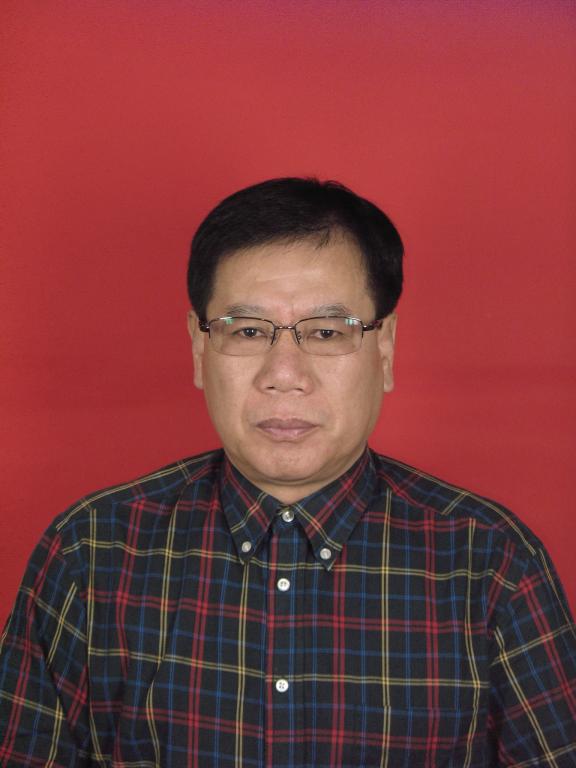 Yi Jin (金一)合作论文数Jiangxi University of Traditional Chinese Medicine11
 Liangxing Tu合作论文数10
 Meng Cheng (程勐)合作论文数8
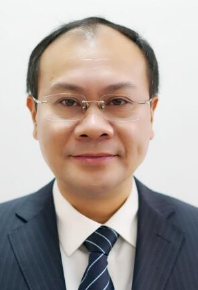 Jianfang Feng (奉建芳)合作论文数Guangxi University of Chinese Medicine7
 Yuanying Fang (房元英)合作论文数National Engineering Research Center for Manufacturing Technology of TCM Solid Preparation, Jiangxi University of Chinese Medicine6
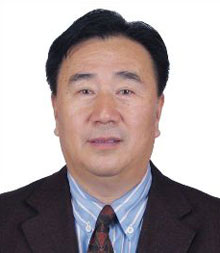 Shilin Yang (杨世林)合作论文数Jiangxi University of Chinese Medicine;College of Pharmaceutical Sciences, Soochow University;Guangxi University of Chinese Medicine;The Institute of Medicinal Plant Development, Chinese Academy of Medical Sciences4Yongbing Sun合作论文数4HE Jia-ying (何佳莹)合作论文数3Jiali Liu合作论文数3Feng Yulin合作论文数2Mei LIU (刘美)合作论文数2LEI Mingdao (雷铭道)合作论文数1Haocheng Li合作论文数1Zhiyang Lu合作论文数1Wei Gan合作论文数1Li YANG (杨丽)合作论文数1Gen Wei合作论文数1Qiaoming Liu合作论文数1Qing-xian WANG (王清娴)合作论文数1Qi Sun合作论文数1Wei Jiang合作论文数1Ying LI (李莹)合作论文数1
 Jun wei He (何军伟)合作论文数1LvJiang Hu (胡律江)合作论文数1WenHong Li (李文宏)合作论文数1YiHong Zhang合作论文数Donghua University, Donghua University1
 Hui Wei (魏辉)合作论文数College of Engineering and Applied Sciences, Nanjing University1
 Xiaoyu Wang (王晓瑜 )合作论文数School of Metallurgical and Ecological Engineering, University of Science and Technology Beijing1




