— The review presents the experiments performed with the KEDR detector at the e^ + e^ - collider VEPP-4M in the energy range of √(s) = 1.84–3.88 GeV. The cross section of e^ + e^ - annihilation to hadrons was measured at 22 points of this range and the search for narrow resonances was conducted below 3.1 GeV. The masses of J / . -0emψ and ψ (2S) mesons were measured with a record accuracy better than 3 ×10^ - 6 ; their partial and total widths were determined. Measurements of the tau lepton mass and masses of charged and neutral D mesons were performed with high precision. The measurements of the ψ (3770) parameters are discussed, and attention is drawn to some inconsistency of the procedure employed by the Particle Data Group for determining its parameters.
Using the 1.32 pb^-1 statistics collected at the J/ψ peak with the KEDR detector at the VEPP-4M e^+e^- collider, we measured the branching fractions of J/ψ meson decays to the final states 2( π ^+π ^-)π ^0 , K^+K^-π ^+π ^-π ^0 , 2( π ^+π ^-) and K^+K^-π ^+π ^- . The results obtained for the decays J/ψ→ 2( π ^+π ^-)π ^0 , J/ψ→ K^+K^-π ^+π ^-π ^0 contradict the measurements performed by other groups in the last century, but agree well with recent results of BABAR and BESIII collaborations.
Abstract Using the 1.32 $$\hbox {pb}^{-1}$$ pb - 1 statistics collected at the $$J/\psi $$ J / ψ peak with the KEDR detector at the VEPP-4M $$e^{+}e^{-\, }$$ e + e - collider, we measured the branching fractions of $$J/\psi $$ J / ψ meson decays to the final states 2( $$\pi ^{+}\pi ^{-})\pi ^{0}$$ π + π - ) π 0 , $$K^{+}K^{-}\pi ^{+}\pi ^{-}\pi ^{0}$$ K + K - π + π - π 0 , 2( $$\pi ^{+}\pi ^{-})$$ π + π - ) and $$K^{+}K^{-}\pi ^{+}\pi ^{-}$$ K + K - π + π - . The results obtained for the decays $$J/\psi \rightarrow $$ J / ψ → 2( $$\pi ^{+}\pi ^{-})\pi ^{0}$$ π + π - ) π 0 , $$J/\psi \rightarrow K^{+}K^{-}\pi ^{+}\pi ^{-}\pi ^{0}$$ J / ψ → K + K - π + π - π 0 contradict the measurements performed by other groups in the last century, but agree well with recent results of BABAR and BESIII collaborations.
Using the 1.32 pb(-1) statistics collected at the J/psi peak with the KEDR detector at the VEPP-4M e(+)e(-) collider, we measured the branching fractions of J/psi meson decays to the final states 2(pi(+)pi(-))pi(0), K+K- pi(+)pi(-)pi(0), 2(pi(+)pi(-)) and K+K- pi(+)pi(-). The results obtained for the decays J/psi -> 2(pi(+)pi(-))pi(0), J/psi -> K+K- pi(+)pi(-)pi(0) contradict the measurements performed by other groups in the last century, but agree well with recent results of BABAR and BESIII collaborations.
We report on the first search for electron-muon lepton flavor violation (LFV) in the decay of a b quark and b antiquark bound state. We look for the LFV decay ϒ(3S)→e^{±}μ^{∓} in a sample of 118 million ϒ(3S) mesons from 27 fb^{-1} of data collected with the BABAR detector at the SLAC PEP-II e^{+}e^{-} collider operating with a 10.36 GeV center-of-mass energy. No evidence for a signal is found, and we set a limit on the branching fraction B[ϒ(3S)→e^{±}μ^{∓}]<3.6×10^{-7} at 90% C. L. This result can be interpreted as a limit Λ_{NP}/g_{NP}^{2}>80 TeV on the energy scale Λ_{NP} divided by the coupling-squared g_{NP}^{2} of relevant new physics (NP).
PANDA (anti-Proton ANnihiliation at DArmstadt) is planned to be one of the four main experiments at the future international accelerator complex FAIR (Facility for Antiproton and Ion Research) in Darmstadt, Germany. It is going to address fundamental questions of hadron physics and quantum chromodynamics using cooled antiproton beams with a high intensity and and momenta between 1.5 and 15 GeV/c. PANDA is designed to reach a maximum luminosity of 2x10^32 cm^2 s. Most of the physics programs require an excellent particle identification (PID). The PID of hadronic states at the forward endcap of the target spectrometer will be done by a fast and compact Cherenkov detector that uses the detection of internally reflected Cherenkov light (DIRC) principle. It is designed to cover the polar angle range from 5{\deg} to 22{\deg} and to provide a separation power for the separation of charged pions and kaons up to 3 standard deviations (s.d.) for particle momenta up to 4 GeV/c in order to cover the important particle phase space. This document describes the technical design and the expected performance of the novel PANDA Disc DIRC detector that has not been used in any other high energy physics experiment (HEP) before. The performance has been studied with Monte-Carlo simulations and various beam tests at DESY and CERN. The final design meets all PANDA requirements and guarantees suffcient safety margins.
Using the 1.32 pb^-1 statistics collected at the J/ψ peak with the KEDR detector at the VEPP-4M e^+e^- collider, we measured the branching fractions of J/ψ meson decays to the final states 2( π ^+π ^-)π ^0 , K^+K^-π ^+π ^-π ^0 , 2( π ^+π ^-) and K^+K^-π ^+π ^- . The results obtained for the decays J/ψ→ 2( π ^+π ^-)π ^0 , J/ψ→ K^+K^-π ^+π ^-π ^0 contradict the measurements performed by other groups in the last century, but agree well with recent results of BABAR and BESIII collaborations.
Axionlike particles (ALPs) are predicted in many extensions of the standard model, and their masses can naturally be well below the electroweak scale. In the presence of couplings to electroweak bosons, these particles could be emitted in flavor-changing B meson decays. We report herein a search for an ALP, a, in the reaction B^{±}→K^{±}a, a→γγ using data collected by the BABAR experiment at SLAC. No significant signal is observed, and 90% confidence level upper limits on the ALP coupling to electroweak bosons are derived as a function of ALP mass, improving current constraints by several orders of magnitude in the range 0.175 GeV<m_{a}<4.78 GeV.
Collider searches for dark sectors, new particles interacting only feebly with ordinary matter, have largely focused on identifying signatures of new mediators, leaving much of dark sector structures unexplored. In particular, the existence of dark matter bound states (darkonia) remains to be investigated. This possibility could arise in a simple model in which a dark photon (A^{'}) is light enough to generate an attractive force between dark fermions. We report herein a search for a J^{PC}=1^{--} darkonium state, the ϒ_{D}, produced in the reaction e^{+}e^{-}→γϒ_{D}, ϒ_{D}→A^{'}A^{'}A^{'}, where the dark photons subsequently decay into pairs of leptons or pions, using 514 fb^{-1} of data collected with the BABAR detector. No significant signal is observed, and we set bounds on the γ-A^{'} kinetic mixing as a function of the dark sector coupling constant for 0.001<m_{A^{'}}<3.16 GeV and 0.05<m_{ϒ_{D}}<9.5 GeV.
We review the recent results obtained by the KEDR experiment in the charmonium energy range. They include the measurements of J/psi meson total and partial widths and exclusive branching fractions, study of D+ and D-0 meson masses and R between 1.8 and 7.0 GeV.
We study the processes gamma gamma -> eta(c )-> eta'K+K-, eta'pi(+)pi(-), and eta pi(+)pi(-) using a data sample of 519 fb(-1) recorded with the BABAR detector operating at the SLAC PEP-II asymmetric-energy e(+)e(-) collider at center-of-mass energies at and near the Upsilon(nS) (n = 2, 3, 4) resonances. This is the first observation of the decay eta(c)-> eta'K+K- and we measure the branching fraction Gamma (eta(c) -> eta' K+K- )/(Gamma(eta(c) -> eta'pi(+)pi(-)) = 0.644 +/- 0.039(stat) +/- 0.032(sys). Significant interference is observed between gamma gamma ->eta(c)->eta pi(+)pi(-) and the nonresonant two-photon process gamma gamma -> eta pi(+)pi(-). A Dalitz plot analysis is performed of eta(c) decays to eta'K+K-, eta'pi(+)pi(-) and eta pi(+)pi(-). Combined with our previous analysis of eta(c) -> K (K) over bar pi, we measure the K-0*(1430) parameters and the ratio between its eta'K and pi K couplings. The decay eta(c) -> eta'pi(+)pi(-) is dominated by the f(0)(2100) resonance, also observed in J/psi radiative decays. A new a(0) (1700) -> eta pi resonance is observed in the eta(c) -> eta pi(+)pi(-) channel. We also compare eta(c) decays to eta and eta' final states in association with scalar mesons as they relate to the identification of the scalar glueball.
In an experiment with the SND detector at the VEPP-2000 $$e^{+}e^{-}$$ collider, the cross sections for the processes $$e^{+}e^{-}\to K^{+}K^{-}\pi^{0}$$ and $$e^{+}e^{-}\to\phi\pi^{0}$$ were measured at collision energies of $$\sqrt{s}=1.28{-}2.00$$ GeV in the center-of-mass frame. The results agree with the results of earlier measurements in the BABAR experiment and have a commensurate precision.
We study the processes e(+)e(-) -> pi+ pi-pi(0)pi(0)pi(0)pi(0)gamma and pi(+) pi(-) pi(0)pi(0)pi eta gamma in which an energetic photon is radiated from the initial state. The data were collected with the BABAR detector at the SLAC National Accelerator Laboratory. About 7300 and 870 events, respectively, are selected from a data sample corresponding to an integrated luminosity of 469 fb(-1). The invariant mass of the hadronic final state defines the effective e(+)e(-) center-of-mass energy. The center-of-mass energies range from threshold to 4.5 GeV. From the mass spectra, the first ever measurements of the e(+)e(-) -> pi(+)pi(-) pi(0)pi(0)pi(0)pi(0) and the e(+)e(-) -> pi(+)pi(-) pi(0)pi(0)pi(0)eta cross sections are performed. The contributions from omega pi(0)pi(0)pi(0), eta pi(+)pi(-)pi(0), omega eta, and other intermediate states are presented. We observe the J=psi and psi(2S) in most of these final states and measure the corresponding branching fractions, many of them for the first time.
We study the processes $e^+e^-\to 2(\pi^+\pi^-)\pi^0\pi^0\pi^0\gamma$ and $2(\pi^+\pi^-)\pi^0\pi^0\eta\gamma$ in which an energetic photon is radiated from the initial state. The data were collected with the \babar~ detector at SLAC. About 14\,000 and 4700 events, respectively, are selected from a data sample corresponding to an integrated luminosity of 469 fb^{-1}. The invariant mass of the hadronic final state defines the effective \epem center-of-mass energy. The center-of-mass energies range from threshold to 4.5 GeV. From the mass spectra, the first ever measurements of the $e^+e^-\to 2(\pi^+\pi^-)\pi^0\pi^0\pi^0$ and the $e^+e^-\to2(\pi^+\pi^-)\pi^0\pi^0\eta$ cross sections are performed. The contributions from $\omega\pi^+\pi^-\pi^0\pi^0$, $\eta2(\pi^+\pi^-)$, and other intermediate states are presented. We observe the $J/\psi$ and $\psi(2S)$ in most of these final states and measure the corresponding branching fractions, many of them for the first time.
We study the processes e(+)e(-) -> 2(pi(+)pi(-))pi(0)pi(0)pi(0)gamma and 2(pi(+)pi(-))pi(0)pi(0)eta gamma in which an energetic photon is radiated from the initial state. The data were collected with the BABAR detector at SLAC. About 14 000 and 4700 events, respectively, are selected from a data sample corresponding to an integrated luminosity of 469 fb(-1). The invariant mass of the hadronic final state defines the effective e(+)e(-) center-of-mass energy. The center-of-mass energies range from threshold to 4.5 GeV. From the mass spectra, the first ever measurements of the e(+)e(-) -> 2(pi(+)pi(-))pi(0)pi(0)pi(0) and the e(+)e(-) -> 2(pi(+)pi(-))pi(0)pi(0)eta cross sections are performed. The contributions from omega pi(+)pi(-)pi(0)pi(0), eta 2(pi(+)pi(-)), and other intermediate states are presented. We observe the J/psi and psi(2S) in most of these final states and measure the corresponding branching fractions, many of them for the first time.
J. P. Lees, V. Poireau, V. Tisserand, E. Grauges, A. Palano, G. Eigen, D. N. Brown, Yu. G. Kolomensky, M. Fritsch, H. Koch, T. Schroeder, R. Cheaib, C. Hearty, T. S. Mattison, J. A. McKenna, R. Y. So, V. E. Blinov, A. R. Buzykaev, V. P. Druzhinin, V. B. Golubev, E. A. Kozyrev, E. A. Kravchenko, A. P. Onuchin, S. I. Serednyakov, Yu. I. Skovpen, E. P. Solodov, K. Yu. Todyshev, A. J. Lankford, B. Dey, J. W. Gary, O. Long, A. M. Eisner, W. S. Lockman, W. Panduro Vazquez, D. S. Chao, C. H. Cheng, B. Echenard, K. T. Flood, D. G. Hitlin, J. Kim, Y. Li, D. X. Lin, T. S. Miyashita, P. Ongmongkolkul, J. Oyang, F. C. Porter, M. Röhrken, Z. Huard, B. T. Meadows, B. G. Pushpawela, M. D. Sokoloff, L. Sun, ∗ J. G. Smith, S. R. Wagner, D. Bernard, M. Verderi, D. Bettoni, C. Bozzi, R. Calabrese, G. Cibinetto, E. Fioravanti, I. Garzia, E. Luppi, V. Santoro, A. Calcaterra, R. de Sangro, G. Finocchiaro, S. Martellotti, P. Patteri, I. M. Peruzzi, M. Piccolo, M. Rotondo, A. Zallo, S. Passaggio, C. Patrignani, † B. J. Shuve, H. M. Lacker, B. Bhuyan, U. Mallik, C. Chen, J. Cochran, S. Prell, A. V. Gritsan, N. Arnaud, M. Davier, F. Le Diberder, A. M. Lutz, G. Wormser, D. J. Lange, D. M. Wright, J. P. Coleman, E. Gabathuler, ‡ D. E. Hutchcroft, D. J. Payne, C. Touramanis, A. J. Bevan, F. Di Lodovico, § R. Sacco, G. Cowan, Sw. Banerjee, D. N. Brown, C. L. Davis, A. G. Denig, W. Gradl, K. Griessinger, A. Hafner, K. R. Schubert, R. J. Barlow, ¶ G. D. Lafferty, R. Cenci, A. Jawahery, D. A. Roberts, R. Cowan, S. H. Robertson, R. M. Seddon, N. Neri, F. Palombo, L. Cremaldi, R. Godang, ∗∗ D. J. Summers, P. Taras, G. De Nardo, C. Sciacca, G. Raven, C. P. Jessop, J. M. LoSecco, K. Honscheid, R. Kass, A. Gaz, M. Margoni, M. Posocco, G. Simi, F. Simonetto, R. Stroili, S. Akar, E. Ben-Haim, M. Bomben, G. R. Bonneaud, G. Calderini, J. Chauveau, G. Marchiori, J. Ocariz, M. Biasini, E. Manoni, A. Rossi, G. Batignani, S. Bettarini, M. Carpinelli, †† G. Casarosa, M. Chrzaszcz, F. Forti, M. A. Giorgi, A. Lusiani, B. Oberhof, E. Paoloni, M. Rama, G. Rizzo, J. J. Walsh, L. Zani, A. J. S. Smith, F. Anulli, R. Faccini, F. Ferrarotto, F. Ferroni, ‡‡ A. Pilloni, G. Piredda, ‡ C. Bünger, S. Dittrich, O. Grünberg, M. Heß, T. Leddig, C. Voß, R. Waldi, T. Adye, F. F. Wilson, S. Emery, G. Vasseur, D. Aston, C. Cartaro, M. R. Convery, J. Dorfan, W. Dunwoodie, M. Ebert, R. C. Field, B. G. Fulsom, M. T. Graham, C. Hast, W. R. Innes, ‡ P. Kim, D. W. G. S. Leith, ‡ S. Luitz, D. B. MacFarlane, D. R. Muller, H. Neal, B. N. Ratcliff, A. Roodman, M. K. Sullivan, J. Va’vra, W. J. Wisniewski, M. V. Purohit, J. R. Wilson, A. Randle-Conde, S. J. Sekula, H. Ahmed, M. Bellis, P. R. Burchat, E. M. T. Puccio, M. S. Alam, J. A. Ernst, R. Gorodeisky, N. Guttman, D. R. Peimer, A. Soffer, S. M. Spanier, J. L. Ritchie, R. F. Schwitters, J. M. Izen, X. C. Lou, F. Bianchi, F. De Mori, A. Filippi, D. Gamba, L. Lanceri, L. Vitale, F. Martinez-Vidal, A. Oyanguren, J. Albert, A. Beaulieu, F. U. Bernlochner, G. J. King, R. Kowalewski, T. Lueck, I. M. Nugent, J. M. Roney, A. Sibidanov, R. J. Sobie, N. Tasneem, T. J. Gershon, P. F. Harrison, T. E. Latham, R. Prepost, and S. L. Wu
Abstract The process $$e^+e^-\rightarrow K^+K^-\pi ^0$$ e + e - → K + K - π 0 is studied with the SND detector at the VEPP-2000 $$e^+e^-$$ e + e - collider. Basing on data with an integrated luminosity of 26.4 $$\hbox {pb}^{-1}$$ pb - 1 we measure the $$e^+e^-\rightarrow K^+K^-\pi ^0$$ e + e - → K + K - π 0 cross section in the center-of-mass energy range from 1.28 up to 2 GeV. The measured mass spectrum of the $$K\pi $$ K π system indicates that the dominant mechanism of this reaction is the transition through the $$K^{*}(892)K$$ K ∗ ( 892 ) K intermediate state. The cross section for the $$\phi \pi ^0$$ ϕ π 0 intermediate state is measured separately. The SND results are consistent with previous measurements in the BABAR experiment and have comparable accuracy. We study the effect of the interference between the $$\phi \pi ^0$$ ϕ π 0 and $$K^*K$$ K ∗ K amplitudes. It is found that the interference gives sizable contribution to the measured $$e^+e^- \rightarrow \phi \pi ^0\rightarrow K^+K^-\pi ^0$$ e + e - → ϕ π 0 → K + K - π 0 cross section below 1.7 GeV.
The Super Charm-Tau Factory is an electron-positron collider project in Novosibirsk with a peak luminosity of 1035 cm−1s−1 operating in the center of mass energy range between 2 and 6 GeV. The physics program of the experiment in general is devoted to the study of charm quark and tau lepton. Conceptual designs of the collider and a universal detector are presented. The dedicated particle identification (PID) system is required to provide the state-of-the-art level of μ/π separation for the particle momenta up to 1.2 GeV/c. The following options for the PID system are considered in this paper: Focusing Aerogel RICH (FARICH) detector composed of 4-layer aerogel tiles, threshold Cherenkov counters based on aerogel and shifter (ASHIPH), Focusing DIRC (FDIRC) counter and time-of-flight (ToF) detector combined with the time-of-propagation (ToP) approach providing a time resolution better than 30 ps. Also the capabilities of particles separation in tracking system are discussed. Comparison of PID approaches with help of parametric simulation is performed.
The Super Charm-Tau (SCT) Factory is a proposed electron-positron collider in Novosibirsk with a peak luminosity of 10(35) cm(-1)s(-1) operating in the energy range between 2and 6 GeV. The interaction region should be equipped by an excellent universal particle detector meeting the requirements of broad physics program of the experiment. Research and development for all detector subsystems is currently underway. Particle identification (PID) system of the detector is required to provide the state-of-the-art level of mu/pi separation for the particle momenta up to 1.2 GeV/c. The following options for the PID system are considered in this paper: focusing aerogel ring imaging Cherenkov (FARICH) detector composed of 4-layer aerogel tiles, threshold Cherenkov counters based on aerogel shifter photomultiplier (ASHIPH), and time-of-flight (ToF) detector combined with the time-of-propagation (ToP) approach providing a time resolution better than 30 ps. Assessment of the charged particle separation performance for these options based on simulation and prototype tests results is presented.
 Ve Blinov合作论文数1155Serednyakov Sergey Ivanovich合作论文数Budker Institute of Nuclear Physics, Siberian Division, Russian Academy of Sciences1154
 j a mckenna合作论文数University of British Columbia1122
 Gerald Eigen合作论文数Department of Physics and Technology, University of Bergen1078T. S. Mattison合作论文数1069Am Eisner合作论文数1063
 David Hitlin合作论文数Division of Physics Mathematics and Astronomy, California Institute of Technology1060
 Christopher Hearty合作论文数Department of Physics & Astronomy, Faculty of Science, The University of British Columbia1057
 Frank C. Porter合作论文数The Division of Physics, Mathematics and Astronomy, California Institute of Technology1050
 Bill Lockman合作论文数Santa Cruz Institute for Particle Physics, Department of Physics, University of California, Santa Cruz1042Vladimir B. Golubev合作论文数Novosibirsk State University1036Evgeny Solodov合作论文数1033G. Finocchiaro合作论文数1032
 Terry L. Schalk合作论文数Division of Physical & Biological Sciences, Department of Physics, University of California, Santa Cruz;Santa Cruz Institute for Particle Physics, University of California, Santa Cruz1030
 Gr Bonneaud合作论文数University of Paris1030
 Francesca Di Lodovico合作论文数Department of Physics, Faculty of Natural, Mathematical & Engineering Sciences, King’s College London1027
 Lucien Cremaldi合作论文数Department of Physics and Astronomy, University of Mississippi1021G. Lynch合作论文数Lawrence Berkeley National Laboratory1021George Lafferty合作论文数School of Physics and Astronomy, The University of Manchester1015
 James Cochran合作论文数Department of Physics and Astronomy, College of Liberal Arts and Sciences, Iowa State University1014
 Antimo Palano合作论文数University of Bari1011J. M. Losecco合作论文数1004
 A. V. Gritsan合作论文数Johns Hopkins University1000
 Concezio Bozzi合作论文数Istituto Nazionale di Fisica Nucleare Sezione di Ferrara997
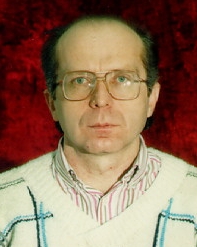 Yuri I. Skovpen (尤里斯科夫片)合作论文数Hadron Interactions Physics Laboratory, Novosibirsk State University997
 David Nathan Brown合作论文数Physics Division, Lawrence Berkeley National Laboratory993J. D. Lange合作论文数990
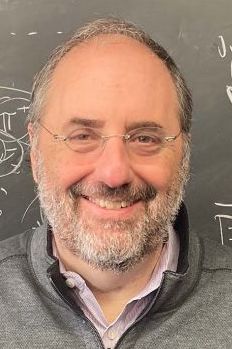 Claudio Campagnari合作论文数Physics Department, University of California Santa Barbara;CERN990
 Roger Barlow合作论文数School of Computing and Engineering, University of Huddersfield985
 Bjarne Sandvik Stugu合作论文数Department of Physics and Technology University of Bergen983Erwin Gabathuler合作论文数University of Liverpool982Gilbert Grosdidier合作论文数Laboratoire de l'Accélérateur Linéaire, Institut National de Physique Nucléaire et de Physique des Particules977
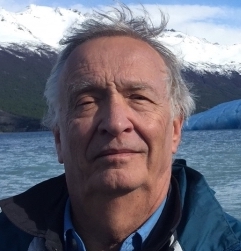 Blair Ratcliff合作论文数SLAC National Accelerator Laboratory;Stanford University973L. Piemontese合作论文数972Jean-Pierre Lees合作论文数Laboratoire d'Annecy-le-Vieux de Physique des Particules969
 Fernando Palombo合作论文数Department of Physics, University of Milan968Lt Kerth合作论文数965
 Jeffrey D. Richman合作论文数Physics Department, University of California, Santa Barbara963
 David Kirkby合作论文数Dept Phys & Astron, Univ Calif Irvine963J. Chauveau合作论文数955
 Francesco Forti合作论文数Department of Physics, University of Pisa;Istituto Nazionale di Fisica Nucleare953
 Masahiro Morii合作论文数Department of Physics, Harvard University951
 Vincent Tisserand合作论文数Laboratoire de Physique Corpusculaire de Clermont-Ferrand950J. R. Fry合作论文数950
 Rolf Dubitzky合作论文数CARIAD948O. Long合作论文数948M. Verderi合作论文数944P. M. Patel合作论文数939David J Payne合作论文数937




