Formation of the passive continental margin of the Laptev Sea (Laptev Plate), which was part of the Siberian Platform till the Late Cretaceous, was related to the Late Mesozoic–Cenozoic rifting of the Arctic geodepression. The regime of the passive continental margin still continues. The maximum thickness of the deposits of this age seems to exceed 6 km in the northeastern part of the shelf. The hydrocarbon resources of the Late Precambrian–Cenozoic deposits forming the Laptev Plate cover are evaluated. Based on the concept of the similar evolution of the Laptev Plate and Vilyui syneclise, the geochemical characteristics of dispersed organic matter of the coeval deposits of the Vilyui syneclise are used.
Much work at A.A. Trofimuk Institute of Petroleum Geology and Geophysics (Novosibirsk) has been done to synthesize geological and geophysical data from the Siberian Arctic and Arctic shelf. Namely, seismic-geological modeling and petroleum potential assessment have been performed for the Neoproterozoic–Phanerozoic section of the Anabar–Lena province in the northern Sakha Republic (Yakutia). The results include seismic-geological division, a set of structural maps, and structural, paleotectonic, and facies analysis. The study shows that Riphean, Vendian, Cambrian, and Permian sequences are of interest in terms of petroleum potential; oil and gas may accumulate in traps of different types.
1Институт общей и неорганической химии им. Н.С. Курнакова РАН, Москва 119991, Россия 2Московский педагогический государственный университет, Москва 119991, Россия 3Томский государственный университет, Томск 634050, Россия 4Московский институт электронной техники (МИЭТ), Москва 124498, Россия 5Московский технологический университет (ИТХТ), Москва 119571, Россия @Автор для переписки, e-mail: sergkoz@igic.ras.ru
 A. A. Kontorovich合作论文数23а к башарин合作论文数19a f safronov合作论文数18Nikolai Leontjewitsch Dobrezow合作论文数Universität Nowosibirsk13Av Kanygin合作论文数10Vs Staroseltsev合作论文数8Av Khomenko合作论文数8Fg Gurari合作论文数8Gv Polyakov合作论文数8Vladimir V. Reverdatto合作论文数8
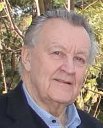 Nikolay V. Sobolev合作论文数V. S. Sobolev Institute of Geology and Mineralogy, Siberian Branch, Russian Academy of Sciences8
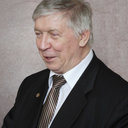 V. A. Kashirtsev合作论文数8Vs Surkov合作论文数7Ae Kontorovich合作论文数7
 N.V. Sennikov合作论文数7
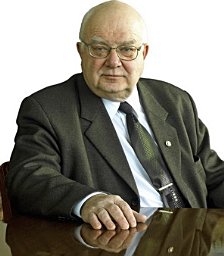 M. I. Kuzmin合作论文数Vinogradov Institute of Geochemistry and Analytical Chemistry, Russian Academy of Sciences7в с ситников合作论文数6с ю беляев合作论文数6Na Berzin合作论文数6Sv Goldin合作论文数6Ii Nesterov合作论文数6Vs Vyshemirskii合作论文数6Nn Puzyrev合作论文数6Vd Suvorov合作论文数6
 Anton A. Duchkov合作论文数Center for Computational and Applied Mathematics;Purdue University;Center for Computational and Applied Mathematics, Purdue University6
 Vasily Nicolaevich Melenevskii合作论文数6а м зотеев合作论文数5Vs Shatskii合作论文数5Vn Sharapov合作论文数5Yr Vasilev合作论文数5Yn Karogodin合作论文数5Gn Anoshin合作论文数5As Borisenko合作论文数5Sl Shvartsev合作论文数5
 A. A. Trofimuk合作论文数Sovetskaja st., Gomel Francisk Skorina State University5V Kashtanov合作论文数5ф к салманов合作论文数5в е бакин合作论文数4к и микуленко合作论文数4с ф бахтуров合作论文数4н в мельников合作论文数4Bs Sokolov合作论文数4Nv Melnikov合作论文数4Vm Gavshin合作论文数4а г коржубаев合作论文数4As Alekseev合作论文数4Ai Larichev合作论文数4Ia Ivanov合作论文数4




