With the adoption of statistical timing across industry, there is a need to characterize all gates/cells in a digital library for delay variations (referred to as, statistical characterization). Statistical characterization need to be performed efficiently with acceptable accuracy as a function of several process and environment parameter variations. In this paper, we propose an approach to consider intra-cell process mismatch variations to characterize a cell's delay and output transition time (output slew) variations. A straightforward approach to address this problem is to model these mismatch variations by characterizing for each device fluctuation separately. However, the runtime complexity for such characterization becomes of the order of number of devices in the cell and the number of simulations required can easily become infeasible. We analyze the fluctuations in switching and non-switching devices and their impact on delay variations. Using these properties of the devices, we propose a clustering approach to characterize for cell's delay variations due to intra-cell mismatch variations. The proposed approach results in as much as 12X runtime improvements with acceptable accuracy, compared with Monte Carlo simulations. We show that this approach ensures an upper-bound on the results while keeping the number of simulations for each cell independent of the number of devices.
Inadequate spatial mesh resolution for simulation of the time‐dependent Ginzburg–Landau equations is shown to give rise to spurious solutions. Phenomenological studies to examine the effect of the physical parameters and boundary conditions in 2D and 3D are presented to illustrate the solution structure and to highlight non‐linear effects related to evolving vortex patterns. We illustrate and explore this issue further by considering a related simplified model in which the number of vortices is equal to the ‘winding number’ that is associated with the applied boundary conditions. Using this model we demonstrate that the solution structure is non‐unique for several values of winding number. Copyright © 2004 John Wiley & Sons, Ltd.
Resonance regions similar to the Arnol'd tongues found in single oscillator frequency locking are observed in experiments using a spatially extended periodically forced Belousov-Zhabotinsky system. We identify six distinct 2:1 subharmonic resonant patterns and describe them in terms of the position-dependent phase and magnitude of the oscillations. Some experimentally observed features are also found in numerical studies of a forced Brusselator reaction-diffusion model.
A mathematical framework has been developed for numerical analysis and simulation of applications in superconducting microelectronics. The approach is similar to those used successfully in semiconductor modeling. Here we investigate semidiscrete simulation of the time dependent Ginzburg-Landau equations. Several interesting numerical and modeling issues regarding the structure of the solutions and their sensitivity to the data and mesh resolution are described using results from a representative problem.
When an oscillatory nonlinear system is driven by a periodic external stimulus, the system can lock at rational multiples p : q of the driving frequency. The frequency range of this resonant locking at a given p : q depends on the amplitude of the stimulus; the frequency width of locking increases from zero as the stimulus amplitude increases from zero, generating an “Arnol’d tongue” in a graph of stimulus amplitude vs stimulus frequency. Physical systems that exhibit frequency locking include electronic circuits [1, 2], Josephson junctions [3], chemical reactions [4], fields of fireflies [5, 6], and forced cardiac systems [7, 8]. Most studies of frequency locking have concerned either maps or systems of a few coupled ODEs. The Arnol’d tongue structure of the sine circle map has been extensively studied, and the theory of periodically driven ODE systems has been well developed [9], but there has been very little analysis of frequency locking phenomena in PDEs, except for a few studies of the parametrically excited Mathieu equation with diffusion and damping [10, 11, 12] and the parametrically excited complex Ginzburg-Landau equation [13, 14]. Our interest here is in the effect of periodic forcing on pattern forming systems such as convecting fluids, liquid crystals, granular media, and reaction-diffusion systems. Such systems are often subject to periodic forcing (e.g., circadian forcing of biological systems), but the effect of forcing on the bifurcations to patterns has not been examined in experiments or analyzed in PDE models of these systems.
A domain decomposition strategy and parallel gradient-type iterative solution scheme have been developed and implemented for computation of complex 3D viscous flow problems involving heat transfer and surface tension effects. Special attention has been paid to the kernels for the computationally intensive matrix-vector products and dot products, to memory management, and to overlapping communication and computation. Details of these implementation issues are described together with associated performance and scalability studies. Representative Rayleigh- Bénard and microgravity Marangoni flow calculations on the Cray T3D are presented, and performance results verifying a sustained rate in excess of 16 gigaflops on 512 nodes of the T3D have been obtained. The work is currently being extended to the T3E and we have begun carrying out further performance benchmarks and scalability studies on this platform. Preliminary performance studies have recently been carried out and sustained rates above 50 gigaflops and 100 gigaflops have been achieved on the 512 node T3E-600 and 1024 node T3E-900 configurations respectively.
 Graham Francis Carey合作论文数Department of Aerospace Engineering and Engineering Mechanics, Cockrell School of Engineering, The University of Texas at Austin3
 S. Swift合作论文数2R. Mclay合作论文数2
 Harry L. Swinney合作论文数Center for Nonlinear Dynamics, Physics Department, University of Texas at Austin2Anand L. Pardhanani合作论文数2
 Walter Richardson合作论文数Texas Institute for Computational and Applied Mathematics, Un. of Texas at Austin2G. Bicken合作论文数2AL Lin合作论文数1Alexander Korobkov合作论文数1
 Rajendran Panda合作论文数Oracle America Inc.1
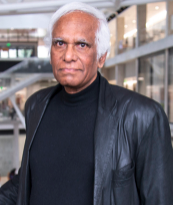 Jacob Abraham合作论文数Department of Electrical and Computer Engineering, Cockrell School of Engineering, The University of Texas at Austin1
 Amit Agarwal合作论文数Sanjay Gandhi Post Graduate Institute of Medical Sciences1Graham F. Carey合作论文数1Valery Petrov合作论文数1
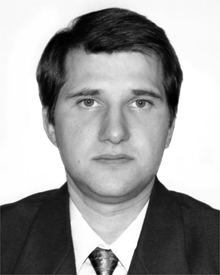 Bogdan Tutuianu合作论文数1Anna Lin合作论文数1Savithri Sundareswaran合作论文数The University of Texas at Austin1
 William L. Barth合作论文数at Austin, The University of Texas1Bill Barth合作论文数1A. I. Pehlivanov合作论文数1




