The high-temperature crystal growth of intermetallics often asks for sealing of the materials in a protective atmosphere. Here, we report on the development of a convenient sealing method for alkali-containing melts, with high vapor pressure and reactivity. Our newly designed container made of high-temperature resistant steel can be sealed manually and reliably without any air exposure of the containing material. The closed container may be heated in air up to at least 1150 °C. The containers were applied for the development and optimization of a high-temperature self-flux growth of KFe1−xAg1+yCh2 (Ch = Se, Te) single crystals. Their crystal structure and the low-temperature electrical resistance are presented. The successful growths of these air-sensitive materials out of a reactive self-flux confirm the reliability of the container.
The sulfur-substituted FeSe, FeSe$_{1-x}$S$_{x} $, is one of the unique systems that provides an independent tunability of nematicity, antiferromagnetism and superconductivity under pressure ($p$). Recently Rana et al. [Phys. Rev. B 101, 180503(R) (2020)] reported, from $^{77}$Se nuclear magnetic resonance (NMR) measurements on FeSe$_{0.91}$S$_{0.09}$ under pressure, that there exists a clear role of nematicity on the relationship between antiferromagnetic (AFM) spin fluctuations and superconducting transition temperature ($T_{\rm c}$) where the AFM spin fluctuations are more effective in enhancing $T_{\rm c}$ in the absence of nematicity than with nematicity. Motivated by the work, we carried out $^{77}$Se NMR measurements on FeSe$_{1-x}$S$_{x}$ with $x$= 0.15 and 0.29 under pressure up to 2.10 GPa to investigate the relationship in a wide range of $x$ in the FeSe$_{1-x}$S$_x$ system. Based on the new results together with the previously reported data for $x$=0 [P. Wiecki et al., Phys. Rev. B 96, 180502(R) (2017)] and 0.09 [K. Rana et al. Phys. Rev. B 101, 180503(R) (2020)], we established a $p$ - $x$ - temperature ($T$) phase diagram exhibiting the evolution of AFM spin fluctuations. From the systematic analysis of the NMR data, we found that the superconducting (SC) state in nematic state arises from a non Fermi liquid state with strong stripe-type AFM spin fluctuations while the SC state without nematicity comes from a Fermi liquid state with mild stripe-type AFM spin fluctuations. Furthermore, we show that the previously reported impact of nematicity on the relationship between AFM fluctuations and superconductivity holds throughout the wide range of $x$ from $x$ = 0 to 0.29 in FeSe$_{1-x}$S$_{x}$ under pressure. We discuss the origin of the role of nematicity in terms of the different numbers of hotspots on Fermi surfaces with and without nematicity.
Several classes of materials manifest displacive phase transitions, including shape memory alloys, many electronically correlated materials, superconductors, and ferroelectrics. Each of these classes of materials displays a wide range of fascinating properties and functionalities that are studied in disparate communities. However, these materials' classes share similar electronic and phononic instabilities in conjunction with microstructural features. Specifically, the common motifs include twinned microstructures, anomalies in the transport behavior, softening of specific phonons, and frequently also (giant) Kohn anomalies, soft phonons, and/or nesting of the Fermi surface. These effects, phenomena, and their applications have until now been discussed in separate communities, which is a missed opportunity. In this perspective a unified framework is presented to understand these materials, by identifying similarities, defining a unified phenomenological description of displacive phase transitions and the associated order parameters, and introducing the main symmetry-breaking mechanisms. This unified framework aims to bring together experimental and theoretical know-how and methodologies across disciplines to enable unraveling hitherto missing important mechanistic understanding about the phase transitions in (magnetic) shape memory alloys, superconductors and correlated materials, and ferroelectrics. Connecting structural and electronic phenomena and microstructure to functional properties may offer so-far unknown pathways to innovate applications based on these materials.
The spontaneous reduction of rotational symmetry in a crystalline solid driven by an electronic mechanism is referred to as electronic nematicity. This phenomenon-initially thought to be rare-has now been observed in an increasing number of strongly interacting systems. In particular, the ubiquitous presence of nematicity in a number of unconventional superconductors suggests its importance in developing a unified understanding of their intricate phase diagrams and superconducting pairing. In this regard, the iron-based superconductors present an ideal material platform to study electronic nematicity. Their nematic transition is pronounced, it can be studied with a wide range of experimental techniques, it is easily tunable, and high-quality samples are widely available. Signatures of nematic quantum criticality near optimal dopings have been reported in almost all families of iron-based superconductors. Here we highlight how the nematic phase in this class of materials can be addressed in its full complexity, encompassing momentum-, time-, energy- and material-dependences. We also discuss a number of important open questions that pertain to how nematicity affects the superconducting pairing and normal-state properties, and intriguing quantum-critical behaviour near the nematic transition.
Received 12 April 2022DOI:https://doi.org/10.1103/PhysRevB.105.179901©2022 American Physical SocietyPhysics Subject Headings (PhySH)Research AreasElectrical conductivityHall effectSuperconductivityPhysical SystemsPnictidesSingle crystal materialsSuperconductorsTechniquesCrystal growthMagnetization measurementsX-ray diffractionCondensed Matter, Materials & Applied Physics
EDITORIAL article Front. Phys., 27 September 2022Sec. Condensed Matter Physics Volume 10 - 2022 | https://doi.org/10.3389/fphy.2022.1038127
Electronic nematicity, the breaking of the crystal lattice rotational symmetry by the electronic fluid, is a fascinating quantum state of matter. Recently, BaNi_2As_2 has emerged as a promising candidate for a novel type of nematicity triggered by charge fluctuations. In this work, we scrutinize the electronic nematicity of BaNi_2(As_1-xP_x)_2 with 0 ≤ x ≤ 0.10 using electronic transport measurements under strain. We report a large B_1g elastoresistance coefficient that is maximized at a temperature slightly higher than the first-order triclinic transition, and that corresponds to the recently discovered tetragonal-to-orthorhombic transition. The reported elastoresistance does not follow the typical Curie-Weiss form observed in iron-based superconductors but has a much sharper temperature dependence with a finite elastoresistance onsetting only together with a strong enhancement of the incommensurate charge density wave of the material. Consequently, the B_1g elastoresistance and the associated orthorhombic distortion appears here as a property of this incommensurate charge density wave. Finally, we report and track the hysteretic behavior seen in the resistance versus strain sweeps and interpret its origin as the pinning of orthorhombic domains. Our results revise the understanding of the interplay between nematicity, charge density waves and structural distortions in this material.
Electronic nematicity, the breaking of the crystal lattice rotational symmetry by the electronic fluid, is a fascinating quantum state of matter. In this work, using electronic transport under strain we investigate the electronic nematicity of BaNi 2 (As 1− x P x ) 2 , a candidate system for charge-induced nematicity. We report a large B 1g elastoresistance coefficient that is maximized at the tetragonal-to-orthorhombic transition temperature, that slightly precedes the first-order triclinic transition. An hysteretic behavior is observed in the resistance versus strain sweeps and interpreted as the pinning of orthorhombic domains. Remarkably, the elastoresistance only onsets together with a strong enhancement of the incommensurate charge density wave of the material, strongly suggesting that this electronic instability is uniaxial in nature and drive the orthorhombic transition. The absence of sizeable elastoresistance above this electronic phase clearly contrasts dynamic and static electronic nematicity. Finally, the elastoresistance temperature dependence that strongly differs from the Curie-Weiss form of iron-based superconductors reveals major differences for the respective coupling of electronic nematicity to the lattice. Our results uncover an extremely strain-sensitive platform to study electronic anisotropy induced by a charge-density-wave instability.
Abstract Complete theoretical understanding of the most complex superconductors requires a detailed knowledge of the symmetry of the superconducting energy-gap $${\mathrm{{\Delta}}}_{\mathbf{k}}^\alpha$$ Δ k α , for all momenta k on the Fermi surface of every band α. While there are a variety of techniques for determining $$|{\mathrm{{\Delta}}}_{\mathbf{k}}^\alpha |$$ ∣ Δ k α ∣ , no general method existed to measure the signed values of $${\mathrm{{\Delta}}}_{\mathbf{k}}^\alpha$$ Δ k α . Recently, however, a technique based on phase-resolved visualization of superconducting quasiparticle interference (QPI) patterns, centered on a single non-magnetic impurity atom, was introduced. In principle, energy-resolved and phase-resolved Fourier analysis of these images identifies wavevectors connecting all k-space regions where $${\mathrm{{\Delta}}}_{\mathbf{k}}^\alpha$$ Δ k α has the same or opposite sign. But use of a single isolated impurity atom, from whose precise location the spatial phase of the scattering interference pattern must be measured, is technically difficult. Here we introduce a generalization of this approach for use with multiple impurity atoms, and demonstrate its validity by comparing the $${\mathrm{{\Delta}}}_{\mathbf{k}}^\alpha$$ Δ k α it generates to the $${\mathrm{{\Delta}}}_{\mathbf{k}}^\alpha$$ Δ k α determined from single-atom scattering in FeSe where s± energy-gap symmetry is established. Finally, to exemplify utility, we use the multi-atom technique on LiFeAs and find scattering interference between the hole-like and electron-like pockets as predicted for $${\mathrm{{\Delta}}}_{\mathbf{k}}^\alpha$$ Δ k α of opposite sign.
We report the evolution of nematic fluctuations in FeSe 1− x S x single crystals as a function of Sulfur content x across the nematic quantum critical point (QCP) x c ~ 0.17 via Raman scattering. The Raman spectra in the B 1g nematic channel consist of two components, but only the low energy one displays clear fingerprints of critical behavior and is attributed to itinerant carriers. Curie–Weiss analysis of the associated nematic susceptibility indicates a substantial effect of nemato-elastic coupling, which shifts the location of the nematic QCP. We argue that this lattice-induced shift likely explains the absence of any enhancement of the superconducting transition temperature at the QCP. The presence of two components in the nematic fluctuations spectrum is attributed to the dual aspect of electronic degrees of freedom in Hund’s metals, with both itinerant carriers and local moments contributing to the nematic susceptibility.
The NMR spectrum of FeSe shows a dramatic broadening on cooling towards the bulk nematic phase at T_s=90 K, due to the formation of a quasi-static, short-range-ordered nematic domain structure. However, a quantitative understanding of the NMR broadening and its relationship to the nematic susceptibility is still lacking. Here, we show that the temperature and pressure dependence of the broadening is in quantitative agreement with the mean-field Edwards-Anderson parameter of an Ising-nematic model in the presence of random-field disorder introduced by non-magnetic impurities. Furthermore, these results reconcile the interpretation of NMR and Raman spectroscopy data in FeSe under pressure.
Electronic nematicity is often found in unconventional superconductors, suggesting its relevance for electronic pairing. In the strongly hole-doped iron-based superconductors, the symmetry channel and strength of the nematic fluctuations, as well as the possible presence of long-range nematic order, remain controversial. Here, we address these questions using transport measurements under elastic strain. By decomposing the strain response into the appropriate symmetry channels, we demonstrate the emergence of a giant in-plane symmetric contribution, associated with the growth of both strong electronic correlations and the sensitivity of these correlations to strain. We find weakened remnants of the nematic fluctuations that are present at optimal doping, but no change in the symmetry channel of nematic fluctuations with hole doping. Furthermore, we find no indication of a nematic-ordered state in the AFe2As2 (A = K, Rb, Cs) superconductors. These results revise the current understanding of nematicity in hole-doped iron-based superconductors.
The CaK(Fe_1-xNi_x)_4As_4 superconductors resemble the archetypal 122-type iron-based materials but have a crystal structure with distinctly lower symmetry. This family hosts one of the few examples of the so-called spin-vortex crystal magnetic order, a non-collinear magnetic configuration that preserves tetragonal symmetry, in contrast to the orthorhombic collinear stripe-type magnetic configuration common to the 122-type systems. Thus, nematic order is completely absent from its phase diagram. To investigate the evolution of nematic fluctuations in such a case, we present elastoresistance and elastic modulus measurements in CaK(Fe_1-xNi_x)_4As_4 (x = 0-0.05) combined with phenomenological modeling and density functional theory. We find clear experimental signatures of considerable nematic fluctuations, including softening of the Young's modulus Y_[110] and a Curie-Weiss type divergence of the B2g elastoresistance coefficient in CaK(Fe_0.951Ni_0.049)_4As_4. Overall, nematic fluctuations within this series bear strong similarities to the hole-doped Ba_1-xK_xFe_2As_2 series, including a substitution-induced sign change. Our theoretical analysis addresses the effect of the specific crystal symmetry of the 1144-type structure in determining its magnetic ground state and on the nematic fluctuations.
We have carried out 75 As nuclear magnetic resonance (NMR) measurements to investigate a new antiferromagnetic (AFM) state, the so-called hedgehog spin-vortex crystal (SVC) in CaK(Fe 0.9 67 Ni 0.0 33 ) 4 As 4 . The hedgehog SVC order is clearly demonstrated by the direct observation of internal magnetic induction along the c axis at the As1 site (close to K) and a zero net internal magnetic induction at the As2 site (close to Ca) below an AFM ordering temperature of T N ~ 45 K. In the superconducting (SC) state, the NMR signal intensity decreases suddenly just below T c ~ 20 K due to Meissner effect, evidencing the coexistence of the hedgehog SVC AFM and SC states from a microscopic point of view.
The iron-based superconductor FeSe offers a unique possibility to study the interplay of superconductivity with purely nematic as well magnetic-nematic order by pressure (p) tuning. By measuring specific heat under p up to 2.36 GPa, we study the multiple phases in FeSe using a thermodynamic probe. We conclude that superconductivity is bulk across the entire p range and competes with magnetism. In addition, whenever magnetism is present, fluctuations exist over a wide temperature range above both the bulk superconducting and the magnetic transitions. Whereas the magnetic fluctuations are likely temporal, the superconducting fluctuations may be either temporal or spatial. These observations highlight similarities between FeSe and underdoped cuprate superconductors.
 Paul C. Canfield合作论文数Department of Physics and Astronomy, College of Liberal Arts and Sciences, Iowa State University of Science and Technology47
 Christoph Meingast合作论文数Forschungszentrum Karlsruhe;Institut für Festkörperphysik;Institut für Festkörperphysik, Forschungszentrum Karlsruhe41
 Sergey Budko合作论文数Department of Materials Sciences and Engineering, Ames Laboratory;Department of Physics and Astronomy, Iowa State University35
 Thomas Wolf合作论文数Linac Coherent Light Source, SLAC National Accelerator Laboratory, Stanford University;Stanford PULSE Institute25
 Frederic Hardy合作论文数LITEWERKS Engineering24
 Andreas Kreyssig合作论文数Department of Physics and Astronomy, Iowa State University21
 Alan I. Goldman合作论文数Department of Physics and Astronomy, College of Liberal Arts and Sciences, Iowa State University;SYNCHXRAY, LLC15
 Valentin Taufour合作论文数Experimental Condensed Matter Physics Research Group, Department of Physics and Astronomy, University of California, Davis15
 A. Sapkota合作论文数Iowa State Univ, Ames Lab, US DOE, Ames, IA 50011 USA13Peter Schweiss合作论文数11Philipp Burger合作论文数10
 Ruslan Prozorov合作论文数Faculty of Science and Technology, Iowa State University;Department of Physics and Astronomy, College of Liberal Arts and Sciences, Iowa State University;Department of Material Science and Engineering, Ames National Laboratory10
 Makariy Tanatar合作论文数Division of Material Science and Engineering, Ames National Laboratory;Clayton Swensson Low Temperature laboratory10
 Hilbert V. Löhneysen合作论文数Physikalisches Institut, Karlsruher Institut für Technologie;Institut für Festkörperphysik, Karlsruher Institut für Technologie10Th Wolf合作论文数10Udhara S. Kaluarachchi合作论文数Dept Phys & Astron, Iowa State Univ9W. R. Meier合作论文数9
 Gil Drachuck合作论文数9
 William R. Meier合作论文数Mat Sci & Engn Dept, Univ Tennessee Knoxville8
 Benjamin Ueland合作论文数Division of Materials Sciences and Engineering, Ames National Laboratory8
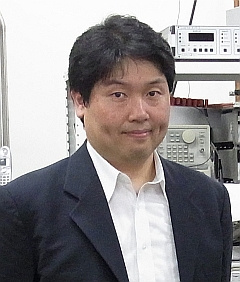 Takasada Shibauchi (芝内孝禎)合作论文数Department of Advanced Materials Science, Graduate School of Frontier Sciences, The University of Tokyo;Department of Applied Physics, School of Engineering, The University of Tokyo8
 Shigeru Kasahara (笠原成)合作论文数The Research Institute for Interdisciplinary Science, Okayama University8
 Paul Wiecki合作论文数Iowa State Univ, Ames Lab, US DOE, Ames, IA 50011 USA7Tatsuya Watashige合作论文数Department of Physics, Kyoto University;RIKEN Center for Emergent Matter Science;RIKEN Center for Emergent Matter Science, Kyoto University7
 Kong Tai合作论文数7
 Yuji Matsuda (松田祐司)合作论文数Department of Physics, Kyoto University7
 Rafael M. Fernandes合作论文数Ames Laboratory;Department of Physics and Astronomy;Iowa State University;Ames Laboratory, Iowa State University7xiao zhen zhi nei (孝禎 芝内)合作论文数6you si song tian (祐司 松田)合作论文数6
 Qing-Ping Ding (丁庆平)合作论文数Ames Lab, Iowa State Univ6
 Pinaki Das合作论文数Department of Physics, University of Notre Dame6
 Robert Mcqueeney合作论文数Los Alamos National Laboratory6
 Peter Hirschfeld合作论文数Department of Physics, College of Liberal Arts and Sciences, University of Florida;Institute for Fundamental Theory, College of Liberal Arts and Sciences, University of Florida6Y. Furukawa合作论文数6Karunakar Kothapalli合作论文数Department of Physics;New Mexico State University6liyuan cheng (成 笠原)合作论文数5da zai mian zhong (達哉 綿重)合作论文数5John Wilde合作论文数Ames Laboratory, U.S. DOE5Merz Michael合作论文数Institut für Festkörperphysik, Karlsruher Institut für Technologie5Th. Wolf合作论文数5Rolf Heid合作论文数5
 Andreas Kreisel合作论文数Niels Bohr Institute, Copenhagen University;University of Leipzig5xiong tai chuan ben (雄太 川本)合作论文数4xiong tai shui shang (雄太 水上)合作论文数4Peter O. Sprau合作论文数Dept Phys, Cornell Univ4
 Yuji Furukawa合作论文数Iowa State Univ, Dept Phys & Astron, Ames, IA 50011 USA4
 Wageesha Jayasekara合作论文数Iowa State Univ, US DOE, Ames Lab, Ames, IA 50011 USA4Vladislav Stanislavovich Borisov合作论文数Dept Phys & Astron, Uppsala Univ4Mingyu Xu合作论文数4




