Story Visualization aims to generate a sequence of images that faithfully depicts a textual narrative that preserve character identity, spatial configuration, and stylistic coherence as the narratives unfold. Maintaining such cross-frame consistency has traditionally relied on explicit memory banks, architectural expansion, or auxiliary language models, resulting in substantial parameter growth and inference overhead. We introduce ReCap, a lightweight consistency framework that improves character stability and visual fidelity without modifying the base diffusion backbone. ReCap's CORE (COnditional frame REferencing) module treats anaphors, in our case pronouns, as visual anchors, activating only when characters are referred to by a pronoun and conditioning on the preceding frame to propagate visual identity. This selective design avoids unconditional cross-frame conditioning and introduces only 149K additional parameters, a fraction of the cost of memory-bank and LLM-augmented approaches. To further stabilize identity, we incorporate SemDrift (Guided Semantic Drift Correction) applied only during training. When text is vague or referential, the denoiser lacks a visual anchor for identity-defining attributes, causing character appearance to drift across frames, SemDrift corrects this by aligning denoiser representations with pretrained DINOv3 visual embeddings, enforcing semantic identity stability at zero inference cost. ReCap outperforms previous state-of-the-art, StoryGPT-V, on the two main benchmarks for story visualization by 2.63
Audio Description (AD) provides spoken narration of visual events during dialogue gaps, making movies accessible to visually impaired audiences. The problem requires determining both what (which visual event) and when (position for inserting the AD) to narrate, to achieve the best user experience. Prior work has largely reduced the problem to video captioning of pre-segmented video clips, i.e., what is largely predefined and when is ignored entirely. We propose Cue2Narrate, a two-stage pipeline that jointly predicts what and when to narrate in longer untrimmed movie clips. A dual-head audio-visual localizer predicts two temporally distinct windows per AD utterance: a visual cue window and a spoken narration window. A LoRA-adapted VLM then generates concise ADs from the predicted visual evidence, trained with a Description Ranking Loss that ranks captions (negative samples) of the same frames lower than the GT AD. To benchmark this new problem statement, we introduce the LongLSMDC benchmark with up to 8-min movie clips ( 6.5min on average). On LongLSMDC, Cue2Narrate outperforms video-only and audio-only localization baselines by 5–12 points in avg. mAP. Under both predicted- and GT-window evaluation, Cue2Narrate improves AD generation over the corresponding fine-tuned base VLM. These results establish the first benchmark for multi-segment AD generation on long-form clips. Data Code: https://github.com/multimodal-ai-lab/Cue2Narrate
White balance (WB) correction in scenes with multiple illuminants remains a persistent challenge in computer vision. Recent methods explored fusion-based approaches, where a neural network linearly blends multiple sRGB versions of an input image, each processed with predefined WB presets. However, we demonstrate that these methods are suboptimal for common multi-illuminant scenarios. Additionally, existing fusion-based methods rely on sRGB WB datasets lacking dedicated multi-illuminant images, limiting both training and evaluation. To address these challenges, we introduce two key contributions. First, we propose an efficient transformer-based model that effectively captures spatial dependencies across sRGB WB presets, substantially improving upon linear fusion techniques. Second, we introduce a large-scale multi-illuminant dataset comprising over 16,000 sRGB images rendered with five different WB settings, along with WB-corrected images. Our method achieves up to 100% improvement over existing techniques on our new multi-illuminant image fusion dataset.
In this paper, we propose GuideSR, a novel single-step diffusion-based image super-resolution (SR) model specifically designed to enhance image fidelity. Existing diffusion-based SR approaches typically adapt pre-trained generative models to image restoration tasks by adding extra conditioning on a VAE-downsampled representation of the degraded input, which often compromises structural fidelity. GuideSR addresses this limitation by introducing a dual-branch architecture comprising: (1) a Guidance Branch that preserves high-fidelity structures from the original-resolution degraded input, and (2) a Diffusion Branch, which a pre-trained latent diffusion model to enhance perceptual quality. Unlike conventional conditioning mechanisms, our Guidance Branch features a tailored structure for image restoration tasks, combining Full Resolution Blocks (FRBs) with channel attention and an Image Guidance Network (IGN) with guided attention. By embedding detailed structural information directly into the restoration pipeline, GuideSR produces sharper and more visually consistent results. Extensive experiments on benchmark datasets demonstrate that GuideSR achieves state-of-the-art performance while maintaining the low computational cost of single-step approaches, with up to 1.39dB PSNR gain on challenging real-world datasets. Our approach consistently outperforms existing methods across various reference-based metrics including PSNR, SSIM, LPIPS, DISTS and FID, further representing a practical advancement for real-world image restoration.
This paper reviews the Challenge on Blind Enhancement of Compressed Image at NTIRE 2024, which aims at enhancing the quality of JPEG images which are compressed with unknown quality factor. The challenge requires that the total size of codes and pre-trained model(s) cannot exceed 300 MB, since we encourage solutions for blind enhancement with generalized models, instead of separately training several models for each quality factor. In this report, we summarize the detailed settings of the challenge, the final results, and the solutions proposed by the participants. The challenge has 129 registered participants and received 13 valid submissions. Several teams (including all TOP 3 teams) have publicly released the codes (see Sec. 4). They gauge the state-of-the-art of blind quality enhancement of compressed image.
Open-Vocabulary Temporal Action Localization (OVTAL) enables a model to recognize any desired action category in videos without the need to explicitly curate training data for all categories. However, this flexibility poses significant challenges, as the model must recognize not only the action categories seen during training but also novel categories specified at inference. Unlike standard temporal action localization, where training and test categories are predetermined, OVTAL requires understanding contextual cues that reveal the semantics of novel categories. To address these challenges, we introduce OVFormer, a novel open-vocabulary framework extending ActionFormer with three key contributions. First, we employ task-specific prompts as input to a large language model to obtain rich class-specific descriptions for action categories. Second, we introduce a cross-attention mechanism to learn the alignment between class representations and frame-level video features, facilitating the multimodal guided features. Third, we propose a two-stage training strategy which includes training with a larger vocabulary dataset and finetuning to downstream data to generalize to novel categories. OVFormer extends existing TAL methods to open-vocabulary settings. Comprehensive evaluations on the THUMOS14 and ActivityNet-1.3 benchmarks demonstrate the effectiveness of our method. Code and pretrained models will be publicly released.
This paper reviews the NTIRE 2023 challenge on image denoising (σ = 50) with a focus on the proposed solutions and results. The aim is to obtain a network design capable to produce high-quality results with the best performance measured by PSNR for image denoising. Independent additive white Gaussian noise (AWGN) is assumed and the noise level is 50. The challenge had 225 registered participants, and 16 teams made valid submissions. They gauge the state-of-the-art for image denoising.
Since convolutional neural networks (CNNs) perform well at learning generalizable image priors from large-scale data, these models have been extensively applied to image restoration and related tasks. Recently, another class of neural architectures, Transformers, have shown significant performance gains on natural language and high-level vision tasks. While the Transformer model mitigates the shortcomings of CNNs (i.e., limited receptive field and inadaptability to input content), its computational complexity grows quadratically with the spatial resolution, therefore making it infeasible to apply to most image restoration tasks involving high-resolution images. In this work, we propose an efficient Transformer model by making several key designs in the building blocks (multi-head attention and feed-forward network) such that it can capture long-range pixel interactions, while still remaining applicable to large images. Our model, named Restoration Transformer (Restormer), achieves state-of-the-art results on several image restoration tasks, including image deraining, single-image motion deblurring, defocus deblurring (single-image and dual-pixel data), and image denoising (Gaussian grayscale/color denoising, and real image denoising). The source code and pre-trained models are available at https://github.com/swz30/Restormer.
This paper reviews the NTIRE 2022 challenge on efficient single image super-resolution with focus on the proposed solutions and results. The task of the challenge was to super-resolve an input image with a magnification factor of ×4 based on pairs of low and corresponding high resolution images. The aim was to design a network for single image super-resolution that achieved improvement of efficiency measured according to several metrics including runtime, parameters, FLOPs, activations, and memory consumption while at least maintaining the PSNR of 29.00dB on DIV2K validation set. IMDN is set as the baseline for efficiency measurement. The challenge had 3 tracks including the main track (runtime), sub-track one (model complexity), and sub-track two (overall performance). In the main track, the practical runtime performance of the submissions was evaluated. The rank of the teams were determined directly by the absolute value of the average runtime on the validation set and test set. In sub-track one, the number of parameters and FLOPs were considered. And the individual rankings of the two metrics were summed up to determine a final ranking in this track. In sub-track two, all of the five metrics mentioned in the description of the challenge including runtime, parameter count, FLOPs, activations, and memory consumption were considered. Similar to sub-track one, the rankings of five metrics were summed up to determine a final ranking. The challenge had 303 registered participants, and 43 teams made valid submissions. They gauge the state-of-the-art in efficient single image super-resolution.
Image restoration tasks demand a complex balance between spatial details and high-level contextualized information while recovering images. In this paper, we propose a novel synergistic design that can optimally balance these competing goals. Our main proposal is a multi-stage architecture, that progressively learns restoration functions for the degraded inputs, thereby breaking down the overall recovery process into more manageable steps. Specifically, our model first learns the contextualized features using encoder-decoder architectures and later combines them with a high-resolution branch that retains local information. At each stage, we introduce a novel per-pixel adaptive design that leverages in-situ supervised attention to reweight the local features. A key ingredient in such a multi-stage architecture is the information exchange between different stages. To this end, we propose a two-faceted approach where the information is not only exchanged sequentially from early to late stages, but lateral connections between feature processing blocks also exist to avoid any loss of information. The resulting tightly interlinked multi-stage architecture, named as MPRNet, delivers strong performance gains on ten datasets across a range of tasks including image deraining, deblurring, and denoising. The source code and pre-trained models are available at https://github.com/swz30/MPRNet.
This paper introduces the real image Super-Resolution (SR) challenge that was part of the Advances in Image Manipulation (AIM) workshop, held in conjunction with ECCV 2020. This challenge involves three tracks to super-resolve an input image for $\times$2, $\times$3 and $\times$4 scaling factors, respectively. The goal is to attract more attention to realistic image degradation for the SR task, which is much more complicated and challenging, and contributes to real-world image super-resolution applications. 452 participants were registered for three tracks in total, and 24 teams submitted their results. They gauge the state-of-the-art approaches for real image SR in terms of PSNR and SSIM.
This work reviews the results of the NTIRE 2021 Challenge on Non-Homogeneous Dehazing. The proposed techniques and their results have been evaluated on a novel dataset that extends the NH-Haze datset. It consists of additional 35 pairs of real haze free and nonhomogeneous hazy images recorded outdoor. The nonhomogeneous haze has been introduced in the outdoor scenes by using a a professional setup that imitates the real conditions of haze scenes. 327 participants registered in the challenge and 23 teams competed in the final testing phase. The proposed solutions gauge the state-of-the-art in image dehazing.
This paper provides a review of the NTIRE 2021 challenge targeting defocus deblurring using dual-pixel (DP) data. The goal of this single-track challenge was to reduce spatially varying defocus blur present in images captured with a shallow depth of field. The images used in this challenge were obtained using a DP sensor that provided a pair of DP views per captured image. Submitted solutions were evaluated using conventional signal processing metrics, namely peak signal-to-noise ratio (PSNR) and structural similarity index measure (SSIM). Out of 185 registered participants, nine teams provided methods and competed in the final stage. The paper describes the methods proposed by the participating teams and their results. The winning teams represent the state-of-the-art in terms of defocus de-blurring using DP images.
Images captured under low-light conditions manifest poor visibility, lack contrast and color vividness. Compared to conventional approaches, deep convolutional neural networks (CNNs) perform well in enhancing images. However, being solely reliant on confined fixed primitives to model dependencies, existing data-driven deep models do not exploit the contexts at various spatial scales to address low-light image enhancement. These contexts can be crucial towards inferring several image enhancement tasks, e.g., local and global contrast, brightness and color corrections; which requires cues from both local and global spatial extent. To this end, we introduce a context-aware deep network for low-light image enhancement. First, it features a global context module that models spatial correlations to find complementary cues over full spatial domain. Second, it introduces a dense residual block that captures local context with a relatively large receptive field. We evaluate the proposed approach using three challenging datasets: MIT-Adobe FiveK, LoL, and SID. On all these datasets, our method performs favorably against the state-of-the-arts in terms of standard image fidelity metrics. In particular, compared to the best performing method on the MIT-Adobe FiveK dataset, our algorithm improves PSNR from 23.04 dB to 24.45 dB.
In low-light conditions, a conventional camera imaging pipeline produces sub-optimal images that are usually dark and noisy due to a low photon count and low signal-to-noise ratio (SNR). We present a data-driven approach that learns the desired properties of well-exposed images and reflects them in images that are captured in extremely low ambient light environments, thereby significantly improving the visual quality of these low-light images. We propose a new loss function that exploits the characteristics of both pixel-wise and perceptual metrics, enabling our deep neural network to learn the camera processing pipeline to transform the short-exposure, low-light RAW sensor data to well-exposed sRGB images. The results show that our method outperforms the state-of-the-art according to psychophysical tests as well as pixel-wise standard metrics and recent learning-based perceptual image quality measures.
Motion blur is a common photography artifact in dynamic environments that typically comes jointly with the other types of degradation. This paper reviews the NTIRE 2021 Challenge on Image Deblurring. In this challenge report, we describe the challenge specifics and the evaluation results from the 2 competition tracks with the proposed solutions. While both the tracks aim to recover a high-quality clean image from a blurry image, different artifacts are jointly involved. In track 1, the blurry images are in a low resolution while track 2 images are compressed in JPEG format. In each competition, there were 338 and 238 registered participants and in the final testing phase, 18 and 17 teams competed. The winning methods demonstrate the state-of-the-art performance on the image deblurring task with the jointly combined artifacts.
Several studies show that animal needs are often expressed through their faces. Though remarkable progress has been made towards the automatic understanding of human faces, this has not been the case with animal faces. There exists significant room for algorithmic advances that could realize automatic systems for interpreting animal faces. Besides scientific value, resulting technology will foster better and cheaper animal care. We believe the underlying research progress is mainly obstructed by the lack of an adequately annotated dataset of animal faces, covering a wide spectrum of animal species. To this end, we introduce a large-scale, hierarchical annotated dataset of animal faces, featuring 22.4K faces from 350 diverse species and 21 animal orders across biological taxonomy. These faces are captured 'in-the-wild' conditions and are consistently annotated with 9 landmarks on key facial features. The dataset is structured and scalable by design; its development underwent four systematic stages involving rigorous, overall effort of over 6K man-hours. We benchmark it for face alignment using the existing art under two new problem settings. Results showcase its challenging nature, unique attributes and present definite prospects for novel, adaptive, and generalized face-oriented CV algorithms. Further benchmarking the dataset across face detection and fine-grained recognition tasks demonstrates its multi-task applications and room for improvement. The dataset is available at: https : //fdmaproject.wordpress.com/.
The availability of large-scale datasets has helped unleash the true potential of deep convolutional neural networks (CNNs). However, for the single-image denoising problem, capturing a real dataset is an unacceptably expensive and cumbersome procedure. Consequently, image denoising algorithms are mostly developed and evaluated on synthetic data that is usually generated with a widespread assumption of additive white Gaussian noise (AWGN). While the CNNs achieve impressive results on these synthetic datasets, they do not perform well when applied on real camera images, as reported in recent benchmark datasets. This is mainly because the AWGN is not adequate for modeling the real camera noise which is signal-dependent and heavily transformed by the camera imaging pipeline. In this paper, we present a framework that models camera imaging pipeline in forward and reverse directions. It allows us to produce any number of realistic image pairs for denoising both in RAW and sRGB spaces. By training a new image denoising network on realistic synthetic data, we achieve the state-of-the-art performance on real camera benchmark datasets. The parameters in our model are -5 times lesser than the previous best method for RAW denoising. Furthermore, we demonstrate that the proposed framework generalizes beyond image denoising problem e.g., for color matching in stereoscopic cinema. The source code and pre-trained models are available at https: //github.com/swz30/CycleISP.
This paper reviews the NTIRE 2019 challenge on real image denoising with focus on the proposed methods and their results. The challenge has two tracks for quantitatively evaluating image denoising performance in (1) the Bayer-pattern raw-RGB and (2) the standard RGB (sRGB) color spaces. The tracks had 216 and 220 registered participants, respectively. A total of 15 teams, proposing 17 methods, competed in the final phase of the challenge. The proposed methods by the 15 teams represent the current state-of-the-art performance in image denoising targeting real noisy images.
This paper reviews the first NTIRE challenge on video deblurring (restoration of rich details and high frequency components from blurred video frames) with focus on the proposed solutions and results. A new REalistic and Diverse Scenes dataset (REDS) was employed. The challenge was divided into 2 tracks. Track 1 employed dynamic motion blurs while Track 2 had additional MPEG video compression artifacts. Each competition had 109 and 93 registered participants. Total 13 teams competed in the final testing phase. They gauge the state-of-the-art in video deblurring problem.
 Salman Khan合作论文数Computer Vision Department, Mohamed bin Zayed University of Artificial Intelligence17
 Syed Waqas Zamir合作论文数Inception Institute of Artificial Intelligence17
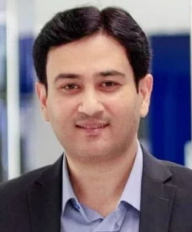 Fahad Shahbaz Khan合作论文数Mohamed bin Zayed University of Artificial Intelligence;Computer Vision Laboratory, Linkoping University;Inception Institute of Artificial Intelligence17
 Ling Shao (邵岭)合作论文数Terminus Group14
 Radu Timofte合作论文数Computer Vision Laboratory, Institute of Computer Science, Faculty of Mathematics and Computer Science, Julius Maximilians University of Würzburg;ETH Zurich11
 Munawar Hayat合作论文数Qualcomm9
 Wangmeng Zuo (左旺孟)合作论文数School of Computer Science and Technology, Harbin Institute of Technology5
 Akshita Gupta合作论文数Technische Universität Darmstadt5
 Ming-Hsuan Yang合作论文数Vision and Learning Lab, University of California, Merced;Google DeepMind5
 Dongwon Park合作论文数Seoul National University4
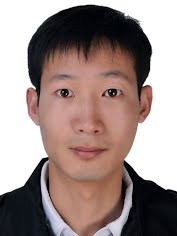 Jinshan Pan (潘金山)合作论文数School of Computer Science and Engineering, Nanjing University of Science and Technology4
 Kai Zhang (张凯)合作论文数School of Intelligence Science and Technology, Nanjing University, Suzhou4
 Muhammad Haris合作论文数INA Digital Edu4
 Michael S. Brown合作论文数Department of Electrical Engineering & Computer Science, Lassonde School of Engineering, York University4
 Se Young Chun合作论文数Department of Electrical and Computer Engineering, Seoul National University4Shuai Liu合作论文数3
 Xin Li (李鑫)合作论文数University of Science and Technology of China3Chaoyu Feng合作论文数3
 Tao Wang合作论文数School of Computer Science, Nanjing University3
 Dafeng Zhang合作论文数Samsung Research China - Beijing3
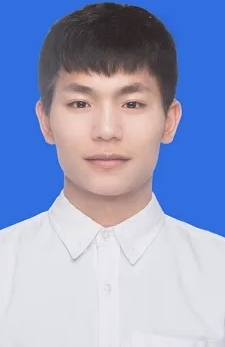 Long Sun (孙龙)合作论文数Intelligent Media Analysis Group, School of Computer Science, Nanjing University of Science and Technology3
 Greg Shakhnarovich合作论文数Toyota Technological Institute at Chicago3
 Hao Li (李昊)合作论文数Artificial Intelligence Innovation and Incubation (AI³) Institute, Fudan University3
 Liang Lin (林倞)合作论文数School of Computer Science and Engineering, Sun Yat-sen University3
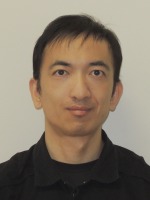 Norimichi Ukita (浮田宗伯)合作论文数Graduate School of Engineering, Toyota Technological Institute3
 Chao Dong (董超)合作论文数Shanghai AI Lab, Shenzhen Institutes of Advanced Technology, Chinese Academy of Sciences;University of Chinese Academy of Sciences;Shenzhen University of Advanced Technology3
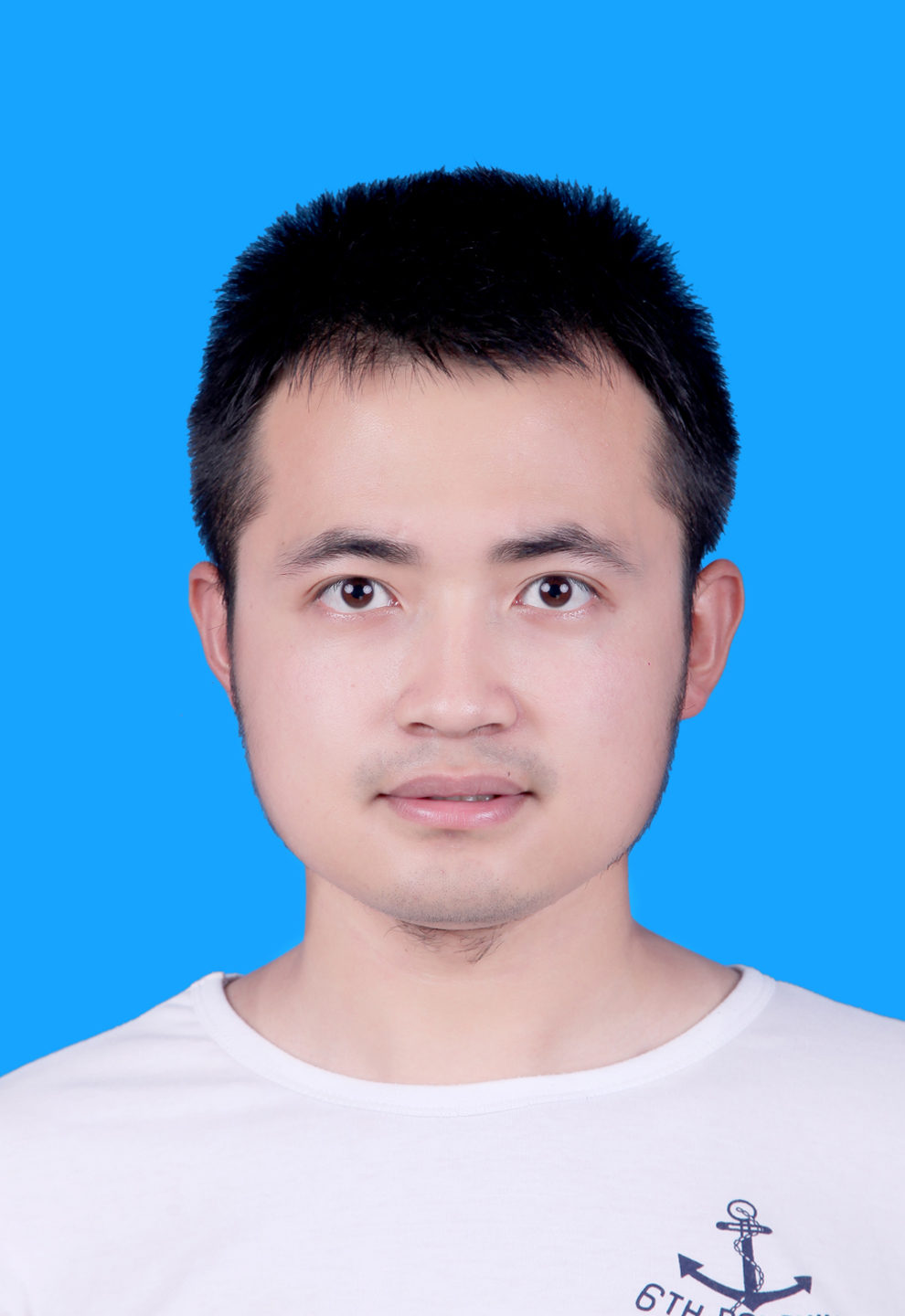 Zheng Hui (惠政)合作论文数Baidu3
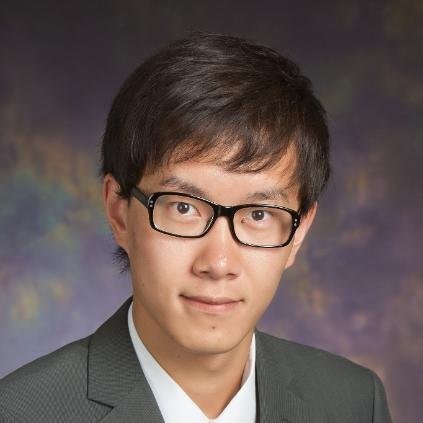 Ding Liu合作论文数ByteDance;TikTok3
 Jinhui Tang (唐金辉)合作论文数College of Information Science and Technology & Artificial Intelligence, Nanjing Forestry University3
 Zhiwei Xiong (熊志伟)合作论文数Department of Electronic Engineering and Information Science, School of Information Science and Technology, University of Science and Technology of China3
 Haoqiang Fan (范浩强)合作论文数Megvii Technology Inc.3
 Pengxu Wei (魏朋旭)合作论文数Human-Cyber-Physical Intelligence Integration Lab, School of Computer Science and Engineering, Sun Yat-sen University3
 Zeyu Xiao合作论文数National University of Singapore2Si Miao合作论文数2Jun-Ho Choi合作论文数2Jong-Seok Lee合作论文数2Chu-Tak Li合作论文数2Yiqun Chen合作论文数University of Chinese Academy of Sciences;Institute of Automation, Chinese Academy of Sciences2Jingdong Liu合作论文数2Donghao Luo合作论文数Department of Precision Instrument, Tsinghua University2Wenyi Tang合作论文数2
 Yuanfei Huang (黄源飞)合作论文数School of Artificial Intelligence, Beijing Normal University2
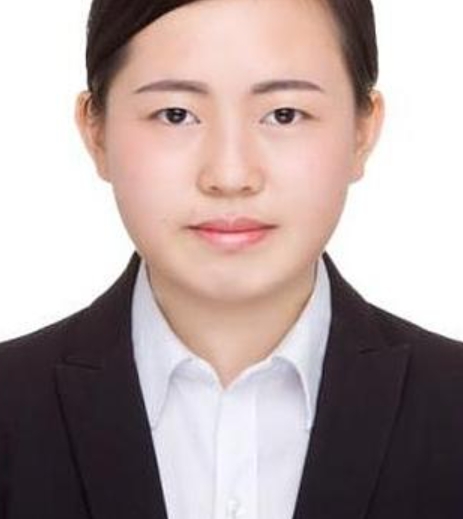 Xiaotong Luo合作论文数School of Informatics, Xiamen University2Jiye Liu合作论文数2Wenjie Zhang合作论文数2
 Ruikang Xu (徐瑞康)合作论文数MoE Key Laboratory of Brain-Inspired Intelligent Perception and Cognition, University of Science and Technology of China2Tomoki Yoshida合作论文数2Lishan Huang合作论文数2
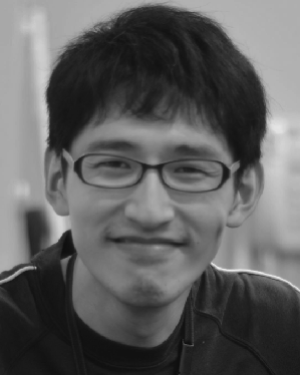 Kazutoshi Akita合作论文数Ecole Polytech Fed Lausanne, Image & Visual Representat Lab, Lausanne, Switzerland2




