In this paper, we articulate a functional approach to cognitive capacities. It is a restricted functionalism for various reasons, but especially because it does not claim that all cognitive (and/or mental) entities and processes are functional in the sense of a systemic capacities approach. One of the central aims of a cognitive theory consists in providing explanations of behavioral phenomena of (human and non-human) animals, and of the phenomena that are involved in those explanations. We accept that part of what lies at the heart of these explanations are certain functional entities –we call them “cognitive functional systems” –which in our view stand for most of the cognitive capacities of an organism; that is, systems that are individuated primarily by the main cognitive functions they undertake. Additionally, in the paper, we go into further detail concerning these functional systems, their internal organization, the nature of their causal interactions, etc. We also argue that some of these classes of cognitive functional systems (i.e., cognitive capacities) can be construed as “natural kinds” whenever their kinds of functional organizations are understood as kinds of hierarchically ordered classes of information processing events that are related among each other in regular (often complex) ways.
This article offers a reconstruction of the main theses of cognitive structural realism in the philosophy of science, to examine its theoretical commitments and their viability. To this end, the connectionist version of P. M. Churchland and the predictive processing version of M. D. Beni are critically analyzed. Subsequently, the central theses of the position are identified and a distinction between strong and weak varieties of cognitive structural realism is proposed. Finally, some of its problems and potential developments are addressed.
Este artículo ofrece una reconstrucción de las tesis principales del realismo estructural cognitivo en filosofía de la ciencia, para examinar sus compromisos teóricos y la viabilidad de estos. Con esta finalidad, se analiza de manera crítica la versión conexionista de P.M. Churchland y la versión de procesamiento predictivo de M.D. Beni. Posteriormente, se identifican las tesis centrales y se propone una distinción entre realismo estructural cognitivo fuerte y débil. Finalmente, se abordan algunos de sus problemas y desarrollos potenciales.
This is the introduction of the Synthese Topical Collection Epistemological Issues in Neurodivergence and Atypical Cognition written by the guest editors. In order to justify the relevance of the topic, a minimum context is given on the notions of neurodivergence as well as some brief remarks on the neurodiversity advocacy movement. This serves as a basis to establish the importance of increasing the scope of epistemology to include issues that do not fit in the descriptions of typical subjects and cognitive processes.
El periodo de duelo tras la pérdida de un ser querido presenta experiencias y actitudes inusuales que juegan un papel importante en la vida cognitiva de las personas dolientes; por ejemplo, la sensación momentánea de que la persona difunta se encuentra presente, así como creencias de carácter religioso o espiritual. Frecuentemente esto involucra el mantenimiento activo de un vínculo con la persona difunta a través de diversas prácticas en la vida cotidiana. Tanto los estados mentales relacionados con el duelo como las prácticas correspondientes al mantenimiento de vínculos tienen un valor epistémico, en la medida en que proveen un aporte a la funcionalidad del agente en su búsqueda por adquirir conocimiento, comprensión y otros bienes epistémicos. Esto tiene consecuencias éticas y sociales, ya que estos bienes epistémicos pueden ser destruidos o afectados por las intervenciones en el duelo, tanto clínicas como no-clínicas. A pesar de ello, esta dimensión no ha sido suficientemente reconocida por la literatura filosófica. Este trabajo busca motivar el interés por estudiar epistemológicamente el duelo de dos maneras. En primer lugar, ofreciendo una caracterización de los estados mentales asociados con el duelo en términos de estados subdoxásticos (como aliefs). Posteriormente, se muestra el papel que juegan dichos estados mentales en el espacio de affordances estructuradas en un nicho afectivo que permite el desempeño exitoso de la persona doliente en tanto agente epistémico. Con ello se busca proveer un marco de análisis que se pueda desarrollar y extender en futuros trabajos para estudiar los aspectos epistemológicos del duelo.
Since at least Hume and Kant, philosophers working on the nature of aesthetic judgment have generally agreed that common sense does not treat aesthetic judgments in the same way as typical expressions of subjective preferences-rather, it endows them with intersubjective validity, the property of being right or wrong regardless of disagreement. Moreover, this apparent intersubjective validity has been taken to constitute one of the main explananda for philosophical accounts of aesthetic judgment. But is it really the case that most people spontaneously treat aesthetic judgments as having intersubjective validity? In this paper, we report the results of a cross-cultural study with over 2,000 respondents spanning 19 countries. Despite significant geographical variations, these results suggest that most people do not treat their own aesthetic judgments as having intersubjective validity. We conclude by discussing the implications of our findings for theories of aesthetic judgment and the purpose of aesthetics in general.
NoûsVolume 53, Issue 1 p. 224-247 ARTICLE Nothing at Stake in Knowledge* David Rose, David Rose drose@philosophy.rutgers.edu Rutgers UniversitySearch for more papers by this authorEdouard Machery, Edouard Machery machery@pitt.edu University of PittsburghSearch for more papers by this authorStephen Stich, Stephen Stich stich.steve@gmail.com Rutgers UniversitySearch for more papers by this authorMario Alai, Mario Alai mario.alai@libero.it University of UrbinoSearch for more papers by this authorAdriano Angelucci, Adriano Angelucci adrian.angelucci@gmail.com University of UrbinoSearch for more papers by this authorRenatas Berniūnas, Renatas Berniūnas renatasberniunas@gmail.com Vilnius UniversitySearch for more papers by this authorEmma E. Buchtel, Emma E. Buchtel buchtel@eduhk.hk The Education University of Hong KongSearch for more papers by this authorAmita Chatterjee, Amita Chatterjee chatterjeeamita@gmail.com Jadavpur UniversitySearch for more papers by this authorHyundeuk Cheon, Hyundeuk Cheon hdcheon@gmail.com Ewha Womans UniversitySearch for more papers by this authorIn-Rae Cho, In-Rae Cho ircho@snu.ac.kr Seoul National UniversitySearch for more papers by this authorDaniel Cohnitz, Daniel Cohnitz d.cohnitz@uu.nl Utrecht UniversitySearch for more papers by this authorFlorian Cova, Florian Cova florian.cova@gmail.com University of GenevaSearch for more papers by this authorVilius Dranseika, Vilius Dranseika vilius.dranseika@fsf.vu.lt Vilnius University, LithuaniaSearch for more papers by this authorÁngeles Eraña Lagos, Ángeles Eraña Lagos mael@filosoficas.unam.mx Instituto de Investigaciones Filosóficas, UNAMSearch for more papers by this authorLaleh Ghadakpour, Laleh Ghadakpour laleh@ghadakpour.net Independent Scholar, IranSearch for more papers by this authorMaurice Grinberg, Maurice Grinberg mgrinberg@ngu.bg New Bulgarian UniversitySearch for more papers by this authorIvar Hannikainen, Ivar Hannikainen ivar.hannikainen@gmail.com Catholic University of Rio de JaneiroSearch for more papers by this authorTakaaki Hashimoto, Takaaki Hashimoto hshmt@l.u-tokyo.ac.jp University of TokyoSearch for more papers by this authorAmir Horowitz, Amir Horowitz amirho@openu.ac.il Open University of IsraelSearch for more papers by this authorEvgeniya Hristova, Evgeniya Hristova ehristova@cogs.nbu.bg New Bulgarian UniversitySearch for more papers by this authorYasmina Jraissati, Yasmina Jraissati yasmina.jraissati@gmail.com American University of BeirutSearch for more papers by this authorVeselina Kadreva, Veselina Kadreva vkadreva@nbu.bg New Bulgarian UniversitySearch for more papers by this authorKaori Karasawa, Kaori Karasawa karasawa@l.u-tokyo.ac.jp University of TokyoSearch for more papers by this authorHackjin Kim, Hackjin Kim hackjinkim@korea.ac.kr Korea UniversitySearch for more papers by this authorYeonjeong Kim, Yeonjeong Kim yeonjeongkim@cmu.edu Carnegie Mellon UniversitySearch for more papers by this authorMinwoo Lee, Minwoo Lee redooly86@gmail.com Korea University, SeoulSearch for more papers by this authorCarlos Mauro, Carlos Mauro cmauro72@gmail.com Católica Porto Business SchoolSearch for more papers by this authorMasaharu Mizumoto, Masaharu Mizumoto mizumoto@jaist.ac.jp Japan Advanced Institute of Science and TechnologySearch for more papers by this authorSebastiano Moruzzi, Sebastiano Moruzzi sebastiano.moruzzi@unibo.it University of BolognaSearch for more papers by this authorChristopher Y. Olivola, Christopher Y. Olivola olivola@cmu.edu Carnegie Mellon UniversitySearch for more papers by this authorJorge Ornelas, Jorge Ornelas jornelass@gmail.com Universidad Autónoma de San Luis PotosíSearch for more papers by this authorBarbara Osimani, Barbara Osimani B.Osimani@lmu.de Ludwig-Maximilians Univesität, München – MCMPSearch for more papers by this authorCarlos Romero, Carlos Romero ckronosz@hotmail.com UNAMSearch for more papers by this authorAlejandro Rosas Lopez, Alejandro Rosas Lopez arosasl@unal.edu.co National University of ColombiaSearch for more papers by this authorMassimo Sangoi, Massimo Sangoi massimosangoi@hotmail.com University of UrbinoSearch for more papers by this authorAndrea Sereni, Andrea Sereni andrea.sereni@iusspavia.it Scuola Universitaria Superiore IUSS PaviaSearch for more papers by this authorSarah Songhorian, Sarah Songhorian songhorian.sarah@unisr.it Università Vita-Salute San Raffaele MilanoSearch for more papers by this authorPaulo Sousa, Paulo Sousa paulo.sousa@qub.ac.uk Institute of Cognition and Culture, Queen's University BelfastSearch for more papers by this authorNoel Struchiner, Noel Struchiner struchiner@gmail.com Catholic University of Rio de JaneiroSearch for more papers by this authorVera Tripodi, Vera Tripodi vera.tripodi@unito.it University of TurinSearch for more papers by this authorNaoki Usui, Naoki Usui nusui@nna.so-net.ne.jp Mie UniversitySearch for more papers by this authorAlejandro Vázquez del Mercado, Alejandro Vázquez del Mercado vazquezdelmercado@gmail.com UNAMSearch for more papers by this authorGiorgio Volpe, Giorgio Volpe giorgio.volpe@unibo.it University of BolognaSearch for more papers by this authorHrag Abraham Vosgerichian, Hrag Abraham Vosgerichian hav00@aub.edu.lb American University of BeirutSearch for more papers by this authorXueyi Zhang, Xueyi Zhang zxynj0928@126.com Southeast University, P. R. ChinaSearch for more papers by this authorJing Zhu, Jing Zhu zhujing6@mail.sysu.edu.cn Sun Yat-Sen UniversitySearch for more papers by this author David Rose, David Rose drose@philosophy.rutgers.edu Rutgers UniversitySearch for more papers by this authorEdouard Machery, Edouard Machery machery@pitt.edu University of PittsburghSearch for more papers by this authorStephen Stich, Stephen Stich stich.steve@gmail.com Rutgers UniversitySearch for more papers by this authorMario Alai, Mario Alai mario.alai@libero.it University of UrbinoSearch for more papers by this authorAdriano Angelucci, Adriano Angelucci adrian.angelucci@gmail.com University of UrbinoSearch for more papers by this authorRenatas Berniūnas, Renatas Berniūnas renatasberniunas@gmail.com Vilnius UniversitySearch for more papers by this authorEmma E. Buchtel, Emma E. Buchtel buchtel@eduhk.hk The Education University of Hong KongSearch for more papers by this authorAmita Chatterjee, Amita Chatterjee chatterjeeamita@gmail.com Jadavpur UniversitySearch for more papers by this authorHyundeuk Cheon, Hyundeuk Cheon hdcheon@gmail.com Ewha Womans UniversitySearch for more papers by this authorIn-Rae Cho, In-Rae Cho ircho@snu.ac.kr Seoul National UniversitySearch for more papers by this authorDaniel Cohnitz, Daniel Cohnitz d.cohnitz@uu.nl Utrecht UniversitySearch for more papers by this authorFlorian Cova, Florian Cova florian.cova@gmail.com University of GenevaSearch for more papers by this authorVilius Dranseika, Vilius Dranseika vilius.dranseika@fsf.vu.lt Vilnius University, LithuaniaSearch for more papers by this authorÁngeles Eraña Lagos, Ángeles Eraña Lagos mael@filosoficas.unam.mx Instituto de Investigaciones Filosóficas, UNAMSearch for more papers by this authorLaleh Ghadakpour, Laleh Ghadakpour laleh@ghadakpour.net Independent Scholar, IranSearch for more papers by this authorMaurice Grinberg, Maurice Grinberg mgrinberg@ngu.bg New Bulgarian UniversitySearch for more papers by this authorIvar Hannikainen, Ivar Hannikainen ivar.hannikainen@gmail.com Catholic University of Rio de JaneiroSearch for more papers by this authorTakaaki Hashimoto, Takaaki Hashimoto hshmt@l.u-tokyo.ac.jp University of TokyoSearch for more papers by this authorAmir Horowitz, Amir Horowitz amirho@openu.ac.il Open University of IsraelSearch for more papers by this authorEvgeniya Hristova, Evgeniya Hristova ehristova@cogs.nbu.bg New Bulgarian UniversitySearch for more papers by this authorYasmina Jraissati, Yasmina Jraissati yasmina.jraissati@gmail.com American University of BeirutSearch for more papers by this authorVeselina Kadreva, Veselina Kadreva vkadreva@nbu.bg New Bulgarian UniversitySearch for more papers by this authorKaori Karasawa, Kaori Karasawa karasawa@l.u-tokyo.ac.jp University of TokyoSearch for more papers by this authorHackjin Kim, Hackjin Kim hackjinkim@korea.ac.kr Korea UniversitySearch for more papers by this authorYeonjeong Kim, Yeonjeong Kim yeonjeongkim@cmu.edu Carnegie Mellon UniversitySearch for more papers by this authorMinwoo Lee, Minwoo Lee redooly86@gmail.com Korea University, SeoulSearch for more papers by this authorCarlos Mauro, Carlos Mauro cmauro72@gmail.com Católica Porto Business SchoolSearch for more papers by this authorMasaharu Mizumoto, Masaharu Mizumoto mizumoto@jaist.ac.jp Japan Advanced Institute of Science and TechnologySearch for more papers by this authorSebastiano Moruzzi, Sebastiano Moruzzi sebastiano.moruzzi@unibo.it University of BolognaSearch for more papers by this authorChristopher Y. Olivola, Christopher Y. Olivola olivola@cmu.edu Carnegie Mellon UniversitySearch for more papers by this authorJorge Ornelas, Jorge Ornelas jornelass@gmail.com Universidad Autónoma de San Luis PotosíSearch for more papers by this authorBarbara Osimani, Barbara Osimani B.Osimani@lmu.de Ludwig-Maximilians Univesität, München – MCMPSearch for more papers by this authorCarlos Romero, Carlos Romero ckronosz@hotmail.com UNAMSearch for more papers by this authorAlejandro Rosas Lopez, Alejandro Rosas Lopez arosasl@unal.edu.co National University of ColombiaSearch for more papers by this authorMassimo Sangoi, Massimo Sangoi massimosangoi@hotmail.com University of UrbinoSearch for more papers by this authorAndrea Sereni, Andrea Sereni andrea.sereni@iusspavia.it Scuola Universitaria Superiore IUSS PaviaSearch for more papers by this authorSarah Songhorian, Sarah Songhorian songhorian.sarah@unisr.it Università Vita-Salute San Raffaele MilanoSearch for more papers by this authorPaulo Sousa, Paulo Sousa paulo.sousa@qub.ac.uk Institute of Cognition and Culture, Queen's University BelfastSearch for more papers by this authorNoel Struchiner, Noel Struchiner struchiner@gmail.com Catholic University of Rio de JaneiroSearch for more papers by this authorVera Tripodi, Vera Tripodi vera.tripodi@unito.it University of TurinSearch for more papers by this authorNaoki Usui, Naoki Usui nusui@nna.so-net.ne.jp Mie UniversitySearch for more papers by this authorAlejandro Vázquez del Mercado, Alejandro Vázquez del Mercado vazquezdelmercado@gmail.com UNAMSearch for more papers by this authorGiorgio Volpe, Giorgio Volpe giorgio.volpe@unibo.it University of BolognaSearch for more papers by this authorHrag Abraham Vosgerichian, Hrag Abraham Vosgerichian hav00@aub.edu.lb American University of BeirutSearch for more papers by this authorXueyi Zhang, Xueyi Zhang zxynj0928@126.com Southeast University, P. R. ChinaSearch for more papers by this authorJing Zhu, Jing Zhu zhujing6@mail.sysu.edu.cn Sun Yat-Sen UniversitySearch for more papers by this author First published: 24 August 2017 https://doi.org/10.1111/nous.12211Citations: 25 † *This paper is dedicated to Richard Nisbett, who helped create the field of experimental philosophy, on the occasion of his retirement. Read the full textAboutPDF ToolsRequest permissionExport citationAdd to favoritesTrack citation ShareShare Give accessShare full text accessShare full-text accessPlease review our Terms and Conditions of Use and check box below to share full-text version of article.I have read and accept the Wiley Online Library Terms and Conditions of UseShareable LinkUse the link below to share a full-text version of this article with your friends and colleagues. Learn more.Copy URL Share a linkShare onFacebookTwitterLinkedInRedditWechat Citing Literature Volume53, Issue1March 2019Pages 224-247 RelatedInformation
Philosophers have long debated whether, if determinism is true, we should hold people morally responsible for their actions since in a deterministic universe, people are arguably not the ultimate source of their actions nor could they have done otherwise if initial conditions and the laws of nature are held fixed. To reveal how non-philosophers ordinarily reason about the conditions for free will, we conducted a cross-cultural and cross-linguistic survey (N = 5,268) spanning twenty countries and sixteen languages. Overall, participants tended to ascribe moral responsibility whether the perpetrator lacked sourcehood or alternate possibilities. However, for American, European, and Middle Eastern participants, being the ultimate source of one’s actions promoted perceptions of free will and control as well as ascriptions of blame and punishment. By contrast, being the source of one’s actions was not particularly salient to Asian participants. Finally, across cultures, participants exhibiting greater cognitive reflection were more likely to view free will as incompatible with causal determinism. We discuss these findings in light of documented cultural differences in the tendency toward dispositional versus situational attributions.
This article examines whether people share the Gettier intuition (viz. that someone who has a true justified belief that p may nonetheless fail to know that p) in 24 sites, located in 23 countries (counting Hong Kong as a distinct country) and across 17 languages. We also consider the possible influence of gender and personality on this intuition with a very large sample size. Finally, we examine whether the Gettier intuition varies across people as a function of their disposition to engage in “reflective” thinking.
Is behavioral integration (i.e., which occurs when a subject's assertion that p matches her nonverbal behavior) a necessary feature of belief in folk psychology? Our data from over 5,000 people across 26 samples, spanning 22 countries suggests that it is not. Given the surprising cross-cultural robustness of our findings, we argue that the types of evidence for the ascription of a belief are, at least in some circumstances, lexicographically ordered: assertions are first taken into account, and when an agent sincerely asserts that p , nonlinguistic behavioral evidence is disregarded. In light of this, we take ourselves to have discovered a universal principle governing the ascription of beliefs in folk psychology.
Is behavioral integration (i.e., which occurs when a subject's assertion that p matches her nonverbal behavior) a necessary feature of belief in folk psychology? Our data from over 5,000 people across 26 samples, spanning 22 countries suggests that it is not. Given the surprising cross-cultural robustness of our findings, we argue that the types of evidence for the ascription of a belief are, at least in some circumstances, lexicographically ordered: assertions are first taken into account, and when an agent sincerely asserts that p, nonlinguistic behavioral evidence is disregarded. In light of this, we take ourselves to have discovered a universal principle governing the ascription of beliefs in folk psychology.
The objective of this work is to give a panoramic perspective of three different ways to talk about collective beliefs that have been presented in the philosophical literature. The first one is as a high-level property of social entities, independent from the properties of individual members. The second alternative is through a notion of collective intentionality, irreducible to individual intentionality, attributed to individuals. The third alternative proposed is through judgment aggregation along with additional collective rationality criteria. The advantages and short-comings of each of these alternatives are weighted through the light of the role that a notion of collective belief should be able to have in the social sciences and in social life in general.
El objetivo de este trabajo es dar una perspectiva panorá- mica de tres distintas maneras de hablar acerca de creencias colectivas que han sido presentadas en la literatura filosófica. La primera es como propiedades de alto nivel de las entidades sociales, de manera independiente a las propiedades de los miembros individuales que las componen. La segunda alternativa es por medio de una noción de intencionalidad colectiva no reductible a la intencionalidad individual, que se atribuye a los individuos. La tercera alternativa propuesta es a través de la agregación de juicios y criterios adicionales de racionalidad. Las ventajas y desventajas de cada uno de estos tres alternativas son juzgadas a la luz del papel que una noción de creencia colectiva debería llevar a cabo en las ciencias sociales y en la vida social en general.
 Naoki Usui合作论文数7
 Adriano Angelucci合作论文数7
 Stephen Stich合作论文数Department of Philosophy, Rutgers University;University of Sheffield7Massimo Sangoi合作论文数7
 Carlos Mauro合作论文数Catolica Porto Business Sch7
 Yeonjeong Kim合作论文数Sloan Sch Management, MIT7Hyundeuk Cheon合作论文数Seoul National University7
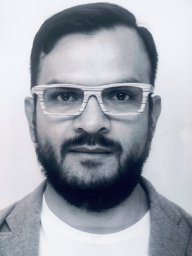 Jorge Ornelas合作论文数Univ Autonoma San Luis Potosi7
 Noel Struchiner合作论文数Pontifical Catholic Univ Rio de Janeiro, Rio De Janeiro, Brazil7Sebastiano Moruzzi合作论文数University of Bologna7Sarah Songhorian合作论文数Moral Philosophy, Univ Vita Salute San Raffaele7Kaori Karasawa合作论文数7
 Renatas Berniunas合作论文数Inst Psychol, Vilnius Univ7Vera Tripodi合作论文数7Andrea Sereni合作论文数NEtS Ctr, Scuola Univ Super IUSS Pavia7
 Christopher Y. Olivola合作论文数Marketing Faculty, Tepper School of Business, Carnegie Mellon University;Social and Decision Sciences, Dietrich College of Humanities and Social Sciences, Carnegie Mellon University7
 Alejandro Rosas合作论文数7
 Barbara Osimani合作论文数7
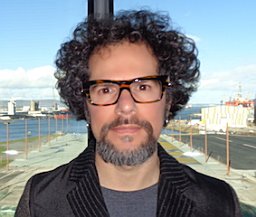 Sousa Paulo合作论文数7
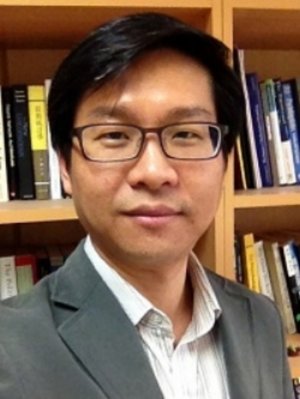 Hackjin Kim合作论文数School of Psychology, College of Liberal Arts, Korea University;Laboratory of Social and Decision Neuroscience, Korea University7
 Edouard Machery合作论文数Department of History and Philosophy of Science, University of Pittsburgh7Amir Horowitz合作论文数7
 Florian Cova合作论文数7
 Yasmina Jraissati合作论文数7Mario Alai合作论文数Istituto di Filosofia;Università di Urbino;Istituto di Filosofia, Università di Urbino7
 Vilius Dranseika合作论文数Department of Medical History and Ethics, Vilnius University7
 Emma E. Buchtel合作论文数Department of Psychology;University of British;Department of Psychology, University of British7Amita Chatterjee合作论文数Center for Cognitive Science, Jadavpur University, Calcutta, India7
 Daniel Cohnitz合作论文数Philosophy Department, University of Düsseldorf7Hrag Abraham Vosgerichian合作论文数6Veselina Kadreva合作论文数6In‐Rae Cho合作论文数6Xueyi Zhang合作论文数6
 Minwoo Lee合作论文数6Laleh Ghadakpour合作论文数6Takaaki Hashimoto合作论文数6
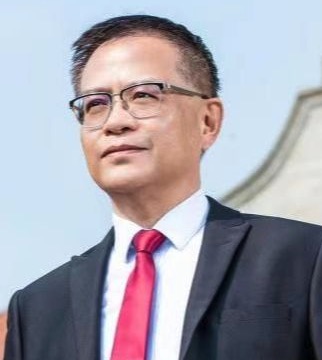 Jing Zhu (朱菁)合作论文数Department of Philosophy, Xiamen University6
 Maurice Grinberg合作论文数Изследователски център по когнитивна наука, Нов Български Университет6
 David C. Rose合作论文数Department of Economics;University of Missouri-St;Department of Economics, University of Missouri-St6
 Ángeles Eraña合作论文数Instituto de Investigaciones Filosóficas, Ciudad de la Investigación en Humanidades6
 Evgenia Hristova合作论文数Department of Cognitive Science and Psychology, New Bulgarian University6
 Giorgio Volpe合作论文数5
 Hannikainen Ivar A合作论文数Department of Philosophy, University of Sheffield.5Ivar R. Hannikainen合作论文数2
 Claudia Lorena Garcia合作论文数2
 Maria Del Rosario Martinez-Ordaz合作论文数1
 Carlos Romero合作论文数Departamento de Economia y Gestion Forestal, ETS Ingenieros de Montes, Universidad Politecnica de Madrid1




